1. ArchDaily
  2. Archigram

Archigram: The Latest Architecture and News

Farewell to Masters: Remembering the Architects We Lost in 2025

Every year brings new ideas, projects, and shifts in architectural culture, but it also marks the loss of voices that have shaped the discipline across decades. Architecture moves forward, but it also advances through absence. When figures who helped articulate its language and its ambitions disappear, they leave behind more than completed works or influential texts. Their absence becomes a threshold, a moment in which the discipline pauses to understand what remains, what evolves, and what continues to guide us. These moments of loss remind us that architecture is a long, collective construction, carried not only by those shaping the present but also by those whose visions continue to orient how we think about cities and landscapes.

The architects and thinkers we lost in 2025 came from remarkably different worlds, yet the questions that shaped their work often intersected. Some approached the city through identity, symbolism, and historical continuity, seeking to ground the built environment in cultural memory. Others interpreted it through engineering precision, ecological systems, or radical experimentation, expanding what architecture could be and how it could be experienced. Their work spans contexts as diverse as postwar Britain, rapidly urbanizing China, Central European avant-gardes, and the evolving cultural institutions of Berlin and New York. Together, they form a spectrum of responses that defined, and continue to define, architectural culture over the last half-century, revealing the multiplicity of ways in which architecture can engage with society, technology, and the environment.

Farewell to Masters: Remembering the Architects We Lost in 2025 - Image 1 of 4Farewell to Masters: Remembering the Architects We Lost in 2025 - Image 2 of 4Farewell to Masters: Remembering the Architects We Lost in 2025 - Image 3 of 4Farewell to Masters: Remembering the Architects We Lost in 2025 - Image 4 of 4Farewell to Masters: Remembering the Architects We Lost in 2025 - More Images+ 33

From Design Fiction to Design Futures: The Changing Role of Architecture in Cultural Production

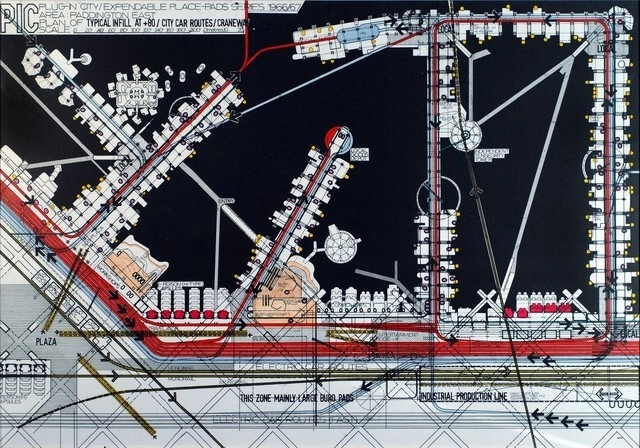
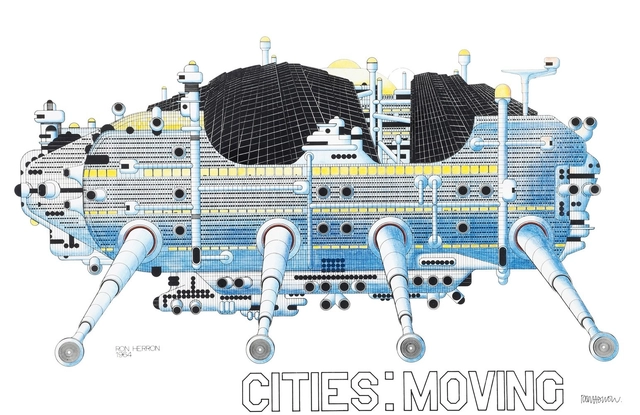
When Archigram published their fanatical vision for pneumatic cities and walking megastructures in the 1960s, they seemed to be designing buildings. Beneath the surface, the avant-gardeists were pushing culture through radical alternatives to lifestyles and forms of organizing in the city. Laboratories found themselves between the lines of copy on Domus or Casabella magazines, propositions doubling as blueprints for the civilizations to come. From Gropius's Bauhaus in 1919 to Arcosanti's desert experiments in the 1970s, architecture operated as a form of cultural prophecy. Built form was the argument. The drawing was the vision. Today, we live in a world that remarkably resembles what the starchitects of the 1900s imagined - modular construction, interconnected digital cities, and automated systems. Yet contemporary architecture rarely proposes culture with the same totalizing confidence.
From Design Fiction to Design Futures: The Changing Role of Architecture in Cultural Production - Image 1 of 4From Design Fiction to Design Futures: The Changing Role of Architecture in Cultural Production - Image 2 of 4From Design Fiction to Design Futures: The Changing Role of Architecture in Cultural Production - Image 3 of 4From Design Fiction to Design Futures: The Changing Role of Architecture in Cultural Production - Image 4 of 4From Design Fiction to Design Futures: The Changing Role of Architecture in Cultural Production - More Images+ 1

The Architect as Writer: Expanding the Discipline Beyond Buildings

Architecture has always been more than bricks and mortar. It is equally constructed through words, ideas, and narratives. From ancient treatises to radical manifestos, from technical manuals to poetic essays, the written word has served as a spatial, pedagogical, and political tool within the field. Writing shapes how architecture is conceptualized, communicated, and critiqued — often long before, or even in the absence of, physical construction.

Historically, figures such as Vitruvius, Alberti, and Palladio employed writing to codify principles, project ideals, and legitimize architecture as a discipline. In the modern era, Le Corbusier, Adolf Loos, and Lina Bo Bardi wrote prolifically to expand the scope of architecture beyond form and function, often using publications as tools for persuasion and experimentation. The postwar period gave rise to new editorial strategies, as evident in the manifestos of Archizoom and Superstudio, and the polemical publications of Delirious New York and Oppositions, where writing served as both critique and project.

The Architect as Writer: Expanding the Discipline Beyond Buildings - Image 1 of 4The Architect as Writer: Expanding the Discipline Beyond Buildings - Image 2 of 4The Architect as Writer: Expanding the Discipline Beyond Buildings - Image 3 of 4The Architect as Writer: Expanding the Discipline Beyond Buildings - Image 4 of 4The Architect as Writer: Expanding the Discipline Beyond Buildings - More Images+ 31

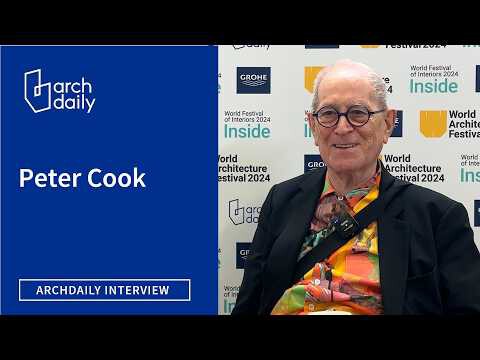
“Even If You Want to Be a Gardener, Study Architecture”: Archigram Co-Founder Sir Peter Cook on Boldness, Creativity, and Architectural Education

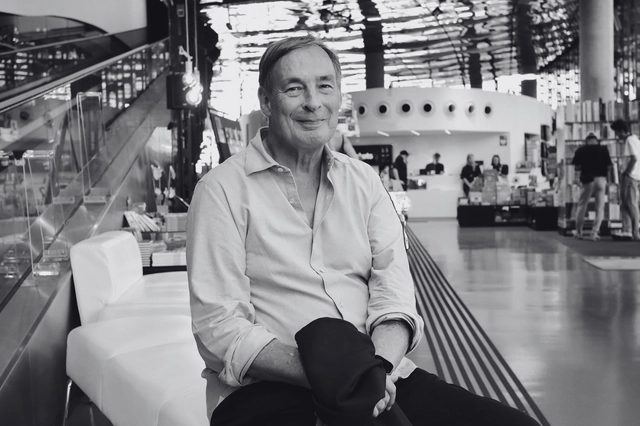
Sir Peter Cook is an English architect, professor, and writer, and a founding member of the neo-futuristic design group Archigram, alongside Warren Chalk, Ron Herron, David Greene, and Michael Webb. Beyond the group's radical urban concepts and visionary imagery, he co-founded CRAB Studio (Cook Robotham Architectural Bureau) with David Robotham in 2006, where they have developed built, conceptual, and speculative projects. He recently designed the Play Pavilion, located next to Serpentine South in Kensington Gardens, which opened on World Play Day, June 11, 2025. He is also known for the BIX Light and Media Façade at MoMA and for his series of drawings and collages that explore spaces, building elements, and organic landscapes.
Returning for his second interview with ArchDaily, Sir Peter Cook sat with Editor in Chief, Christele Harrouk, at the World Architecture Festival 2025. While the first conversation focused on his advice for young architects, this one followed his presentation during WAF on the forthcoming book, Archigram Ten, an editorial project reviving the spirit of the original magazine with founding members and contemporary designers. Building on those themes, he reflects on artificial intelligence, the impact of COVID-19 on his own practice, and current architectural pedagogies.

“Even If You Want to Be a Gardener, Study Architecture”: Archigram Co-Founder Sir Peter Cook on Boldness, Creativity, and Architectural Education - Image 1 of 4“Even If You Want to Be a Gardener, Study Architecture”: Archigram Co-Founder Sir Peter Cook on Boldness, Creativity, and Architectural Education - Image 2 of 4“Even If You Want to Be a Gardener, Study Architecture”: Archigram Co-Founder Sir Peter Cook on Boldness, Creativity, and Architectural Education - Image 3 of 4“Even If You Want to Be a Gardener, Study Architecture”: Archigram Co-Founder Sir Peter Cook on Boldness, Creativity, and Architectural Education - Image 4 of 4“Even If You Want to Be a Gardener, Study Architecture”: Archigram Co-Founder Sir Peter Cook on Boldness, Creativity, and Architectural Education - More Images+ 2

Architect and Archigram Founding Member Dennis Crompton Passes Away at 90

Dennis Crompton, an influential figure in the field of architecture, passed away on January 21, 2025, at the age of 90. Born in Blackpool in 1935, Crompton's remarkable career spanned several decades and left an indelible mark on modern architecture. As a key member of the avant-garde architectural group Archigram, established in London in 1961, Crompton played a pivotal role in revolutionizing architectural practice, together with Warren Chalk, Peter Cook, Ron Herron, David Greene, and Michael Webb.

Architect and Archigram Founding Member Dennis Crompton Passes Away at 90 - Image 1 of 4Architect and Archigram Founding Member Dennis Crompton Passes Away at 90 - Image 2 of 4Architect and Archigram Founding Member Dennis Crompton Passes Away at 90 - Image 3 of 4Architect and Archigram Founding Member Dennis Crompton Passes Away at 90 - Image 4 of 4Architect and Archigram Founding Member Dennis Crompton Passes Away at 90 - More Images+ 2

Kunsthaus Graz: A Friendly Alien Among Historic Landmarks

Subscriber Access | 

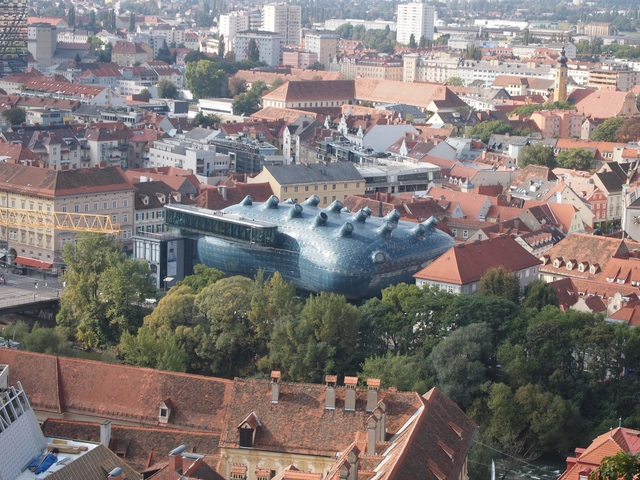
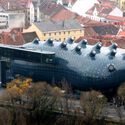
The Kunsthaus Graz, designed by Peter Cook and Colin Fournier, boldly redefines contemporary architecture in a historic city. Completed in 2003 as a centerpiece of Graz's European Capital of Culture celebrations, its biomorphic form, nicknamed the "Friendly Alien", captured global attention. Amidst Baroque and Medieval surroundings, it bridges past and future, standing as a testament to the city's cultural ambitions.

Situated along the River Mur in the Lend district, the Kunsthaus challenges traditional architectural norms with its organic, free-flowing design. Rejecting orthogonal geometry, the museum seamlessly merges art, architecture, and public interaction, redefining the concept of a cultural institution. Its impact extends beyond aesthetics, sparking urban revitalization in a once-overlooked neighborhood, and bringing cultural vibrancy and economic activity.

Kunsthaus Graz: A Friendly Alien Among Historic Landmarks - Image 1 of 4Kunsthaus Graz: A Friendly Alien Among Historic Landmarks - Image 2 of 4Kunsthaus Graz: A Friendly Alien Among Historic Landmarks - Image 3 of 4Kunsthaus Graz: A Friendly Alien Among Historic Landmarks - Image 4 of 4Kunsthaus Graz: A Friendly Alien Among Historic Landmarks - More Images+ 34

Colin Fournier, Co-Founder of Archigram, Passes Away at 79

British architect and planner Colin Fournier, co-founder of conceptual architecture studio Archigram and Professor of Architecture and Urbanism at the Bartlett School of Architecture, has passed away at the age of 79. Fournier was best known for his co-design of the Kunsthaus Graz in Austria, also known as the "Friendly Alien." This project, completed together with Sir Peter Cook, is celebrated as one of the most distinctive cultural landmarks of its time. For his contributions to this work, Fournier was awarded Austria's Goldener Ehrenzeichen medal in 2005, a recognition of his impact on the architectural landscape.

Colin Fournier, Co-Founder of Archigram, Passes Away at 79 - Image 1 of 4Colin Fournier, Co-Founder of Archigram, Passes Away at 79 - Image 2 of 4Colin Fournier, Co-Founder of Archigram, Passes Away at 79 - Image 3 of 4Colin Fournier, Co-Founder of Archigram, Passes Away at 79 - Image 4 of 4Colin Fournier, Co-Founder of Archigram, Passes Away at 79 - More Images

The Top 20 Most Visited AD Architecture Classics

Subscriber Access | 

AD Classics presents you with some of the greatest buildings of the past that have influenced and shaped architecture today. Throughout ArchDaily's 13 years, more than 200 classics were published, and for this edition, we have rounded up the top 20 most visited Architecture Classics to date.

The Top 20 Most Visited AD Architecture Classics  - Image 1 of 4The Top 20 Most Visited AD Architecture Classics  - Image 2 of 4The Top 20 Most Visited AD Architecture Classics  - Image 3 of 4The Top 20 Most Visited AD Architecture Classics  - Image 4 of 4The Top 20 Most Visited AD Architecture Classics  - More Images+ 16

Ephemeral Cities: 3 Radical City Concepts That Propose for Users to Shape Their Built-Form

Subscriber Access | 

The concept of a city can be viewed as a constantly evolving system where both architects and users contribute to its design and redesign. While its framework may start with planners or designers, the character of the urban fabric is ultimately shaped by the societies and generations that inhabit it. The question of "city authorship" often arises in the context of masterplan design. Can architects and urban planners determine the extent to which a city will evolve through its initial design? The answer is no. User authorship then acknowledges that city planning should not be approached like building design, where designers attempt to predict every aspect of shape, pattern, behavior, and culture. Instead, it recognizes the role that people play in shaping the urban fabric through their personal taste in architecture, the development of neighborhood personality, and ongoing redesign that contributes to the story and spirit of a place. These factors should be considered in the initial design by engaging ideas related to future expansion, adaptable infrastructure, and empowering citizens to contribute to the city's architecture, thus making the city design democratic. This article explores conceptual radical cities where designers embrace the ideas of user authorship and the constant evolution of ephemeral architecture.

Ephemeral Cities: 3 Radical City Concepts That Propose for Users to Shape Their Built-Form - Image 1 of 4Ephemeral Cities: 3 Radical City Concepts That Propose for Users to Shape Their Built-Form - Image 2 of 4Ephemeral Cities: 3 Radical City Concepts That Propose for Users to Shape Their Built-Form - Image 3 of 4Ephemeral Cities: 3 Radical City Concepts That Propose for Users to Shape Their Built-Form - Image 4 of 4Ephemeral Cities: 3 Radical City Concepts That Propose for Users to Shape Their Built-Form - More Images+ 8

The Architecture of Countercultures: Utopian Movements in the United States and Berlin, Germany

The Law of Polarity holds good in relation to human society and cultures as well - everything has an opposite. Countercultures have erupted as condemnations of “the ways of the world”. A countercultural movement expresses the ethos and aspirations of a population during a specific time. As new lifestyles are explored, supporting architecture evolves to satiate the utopian ideals of new societies. Architecture is a product of the culture it is designed for.

The Architecture of Countercultures: Utopian Movements in the United States and Berlin, Germany - Image 1 of 4The Architecture of Countercultures: Utopian Movements in the United States and Berlin, Germany - Image 2 of 4The Architecture of Countercultures: Utopian Movements in the United States and Berlin, Germany - Image 3 of 4The Architecture of Countercultures: Utopian Movements in the United States and Berlin, Germany - Image 4 of 4The Architecture of Countercultures: Utopian Movements in the United States and Berlin, Germany - More Images

Can Architectural Journalism Shape the Future of the Profession?

Koolhaas' journalism work won him fame in architecture before he completed a single building. The switch from storyteller to architect was more a change in the script than a professional shift. He pointed out that "[architecture] is a form of scriptwriting that implicitly describes human and spatial relationships." Restating the role of architecture in defining daily life beyond buildings and cities' construction, architecture is also a written and spoken tool capable of explaining daily worldwide events, giving voices to unspoken projects, and actively shaping the future of the architect's role. 

Can Architectural Journalism Shape the Future of the Profession? - Image 1 of 4Can Architectural Journalism Shape the Future of the Profession? - Image 2 of 4Can Architectural Journalism Shape the Future of the Profession? - Image 3 of 4Can Architectural Journalism Shape the Future of the Profession? - Image 4 of 4Can Architectural Journalism Shape the Future of the Profession? - More Images+ 1

Who Was Günther Domenig, the Unknown Deconstructivist?

Subscriber Access | 

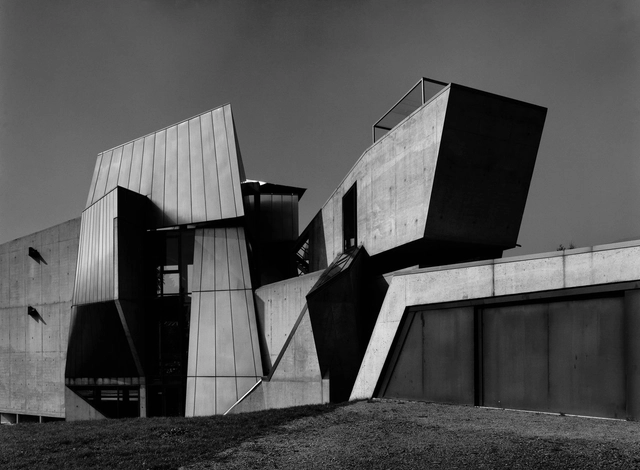
Domenig was one of Austria’s most radical architects and a major influence on many of architecture’s leading lights but remains widely unknown. A new exhibition aims to change that.

Who Was Günther Domenig, the Unknown Deconstructivist? - Image 1 of 4Who Was Günther Domenig, the Unknown Deconstructivist? - Image 2 of 4Who Was Günther Domenig, the Unknown Deconstructivist? - Image 3 of 4Who Was Günther Domenig, the Unknown Deconstructivist? - Image 4 of 4Who Was Günther Domenig, the Unknown Deconstructivist? - More Images+ 4

What Can Metaverse Planners Learn from Italo Calvino’s Invisible Cities

Subscriber Access | 

We are still at the dawn of the Metaverse, the next wave of the Internet. The current “mainstream” Metaverse platforms serve as experimental containers to host the wildest dreams of virtual worlds where we are supposed to unleash the imagination. However, from a spatial design perspective, they have so far been lame and ordinary. Without the constraints in the physical world, how do we draft the urban blueprints in the metaverse? I believe metaverse planners can find inspiration from Italo Calvino’s Invisible Cities, in which he revealed a poetic and mathematical approach to “urban planning” in the imaginary worlds.

What Can Metaverse Planners Learn from Italo Calvino’s Invisible Cities - Image 1 of 4What Can Metaverse Planners Learn from Italo Calvino’s Invisible Cities - Image 2 of 4What Can Metaverse Planners Learn from Italo Calvino’s Invisible Cities - Image 3 of 4What Can Metaverse Planners Learn from Italo Calvino’s Invisible Cities - Image 4 of 4What Can Metaverse Planners Learn from Italo Calvino’s Invisible Cities - More Images+ 8

Exploring the Architecture of Star Wars: In a Galaxy Far Away, Using the Tangible for Futuristic Visualizations

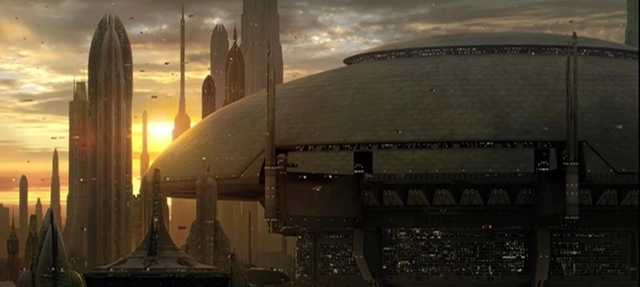
Depicting architectural visualizations of the future is no easy feat, so it makes much sense for designers to use aspects of our existing architecture as a foundation for these fictional worlds. Despite recent advancements in terms of animation technologies and CGI, there is still substantial use of existing architecture to provide tangible structural elements in film.

In terms of recycling architectural aesthetics, elements of the past and future are often integrated to create a hybridized style, an amalgamation of Retro, Dystopian, Modernist and Futuristic themes. From the resurgence of ancient pyramids and temples, to skylines reminiscent of the city of New York, visualizations vary depending on different notions of what our future may look like.

Exploring the Architecture of Star Wars: In a Galaxy Far Away, Using the Tangible for Futuristic Visualizations - Image 1 of 4Exploring the Architecture of Star Wars: In a Galaxy Far Away, Using the Tangible for Futuristic Visualizations - Image 2 of 4Exploring the Architecture of Star Wars: In a Galaxy Far Away, Using the Tangible for Futuristic Visualizations - Image 3 of 4Exploring the Architecture of Star Wars: In a Galaxy Far Away, Using the Tangible for Futuristic Visualizations - Image 4 of 4Exploring the Architecture of Star Wars: In a Galaxy Far Away, Using the Tangible for Futuristic Visualizations - More Images+ 8

Architectural Drawings: Imagining the Future

There’s the iconic Cenotaph for Newton drawing, the evocative monochrome illustration by Etienne-Louis Boullée. There are the experimental drawings of Lebbeus Woods, evocative urban visions of a distant future. There are also the well-known drawings of Le Corbusier’s utopian Ville Radieuse. Drawing, and in turn architectural visualizations, have always been a useful medium with which to contemplate architectural concepts of the future. It is fascinating to look back at the architectural visualizations of the future done in the past.

Architectural Drawings: Imagining the Future - Image 1 of 4Architectural Drawings: Imagining the Future - Image 2 of 4Architectural Drawings: Imagining the Future - Image 3 of 4Architectural Drawings: Imagining the Future - Image 4 of 4Architectural Drawings: Imagining the Future - More Images+ 7

''The Delight I Get Out of Doing Buildings is to Say: It Can be Built'' : In Conversation with Peter Cook

‘’The delight I get out of doing buildings is to say: Screw you, it can be built’’ says Architect Peter Cook in conversation with Louisiana Channel, where he discusses his determination to communicate ideas through vivid Architectural drawings and the skepticism he has faced in regards to his ambitious design proposals and their outlandish appearance.

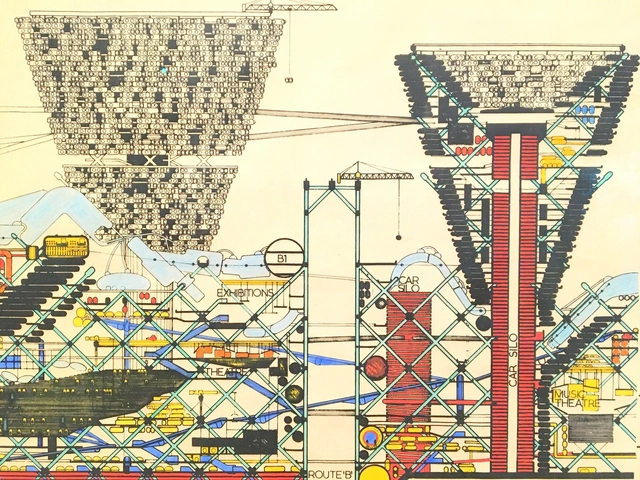
Peter Cook was interviewed at his studio in January 2022 prior to his exhibition ‘City Landscapes’ at the Louisiana Museum of Modern Art, Denmark. As the first artwork displayed that has been produced by an Architect, it explores his reverence for hand-drawing as an Architect's primary medium. The work depicts innovative new ways of exploring the city and our physical space in striking and evocative texture and color.

''The Delight I Get Out of Doing Buildings is to Say: It Can be Built'' : In Conversation with Peter Cook  - Image 1 of 4''The Delight I Get Out of Doing Buildings is to Say: It Can be Built'' : In Conversation with Peter Cook  - Image 2 of 4''The Delight I Get Out of Doing Buildings is to Say: It Can be Built'' : In Conversation with Peter Cook  - Image 3 of 4''The Delight I Get Out of Doing Buildings is to Say: It Can be Built'' : In Conversation with Peter Cook  - Image 4 of 4''The Delight I Get Out of Doing Buildings is to Say: It Can be Built'' : In Conversation with Peter Cook  - More Images

Framing Indeterminacy: The Incorporation of Uncertainty Into Architecture

Subscriber Access | 
Framing Indeterminacy: The Incorporation of Uncertainty Into Architecture - Featured Image
OMA's transformation of Post Houston. Image © Leonid Furmansky

By definition, architecture and urban planning operate within a certain degree of indeterminacy, using present context to find viable answers for an unknown future. As a result, design is a constant search for a balance between prescribing and taking a step back to make room for alternate yet unforeseeable scenarios. Uncertainty is an inherent condition in present-day society, and recent rapid social, economic, and even environmental changes prompt a closer look at how architecture can incorporate indeterminacy. The following reviews some precedents and contemporary examples that programmatically operate with indeterminacy, highlighting several strategies for designing for uncertainty and change.

Framing Indeterminacy: The Incorporation of Uncertainty Into Architecture - Image 1 of 4Framing Indeterminacy: The Incorporation of Uncertainty Into Architecture - Image 2 of 4Framing Indeterminacy: The Incorporation of Uncertainty Into Architecture - Image 3 of 4Framing Indeterminacy: The Incorporation of Uncertainty Into Architecture - Image 4 of 4Framing Indeterminacy: The Incorporation of Uncertainty Into Architecture - More Images

New Louisiana Museum Exhibition Showcases Drawings by Peter Cook

New Louisiana Museum Exhibition Showcases Drawings by Peter Cook - Featured Image
Courtesy of Louisiana Museum of Modern Art

In its new exhibition Peter Cook: City Landscapes, Louisiana Museum of Modern Art showcases drawings by the influential architect, best known for his architectural theories and visionary concepts. Curated by Kjeld Kjeldsen and Mette Marie Kallehauge, the event is part of the exhibition series Louisiana on Paper, which presented the work of various artists over the years and is now debuting its first show featuring drawings by an architect.

New Louisiana Museum Exhibition Showcases Drawings by Peter Cook - Image 1 of 4New Louisiana Museum Exhibition Showcases Drawings by Peter Cook - Image 2 of 4New Louisiana Museum Exhibition Showcases Drawings by Peter Cook - Image 3 of 4New Louisiana Museum Exhibition Showcases Drawings by Peter Cook - Image 4 of 4New Louisiana Museum Exhibition Showcases Drawings by Peter Cook - More Images