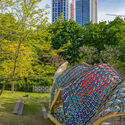
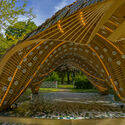
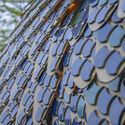
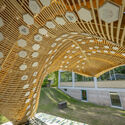
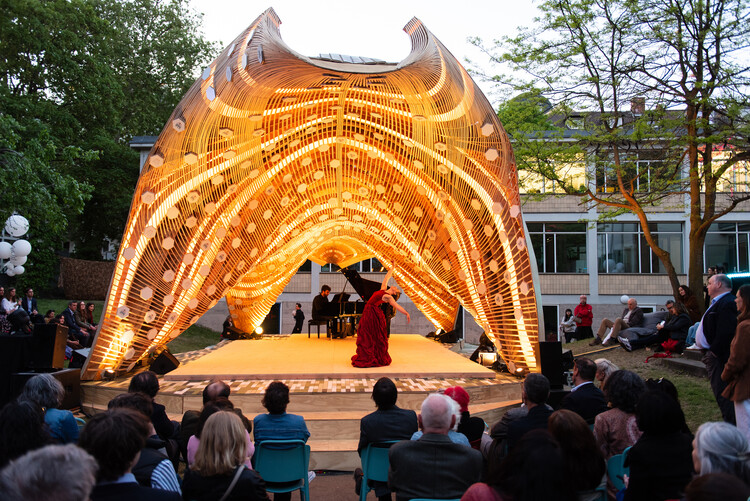
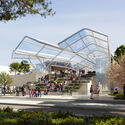
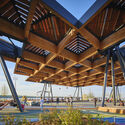
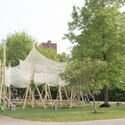
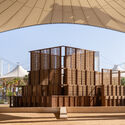
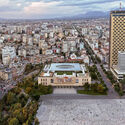
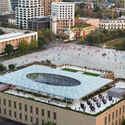
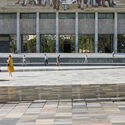
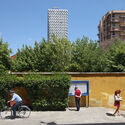
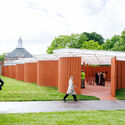
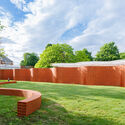
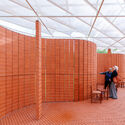
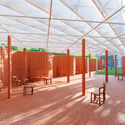
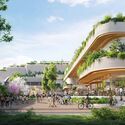
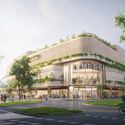
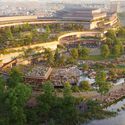
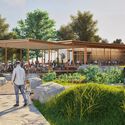
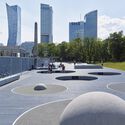
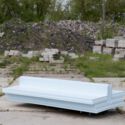
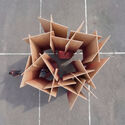
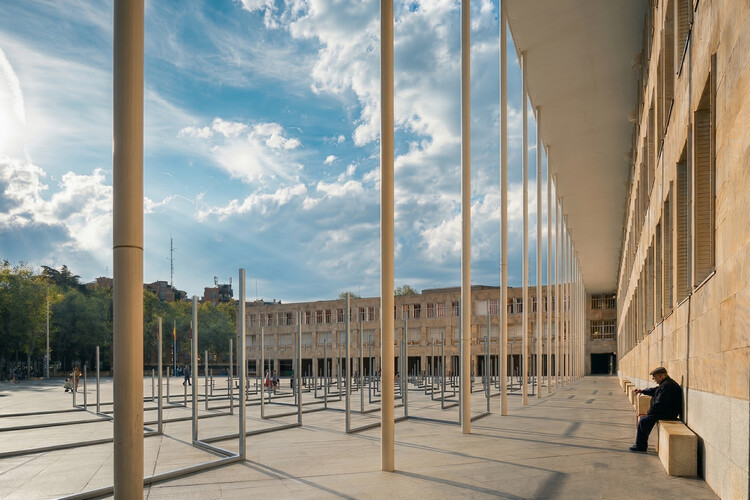
What happens when materiality becomes the driving force of design? How can a cultural infrastructure express its own identity? The Spanish Design Pavilion for World Design Capital Frankfurt Rhein-Main 2026 brings together the country's creative innovation to address contemporary challenges through a reinterpretation of Gaudí's architectural legacy. Conceived as a reversible cultural infrastructure, the project activates public space while expanding the conversation around material use, circularity, and reuse. Rather than reproducing historical forms, the pavilion adopts a contemporary, operational approach. It highlights collaboration among Spanish industry, design and culture,exploring structural and constructive principles rooted in geometry, material efficiency, and the relationship between form and system.
This week, architecture's cultural dimension took center stage through a series of new platforms, institutional developments, and public-facing projects that expand how the discipline is discussed, preserved, and experienced. From the announcement of participants for the inaugural Pan-African Biennale in Nairobi and the unveiling of Concéntrico Festival's urban interventions across Logroño, to the opening of La Biennale di Venezia's new archival headquarters at the Arsenale, architecture emerged as a vehicle for research, exchange, and collective reflection. Alongside these initiatives, projects such as the expansion of Crystal Bridges Museum in Arkansas and the opening of the 2026 Serpentine Pavilion demonstrate how cultural institutions continue to invest in new spaces for gathering and engagement. This week's selection spans Kenya, Spain, Albania, Saudi Arabia, Italy, Lebanon, the United Kingdom, and the United States, reflecting the diverse contexts in which cultural institutions, public events, and architectural initiatives continue to evolve.
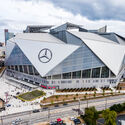
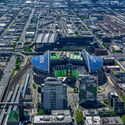
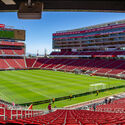
The FIFA World Cup 2026 will take place from June 11 to July 19, 2026, across North America, with matches hosted at 16 venues in Canada, Mexico, and the United States. For the first time, the tournament is being co-hosted by three countries: 11 venues in the United States, 3 in Mexico, and 2 in Canada. Since the 2018 FIFA Congress selected the venues to host the 2026 World Cup, the three North American countries have been working to deliver the tournament. This edition will be the first to feature 48 competing teams, expanded from 32. Unlike the 2022 Qatar World Cup, which required the construction of entirely new stadiums, the three host countries already have the necessary infrastructure in place, though several venues are taking the opportunity to upgrade their facilities, including Mexico City's Estadio Azteca, Arlington's AT&T Stadium, and Toronto's BMO Field.
https://www.archdaily.com/993287/explore-the-full-list-of-football-stadiums-for-the-2026-fifa-world-cup-in-united-states-mexico-and-canadaArchDaily Team
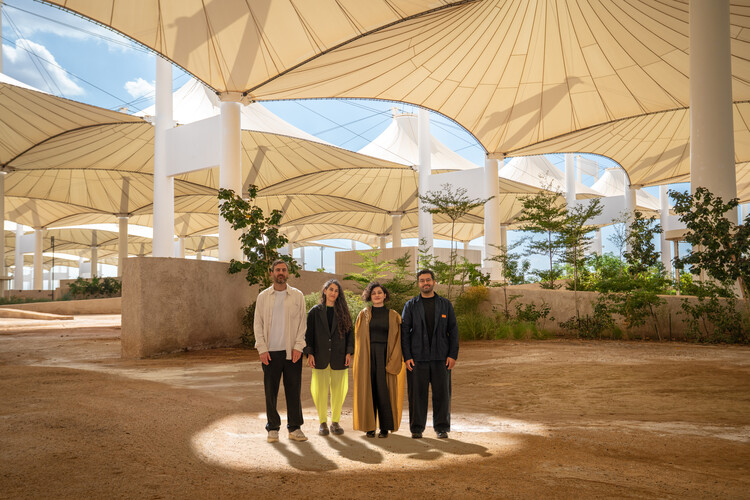
AlMusalla Prize 2027 - Group portrait, from left to right_ Jessam Al-Jawad (Al-Jawad Pike), Zeina Koreitem (MILLIØNS), Meriem Chabani (New South), Ali Ismail Karimi (Civil Architecture). Image Courtesy of Diriyah Biennale Foundation
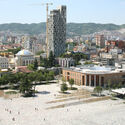
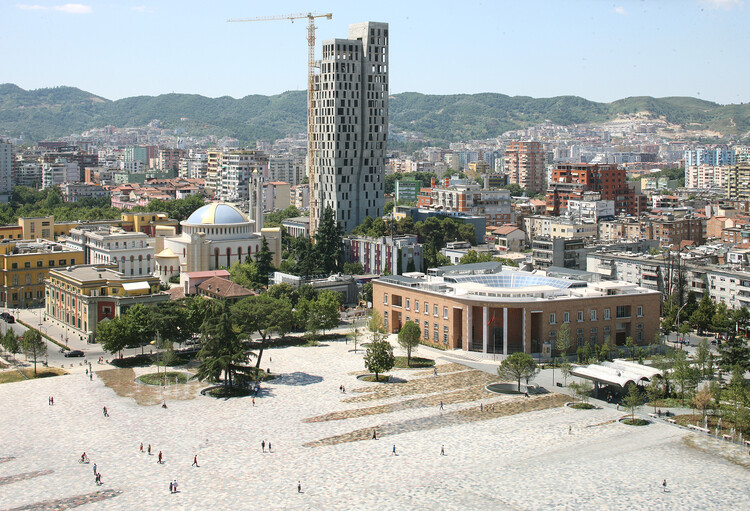
The second edition of The Bread & Heart Festival will be held in Tirana, Albania, from June 3 to 5, 2026. The annual event is organised by The Bread & Heart Foundation and co-curated with the NEWROPE Chair of Architecture and Urban Transformation at ETH Zürich. The Foundation's objective is to offer an open platform for dialogue on architecture, landscape, and development in Albania, a country undergoing rapid transformation and becoming one of the most active urban environments in Southeast Europe. The purpose of the event is to connect international figures from the architectural community, such as Francis Kéré, Jeanne Gang, Ma Yansong, and Sumayya Vally, with local practitioners, institutions, and a broader audience. As in 2025, the festival will take place at 51N4E's Book Building on Skanderbeg Square, bringing together participants under the theme "Landscapes of Abundance."
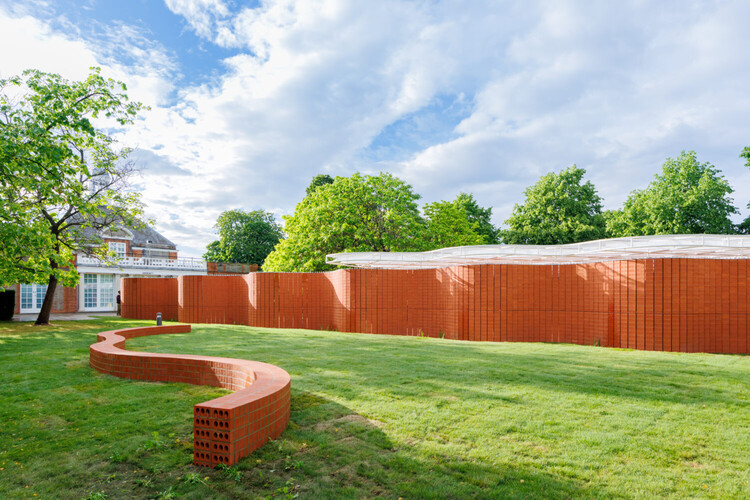
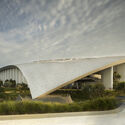
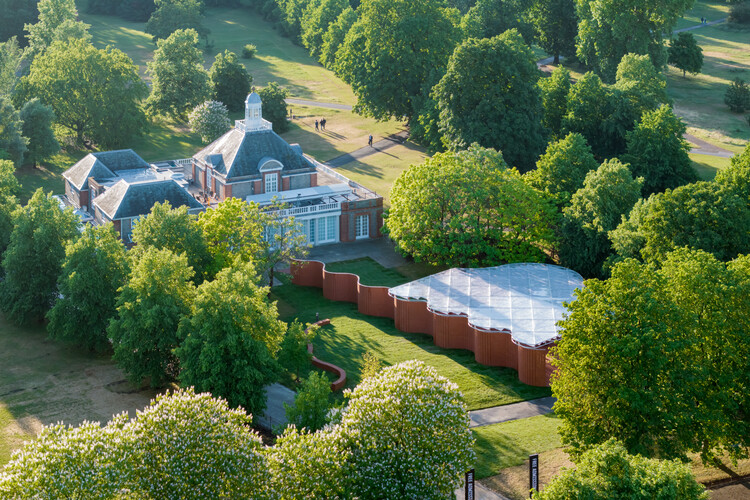
The 2026 Serpentine Pavilion, titled "a serpentine," designed by Mexico City-based architecture studio LANZA atelier, will open to the public on 6 June 2026 at Serpentine South in London. Newly released preview-days images show the completed structure ahead of its seasonal activation, which will run through 25 October 2026 and include Serpentine's annual programme of public events. Now in its 25th edition, the Serpentine Pavilion marks a milestone for the annual commission first launched in 2000 with Zaha Hadid's inaugural project. To commemorate the anniversary, Serpentine Galleries will also collaborate with the Zaha Hadid Foundation and the Architectural Association on a parallel programme reflecting on the Pavilion's legacy and its role in contemporary architectural discourse.
Traditional building solutions tend to work well in their respective contexts, as they have withstood hundreds of years of testing and improvements, and use techniques and materials available locally. Although globalization and the democratization of access to technology have brought more comfort and new opportunities to humanity, it has also led to the homogenization of solutions in the construction sector and a dependence on global supply chains for construction materials and components. This has also caused a rupture in how knowledge is passed on to new generations and, eventually, the disappearance of traditions.
In particular, the topic of passive cooling solutions for buildings is currently having a resurgence, with an effort to recover ancient techniques used throughout history in locations that have always had to deal with hot climates. This is even more evident due to the high energy costs imposed by artificial cooling, the global warming scenario, and mainly because, among the projections of population growth, a significant portion of megacities will be located in the predominantly hot climates of Africa and Asia. When we think about the future, is it possible to be inspired by the past and apply ancient cooling techniques to contemporary buildings?
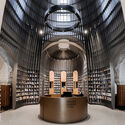
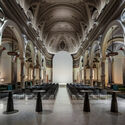
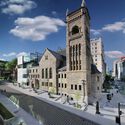
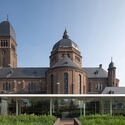
The conversion of disused religious temples through cultural programs constitutes one of the most compelling adaptive reuse strategies in contemporary urban planning. This functional compatibility seems to be rooted in the specific characteristics of churches: their central naves offer large-scale, clear floor plans and monumental cross-sections that easily accommodate the volumetric requirements of museums, theaters, or community hubs. Furthermore, the acoustic properties inherent to their vaulted ceilings, combined with intentional natural lighting filtered through stained glass windows or domes, create the spatial conditions for activities ranging from the performing arts to the exhibition of cultural artifacts. By assuming a public and cultural role, these buildings not only avoid demolition or physical abandonment but also preserve their status as urban and identity landmarks within the city fabric, revitalizing their immediate surroundings without altering their historical significance.
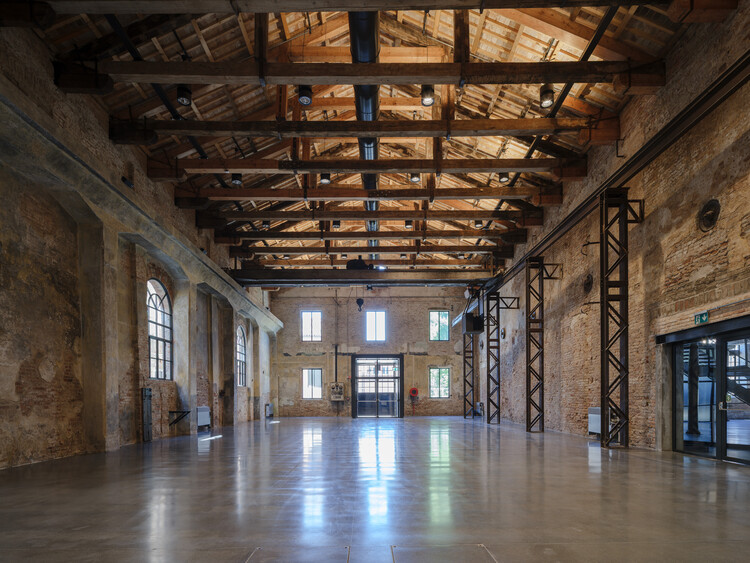
La Biennale di Veneziahas inaugurated the new home of its Historical Archive – International Centre for Research on Contemporary Arts at the Arsenale, relocating the institution's archival collections and research activities to a restored complex within one of its principal exhibition sites. The opening introduces a new permanent headquarters for the archive, bringing together facilities for conservation, research, public consultation, and cultural programming within the historic Arsenale. To mark the occasion, La Biennale organized a three-day program of performances, lectures, conversations, and public visits, highlighting the archive's role within the institution's broader ecosystem of exhibitions, festivals, and educational initiatives.
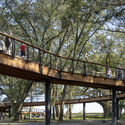
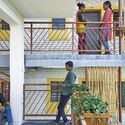
Most people rarely remember a passage. They remember the classroom, the apartment, the gallery, or the plaza at the end of it. Passages are usually designed to disappear into the background, guiding movement from one destination to the next. Yet some of architecture's most memorable experiences happen while moving through a place rather than arriving at it.
Circulation is often treated as one of architecture's most practical elements. Corridors connect rooms, galleries provide access, and walkways organize movement through a building. Their purpose seems straightforward: to help people get from one point to another. Because of this, circulation spaces have long been considered secondary to the programs they serve. Attention tends to focus on destinations, while the spaces in between remain largely unnoticed.
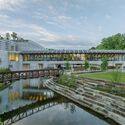
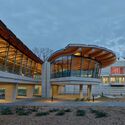
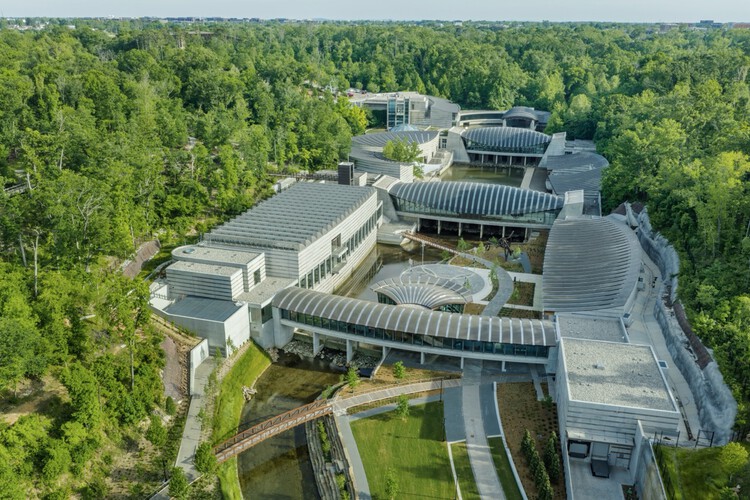
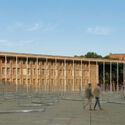
Crystal Bridges Museum of American Art in Bentonville, Arkansas, will open a major 114,000-square-foot expansion to the public on June 6–7, 2026. Designed by Safdie Architects, the project extends the museum's original architecture while introducing new galleries, educational facilities, public gathering spaces, and landscape connections across the institution's 134-acre campus. The addition represents the completion of a long-term development strategy for the museum, enhancing both its exhibition capacity and its engagement with the surrounding Ozark landscape.
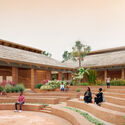
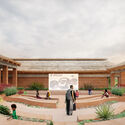
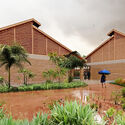
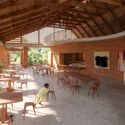
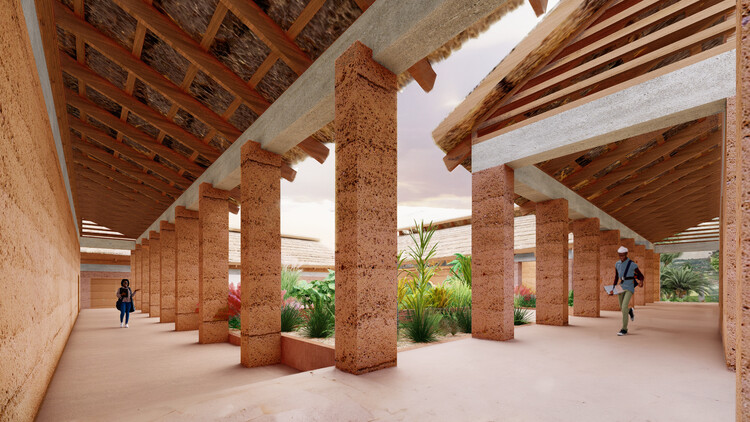
Designed by Studio NEiDA, The Falcon Cinema is a community and art centre located in Berekuso, Ghana, commissioned by film curator and Founding Director Jacqueline Nsiah. The cinema's mission is to create a home for cineastes to preserve Africa's cinematic legacy while hosting critical and creative thinking about contemporary filmmaking on the continent, designed and curated with a pan-African approach. The programme includes a 250-seat and a 150-seat screening room, a restaurant, an archive, communal spaces, an education hub, and an outdoor cinema. A second compound is planned for a future phase, to house living quarters for filmmakers in residence. Still in the design phase, the project started in 2024 and is expected to be completed in 2027.
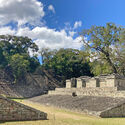
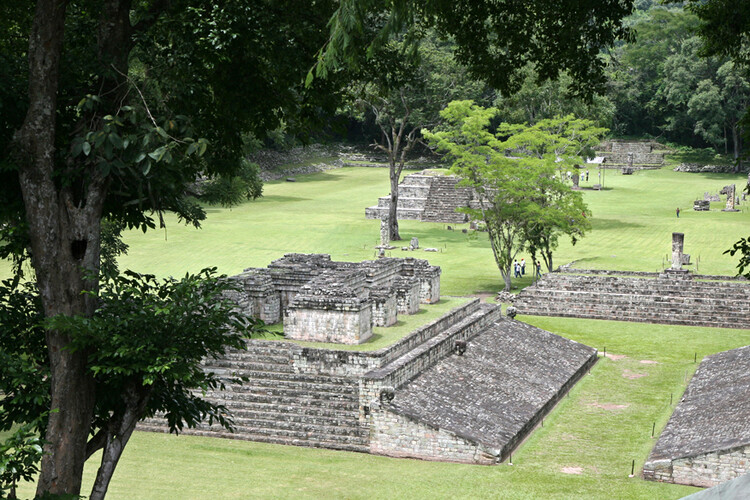
Deep in western Honduras, within a valley near the Guatemalan border, lies the ancient Maya city of Copán. Flourishing during the Classic period between the fifth and ninth centuries CE, the city developed as a regional epicenter through trade networks, dynastic politics, and monumental architecture. Today, the site is designated a UNESCO World Heritage Site due to its extensive architectural remains, including stepped pyramids, sculpted stelae, and ceremonial core. Over a century of systematic archaeological research has documented its urban morphology, revealing distinct residential districts, civic spaces, and systems of movement and visibility.
This analysis examines the spatial organization of Copán through the framework of urban theorist Kevin Lynch and "The Image of the City". By applying Lynch's five structural elements — edges, districts, paths, nodes, and landmarks — it is possible to analyze how Copán functioned not only as a ritual center but as a legible urban landscape designed to reinforce political hierarchy and regulate collective movement. Historical data for this analysis was taken from books and articles linked throughout the text, and was possible thanks to the collaboration of historian Arnulfo Ramirez de la Costa, professor and coordinator of the History program in the Department of History at the National Autonomous University of Honduras (UNAH) in Tegucigalpa.
How can the most structured elements in architecture give rise to unplanned forms of everyday life? "Spontaneous order" describes how structured systems can generate unplanned but coherent patterns of behavior. In urban discourse, it is often used to describe cities: frameworks of streets, plots, and buildings that are designed, while everyday life is not. Movement, encounters, routines, and informal uses emerge from simple spatial rules rather than explicit programming. In cities, this is visible in how sidewalks, stations, and thresholds operate. The structure is fixed, but the social order is fluid, setting conditions for behavior rather than defining it.
A similar logic can be observed in architectural micro-infrastructures such as locker systems. Like cities, lockers rely on structured frameworks that do not prescribe how life unfolds within them. A locker system is highly controlled in architectural terms: repetitive modules, strict grids, standardized dimensions, controlled access. Yet once in use, it produces spontaneous behaviors. People pause in corridors, return at irregular times, linger near locker zones, or briefly interact with others doing the same. What appears to be a strictly infrastructural storage system begins to generate informal social and spatial behavior.
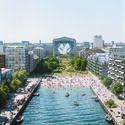
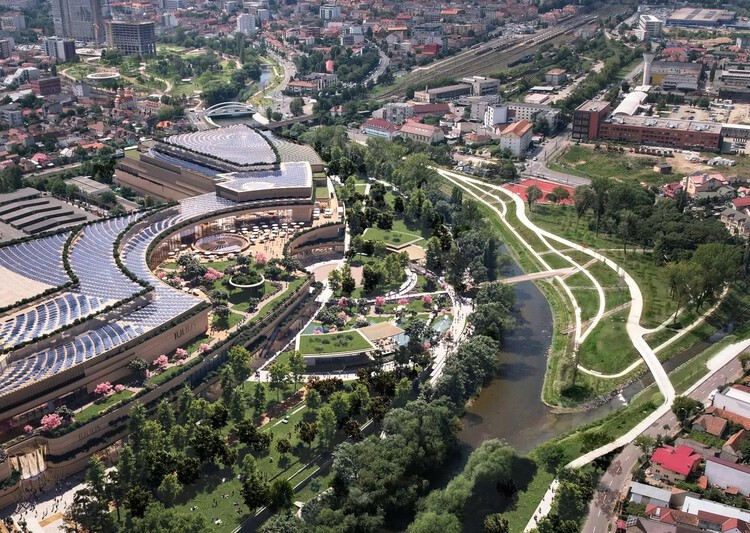
A former industrial site along the Someș River in Cluj-Napoca, Romania, is being transformed into a large-scale mixed-use district that reconnects the city with its waterfront. Designed by UNStudio in collaboration with Felixx Landscape Architects and Planners for developers IULIUS and Atterbury Europe, the RIVUS project combines urban regeneration, adaptive reuse, landscape design, and new public infrastructure within a single framework. Developed through a public participation process involving local residents, the proposal will transform the former Carbochim industrial platform into a river-oriented district organized around public space, mobility, and everyday urban activity.
Concéntrico Festival 2026 will take place in Logroño, Spain, from June 18 to 23, transforming the city into a large-scale laboratory for architecture, design, and urban experimentation. Over six days, more than twenty interventions will be distributed across squares, vacant plots, streets, bridges, and emblematic spaces throughout the city, bringing together leading studios, researchers, and creators from the international scene, including Chilean architect Smiljan Radić, the raumlabor collective, Matilde Cassani, AAU Anastas, and Sahra Hersi, among others. This edition introduces a shift towards more collective, festive, and performative practices in public space, with a strong emphasis on sonic experiences and projects linked to accessibility, inclusion, and urban transformation. The programme is structured around three thematic axes: Identity and Fiction, Urban Ecologies, and Ephemeral Agents, ranging from architectures that understand public space as ritual or celebration to experimental approaches exploring materials, sound, and processes of reuse.