1. ArchDaily
  2. Arne Jacobsen

Arne Jacobsen: The Latest Architecture and News

The Evolution of Gas Stations: From Roadside Stops to Architectural Landmarks

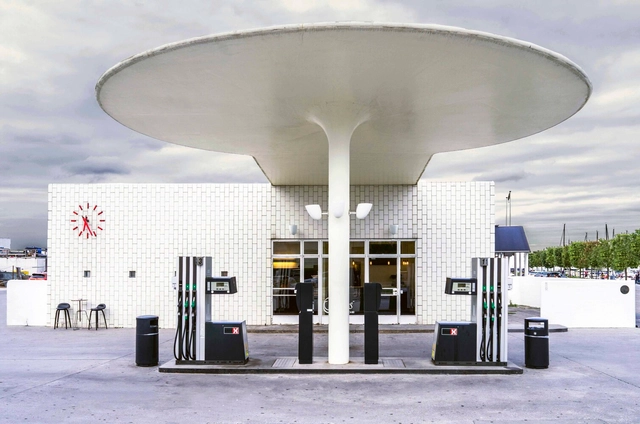
The gas station is an architectural typology that has undergone significant transformations since its inception. Initially, these structures were simple roadside refueling points designed for functionality rather than aesthetics. As automobile culture expanded, gas stations evolved to accommodate new technologies, shifting urban landscapes and changing consumer behaviors. Over time, they became more than just utilitarian stops — they developed into service hubs, integrating restaurants, motels, and leisure spaces, responding to contemporary transportation increasing demands.

By the late 20th century, however, the widespread standardization of gas stations led them to be perceived as "non-places", a concept defined by anthropologist Marc Augé to describe transient spaces that lack social or cultural significance. With uniform designs and a focus on efficiency, gas stations became interchangeable, reinforcing their role as purely functional infrastructure rather than meaningful architectural interventions. This standardization also departed from the era when fuel stations served as recognizable landmarks, contributing to a homogenized landscape devoid of local identity.

The Evolution of Gas Stations: From Roadside Stops to Architectural Landmarks - Image 1 of 4The Evolution of Gas Stations: From Roadside Stops to Architectural Landmarks - Image 2 of 4The Evolution of Gas Stations: From Roadside Stops to Architectural Landmarks - Image 3 of 4The Evolution of Gas Stations: From Roadside Stops to Architectural Landmarks - Image 4 of 4The Evolution of Gas Stations: From Roadside Stops to Architectural Landmarks - More Images+ 41

Open House Copenhagen Reveals Its Full Program

As one of the major signature events taking place in connection with Copenhagen as the UNESCO World Capital of Architecture in 2023, Open House Copenhagen has revealed more than 50 sites included in its program. The event represents an invitation for visitors to take a look inside iconic buildings that are typically only visible from the outside. Included in the list are examples of floating architecture on Refshaleøen, one of Arne Jacobsen’s masterpieces, along wth unusual spaces such as the interior of a power plant or an underwater passage tunnel. Open House Copenhagen takes place on the weekend of March 25–26 2023. The event is open for everyone and is free of charge, but registration is required.

Open House Copenhagen Reveals Its Full Program - Image 1 of 4Open House Copenhagen Reveals Its Full Program - Image 2 of 4Open House Copenhagen Reveals Its Full Program - Image 3 of 4Open House Copenhagen Reveals Its Full Program - Image 4 of 4Open House Copenhagen Reveals Its Full Program - More Images+ 12

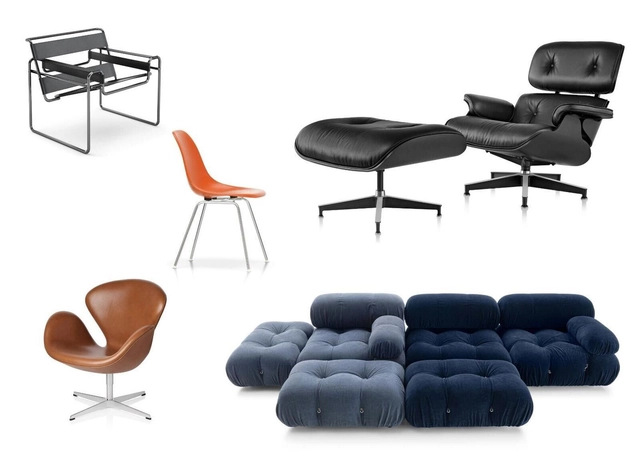
Styling Interiors with Design Icons: Eames, Breuer, Jacobsen, & Bellini

In a way, classic furniture is like a mixture between a work of art and a gold bar: it is a safe investment and can often even increase in value with age. In our second selection of design icons from the 20th century, we present Ray and Charles Eames, Marcel Breuer, Arne Jacobsen and Mario Bellini and some furniture pieces from the past century that remain more modern today than ever, in terms of not only design but also comfort. Find out more on the Architonic Platform.

Monumental Minds: Illustrations of Scandinavia’s Design Legacy

Subscriber Access | 

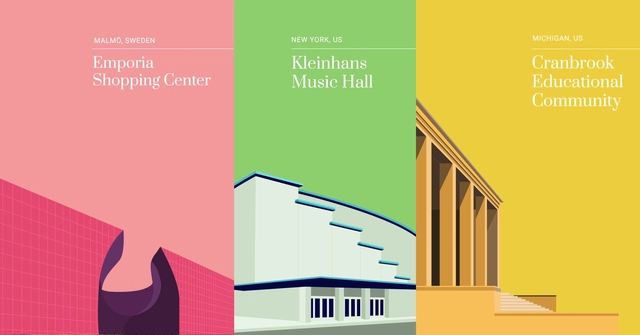
Not just meatballs and Vikings; Scandinavia has always been the epicentre of design across the world - just look at the growing impact of Bjarke Ingels and Ikea's future living lab SPACE10. To showcase their significant influence, Expedia has illustrated the works of four famous architects from Denmark, Finland, Norway and Sweden and how they shaped international architectural movements of the 20th and 21st centuries in a collection of posters called Monumental Minds.

Monumental Minds: Illustrations of Scandinavia’s Design Legacy - Films & ArchitectureMonumental Minds: Illustrations of Scandinavia’s Design Legacy - Films & ArchitectureMonumental Minds: Illustrations of Scandinavia’s Design Legacy - Films & ArchitectureMonumental Minds: Illustrations of Scandinavia’s Design Legacy - Films & ArchitectureMonumental Minds: Illustrations of Scandinavia’s Design Legacy - More Images+ 16

BIG, Jean Nouvel, and 5 Others Reinterpret Arne Jacobsen's Series 7 Chair

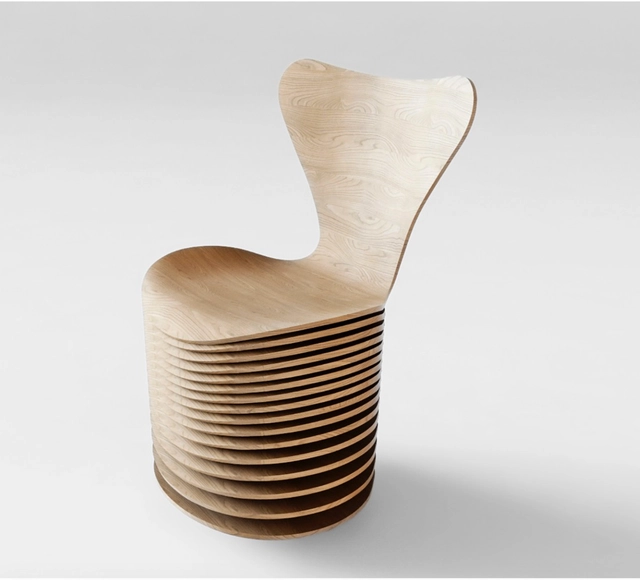
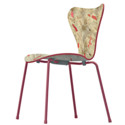
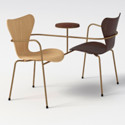
Sixty years ago Arne Jacobsen designed the Series 7 chair - the "Sevener." Unlike many other Jacobsen designs, the chair was not designed for a specific use, leaving it to interpretation. In light of the chair's 60th anniversary, Fritz Hansen commissioned "seven cool architects" - BIG, Zaha Hadid, Jean Nouvel, Snøhetta and three others - to recreate the chair. The results, after the break.

BIG, Jean Nouvel, and 5 Others Reinterpret Arne Jacobsen's Series 7 Chair - Image 1 of 4BIG, Jean Nouvel, and 5 Others Reinterpret Arne Jacobsen's Series 7 Chair - Image 2 of 4BIG, Jean Nouvel, and 5 Others Reinterpret Arne Jacobsen's Series 7 Chair - Image 3 of 4BIG, Jean Nouvel, and 5 Others Reinterpret Arne Jacobsen's Series 7 Chair - Image 4 of 4BIG, Jean Nouvel, and 5 Others Reinterpret Arne Jacobsen's Series 7 Chair - More Images+ 10