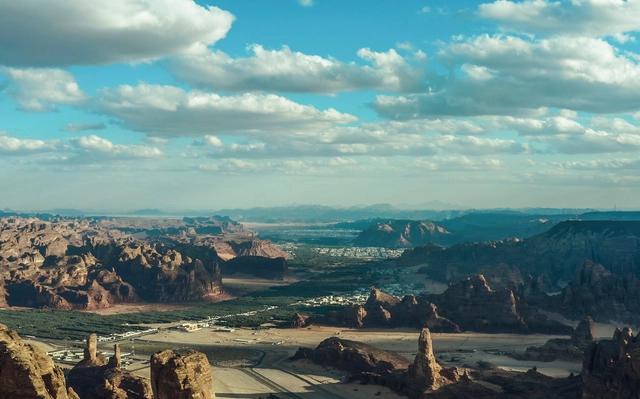
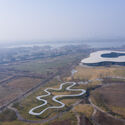
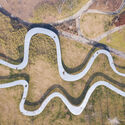
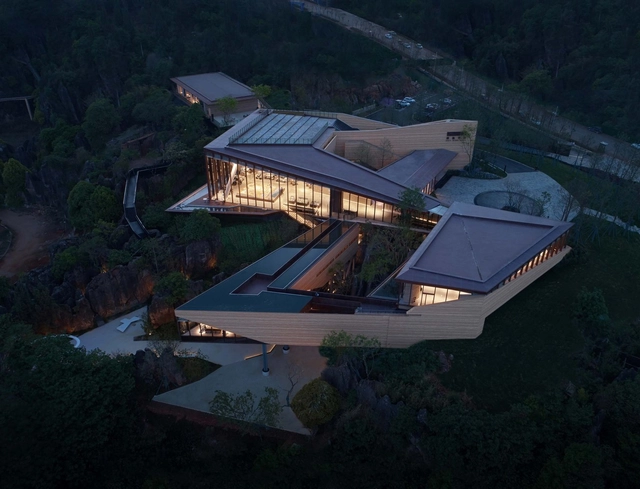
AlUla Oasis. Image Courtesy of Royal Commission of AlUla
The Centre Pompidou is an arts and culture institution that has been present in Paris since the late 1970s. It houses the Public Information Library, the largest museum for modern art in Europe, and a center for musical research. This month, the institution signed a partnership agreement to create a museum of contemporary art in Saudi Arabia with the Royal Commission of AlUla (RCU). Additionally, the establishment signed a similar partnership agreement to develop a modern and contemporary museum in Seoul, South Korea, with the Hanwha Culture Foundation.
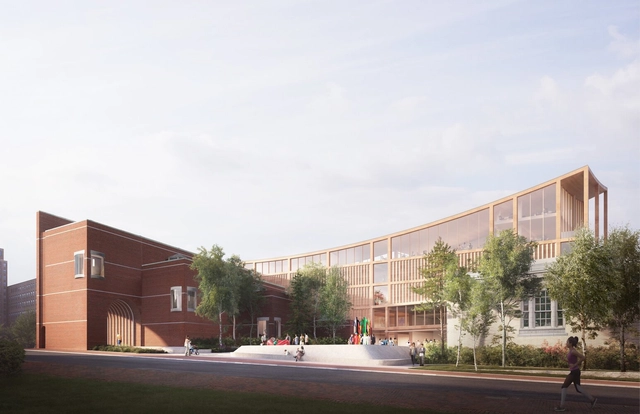
LEVER Architecture has been selected to lead the design team for the campus expansion of the Portland Museum of Art. The project aims to not only expand the existing campus but also to create a unified identity for the institution, one that ties together all the architecturally significant buildings on site. The winning proposal is primarily a mass timber structure inspired by Maine’s communities, history, and culture.
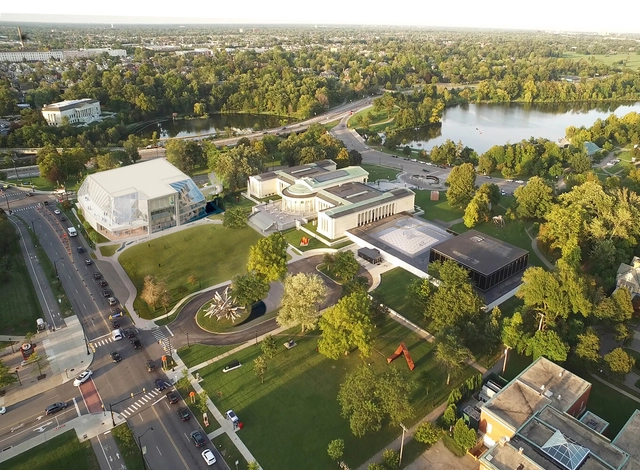
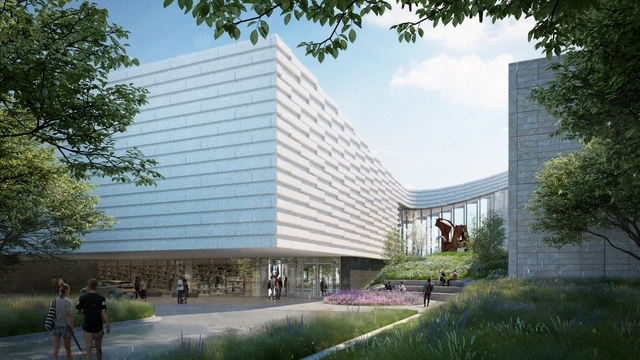
The Buffalo AKG Art Museum (formerly known as the Albright-Knox Art Gallery) has announced that it will welcome its first visitors on the 25th of May, 2023. Revamped and expanded, the new campus designed by OMA/Shohei Shigematsu in collaboration with Cooper Robertson features “new work of signature architecture, the Jeffrey E. Gundlach building, and extensive renovation to existing buildings”.
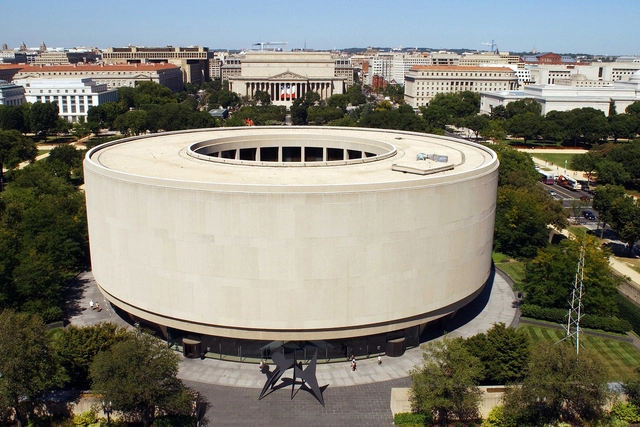
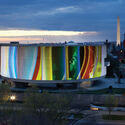
Hirshhorn Museum. Image Courtesy of Hirshhorn Museum
The Smithsonian’s Hirshhorn Museum and Sculpture Garden has selected Skidmore, Owings & Merrill and Selldorf Architects to jointly develop the modernization plan for the Hirshhorn Museum’s interior and plaza. As the first renovation in the last fifty years, the museum plans to upgrade its galleries and public spaces in order to fit the contemporary requirements of a public museum of modern art. It also represents a response to the increased attendance during the past five years. The federal contract was awarded following a competitive process by Smithsonian Facilities in consultation with the Hirshhorn. The concept design, to be submitted in 2023, will be subject to a public consultation process.
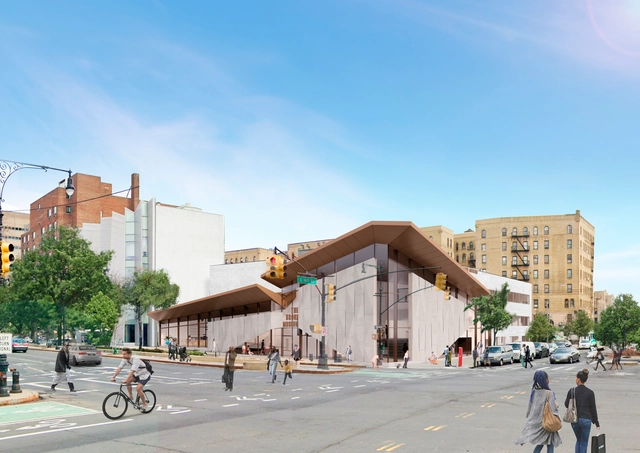
The Bronx Museum Renovation. Image Courtesy of Marvel Architects
New York-based firm Marvel revealed schematic designs for The Bronx Museum's new multi-story entrance and lobby, as part of the museum's revamp for its 50th anniversary. With a budget of USD $26 million and slated for completion in 2025, the renovation will relocate the access on the Grand Concourse Street, one of the most iconic The Bronx boulevards, and focus on the cohesion of the multiple sections for a fully accessible route through all of the galleries. Coinciding with this announcement, the Museum reinvented its brand identity and website for the first time in over two decades to reflect its ethos as a vital space at the intersection of art and social justice in New York City.
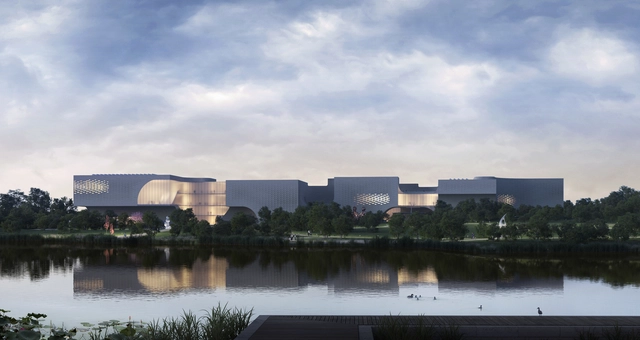
Ennead Architects has revealed the design for the Wuxi Art Museum in the historic port city of Wuxi, China. The competition-winning design proposes a new center for art and culture that builds upon the tradition of the Chinese gardens, a practice with a long legacy in the region. The complex is located in the Shangxianhe Wetland Park, a natural environment that informs and influences the museum experience. According to the designers, the architecture behind the Wuzi Art Museum is conceived as a Taihu Scholar Stone, a contemplative spatial structure sitting quietly in the broader natural context and inviting visitors to pause.
Museums play a critical role in preserving local cultures, promoting a better understanding of our collective heritage, and fostering dialogue, curiosity and self-reflection. In recent years –and largely driven by the Covid-19 pandemic– technological advances have enabled users from all over the world to visit exhibitions virtually, at any time and from the comfort of their own home. However, although online tours are a good way of increasing accessibility, there is something about the in-person museum experience that will never get old: the ability to witness, embrace and closely admire artefacts, paintings and sculptures in their true form, as well as the chance to experience the unique ambiance and essence of a traditional museum setting. Viewing the Mona Lisa virtually will never live up to appreciating it face-to-face at The Louvre, for instance.
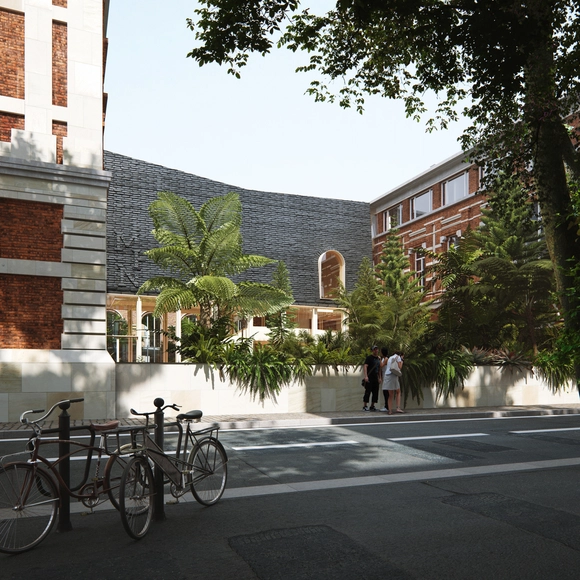
The Natural History Museum Of Lille in France will undertake a significant architectural transformation for its 200th anniversary. Snøhetta, selected to restore and modernize the complex, with a transdisciplinary team featuring the scenographer Adeline Rispal and the landscape architects of Taktyk, imagines a renovation that will support the city's ambition to combine urban renewal with the preservation of the city's historic architecture. Planned for completion in 2025 and with a total of 7,500 m², the restoration will accommodate flexible exhibition areas, more extensive storage, and gardens.
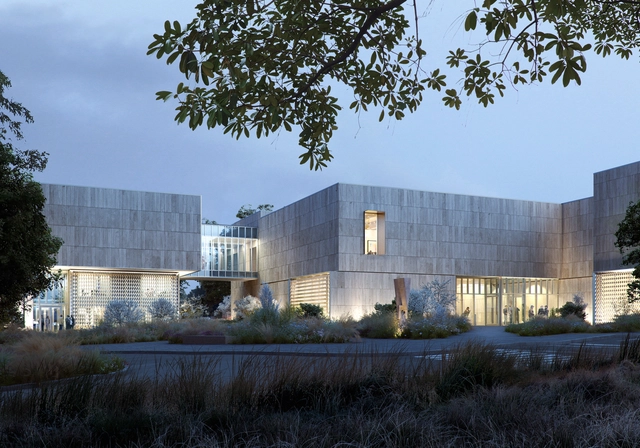
The construction of the new building of Palmer Museum has begun. Located at Penn State, USA, and scheduled to open in the spring of 2024, the new 6600 square meters complex will expand nearly double the space of the current gallery to host the growing collection of more than 10,000 pieces. The design features a series of pavilions, educational areas, and courtyards to boost accessibility to the art collections for students, staff, and the public. The construction aligns with the 50th anniversary of the museum along with a multitude of events, including the exhibition of Allied Works' pieces of the design process for the new Palmer Museum.
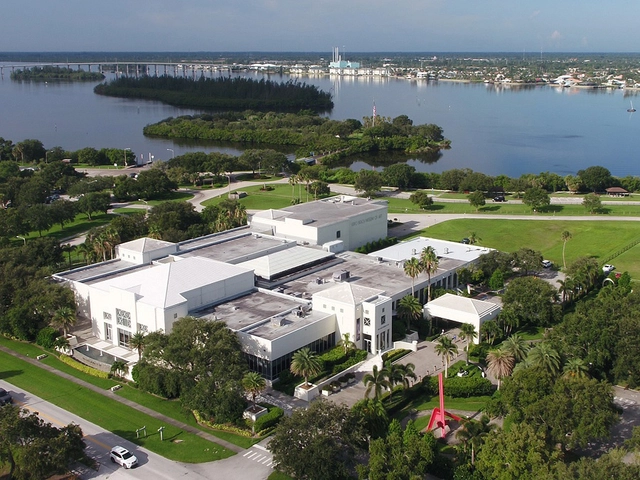
Vero Beach Museum of Art. Image Courtesy of Vero Beach Museum of Art
The Vero Beach Museum of Art (VBMA) in Florida has announced the appointment of Allied Works Architecture to lead the expansion and renovation project. The selection process took over nine months and it entailed a line-up of 13 national architectural firms and an eventual short-list. The winning design team will be led by Allied Works founder Brad Cloepfil and Principals Chelsea Grassinger and Gabe Smith. The expansion and renovation process is expected to be completed by 2026.
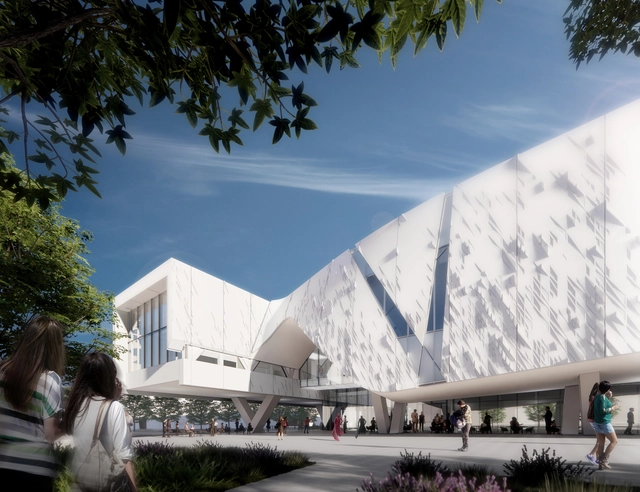
Rendering of Crow Museum of Asian Art at the O’Donnell Athenæum at UT Dallas, view of arrival and drop off from northwest. Image Courtesy of Morphosis Architects
The new arts campus, designed by global architecture and design firm Morphosis, has broken ground in Dallas, Texas. This marks the beginning of the first phase of construction for Edith and Peter O’Donnell Jr. Athenæum, a twelve-acre expansion of the University of Texas at Dallas (UT Dallas). The Athenæum complex will feature three main buildings: the Crow Museum of Asian Art (Phase I), a performance hall (Phase II), and a museum for the traditional arts of the Americas (Phase III). Phase I of the plan, the Crow Museum of Asian Art, is expected to be completed in 2024. The whole project is catalyzed by a $32 million donation from the O’Donnell Foundation.
This new cultural district, located at the southeastern edge of the UT Dallas campus, aims to become an arts destination for students, faculty, and the community. It also represents the latest milestone in a period of significant growth of the arts at UT Dallas, a school that had historically focused on science, engineering, technology, and business.
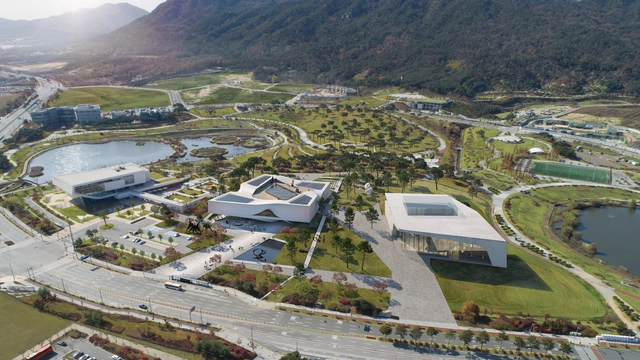
Fotografiska Museum has announced its expansion to three new locations in Berlin, Shanghai and Miami, to be housed within existing buildings redesigned by Herzog & De Meuron, Neri&Hu and Rockwell Group. A former department store in Berlin's Jewish Quarter, a 1946 factory building in Miami and a historically significant warehouse complex in Shanghai are the future Fotografiska venues set for completion in 2022 and 2023. Together with the existing locations in Stockholm, Tallin and New York, these will form the world's largest private art museum in terms of size, number of locations, and exhibitions per year.
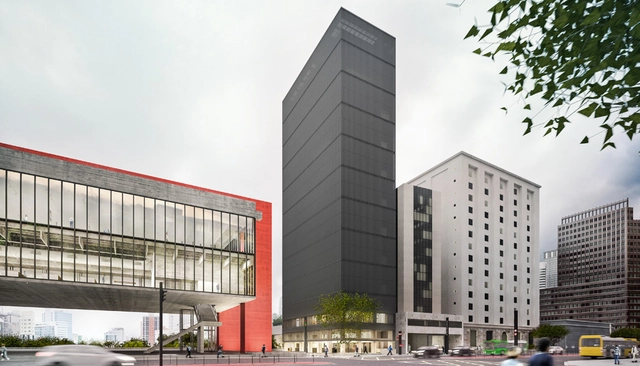
The Museum of Art of São Paulo - MASP will soon expand its facilities to include an annex next to the iconic project by Lina Bo Bardi. The 14-story Dumont-Adams building, which has been inactive for decades, has 7800 square meters and will be renovated to house exhibition wings, a café, a restaurant, and a restoration laboratory.
https://www.archdaily.com/967425/masp-to-receive-a-14-story-annex-on-paulista-avenue-designed-by-metro-arquitetosEquipe ArchDaily Brasil
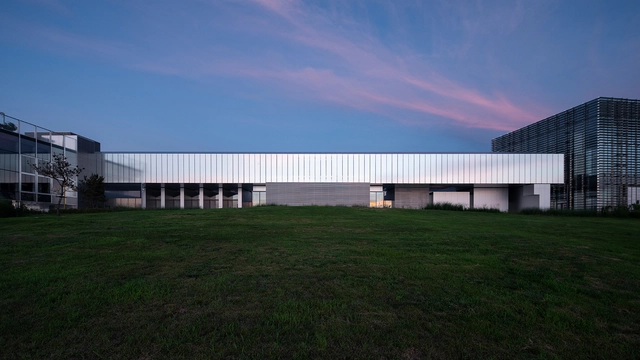
ACF has released a new series of images demonstrating the recently completed TAG Art Museum, designed by Ateliers Jean Nouvel, as part of the Artists’ Garden project collaborated with Shandong International Coastal Cultural Industry. The museum is located in the West Sea Bay in Qingdao, China. Strung along a covered promenade that weaves through planted gardens and woodland, running along the coastline towards a new marina, the structures consist of 12 interconnected exhibition halls.
Snøhetta has unveiled his latest project, the expansion and site redesign of the Joslyn Art Museum, in Nebraska. Developed in partnership with local architects Alley Poyner Macchietto Architecture (APMA), the project seeks to add new gallery space, public gardens, and outdoor spaces as well as restore and modernize existing office spaces in the Joslyn Memorial building.
UNStudio and South Korean design firm DA Group have been selected to design the Chungnam Art Museum in Naepo, South Korea. The proposal will provide an immersive cultural experience, with a strong focus on the interaction between art and the public. In addition to creating an assemblage of technology and art, the project will serve as a social anchor for the local community, a space defined by notions of flexibility and “art for all”.
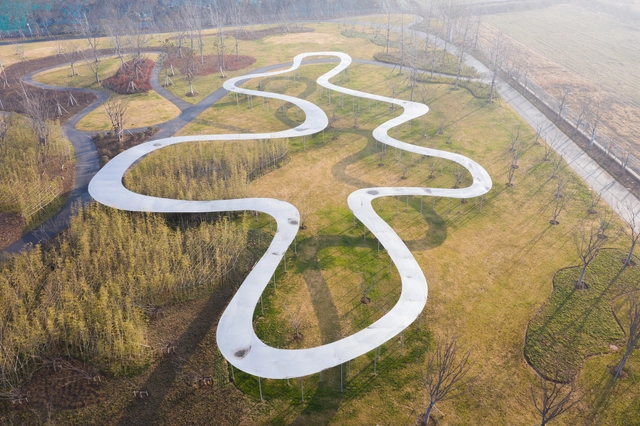
The Jining Art Museum, designed by Japanese architect Ryue Nishizawa in China’s Shandong province, merges architecture and landscape across three structures unified by a distinctive architectural language. Images by photographer Paulo dos Sousa showcases how the museum relates with the adjacent lake and the surrounding greenery while also highlighting how the main architectural gesture of the organically shaped roof creates a series of intermediary spaces that expand the museum’s activities outwards into the environment.
Ever since the period of the Renaissance in Europe, the indivisible relationship between art and architecture has long been heatedly discussed and vividly reflected in numerous classical books and buildings. With the deep connection that unites art and architecture together, designers, artists, and architects have been actively collaborating and came up with solutions on how we can house and exhibit art in the form of changing spaces.