1. ArchDaily
  2. Assemblage

Assemblage: The Latest Architecture and News

"Calibrated Instability": Daryan Knoblauch on Building With Tension, Time, and Light

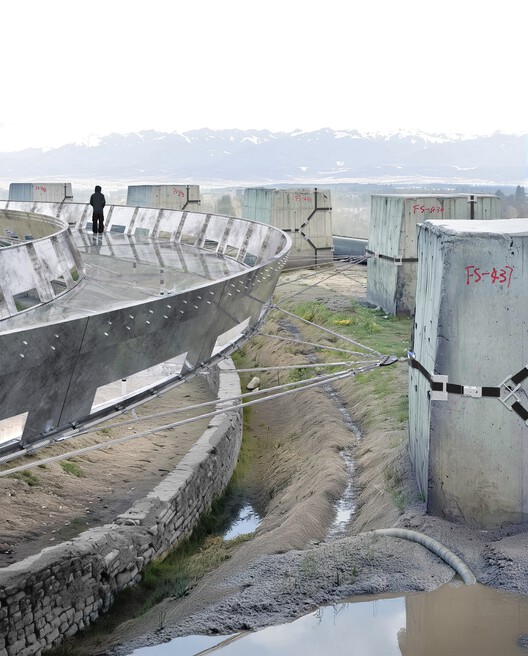
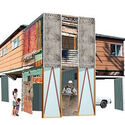
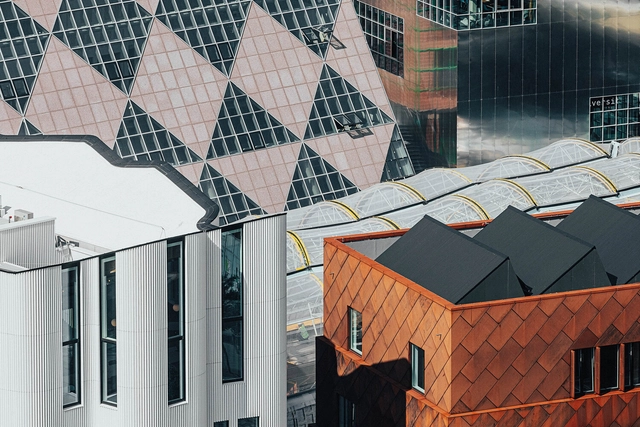
Daryan Knoblauch's work sits at the intersection of architecture and live cultural production, with a focus on how space is made legible through tension and atmosphere. Rather than treating temporary work as a lesser category of architecture, Knoblauch approaches installations, stages, and event architectures as full disciplinary problems—where enclosure, stability, light, and movement must be resolved with the same seriousness as any building, often under tighter constraints and faster timelines.

Across projects, a consistent thread is the productive tension between high-modern precision and an intentionally raw clarity of assembly. Membranes and lightweight systems are not deployed as surface effects, but as structural and spatial instruments—tuned to wind, load, and occupation, and calibrated to produce a sublimity that is felt as much as it is seen. Here, ephemerality is not simply a duration, but a design condition: temporality makes forces—weather, wear, performance—more visible, and demands an ethic of making that is both exacting and adaptable.

"Calibrated Instability": Daryan Knoblauch on Building With Tension, Time, and Light - Image 1 of 4"Calibrated Instability": Daryan Knoblauch on Building With Tension, Time, and Light - Image 2 of 4"Calibrated Instability": Daryan Knoblauch on Building With Tension, Time, and Light - Image 3 of 4"Calibrated Instability": Daryan Knoblauch on Building With Tension, Time, and Light - Image 4 of 4Calibrated Instability: Daryan Knoblauch on Building With Tension, Time, and Light - More Images+ 4

Concéntrico 2025: The Politics of Urban Presence

Subscriber Access | 

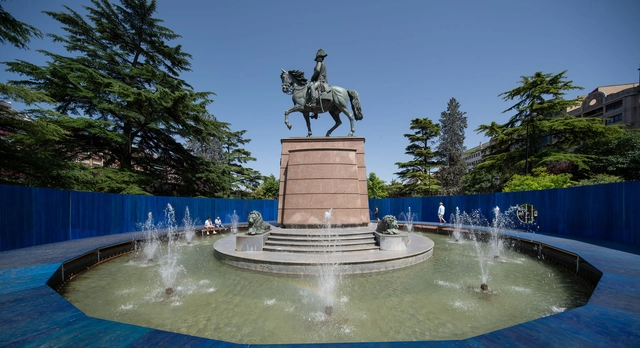
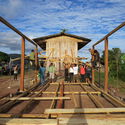
Every June, the Spanish city of Logroño transforms into a space of architectural dialogue, opening its streets, plazas, riverbanks, and traffic islands to temporary structures that redefine how cities are inhabited. For ten editions, Concéntrico has worked not as a specialized fair or an architecture biennale, but as a portable museum — a curatorial gesture that brings a dispersed collection of contemporary architecture into public space. Set in a city suspended between arid plains and distant mountains, far from the circuits of capital cities and cultural institutions, Concéntrico presents itself as a temporary promise. It's a reminder that even cities that are often overlooked can host architecture that is current, diverse, and speculative. In this sense, the festival is less about celebration and more about activation.

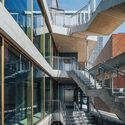
But beyond its curatorial logic, Concéntrico operates as a political structure. In the ancient sense of polis, it invites citizens, architects, and institutions to reassess what public space can be. The interventions offer speculative proposals for urban life that reveal what is missing, what is possible, and what should be questioned. A temporary pool over a fountain, a bathhouse in a roundabout, or a shared meal on a major avenue are not just spatial gestures — they are political statements, asking how urban infrastructure might be redirected from control to care, from efficiency to encounter. In that way, the festival becomes not just a reflection of the city, but an instrument for its transformation.

Concéntrico 2025: The Politics of Urban Presence - Image 1 of 4Concéntrico 2025: The Politics of Urban Presence - Image 2 of 4Concéntrico 2025: The Politics of Urban Presence - Image 3 of 4Concéntrico 2025: The Politics of Urban Presence - Image 4 of 4Concéntrico 2025: The Politics of Urban Presence - More Images+ 58

How Do You Design for Informality?

Subscriber Access | 

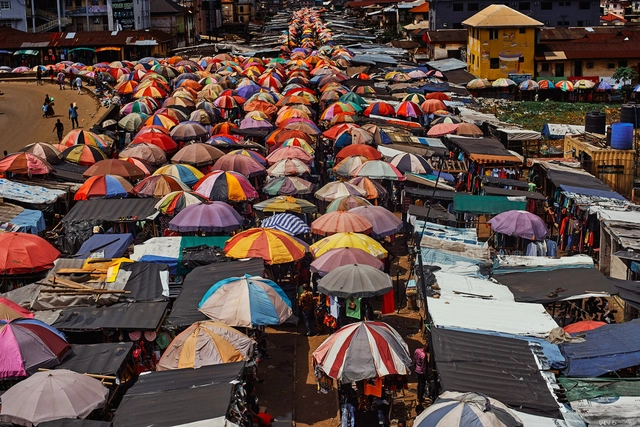
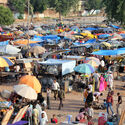
Informal architecture is the dominant mode of urbanization in rapidly growing and industrializing cities worldwide. In Delhi, the city with the largest population in India has half of its residents living in informal settlements. Lagos, with a population of over 22 million, also has 60% of its residents living in informal settlements. This pattern is also observed in Cairo, Johannesburg, Kinshasa, and other cities in the global south that face similar challenges of inequality and housing shortages. As their population grows and urbanization progresses, the exploration of informal architecture schemes to address the demand for affordable housing and basic services will only increase. While the primary purpose of design is to provide structure, lessons from informal architecture offer insights into how architects can respond to such schemes.

How Do You Design for Informality? - Image 1 of 4How Do You Design for Informality? - Image 2 of 4How Do You Design for Informality? - Image 3 of 4How Do You Design for Informality? - Image 4 of 4How Do You Design for Informality? - More Images+ 3

The New Home of Creative Industries, London's Design District Opens It Doors to the Public

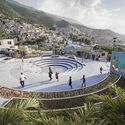
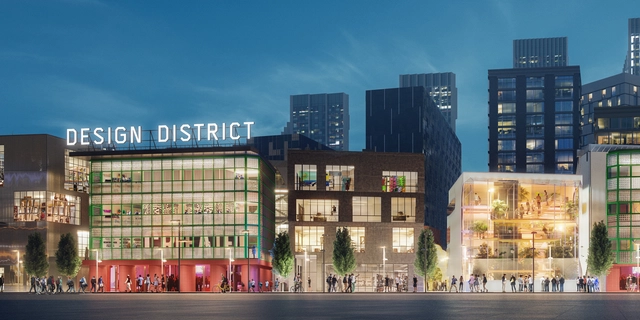
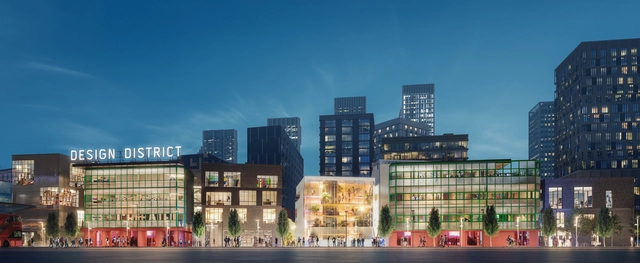
London’s Design District, the new purpose-built creative hub at the heart of the Greenwich Peninsula, opened its doors to the public and is set on becoming a prominent destination for the city’s creative community. Comprising 16 buildings designed by a collective of eight renowned architectural studios and with landscaping by Schulze+Grassov, the project aims to gather startups, artists and entrepreneurs across many industries, generating a vibrant new neighbourhood.

The New Home of Creative Industries, London's Design District Opens It Doors to the Public - Image 1 of 4The New Home of Creative Industries, London's Design District Opens It Doors to the Public - Image 2 of 4The New Home of Creative Industries, London's Design District Opens It Doors to the Public - Image 3 of 4The New Home of Creative Industries, London's Design District Opens It Doors to the Public - Image 4 of 4The New Home of Creative Industries, London's Design District Opens It Doors to the Public - More Images+ 17

New Visuals of London’s Upcoming Design District Released

The developers of Design District have released new visuals of the future creative hub at the heart of Greenwich Peninsula. Designed by a collective of eight well-renowned architectural studios, and with landscaping by Schulze+Grassov, the project aims to gather together startups, artists and entrepreneurs across many industries, generating a new creative neighbourhood for London.

8 Emerging Architects Create an Unexpected Playful Contrast for Greenwich's Design District

The Greenwich Design District is the next phase in London's largest single regeneration project - a new creative hub providing affordable workspaces and studios. Eight up and coming architecture practices have 'blindly' designed two buildings each, independently from one and other. The result is an amalgamation of 'architectural anarchy' and a 'neighborhood of playful contrasts.'

Urban developers Knight Dragon are coordinating the entire development of Greenwich Peninsula, celebrating the diversity of art, design, technology, music, and food industries that this innovative district will be the home of. The mix of architecture stays true to the ideals of the district, presenting a provocative front of 'unexpected contrasts' brought together by the same natural paving throughout the pedestrianized quarter designed by Schulze+Grassov to encourage communication and interaction between the public.

Zaha Hadid Officially Signed Up For Iraq Parliament Job

Zaha Hadid has now officially signed a deal to design the Iraq Parliament building in Baghdad, despite only coming third in the original design competition. BD Online reports that Hadid attended a signing ceremony held at the Iraqi Embassy in London last month, finally bringing a close to the controversial process.

The original competition run by the Royal Institute of British Architects at the request of the Iraqi Government was won by Assemblage, however shortly after the win it became apparent that the Iraqi Council of Representatives had other ideas, as they remained in discussion with Hadid's Practice. Under the rules of the competition, the client is under no obligation to follow through with the winning design.

More on the controversy after the break

Assemblage Wins Iraqi Parliament Competition

Subscriber Access | 
Assemblage Wins Iraqi Parliament Competition  - Image 3 of 4
© Assemblage

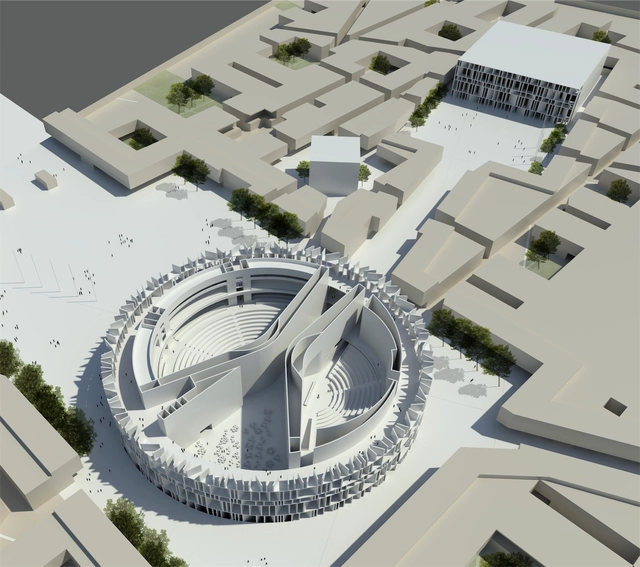
Assemblage has succeeded against a prestigious shortlist – which included Zaha Hadid Architects, Capita Symonds, Fevre Gaucher and ADPI – in an international competition for the new Iraqi parliament complex in Baghdad. The $1Bn USD project challenged contestants to design a new, large scale complex amidst the remnants of a partially built super mosque planned by Saddam Hussein (photos of the existing site here).

The London-based practice will be awarded $250,000 USD and asked to produce a master plan for the surrounding city, as well as additional government buildings, a new hotel and public parks. The anonymous jury plans to exhibit the submitted projects, along with the judging committee’s decision. However, a date has yet to be announced.

Continue after the break for more images and the architects’ description.

Assemblage wins competition for Economic Housing in Iraq

Subscriber Access | 
Assemblage wins competition for Economic Housing in Iraq - Featured Image
Economic Housing in Iraq - Courtesy of Assemblage

The London-based firm Assemblage has won the United Nations HABITAT international architecture competition for the design of new housing in Iraq. The competition is part of a larger program by UN-HABITAT and the Iraq government to construct new housing across the country. After succeeding teams from the Netherlands, France and other Arab states, Assemblage plans to refine their proposal and prepare their design for construction sometime within this year. Continue reading for more details on the project.