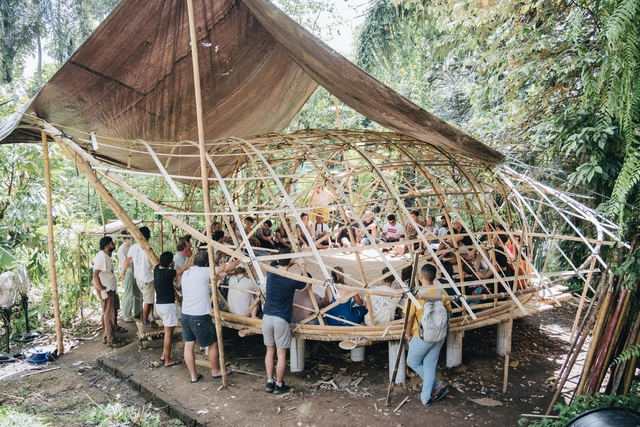
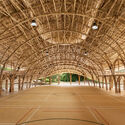
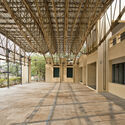
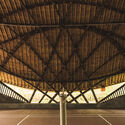
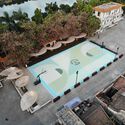
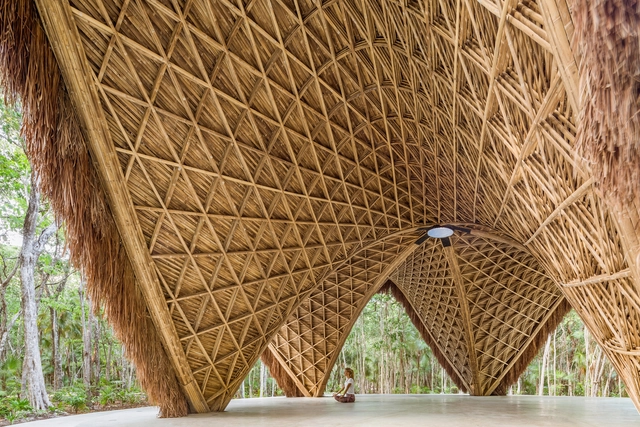
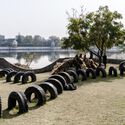
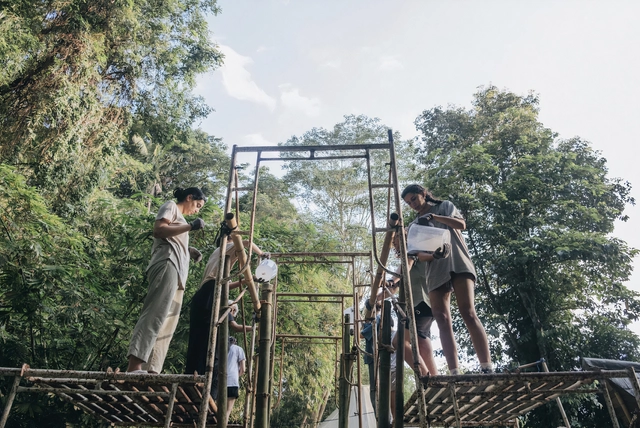
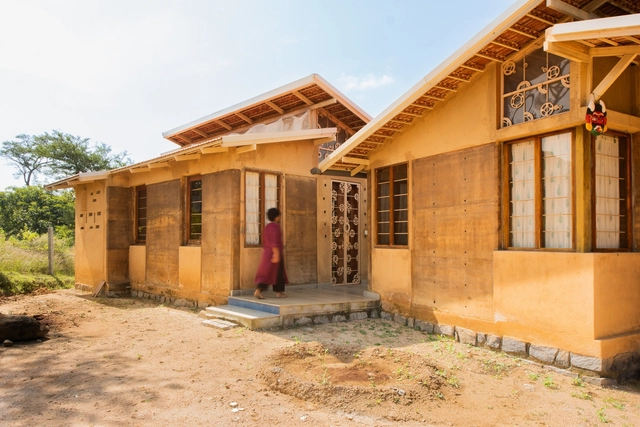
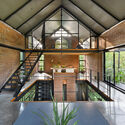
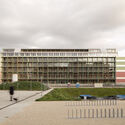
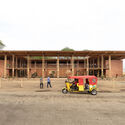
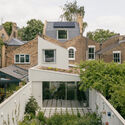
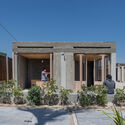
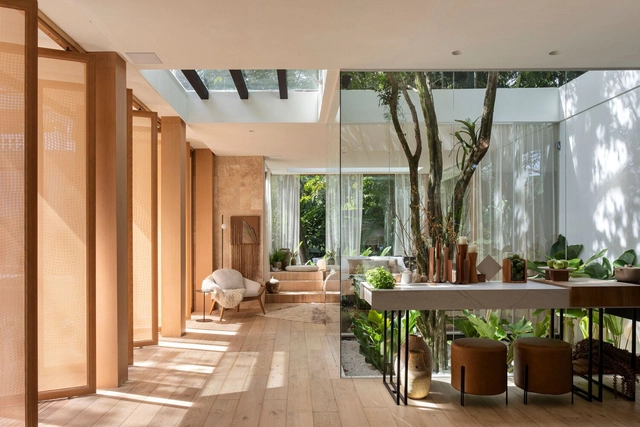
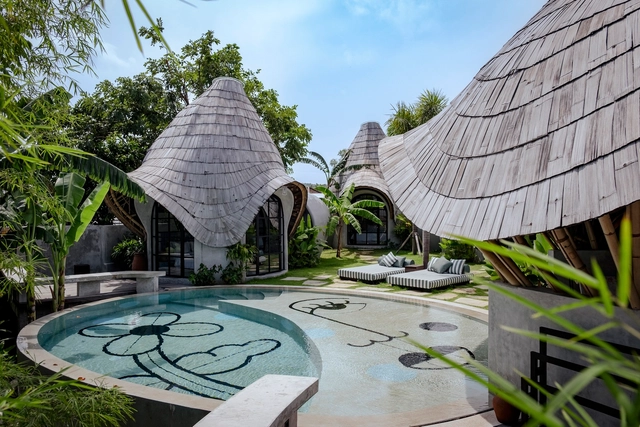
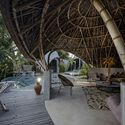
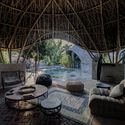
The Kul Kul Farm was born with the purpose of sharing knowledge of how to design, build, grow, make, and create with nature in mind. Promoting values that respect and care for the Earth while strengthening community bonds, the farm has become a beacon of sustainability and connection with the natural environment. In 2015, Maria and Orin started this project with the intention to inspire and empower both local Balinese and tourists to live a life more connected to the natural world. Although they initially promoted their values through permaculture, they soon realized the world was ready and hungry for the knowledge, skill, and inspiration to design homes and spaces connected to nature, and a whole new movement had started to grow in their own backyard—the bamboo movement.
https://www.archdaily.com/1019173/the-kul-kul-farm-and-bamboo-u-empowering-people-to-build-a-better-world-with-bambooMaría Clara Falquez
Architecture is about passion, that often turns into a lifelong journey of discovery. From places, materials, techniques, style or programs, through our interview series we’ve uncovered individual stories that show the many facets of architecture. One of our focuses has been in Indonesia, where we’ve found a new generation of architects dealing with the challenges of one of the world’s largest countries, driving innovation connected to an ever present nature and particular culture.
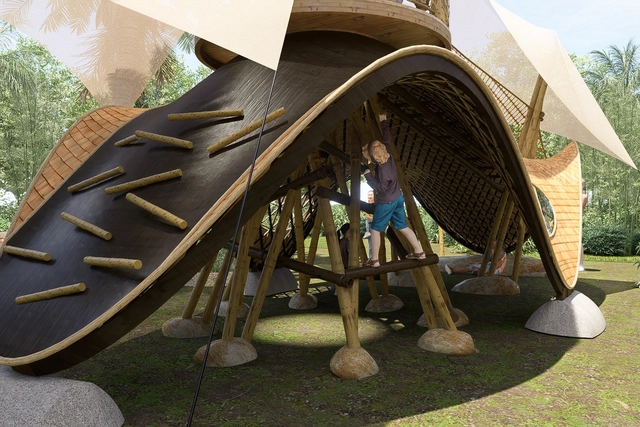
Early this year, Bamboo U and IBUKU launched The Bamboo Playground Design Contest, inviting architects, designers, and creative minds to submit innovative proposals for a sustainable and visually captivating playground for children exclusively constructed using bamboo. The aim of this contest was to explore the versatility of bamboo as a construction material, showcasing its potential for sustainable, aesthetically pleasing, and functional designs.
Bamboo U is an education enterprise that has grown out of the center of the world's bamboo-building movement in Bali, Indonesia. Together with renowned design firm IBUKU, they have been pioneering bamboo architecture for 10+ years, sharing everything they know about bamboo design and sustainable architecture.
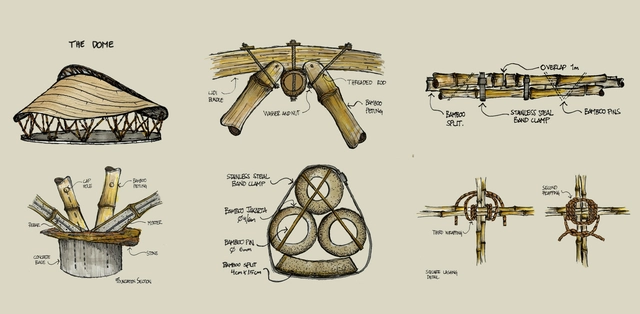
Through the analysis of an innovative bamboo grid structure created using augmented reality by architects Kristof Crolla and Garvin Goepel in August 2023, we delve into the intricate world of bamboo architecture, focusing on its application in dome structures through a series of detailed illustrations that uncover the depth of this sustainable material's capabilities.
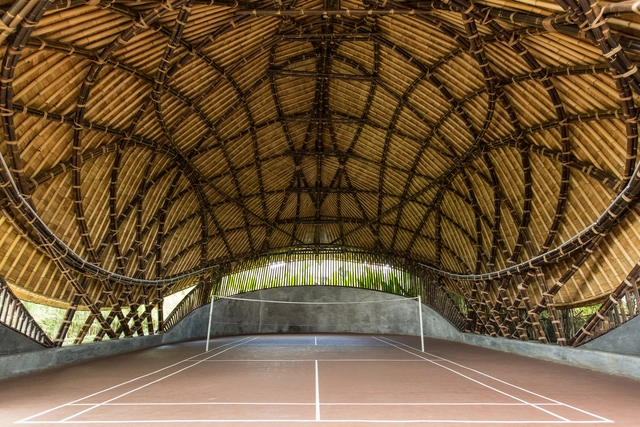
As awareness of sustainable development grows, bamboo is emerging as an attractive alternative to traditional construction materials. This innovative material is making significant inroads in the construction of sports facilities, showcasing how sustainable practices can shape a greener future.
Bamboo stands out as an eco-friendly substitute for wood, concrete, and steel. Its application in sports facility construction markedly reduces environmental impact and enhances sustainability. The use of locally sourced bamboo in certain regions further decreases carbon emissions associated with transportation. The advantages of bamboo extend beyond its environmental benefits. This material is not only strong and durable but also lightweight and flexible, making it ideal for modern construction demands.
Within this scope, much is said about the different vernacular techniques employed in architecture, whether it is the production of adobe bricks, thatched roofs, woven bamboo walls, among many others. However, while vernacular technique focuses on specific actions or skills, its meaning differs from vernacular technologies.
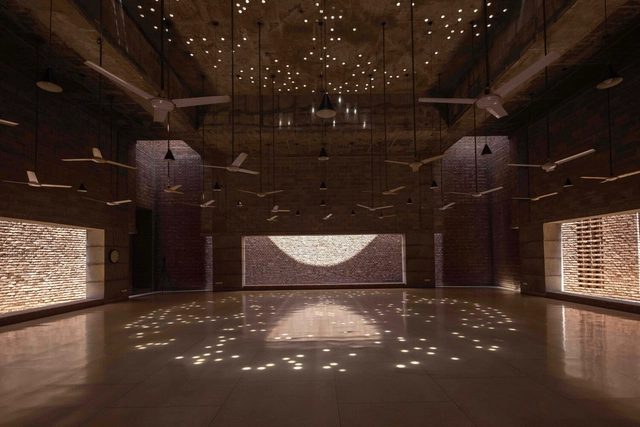
In her Dhaka, Bangladesh–based practice, Marina Tabassum seeks to create a language of architecture that’s simultaneously contemporary yet rooted to its place. One of the first buildings she undertook after establishing her own practice in 2005—the Bait Ur Rouf Mosque in her own city—won an Aga Khan Award for Architecture, which recognizes design that addresses the needs and aspirations of Muslim societies.
Bangladesh’s Museum of Independence, which she designed with her former partner, Kashef Mahboob Chowdhury of the practice URBANA, has become a national landmark. But Tabassum also works at the intimate scale of housing, pursuing innovative modular space-frame designs constructed of bamboo. She’s taught at architecture schools around the globe. Recently, she was recognized with an award from the Architecture, Culture, and Spirituality Forum and identified by Time magazine as one of the 100 most influential people for 2024 for her work in sustainable, socially responsible design.
https://www.archdaily.com/1017460/light-empathy-and-silence-the-architecture-of-marina-tabassumMichael J. Crosbie
The opening scenes of the award-winning Brazilian film "City of God" (2002) portray a newly constructed housing complex situated on the outskirts of Rio de Janeiro. Subsequently, this complex evolves into a hub of poverty and violence. Despite the film being set in the 1960s, the housing development depicted was a recent construction.
This choice made no difference because, despite the 40-year difference between the depicted era in the film and the time of filming, the architectural solutions employed by housing programs in the country remained stagnant. They continued to replicate outdated models, showcasing a lack of progress in the sector.
“The Mindfulness City will be a sustainable city. To be mindful is to be aware — to perform best,” said Giulia Frittoli, partner and head of landscape at BIG. The Kingdom of Bhutan is a landlocked Buddhist country in the eastern Himalayas, nestled between China and India. It covers 14,000 square miles and has a population of nearly 800,000.
The Royal Office of Bhutan asked BIG, Arup, and Cistri to develop a plan for a new Mindfulness City in Gelephu in southern Bhutan, near the border with India. The city will span 386 square miles and include a new international airport, railway connections, hydroelectric dam, university, spiritual center, and public spaces.
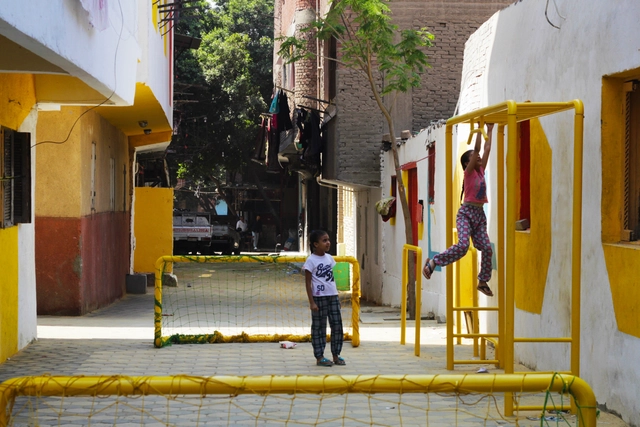
The idea of a community or public playground is about creating an accessible recreational space for all. However, in many cases, initiating a playground project might fail due to insufficient funds or regulations/restrictions. The first challenge is largely to set the project in motion and, most importantly, get the community’s positive reception and, if possible, its involvement, thus ensuring the project's success and sustainability.
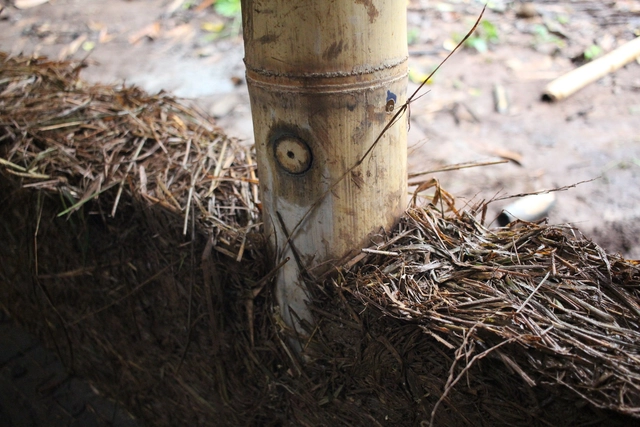
Bamboo, renowned for its strength and eco-friendliness, often faces a formidable adversary: insects and fungi. Despite its resilience, these pests can compromise its durability over time. However, there exists a simple yet effective solution to bolster bamboo's longevity and sturdiness. In this article, we unveil the Vertical Soak Diffusion (VSD) method—a budget-friendly approach that ensures your bamboo projects stand the test of time.
In recent years, India has seen a resurgence of interest in natural building materials, a movement driven by escalating environmental concerns and a growing desire to revive traditional lifestyles. From the busy streets of Mumbai to the serene villages of Kerala, architects, builders, and communities are coming together to experiment with the potential of earth, bamboo, lime, and other organic materials in shaping contextually relevant structures that also embody India's contemporary ideals. The shift towards using natural materials and other vernacular resources reflects a movement towards sustainability and a deeper connection with nature.
A building’s materiality is what our bodies make direct contact with; the cold metal handle, the warm wooden wall, and the hard glass window would all create an entirely different atmosphere if they were, say, a hard glass handle, a cold metal wall and a warm wooden window (which with KTH’s new translucent wood, is not as absurd as it might sound). Materiality is of just as much importance as form, function, and location—or rather, inseparable from all three.
Here we’ve compiled a selection of 16 materials that should be part of the design vocabulary of all architects, ranging from the very familiar (such as concrete and steel) to materials that may be unknown to some of our readers, as well as links to comprehensive resources to learn more about many of them.
By recognizing and analyzing the multiple architectural possibilities of bamboo—a construction material mostly native to warm and tropical areas—the following questions arise: How can we take advantage of its qualities and enhance its use in colder climates? Such regions necessarily require a certain level of thermal isolation in walls, floors, and roofs—but for these climates, we can combine bamboo with materials that complement it.
We spoke with Penny Livingston-Stark, a designer and professor of permaculture who has worked for 25 years in the field of regenerative design based on non-toxic natural materials, to understand the opportunities offered by combining bamboo with earth.
The ArchDaily projects library is managed by our curators who constantly seek to populate our stream with the most interesting global works, showcasing evolving focuses and criteria. While we usually share our reader’s top 100 favorites, this year, we also decided to initiate our editor’s picks on the ArchDaily Instagram account, where our curators highlight some projects that include interesting themes and unique traits.
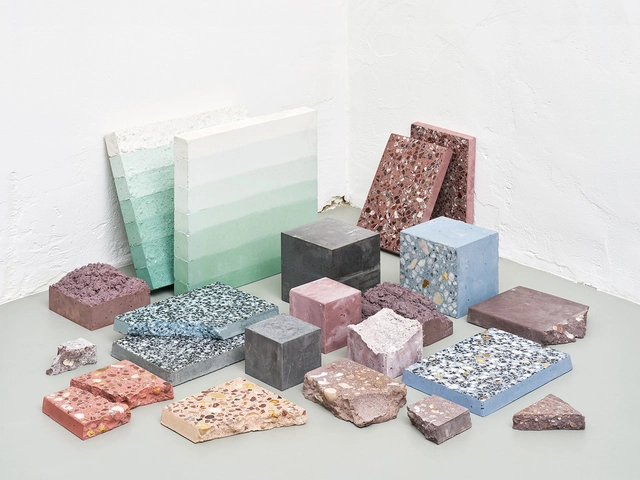
Amid the ongoing environmental crisis, bioeconomy has gained significance across different domains, particularly in the construction sector, where efforts there is a push to enhance sustainability. This shift in mindset has also influenced the realm of interior architecture. With a growing awareness of climate change and the imperative to protect our planet, architects and designers are increasingly embracing biomaterials. The result is the creation of spaces that not only captivate visually but also demonstrate a proactive commitment to the environment.
Architecture is a lifelong journey in constant evolution, where passion, learnings, collaboration and the unexpected shape your career.
In the inspiring context of Bali we meet Javi Diaz, Spanish architect who has been on such a journey, that took him from Spain to Portugal, Brazil, Fiji and then Indonesia, where he has developed the unique Bandido Bali project – an architectural destination embedded into the lush nature of Bali, and connected with its culture.