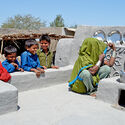
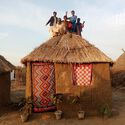
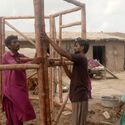
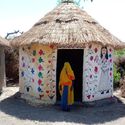
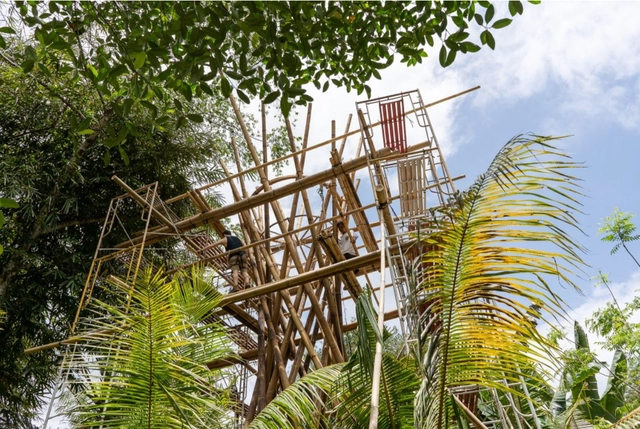
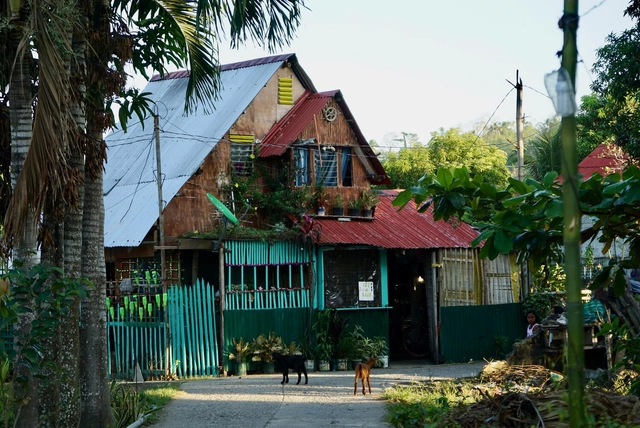
Pono Colony - August 2022. Image Courtesy of Heritage Foundation of Pakistan
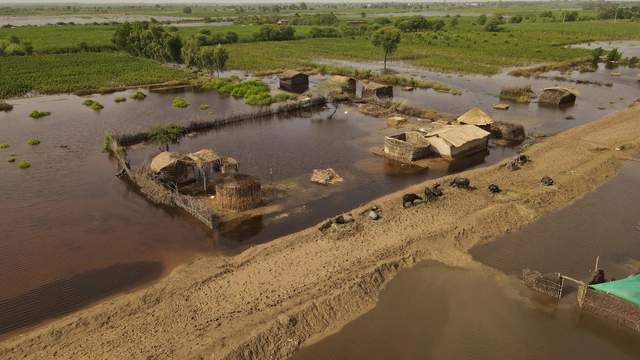
Following the extreme floods that affected Pakistan in 2022, architect Yasmeen Lari the Heritage Foundation of Pakistan pledged to help build one million resilient houses in the country. In 2022, 33 million people have been displaced, and an estimated 500,000 houses have been destroyed or severely damaged. In September 2022, Lari’s NGO launched a target program to start rebuilding and to help communities protect themselves against future disasters. The program is built on Lari’s expertise in working with the communities and employing vernacular and local building materials to achieve resilient and sustainable structures. According to the Heritage Foundation of Pakistan, one-third of the goal has already been reached.
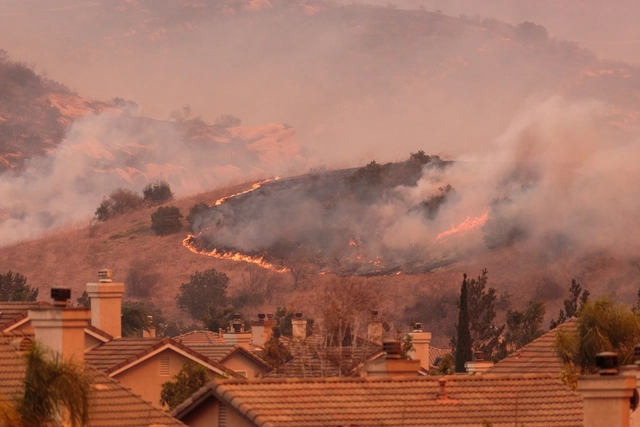
As the world grapples with the effects of climate change, natural disasters like flooding, and the spread of incontrollable wildfires are increasingly threatening cities and inhabitants. While architecture and urban planning cannot prevent these occurrences, they still possess strategies to minimize the damage associated with these events and help protect the citizens. Unfortunate events over the course of last year, like the earthquake that hit central Turkey and north-west Syria this February or the more recent earthquake in western Afghanistan, the flooding and dam failures in Libya, and the wildfires that devastated the city of Lahaina, Hawaii, demonstrate the urgency of implementing preventative and mitigation measures in addition to creating procedures for emergency intervention. This article explores the strategies and resources available to architects and urban planners to address these challenges in three types of natural disasters: flooding, wildfires, and earthquakes.
The use of local materials in architecture is becoming more and more important as there is a growing need to find new, sustainable construction methods that can help address the current climate crisis. Understanding the behavior of different materials and their key construction properties, architects and other professionals in the field are increasingly turning to bamboo, aiming to develop strategies and techniques that enable its use in both the structures of their projects and the various components of spaces.
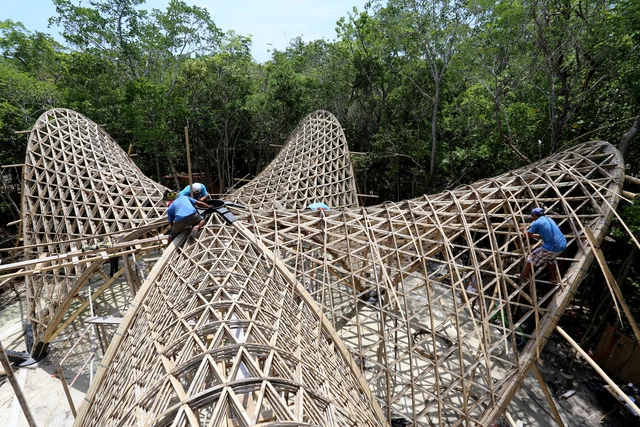
Aerial perspective of the Luum Temple under construction, revealing the network of bamboo elements. Image Courtesy of CO-LAB design office
In a world grappling with environmental challenges, forward-thinking architects and engineers are increasingly leaning towards more sustainable solutions. While steel and concrete have long dominated the construction industry, bamboo is now stepping into the limelight as a compelling alternative. Thanks to its potent mix of strength, flexibility, and eco-friendliness, bamboo is fast becoming the go-to material for those keen on pushing the boundaries of sustainable architecture.
Bridging this transformative moment in sustainable design is the timely arrival of the "Bamboo Structures" eBook series, which this article is based on. Acting as a touchstone in the field, the first volume focuses on the structural design process behind the Luum Temple—a masterclass in bamboo engineering. The guide serves as more than just a theoretical text; it is a comprehensive manual teeming with real-world insights, cutting-edge research, and practical expertise.
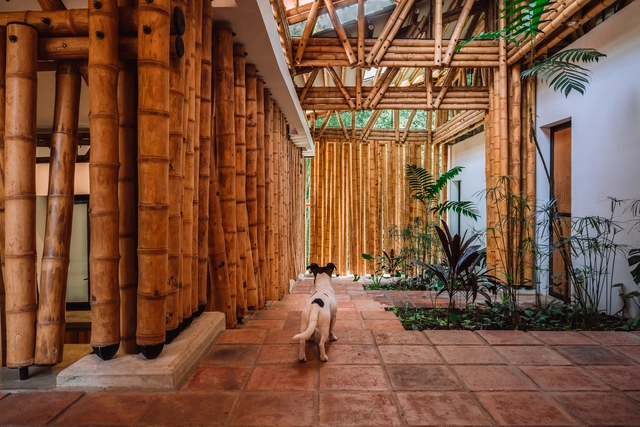
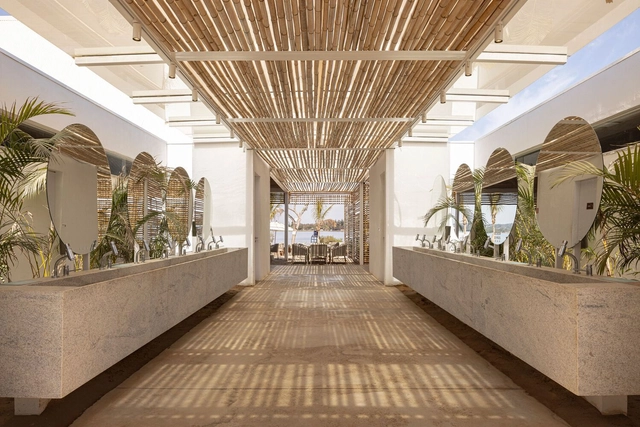
In recent years, there has been a noticeable surge in the pursuit of sustainability and eco-conscious practices across diverse domains, including interior architecture projects. Bamboo has garnered significant attention among various elements thanks to its remarkable versatility. It presents a wide array of creative opportunities for crafting environmentally conscious and elegant spaces.
As the world increasingly recognizes the importance of adopting sustainable construction practices, bamboo’s versatility, strength, and renewable qualities are generating significant momentum in the transition toward a circular material economy. From initial idea to completion, this article will provide you with valuable insights to begin your bamboo building project, from the perspective of Bamboo U.
With its unique blend of form, function, and sustainability, bamboo architecture stands out due to its complex geometries, tridimensional spatiality, and heavy reliance on craftsmanship. For many years, physical models have been central to materializing architects' visions and conveying intricate designs to the skilled craftspeople responsible for construction. Now, we are in the midst of a paradigm shift. The digital revolution is bringing computer-aided and parametric design tools to the forefront, unlocking bamboo's potential in ways never before imagined. This evolution presents exciting possibilities and new challenges for builders and craftsmen alike.
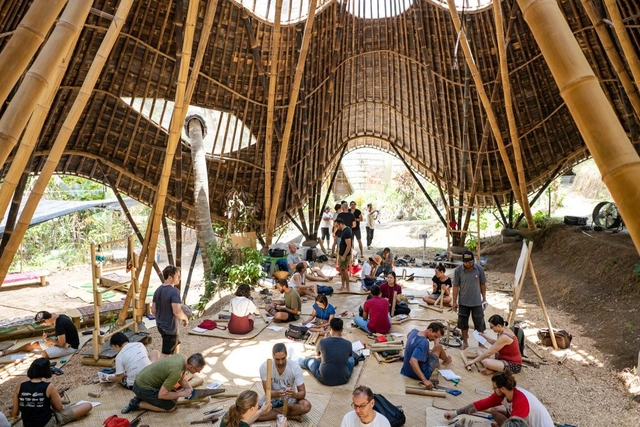
The burning question now is: Can we effectively translate these cutting-edge design innovations to the hands-on world of the craftsmen who bring these visions to life? At a recent 11 day Bamboo Build and Design Course at Bamboo U, we immersed ourselves in a world where technology meets tradition, experiencing the groundbreaking blend of bamboo construction and Augmented Reality (AR) technologies. Guided by the expertise of Dr. Kristof Crolla and Dr. Garvin Goepel from the University of Hong Kong and the Chinese University of Hong Kong, we embarked on an exciting journey to build not one, but two, charming grid shell domes, under the aid of holographic instructions. In this article, we explore this dynamic intersection of tradition and technology in the world of bamboo architecture from the perspective of Bamboo U.
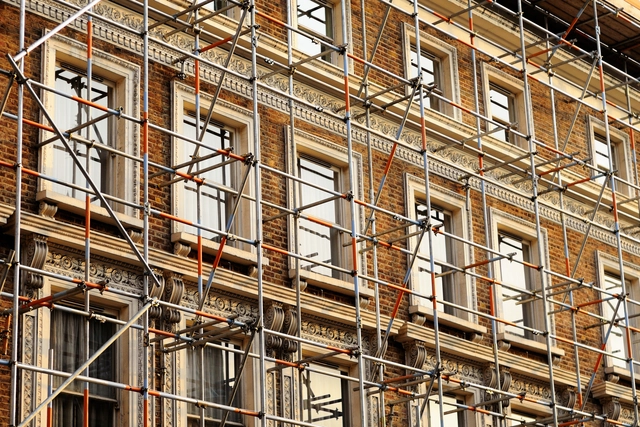
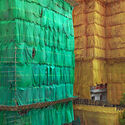
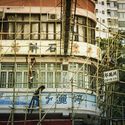
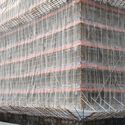
As one takes a visual tour through the city, one might spot structures that break the rhythm of finished architectural products. These are buildings encased in grids of metal or wooden sections, sometimes wrapped in colored nets, that communicate a moment of construction, repair, renovation, or demolition. They are called scaffolding systems, temporary structures built in the city to aid in the erection or maintenance of buildings. However, they have evolved to speak their own architectural language. As city-making is a continuous process, scaffolds serve as beacons, proposing silhouettes of the height, shape, or forms of new buildings. They step into the sidewalks, acting as shade or obstructions to the flow of human and vehicular traffic. In contrast to the permanence of architecture, they exhibit a sense of temporality that helps communicate time, the growth of neighborhoods, and the evolution of a city.
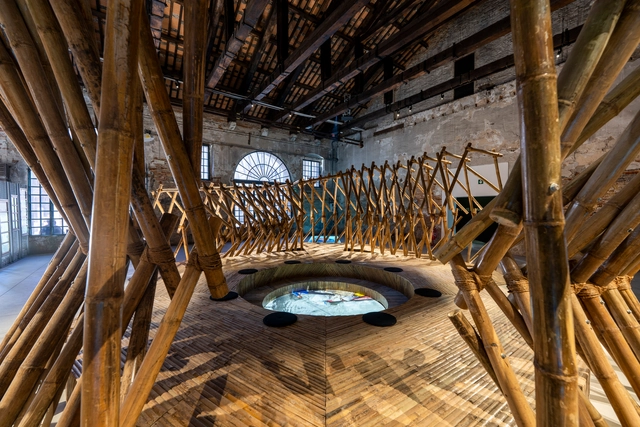
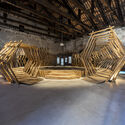
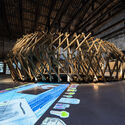
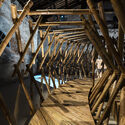
At the 18th International Architecture Exhibition of La Biennale di Venezia, The PhilippinesPavilion presents an exhibition that investigates the ecology and social implication of the Tripa de Gallina estuary in Manila. The body of water, once a mechanism for flood mitigation, has now become congested and polluted, affecting the lives of the nearby communities. The Pavilion aims to present the initiative that set out to gather and investigate the guts of the estuary and to work with the residents to find adequate and sustainable architectural solutions. Titled “Tripa de Gallina: Guts of Estuary,” the exhibition in Venice is co-curated by Architect Choie Funk and Sam Domingo and presents the work of the Architecture Collective, represented by Bien Alvarez, Matthew Gan, Ar. Lyle La Madrid, Noel Narciso and Arnold Rañada.
Contemporary bamboo buildings may initially appear overwhelming to the novice observer. Yet, as you learn more about the structural logic of these inspiring edifices, you'll quickly realize that most employ one or a blend of the structural systems we're about to explore. The mystery unravels, transforming what once seemed complex into a clear composition of simple concepts. This article shines a light on four commonly employed structural systems in bamboo construction:
Chinese Pavilion Osaka Expo 2025. Image Courtesy of China Architecture Design Group
The China Pavilion's plan for Expo Osaka 2025 was revealed at a press conference held on April 26th, 2023, by the China Council for the Promotion of International Trade (CCPIT). Created by the China Architecture Design Group (CADG), the design revolves around "Inscribed Slips of China," resembling traditional Chinese inscribed slips and incorporating elements of bamboo, Chinese characters, and ancient books. This design showcases China's spirit and cultural essence, emphasizing the harmony between humanity and nature and China's commitment to sustainable development in the modern era.
If we were to design an ideal building material, it would look like bamboo. At least, that's what Neil Thomas, director of the London-based structural engineering firm Atelier One, claims. Its tubular shape, vascular bundles, fast growth rate, and ease of manipulation make it ideal for construction. Today, it is even more interesting to the market as a renewable source with low environmental impact compared to other materials. Additionally, it is extremely versatile and can be used in various ways in construction. Here, we list some of them.
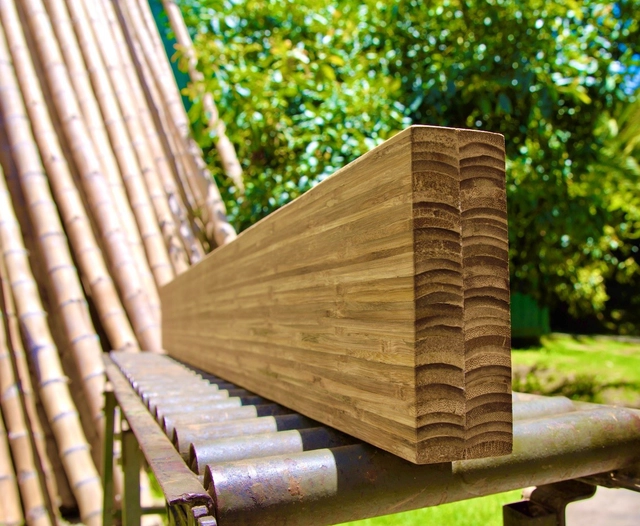
Pretentious as it may sound, we can say with certainty that bamboo is one of the most promising materials for the future of the construction industry. Neil Thomas, principal engineer at atelier one, says that if we were to design an ideal building material, it would look a lot like bamboo. This is because it grows very fast, is present in many countries around the world, has a highly efficient cross-section, and has impressive load-bearing strength. But beyond its structural use in its raw form, bamboo is also a material that allows a high level of processing and can be laminated for flooring, fixtures and, as we will see in this article, for Structural Engineered Bamboo (SEB) structures, which are very similar to Engineered Wood. We spoke with Luke D. Schuette, founder and CEO of ReNüTeq Solutions, LLC, a company in St. Louis, Missouri, that has been working with this structural material technology.
The Philippines' history and cultural background are continually reflected in the architectural landscape throughout the country, with its structures and dwellings harboring a handful of influences from the nations that once purveyed the island.
When we talk about the topic of Filipino architecture and dwellings, more often than not, we may think of the first known Filipino home: Bahay Kubo. The Bahay Kubo is a small hut comprising nipa, bamboo, and other indigenous materials. It is often times that many citizens still choose to adopt this style of habitation, however, over time, the concept of the nipa hut has evolved into a more modern structure.
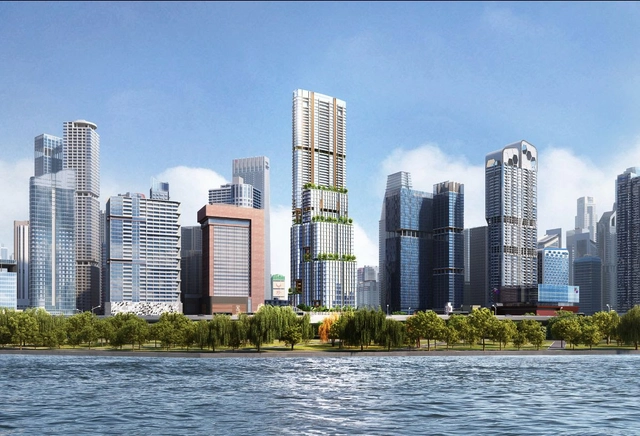
Skidmore, Owings & Merrill (SOM) has revealed the design of 8 Shenton Way, a 305 meters-high tower. Once completed it would become not only Singapore's Tallest Building but one of Asia's most sustainable skyscrapers. The mixed-use tower takes cues from bamboo forests to create an indoor-outdoor vertical community with public spaces, offices, retail, a hotel, and residences. In partnership with DCA Architects, the project is scheduled for completion in 2028 and will become the newest landmark on the Singapore skyline, along with Marina Bay and CapitaSpring Tower.
The construction industry's future will undoubtedly include "carbon reduction" as a mandatory task. Aside from locally sourced, virgin materials, an increasing number of new materials are becoming available. New materials can be developed in several ways, including low-carbon substitution, recycling, performance enhancement, and 3D printing. New materials will not only be more environmentally friendly and enable new construction methods, but they will also influence the starting point and direction of design concepts, resulting in new buildings with new perceptions and spaces.
Los Manantiales by Felix Candela. Image Courtesy of Alexander Eisenschmid
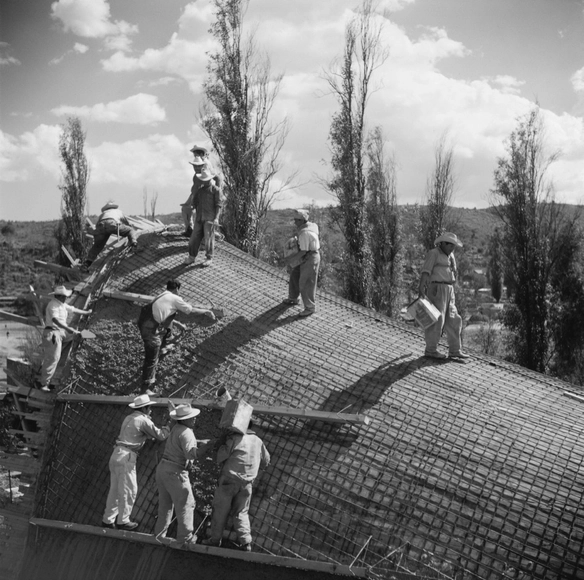
Architecture is often an ambitious profession, with many architects hoping to positively contribute to the social life of the communities, create emotional responses, and add moments of delight and solace to our daily experiences. However, market forces have a way of applying constant pressure on this field, often being the deciding factor in many design choices. Costs and economic value are generally a good indicator of how, when, and to what extent certain materials are being used: the standard rule is the cheaper, the better. But materials are only part of the equation. Site labor, management, and design costs are also considered, depicting a complex picture of the balance between the cost of materials and the cost of labor and its effect on the architectural product.
You may have heard about the use of bamboo in the temporary shelters created in humanitarian aid efforts after an earthquake, but bamboo can actually be very valuable in the construction of buildings that can withstand earthquakes. Why should we look towards bamboo as a temporary solution after a disaster when we could save lives by building with it in the first place? Bamboo is a great option for building homes and shelters in earthquake-prone regions, given that the structures are well designed, constructed, and maintained. From old traditional structures to modern builds, several examples from across the globe have proven themselves against the very forces of nature that have brought down concrete and brick buildings.
https://www.archdaily.com/988992/is-bamboo-a-safe-construction-material-in-natural-disasters-like-earthquakesLayane Al Madani