1. ArchDaily
  2. Biobased Materials

Biobased Materials: The Latest Architecture and News

Willow Technologies Transforms Agricultural By-Products Into Building Materials in Ghana

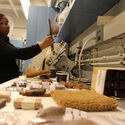
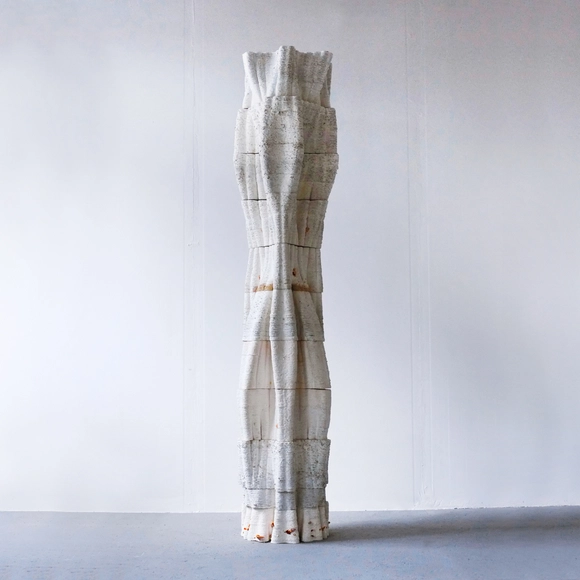
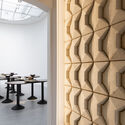
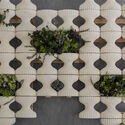
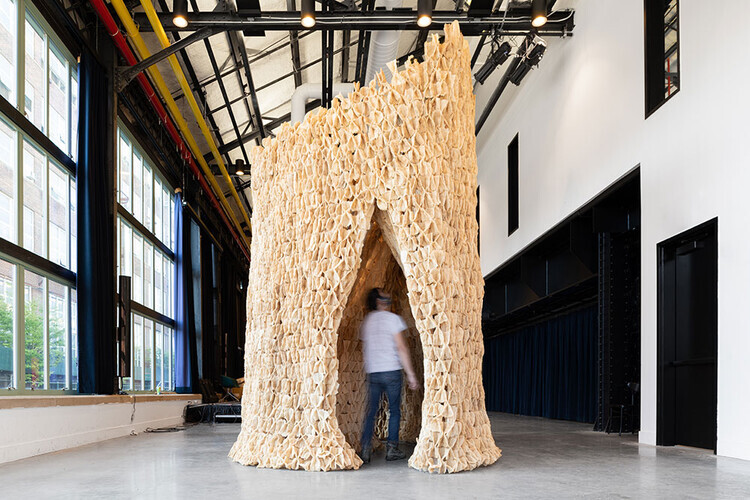
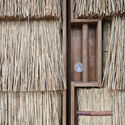
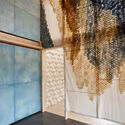
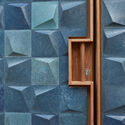
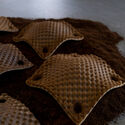
Willow Technologies is a material research and building technology practice that has been selected as part of ArchDaily's 2023 Best New Practices. Founded by Ghanaian-Filipino designer and architectural scientist Mae-Ling Lokko, it operates in the gap between research, development, and diffusion of bio-based building materials. Working with agro-waste and bio-based materials usually incurs technical questions regarding scalability, industrial production, standardization, fireproofing, and mechanical strength. Exploring this data is where Willow Technologies situates itself, but peculiarly through the lens of developing regions in West Africa. Through comprehensive works with coconuts, moringa, rice, and other indigenous crops, Lokko’s practice has been able to investigate and catalog the material character of various crops, their possible by-products, local transformation techniques, and the prospect and challenges of scalability as building materials.

Willow Technologies Transforms Agricultural By-Products Into Building Materials in Ghana - Image 1 of 4Willow Technologies Transforms Agricultural By-Products Into Building Materials in Ghana - Image 2 of 4Willow Technologies Transforms Agricultural By-Products Into Building Materials in Ghana - Image 3 of 4Willow Technologies Transforms Agricultural By-Products Into Building Materials in Ghana - Image 4 of 4Willow Technologies Transforms Agricultural By-Products Into Building Materials in Ghana - More Images+ 9

Building for Sustainability: 3 Main Themes Explored at the Time Space Existence Exhibition in Venice

Subscriber Access | 

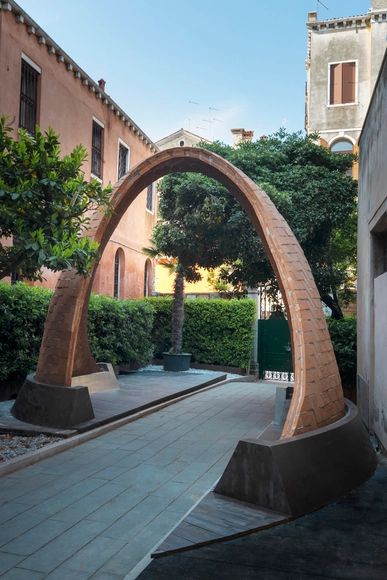
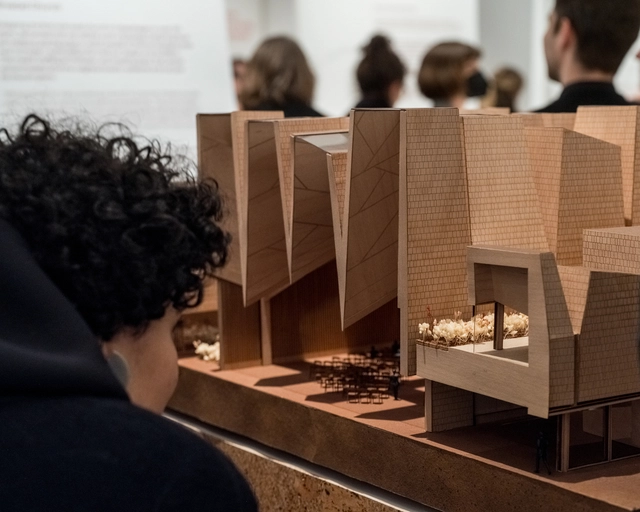
The European Cultural Centre (ECC), a non-profit organization dedicated to fostering cultural exchanges on an international scale, showcased its sixth edition of the Time Space Existence architecture exhibition alongside this year's Venice Architecture Biennale. The 2023 installment was centered on the theme of sustainability in its various forms, encompassing subjects related to migration, digital building technologies and material research, future urban developments, and housing, bringing together architects, designers, artists, academics, and photographers from 52 different countries.

Through diverse mediums and perspectives, participants have explored the philosophical concepts of Time, Space, and Existence. With a total of 217 projects on display, the exhibition is held at Palazzo Bembo, Palazzo Mora, and the Marinaressa Gardens in Venice, throughout the six-month duration of the 2023 Venice Architecture Biennale, running from May 20th to November 26th, 2023. Focusing also on emerging young architects, designers, and researchers, the 2023 edition of the exhibition is a proactive endeavor to reimagine alternative lifestyles and reconceptualize architecture within the contemporary landscape.

Building for Sustainability: 3 Main Themes Explored at the Time Space Existence Exhibition in Venice - Image 1 of 4Building for Sustainability: 3 Main Themes Explored at the Time Space Existence Exhibition in Venice - Image 2 of 4Building for Sustainability: 3 Main Themes Explored at the Time Space Existence Exhibition in Venice - Image 3 of 4Building for Sustainability: 3 Main Themes Explored at the Time Space Existence Exhibition in Venice - Image 4 of 4Building for Sustainability: 3 Main Themes Explored at the Time Space Existence Exhibition in Venice - More Images+ 22

Circular Economy: Designing for Bioregions

Cities are complex ecologies of intersecting natural systems and urban infrastructure. Environmental degradation has brought attention to the asymbiotic relationship between man-made and natural systems. A new economy is emerging where interdependence and environmental stewardship are valued. Designing for a circular economy requires consideration of human habitats not as towns or cities, but as bioregions. 

Circular Economy: Designing for Bioregions - Image 1 of 4Circular Economy: Designing for Bioregions - Image 2 of 4Circular Economy: Designing for Bioregions - Image 3 of 4Circular Economy: Designing for Bioregions - Image 4 of 4Circular Economy: Designing for Bioregions - More Images+ 1

OMA / David Gianotten and Circlewood Develop a Modular Wood System to Create Flexible Schools for the City of Amsterdam

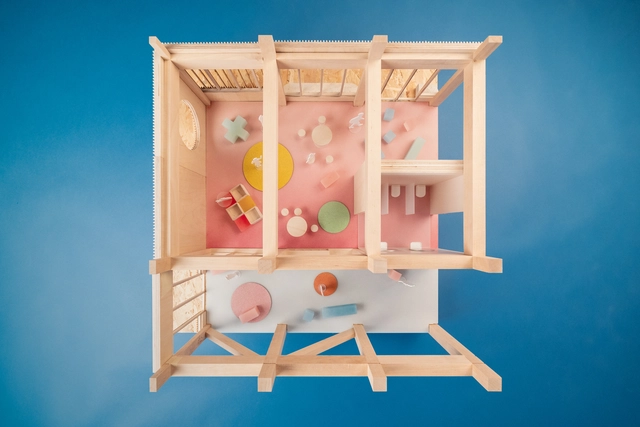
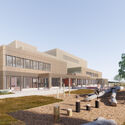
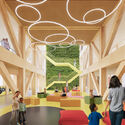
As part of the Circlewood consortium, OMA’s David Gianotten and Michel den Otter have developed a modular system to build schools that can adapt and transform throughout their lifecycle. The system was selected by the City of Amsterdam to be employed to build multiple schools in the coming ten years, as part of the Innovation Partnership School Buildings program. The citywide initiative aims to build nine to thirty “high-quality, flexible, and sustainable” schools as a way to contribute to the city’s goal of becoming fully circular by 2050.

OMA / David Gianotten and Circlewood Develop a Modular Wood System to Create Flexible Schools for the City of Amsterdam - Image 1 of 4OMA / David Gianotten and Circlewood Develop a Modular Wood System to Create Flexible Schools for the City of Amsterdam - Image 2 of 4OMA / David Gianotten and Circlewood Develop a Modular Wood System to Create Flexible Schools for the City of Amsterdam - Image 3 of 4OMA / David Gianotten and Circlewood Develop a Modular Wood System to Create Flexible Schools for the City of Amsterdam - Image 4 of 4OMA / David Gianotten and Circlewood Develop a Modular Wood System to Create Flexible Schools for the City of Amsterdam - More Images+ 1

“Changing Our Footprint”: Henning Larsen Opens an Explorative Exhibition at Aedes Architecture Forum in Berlin

In an effort to address the architecture industry’s environmental impact, Henning Larsen is presenting the “Changing Our Footprint” exhibition at Aedes Architecture Forum in Berlin. The event features the small but scalable steps that the office is taking to move towards a more desirable future through the projects they are designing and the research they are conducting. The exhibition aims to be an engaging event, inviting visitors to participate in the dialogue, to think critically about the proposed solutions and initiatives, and to ask difficult questions in the search for better outcomes. The exhibition is open until March 22, 2023. Henning Larsen will also host a series of panel debates at the Aedes Architecture Forum from February 22 to March 14.

“Changing Our Footprint”: Henning Larsen Opens an Explorative Exhibition at Aedes Architecture Forum in Berlin - Image 1 of 4“Changing Our Footprint”: Henning Larsen Opens an Explorative Exhibition at Aedes Architecture Forum in Berlin - Image 2 of 4“Changing Our Footprint”: Henning Larsen Opens an Explorative Exhibition at Aedes Architecture Forum in Berlin - Image 3 of 4“Changing Our Footprint”: Henning Larsen Opens an Explorative Exhibition at Aedes Architecture Forum in Berlin - Image 4 of 4“Changing Our Footprint”: Henning Larsen Opens an Explorative Exhibition at Aedes Architecture Forum in Berlin - More Images+ 13

Can Architecture and Urban Planning Fight Back Against Climate Change?

Climate change has been one of the most pressing topics of this year, and for a good reason. Its effects are visible not only in natural habitats but also in urban environments. The construction industry has an important role to play in this dynamic. Throughout the year, events such as COP27 emphasized the importance of striving to achieve net carbon zero and the challenges faced by developing countries affected by increasingly devastating natural disasters. Possible directions for development include actions at varying stages and scales, from optimizing green spaces for urban heat control to employing local and innovative building materials to minimize the carbon footprint or passing laws that help create more sustainable urban and natural environments.

This article represents a roundup of articles published on ArchDaily during the course of 2022 with themes related to climate change and architecture’s potential to make a difference. It breaks down the topic into four main questions: What Are Cities Doing to Mitigate Urban Heat? How to Tackle Rising Sea Levels? What Was COP27 and Why Does It Matter? Can Building Materials Play a Role in Achieving These Goals? The last section presents an overview of new legislation approved during 2022 as a way of understanding how state and local governments are imposing this need for change.

Can Architecture and Urban Planning Fight Back Against Climate Change? - Image 1 of 4Can Architecture and Urban Planning Fight Back Against Climate Change? - Image 2 of 4Can Architecture and Urban Planning Fight Back Against Climate Change? - Image 3 of 4Can Architecture and Urban Planning Fight Back Against Climate Change? - Image 4 of 4Can Architecture and Urban Planning Fight Back Against Climate Change? - More Images+ 25

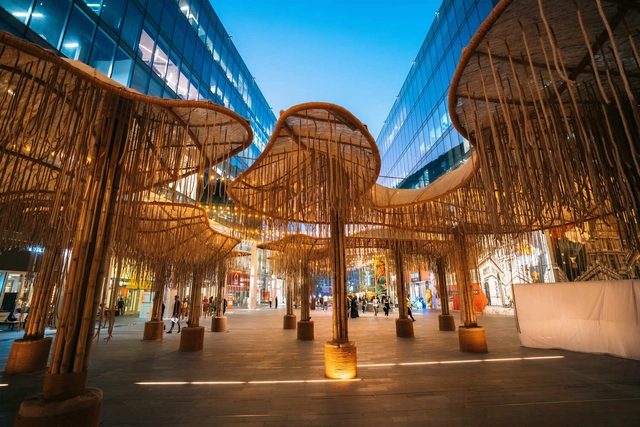
Design with Impact: 8 Architectural Installations at Dubai Design Week 2022

One of the most significant cultural events in the Middle East, Dubai Design Week represents a platform that offers individuals and companies the opportunity to showcase their design experience and to open conversations about the most pressing issues of our times. Developed in a strategic partnership with Dubai Design District (d3), the event presents a series of immersive, large-scale installations that highlight the festival’s theme: Design with Impact.

This year’s program is focused on designing a sustainable future. To promote this, Dubai Design Week has invited international and regional architects and designers to create installations that demonstrate creative design thinking, to introduce innovative materials, and spark conversations about the ways in which design can have a positive impact on the environment.

Design with Impact: 8 Architectural Installations at Dubai Design Week 2022 - Image 1 of 4Design with Impact: 8 Architectural Installations at Dubai Design Week 2022 - Image 2 of 4Design with Impact: 8 Architectural Installations at Dubai Design Week 2022 - Image 3 of 4Design with Impact: 8 Architectural Installations at Dubai Design Week 2022 - Image 4 of 4Design with Impact: 8 Architectural Installations at Dubai Design Week 2022 - More Images+ 10

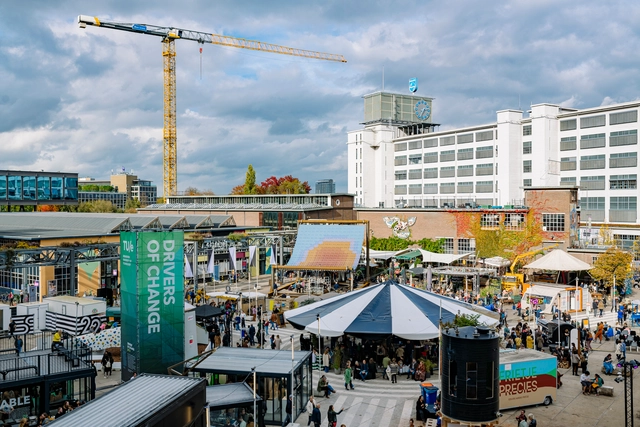
Get Set: 9 Architecturally Relevant Exhibitions at the 2022 Dutch Design Week

Under the motto "Get Set," the 2022 DDW exhibited more than 50 art and architectural installations to call out designers and communities for a shift from preparation to action facing the challenges of our time. Led by Miriam van der Lubbe, Creative Head of DDW, with Marjan van Aube and Formafantasma as ambassadors, the 21st edition of the Dutch Design Week took place the last week of October in Eindhoven, the Netherlands closing with a Graduation Show of over 200 students of the Design Academy Eindhoven.

Inspiring designers to incorporate innovation and sustainability and familiarize the public with all the technology has to offer, ArchDaily has selected 9 relevant works focused on bio-materials and modular systems. Highlighting ongoing design research, the list underlines projects that reinvent how we deal with nature and the space we live in. 

Get Set: 9 Architecturally Relevant Exhibitions at the 2022 Dutch Design Week - Image 12 of 4Get Set: 9 Architecturally Relevant Exhibitions at the 2022 Dutch Design Week - Image 27 of 4Get Set: 9 Architecturally Relevant Exhibitions at the 2022 Dutch Design Week - Image 34 of 4Get Set: 9 Architecturally Relevant Exhibitions at the 2022 Dutch Design Week - Image 35 of 4Get Set: 9 Architecturally Relevant Exhibitions at the 2022 Dutch Design Week - More Images+ 31

From Bio Materials to Load-Bearing Structures: Fungi, Algae and Tree Forks

As researcher, designer and MIT professor Caitlin Mueller once said, “The greatest value you can give to a material is to give it a load-bearing role in a structure.” Load-bearing components – foundations, beams, columns, walls, etc. – are designed to resist permanent or variable forces and movements. Similar to the bones of a human body, these support, protect and hold everything together. To fulfill that indispensable function, they must be made from materials with outstanding mechanical properties, which explains the prominence of cement and steel in structures. However, their high performance comes at a high cost: together, they account for 15% of global CO2 emissions. This makes us wonder, is it possible for structural materials to be truly sustainable? We know solutions like greener versions of concrete already exist, but there are many other alternatives to explore. And sometimes, the answer is closer than we expect; in the earth beneath us and the nature that surrounds us.

The City as an Organism

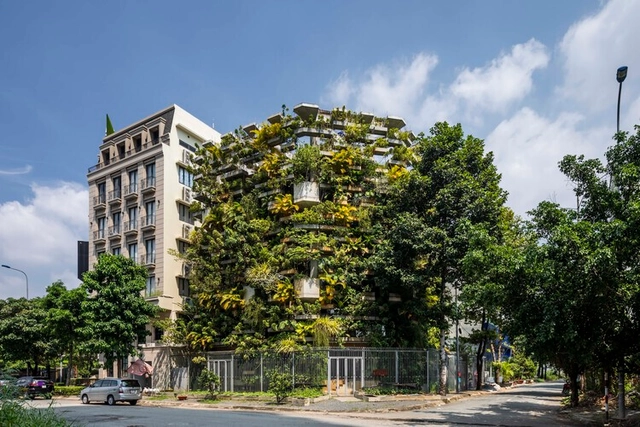
Nature has continually played muse to architects. Colors and forms from the natural world find themselves embedded in artificial edifices. Buildings are also shaped by patterns of the wind and sun, topography, and vegetation. While architecture is informed by the effects of nature, buildings have been proposed as inert objects that remain static in a biologically evolving world. Anthropocentric concrete “jungles” are devoid of life, separating humans from natural environments and causing imbalances that have manifested as pandemics. What would cities look like if there were no boundaries between humans and ecosystems?

The City as an Organism  - Image 1 of 4The City as an Organism  - Image 2 of 4The City as an Organism  - Image 3 of 4The City as an Organism  - Image 4 of 4The City as an Organism  - More Images+ 5

Returning the Building to the Soil: an Interview with the Architect and Scientist Mae-Ling Lokko

Agriculture and the food industry seem to have little in common with architecture, but it is precisely the overlap of these three areas that interests Ghanaian-Filipino scientist and architect Mae-ling Lokko, founder of Willow Technologies based in Accra, Ghana. Working with recycling agricultural waste and biopolymer materials, Lokko searches for ways to transform the so-called agrowaste into building materials.
Returning the Building to the Soil: an Interview with the Architect and Scientist Mae-Ling Lokko - Image 1 of 4Returning the Building to the Soil: an Interview with the Architect and Scientist Mae-Ling Lokko - Image 2 of 4Returning the Building to the Soil: an Interview with the Architect and Scientist Mae-Ling Lokko - Image 3 of 4Returning the Building to the Soil: an Interview with the Architect and Scientist Mae-Ling Lokko - Image 4 of 4Returning the Building to the Soil: an Interview with the Architect and Scientist Mae-Ling Lokko - More Images+ 5

Cities of the Future: Julia Watson on Nature-based Technologies and Radical Materials

Subscriber Access | 
Cities of the Future: Julia Watson on Nature-based Technologies and Radical Materials - Featured Image
Las Islas Flotantes is a floating island system on Lake Titicaca in Peru inhabited by the Uros, who build their entire civilization from the locally grown totora reed. Image © Enrique Castro-Mendivil

Looking ahead to the future of our built environment, a one-size-fits-all approach simply won’t do. Issues like rising sea levels, temperatures, and water scarcity in urban communities need localized solutions that take into account questions of sustainability, culture, and public health. Having investigated vernacular infrastructure across indigenous communities for her book Lo-TEK. Design by Radical Indigenism, designer Julia Watson is an expert in local, nature-based technologies that are inherently adaptable and resilient. We talk to her about the future of our cities, building materials, and her latest project for Our Time on Earth – a five year, world-touring exhibition that just opened at London's Barbican Centre to investigate how radical, collaborative ideas for the way we live can get us to a much improved place by 2040.

Cities of the Future: Julia Watson on Nature-based Technologies and Radical Materials - Image 1 of 4Cities of the Future: Julia Watson on Nature-based Technologies and Radical Materials - Image 2 of 4Cities of the Future: Julia Watson on Nature-based Technologies and Radical Materials - Image 3 of 4Cities of the Future: Julia Watson on Nature-based Technologies and Radical Materials - Image 4 of 4Cities of the Future: Julia Watson on Nature-based Technologies and Radical Materials - More Images+ 8

Biotechnology and Green Tech: A New Material World for Sustainable Architecture

Subscriber Access | 
Biotechnology and Green Tech: A New Material World for Sustainable Architecture - Featured Image
Courtesy of The Living. ImageAlive: A New Spatial Contract for Multispecies Architecture by The Living

Advances in biotechnology and material science are opening new material opportunities, with the potential of fundamentally changing the connection between the built environment and the natural world. Building materials and construction account for 11% of greenhouse gas emissions. The AEC industry can contribute to curbing climate change in the following years, and the re-evaluation of commonplace building materials is one of the most critical steps. Bioengineered materials, which grow, produce energy, self-heal, are the next frontier in biology and material science and potentially a path towards a new kind of architecture. Although innovation in these fields is still far away from mainstream commercial use, it promises to dramatically change the image of the built environment.
Biotechnology and Green Tech: A New Material World for Sustainable Architecture - Image 1 of 4Biotechnology and Green Tech: A New Material World for Sustainable Architecture - Image 2 of 4Biotechnology and Green Tech: A New Material World for Sustainable Architecture - Image 3 of 4Biotechnology and Green Tech: A New Material World for Sustainable Architecture - Image 4 of 4Biotechnology and Green Tech: A New Material World for Sustainable Architecture - More Images

Less Waste or More Value: 8 Architecturally Relevant Interventions at the 2021 Dutch Design Week

Subscriber Access | 

Under the theme of 'The Greater Number', the Dutch Design Week (DDW) returns with a physical edition from the 16 until the 24th of October 2021 in Eindhoven, the Netherlands. The largest design event in Northern Europe has decided for its comeback to tackle the notion of less consumption, less production, and less waste. Knowing that this is not always possible, the design happening also calls for more sustainable products with more value.

Striving to change the behavior of consumers and manufacturers, Dutch Design Week organized lectures, debates, and exhibitions, from which ArchDaily selected 8 architecturally relevant interventions to underline. Highlighting ideas that can shape a positive future, the list is mostly focused on future cities, while also tackling notions such as adapted realities, connected living, interactive experiences, and designing society.

Less Waste or More Value: 8 Architecturally Relevant Interventions at the 2021 Dutch Design Week - Image 1 of 4Less Waste or More Value: 8 Architecturally Relevant Interventions at the 2021 Dutch Design Week - Image 2 of 4Less Waste or More Value: 8 Architecturally Relevant Interventions at the 2021 Dutch Design Week - Image 3 of 4Less Waste or More Value: 8 Architecturally Relevant Interventions at the 2021 Dutch Design Week - Image 4 of 4Less Waste or More Value: 8 Architecturally Relevant Interventions at the 2021 Dutch Design Week - More Images+ 10

At Dutch Design Week 2021 A Building Made of Biobased Materials Illustrates The Possibilities of Circular Design

At Dutch Design Week 2021 A Building Made of Biobased Materials Illustrates The Possibilities of Circular Design - Featured Image
© Oscar Vinck and Jeroen van der Wielen

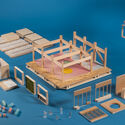
At the Dutch Design Week, a house created entirely from bio-based materials aims to illustrate that circular design is not only feasible but a scaleable construction method for the future. Featuring 100 types of sustainable materials, The Exploded View Beyond Building is a concrete example of the possibilities of creating a circular living environment, bringing together substantial research into high-quality components fit for disassembly and modular design.

At Dutch Design Week 2021 A Building Made of Biobased Materials Illustrates The Possibilities of Circular Design - Image 1 of 4At Dutch Design Week 2021 A Building Made of Biobased Materials Illustrates The Possibilities of Circular Design - Image 2 of 4At Dutch Design Week 2021 A Building Made of Biobased Materials Illustrates The Possibilities of Circular Design - Image 3 of 4At Dutch Design Week 2021 A Building Made of Biobased Materials Illustrates The Possibilities of Circular Design - Image 4 of 4At Dutch Design Week 2021 A Building Made of Biobased Materials Illustrates The Possibilities of Circular Design - More Images+ 7