1. ArchDaily
  2. Biodesign

Biodesign: The Latest Architecture and News

The Architect as a Scientist: New Materials Emerging Between Science and Design

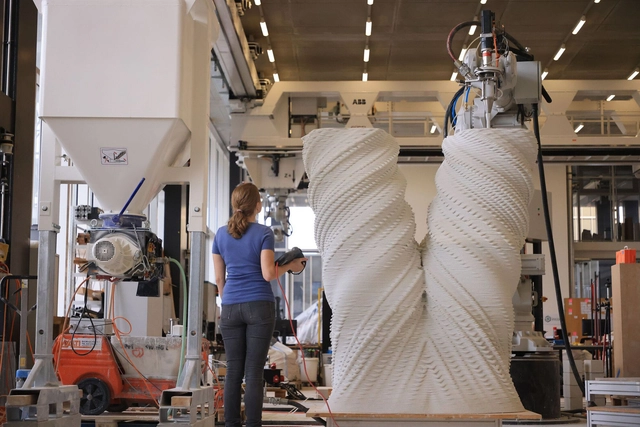
What is architecture? For some, its traditional role is to bring together imagination, technical knowledge, and problem-solving, allowing architects to design and construct while balancing ideas with the means to realize them. From the stone and wood of early buildings to the steel and concrete of the 20th century, each era demanded not only an understanding of form but also of the properties and potential of the materials in use. This grasp of materials has always been a core part of the creative process, though its scope was limited by the know-how and technologies available.

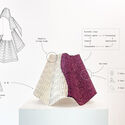
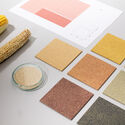
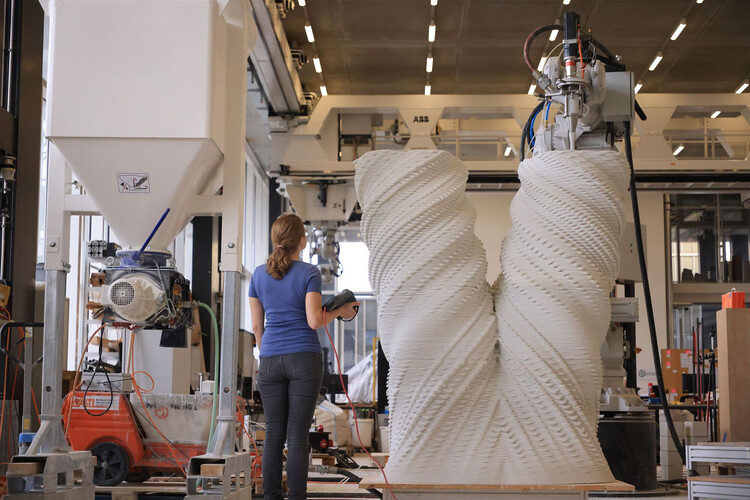
Over time, that balance has begun to shift. Architects have moved from merely using materials to actively designing them, applying scientific principles and experimenting with biological, chemical, and computational processes. This evolution has expanded the possibilities of architecture, intersecting nature, technology, and art, while pushing the role of the architect into a more experimental, science-driven dimension, where the manipulation and creation of materials becomes central to the creative act rather than merely a means to achieve forms or structures.

The Architect as a Scientist: New Materials Emerging Between Science and Design - Image 1 of 4The Architect as a Scientist: New Materials Emerging Between Science and Design - Image 2 of 4The Architect as a Scientist: New Materials Emerging Between Science and Design - Image 3 of 4The Architect as a Scientist: New Materials Emerging Between Science and Design - Image 4 of 4The Architect as a Scientist: New Materials Emerging Between Science and Design - More Images+ 11

Designing at the Edge: 8 Conceptual Projects Where Architecture Meets Nature from the ArchDaily Community

Subscriber Access | 

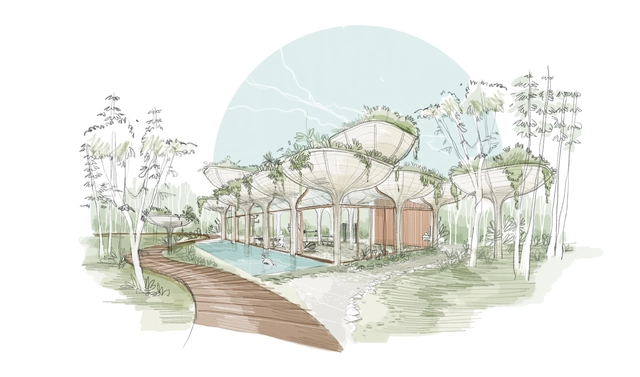
At a time when architectural practice is increasingly tied to climate and context, the boundary between the built and the natural has become a critical site of experimentation. This month's unbuilt selection gathers eight conceptual projects that work with the edges of landscape. In Ramia by João Teles Atelier, the architecture draws directly from the metaphor of a seed breaking through soil, using wood, concrete, and water to create a sensorial route through Tulum's ecology. Meanwhile, Mobius Pier by X Atelier loops gently over the river edge, becoming both infrastructure and observation point. Similarly, Il mare degli Umbri approaches the threshold differently, restoring the historic shoreline of Lake Trasimeno and reintroducing local wetland ecologies. Each project in this collection reflects a unique position: some treat the edge as a spatial experience, others as a regulatory line, and others still as a point of cultural or ecological return.
Cultivating Green Apartments: A Guide to Integrating Nature in Small Urban Spaces

Subscriber Access | 

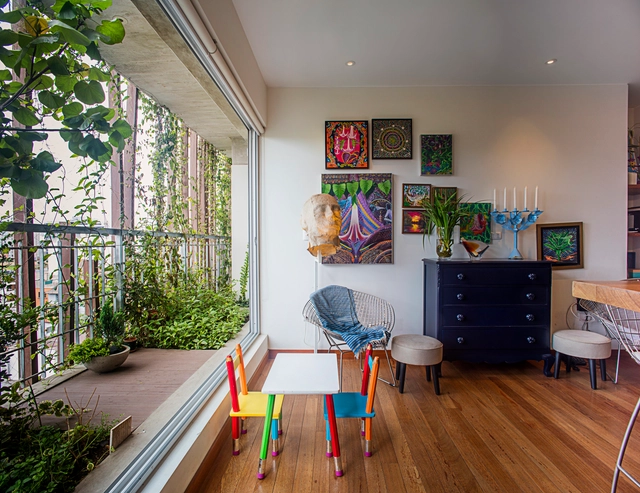
Urban living has become synonymous with limited space and creativity for compact apartments. As cities become more dominated by concrete and steel, there is an exciting, yet unsurprising, rise in interest in embracing the green thumb, even within the constraints of a dense urban environment. This interest is not purely to tend aesthetic tastes, as studies consistently show that exposure to nature reduces stress, improves focus, and enhances overall well-being. However, in dense urban environments, the challenge lies in finding innovative ways to make this vision a reality for apartments where every inch matters.

Cultivating Green Apartments: A Guide to Integrating Nature in Small Urban Spaces - Image 1 of 4Cultivating Green Apartments: A Guide to Integrating Nature in Small Urban Spaces - Image 2 of 4Cultivating Green Apartments: A Guide to Integrating Nature in Small Urban Spaces - Image 3 of 4Cultivating Green Apartments: A Guide to Integrating Nature in Small Urban Spaces - Image 4 of 4Cultivating Green Apartments: A Guide to Integrating Nature in Small Urban Spaces - More Images+ 4

A Bio-Digital Exploration: ecoLogicStudio Opens Deep Forest Exhibition at the Louisiana Museum in Denmark

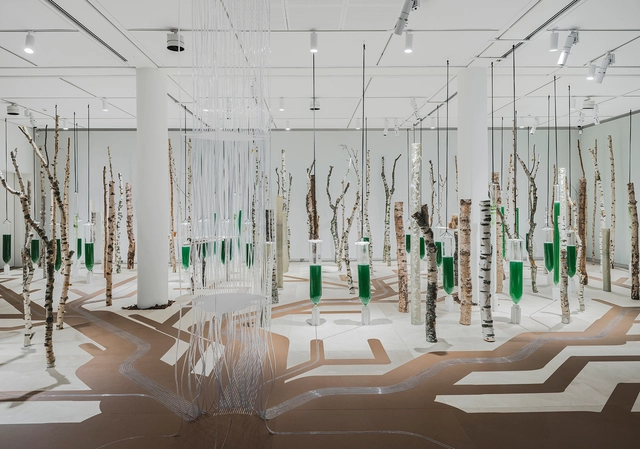
The Louisiana Museum of Modern Art's "Living Structures" exhibition, running from November 8th, 2024, to March 23rd, 2025, features Deep Forest, a new installation by Prof Claudia Pasquero and Dr. Marco Poletto founders of architecture and design innovation firm ecoLogicStudio, together with academic partner Innsbruck University. This immersive work challenges traditional architectural paradigms by embracing the naturalization of architecture and technology, a direct counterpoint to modernist attempts to mechanize nature. The exhibition represents the culmination of twenty years of research in bio-digital design, showcasing the potential of symbiotic relationships between technology and the natural world within built environments.

A Bio-Digital Exploration: ecoLogicStudio Opens Deep Forest Exhibition at the Louisiana Museum in Denmark - Image 1 of 4A Bio-Digital Exploration: ecoLogicStudio Opens Deep Forest Exhibition at the Louisiana Museum in Denmark - Image 2 of 4A Bio-Digital Exploration: ecoLogicStudio Opens Deep Forest Exhibition at the Louisiana Museum in Denmark - Image 3 of 4A Bio-Digital Exploration: ecoLogicStudio Opens Deep Forest Exhibition at the Louisiana Museum in Denmark - Image 4 of 4A Bio-Digital Exploration: ecoLogicStudio Opens Deep Forest Exhibition at the Louisiana Museum in Denmark - More Images+ 27

10 Start-ups Creating Innovative and Sustainable Building Materials, from Mycelium Bricks to Water Purifying Tiles

The building industry is one of the biggest generators of carbon emissions, with some estimates suggesting that 38% percent of all CO2 emissions are linked to this field. As a response to the current crisis, architects, designers, and researchers are taking measures to reduce their carbon footprint during and after construction. Many initiatives and research teams are looking at building materials to find low-carbon solutions and reduce the impact of building materials during production.

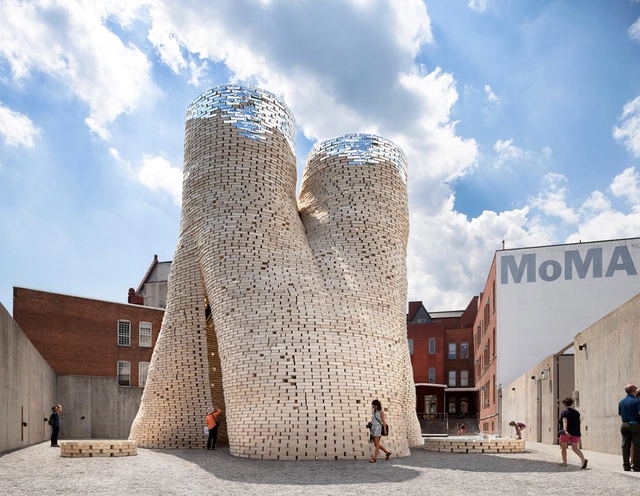
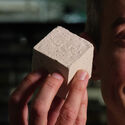
One of the most prominent fields of research is concerned with biofacture, the type of process that involves using biological organisms to manufacture materials. By understanding the abilities of organisms such as algae of fungi, alternatives to widely used materials can become carbon neutral or even carbon negative. Other initiatives are researching novel ways to use untapped, yet readily available resources such as desert sand, soil, or waste from demolitions.

10 Start-ups Creating Innovative and Sustainable Building Materials, from Mycelium Bricks to Water Purifying Tiles - Image 1 of 410 Start-ups Creating Innovative and Sustainable Building Materials, from Mycelium Bricks to Water Purifying Tiles - Image 2 of 410 Start-ups Creating Innovative and Sustainable Building Materials, from Mycelium Bricks to Water Purifying Tiles - Image 3 of 410 Start-ups Creating Innovative and Sustainable Building Materials, from Mycelium Bricks to Water Purifying Tiles - Image 4 of 410 Start-ups Creating Innovative and Sustainable Building Materials, from Mycelium Bricks to Water Purifying Tiles - More Images+ 7

URB Reveals Design for Africa’s Largest Sustainable City

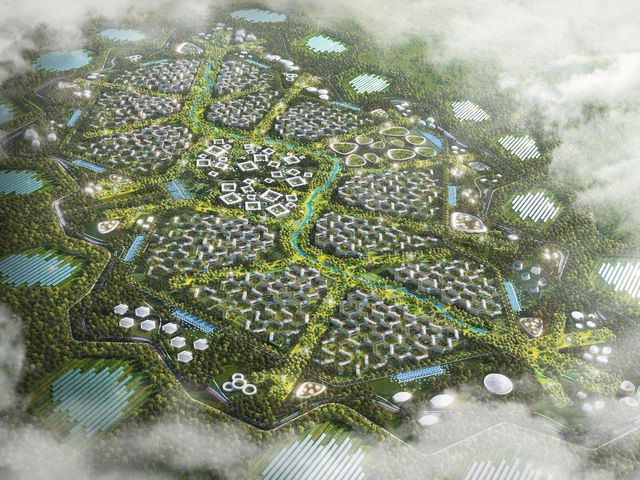
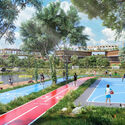
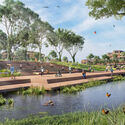
URB has unveiled plans to develop Africa's most sustainable city, a development that can host 150,000 residents. Known as The Parks, the city plans to produce 100% of its energy, water & food on-site through biodomes, solar-powered air-to-water generators, and biogas production. The 1,700-hectare project will feature residential, medical, ecotourism, and educational hubs to become one of the significant contributors to the growing green and tech economy in South Africa.

URB Reveals Design for Africa’s Largest Sustainable City - Image 1 of 4URB Reveals Design for Africa’s Largest Sustainable City - Image 2 of 4URB Reveals Design for Africa’s Largest Sustainable City - Image 3 of 4URB Reveals Design for Africa’s Largest Sustainable City - Image 4 of 4URB Reveals Design for Africa’s Largest Sustainable City - More Images

Get Set: 9 Architecturally Relevant Exhibitions at the 2022 Dutch Design Week

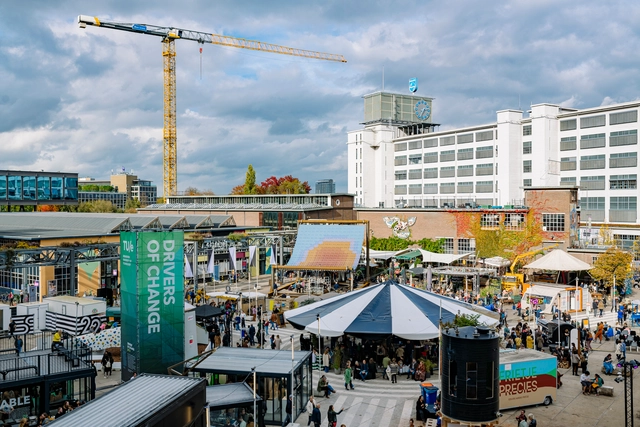
Under the motto "Get Set," the 2022 DDW exhibited more than 50 art and architectural installations to call out designers and communities for a shift from preparation to action facing the challenges of our time. Led by Miriam van der Lubbe, Creative Head of DDW, with Marjan van Aube and Formafantasma as ambassadors, the 21st edition of the Dutch Design Week took place the last week of October in Eindhoven, the Netherlands closing with a Graduation Show of over 200 students of the Design Academy Eindhoven.

Inspiring designers to incorporate innovation and sustainability and familiarize the public with all the technology has to offer, ArchDaily has selected 9 relevant works focused on bio-materials and modular systems. Highlighting ongoing design research, the list underlines projects that reinvent how we deal with nature and the space we live in. 

Get Set: 9 Architecturally Relevant Exhibitions at the 2022 Dutch Design Week - Image 12 of 4Get Set: 9 Architecturally Relevant Exhibitions at the 2022 Dutch Design Week - Image 27 of 4Get Set: 9 Architecturally Relevant Exhibitions at the 2022 Dutch Design Week - Image 34 of 4Get Set: 9 Architecturally Relevant Exhibitions at the 2022 Dutch Design Week - Image 35 of 4Get Set: 9 Architecturally Relevant Exhibitions at the 2022 Dutch Design Week - More Images+ 31

The City as an Organism

Nature has continually played muse to architects. Colors and forms from the natural world find themselves embedded in artificial edifices. Buildings are also shaped by patterns of the wind and sun, topography, and vegetation. While architecture is informed by the effects of nature, buildings have been proposed as inert objects that remain static in a biologically evolving world. Anthropocentric concrete “jungles” are devoid of life, separating humans from natural environments and causing imbalances that have manifested as pandemics. What would cities look like if there were no boundaries between humans and ecosystems?

The City as an Organism  - Image 1 of 4The City as an Organism  - Image 2 of 4The City as an Organism  - Image 3 of 4The City as an Organism  - Image 4 of 4The City as an Organism  - More Images+ 5

Biodesign Competition

The Biodesign competition is a a two week long sprint, seeking bold and innovative visions for the future of construction at the intersection of the physical, the digital and the biological.

We seek radical visions for the following categories:

  • A. Spaces for living – Single family home in the suburbs – Multi-family apartment in the city – Informal settlement or slums in the context of an emerging economy – In situ revitalization of abandoned buildings in the context of cities with declining population
  • B. Spaces for learning or healing – Visions for primary or secondary schools – Novel typologies for wellness institutes

For Terreform ONE, Bioengineering is the Future of Design

Subscriber Access | 

Could an emergency shelter also provide its users with food? Could we make furniture you can eat? Could you merge furniture and farming into one device?

It’s questions like these that set biodesign studio Terreform ONE (Open Network Ecology) apart from other design collaboratives. Instead of looking at design as finding a solution to solve one problem, their structures and furniture pieces try to tackle many issues facing the planet all at once. Need a structure to house refugees as well as find them a reliable source for protein? Why not build them a home that also acts as a cricket farm?