1. ArchDaily
  2. Bus Station

Bus Station: The Latest Architecture and News

Rural Transportation Hubs: Infrastructure Design, Access, and Regional Mobility

Subscriber Access | 

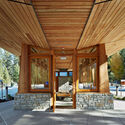
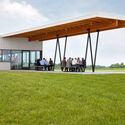
The future of transportation hubs in the United States will not be defined by iconic metropolitan airport terminals and expansive central train stations. Rural communities contain the majority of the nation's road miles, carry nearly half of all truck vehicle miles traveled, and originate two-thirds of rail freight. These realities position rural transportation hubs as vital regional access points and distribution centers that shape national mobility outside models of urban extensions.

Rural transportation hubs in the United States are essential civic and logistical anchors whose success cannot be measured against urban metrics. Instead of replicating transport hubs of dense urban typologies, designers are developing architectural models that reflect rural realities: dispersed populations, freight-dominant infrastructure, modest multimodality, safety challenges, and social access needs. In many rural regions, a modest airport terminal sustains economic viability, a rail transfer facility connects resource-based industries to national markets, and a regional bus depot provides access to employment, education, and essential services.
Rural Transportation Hubs: Infrastructure Design, Access, and Regional Mobility - Image 1 of 4Rural Transportation Hubs: Infrastructure Design, Access, and Regional Mobility - Image 2 of 4Rural Transportation Hubs: Infrastructure Design, Access, and Regional Mobility - Image 3 of 4Rural Transportation Hubs: Infrastructure Design, Access, and Regional Mobility - Image 4 of 4Rural Transportation Hubs: Infrastructure Design, Access, and Regional Mobility - More Images+ 44

Could Transit Oriented Developments Save Your City?

Subscriber Access | 

Cities that rely on the use of private cars experience a variety of problems- long commutes to and from work, endless traffic jams, and an increase in pollution. While it seems like cars are the most reliable option to take us from place to place, city planners are frequently promoting the benefits of public transit, and the development of communities that are centered around many forms of public transportation. Many cities are growing faster than they were initially planned. As a result, roadways have expanded, land is being transformed into massive parking lots, and connections between communities are growing farther apart.

CHYBIK + KRISTOF Redesign Brutalist Bus Terminal in the Czech Republic

Architects and urban designers CHYBIK + KRISTOF have announced the ground-breaking of their redesign of Brno’s Zvonařka Central Bus Terminal in the Czech Republic. Self-initiated by the architects in 2011, the project involved preserving the existing Brutalist heritage structure while addressing the need to rethink the terminal for contemporary needs. The project reimagines an iconic landmark and its role within the city.

5 Teams Shortlisted for Redesign of New York City's Port Authority Bus Terminal

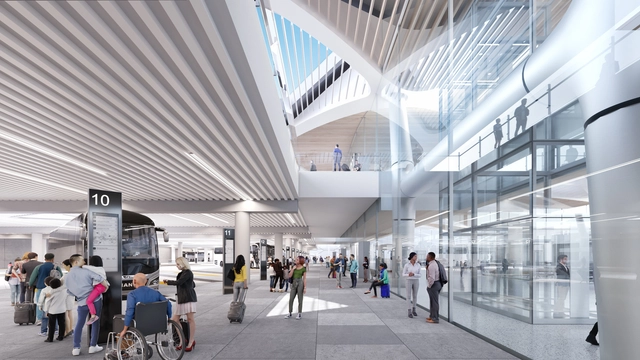
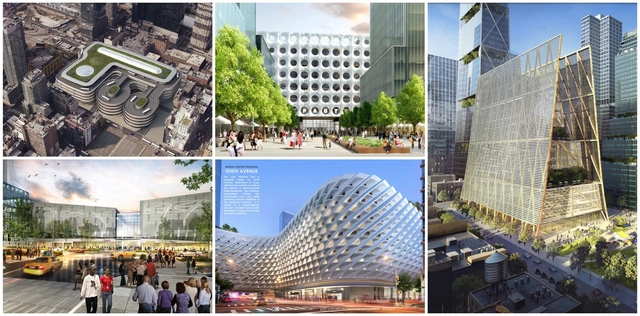
The Port Authority of New York and New Jersey has revealed the five finalists teams in competition to redesign the Port Authority bus terminal in west Manhattan: Arcadis of New York, Archilier Architecture Consortium, Hudson Terminal Center Collaborative, Pelli Clarke Pelli Architects, and Perkins Eastman.

The Port Authority Bus Terminal International Design + Deliverability Competition challenged architects to reimagine the current terminal building, built in 1950 and expanded in 1979, for the demands of modernday ridership. The terminal currently accommodates approximately 220,000 passenger trips and more than 7,000 bus movements on an average weekday, with demand projected to increase to 270,000 daily peak-hour passengers by 2020, and as many as 337,000 daily peak-hour passengers by 2040.

Continue reading to see each of the designs.