

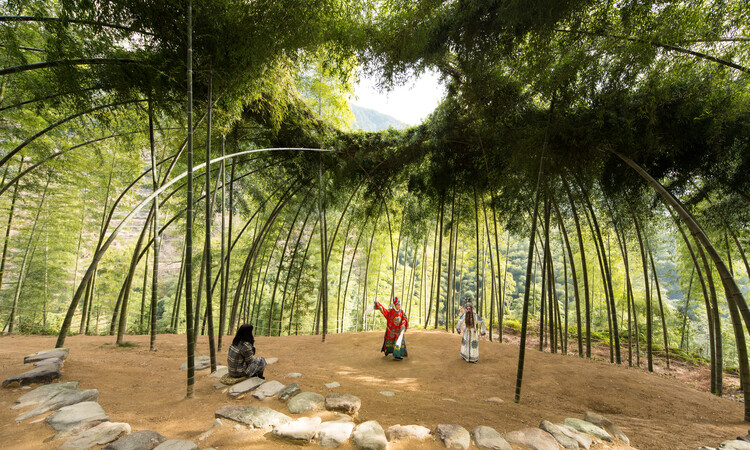
Xu Tiantian is the founding principal of DnA_Design and Architecture, an interdisciplinary practice that addresses both the physical and social dimensions of the contemporary living environment, across scales. Born in 1975 in Fujian, China, she received a Master of Architecture in Urban Design from the Harvard Graduate School of Design and a bachelor's degree in architecture from Tsinghua University in Beijing. Her recent work focuses on rural revitalization through a strategy she describes as "architectural acupuncture," understood as small-scale, site-specific interventions designed to activate local culture, agriculture, and tourism. These interventions, primarily concentrated in China's rural regions, have been recognized by UN-Habitat as a global model for urban–rural integration. In this interview with Louisiana Channel, she reflects on the role of the architect, questions architecture itself and the concept of beauty, explains her working methodology, and emphasizes the spatial dimension of nature.
Chinese Architecture: The Latest Architecture and News
"Beauty in Itself Is Dangerous:" Xu Tiantian on Moving Beyond Starchitecture in Louisiana Channel Interview
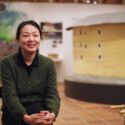

“Great Architecture Must Be Poetry:” Zhu Pei on Architecture as a Form of Art in Louisiana Channel Interview
Zhu Pei is a Chinese architect born in 1962 in Beijing. He studied at Tsinghua University and UC Berkeley, and founded Studio Zhu Pei in 2005. The studio's experimental work and research focus on contemporary architecture, art, and cultural projects. With an artistic and exploratory approach, it investigates the relationship between the roots that anchor architecture in specific natural and cultural contexts and the innovation that drives architecture as a form of artistic revolution. In his interview with Louisiana Channel, Zhu Pei describes architecture as an artistic discipline that, like poetry, relies on openness, imagination, and the creation of new experiences. He argues that great architecture goes beyond functional problem-solving by generating a sense of wonder through its ability to "invent" and "create some new thing, new experience," positioning architectural practice as cultural and sensory exploration rather than purely technical production.


The CCA Launches a Comprehensive Research Initiative and Exhibition on Modern Architecture in China
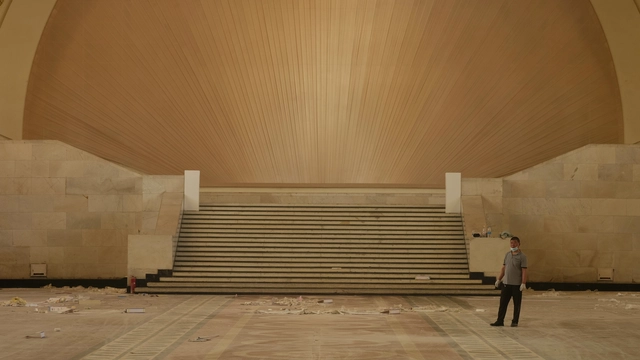
The Canadian Centre for Architecture (CCA) recently launched a new research project and institutional collaboration with M+ in Hong Kong titled How Modern: Biographies of Architecture in China 1949–1979. The project unfolds through an exhibition presented in the CCA's Main Galleries from 20 November 2025 to 5 April 2026, a series of commissioned films and oral history videos by artist Wang Tuo, online editorial content, public programming, and a companion book co-published by the CCA and M BOOKS. This collection of content seeks to reframe architectural histories of modernism in the first three decades of the People's Republic of China, revealing how design operated under shifting ideologies and socioeconomic pressures through the perspectives and experiences of architects, institutions, and residents. The project aligns with the CCA's ongoing interest in producing new readings of modern architecture across different sociopolitical contexts and geographical frameworks, including Architecture in Uniform: Designing and Building for the Second World War (2011) and Building a new New World: Amerikanizm in Russian Architecture (2020).

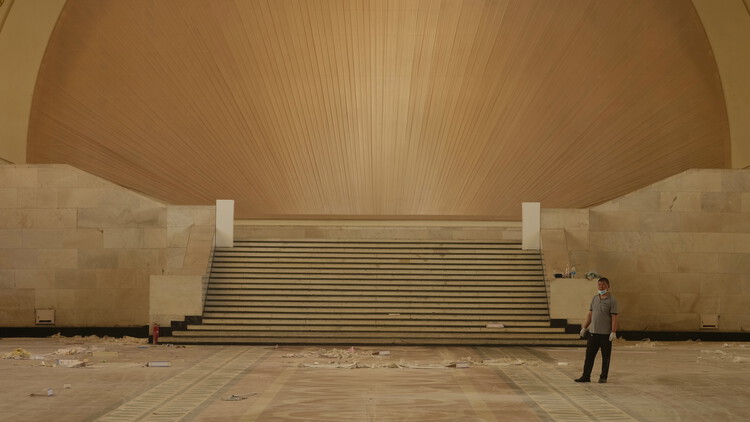
“Ma Yansong: Architecture and Emotion” Exhibition Opens at the Nieuwe Instituut in Rotterdam
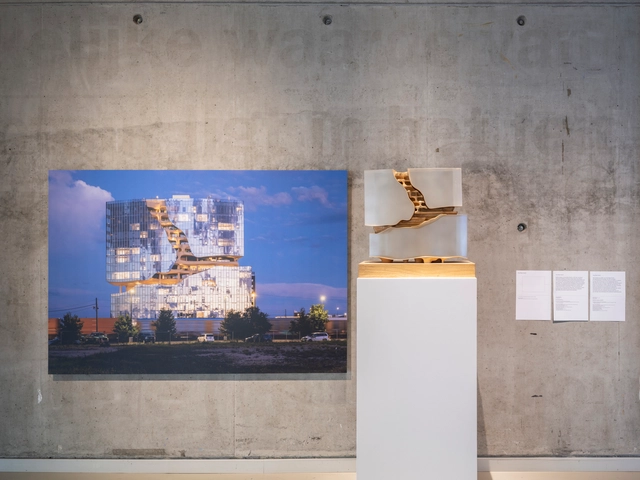
The exhibition "Ma Yansong: Architecture and Emotion," presenting the work of Chinese architect Ma Yansong and his globally recognized practice MAD Architects, has opened at the Nieuwe Instituut in Rotterdam, the Netherlands' national museum for architecture, design, and digital culture. Featuring a selection of projects from MAD's international portfolio, the exhibition explores how the studio challenges conventional architectural paradigms through forms influenced by nature and guided by sensorial experience. The exhibition will be on view until 12 October, and on Thursday 26 June, Ma Yansong will be the guest of honour at the Nieuwe Instituut for "An Evening With...", a public program where he will discuss his design philosophy with Aric Chen.

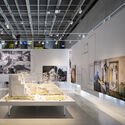

Liu Jiakun and the Reinvention of Tradition in Chinese Architecture
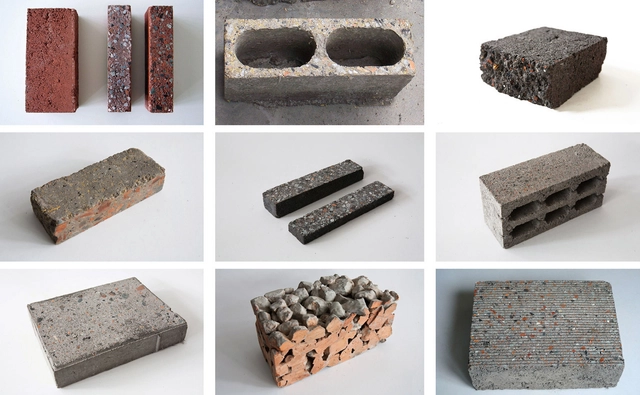
The world watches China's development with a mix of admiration, curiosity, and apprehension. From massive infrastructure projects—such as hydroelectric plants and a modern high-speed rail network—to the emergence of entire cities built from scratch, the country showcases an ambitious growth strategy and an impressive capacity for execution. However, this rapid progress also brings significant challenges and stark contrasts. On one hand, modernity asserts itself in futuristic skyscrapers and cutting-edge technology; on the other, there remains a pressing need to preserve the country's rich cultural and historical heritage, reflected in ancient temples, imperial palaces, and historic cities.
Rapid urban growth has also introduced issues such as overcrowding, environmental pollution, increasing social inequality, and the loss of agricultural land. Large-scale urbanization has led to the disappearance of traditional villages, environmental degradation, and the homogenization of architecture and lifestyles in many Chinese cities. It is within this context that Liu Jiakun, awarded the 2025 Pritzker Prize, stands out for his subtle yet profoundly transformative architectural approach. His work responds to these and other challenges of Chinese society while valuing traditional materials and techniques, as well as the creation of communal spaces.
Chinese Architect Liu Jiakun Receives the 2025 Pritzker Architecture Prize
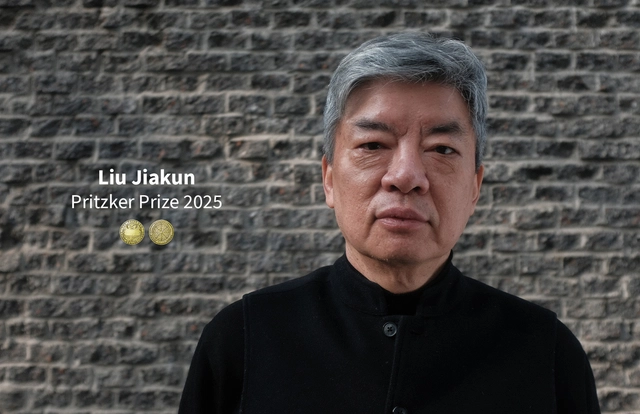
Chinese architect and educator Liu Jiakun has been announced as the laureate of the 2025 Pritzker Architecture Prize, the highest honor in the architecture field. This prestigious award recognizes Jiakun, founder of Jiakun Architects (established 1999), for his ability to blend traditional Chinese elements with contemporary design and for his commitment to social equity in the built environment. Born in Chengdu, China, where he continues to live and work, he becomes the second Chinese architect to receive the accolade, following Wang Shu (2012). Jiakun joins a distinguished list of previous laureates including Riken Yamamoto in 2024, David Chipperfield in 2023, and Francis Kéré in 2022. The award ceremony will be held this spring at the Jean Nouvel-designed Louvre Abu Dhabi, with a global video release of the presentation this fall, followed by the 2025 Laureates' Lecture and Symposium in May.


Contemporary Yet Traditional Courtyards: Enhancing Living Spaces in 10 Chinese Residential Projects
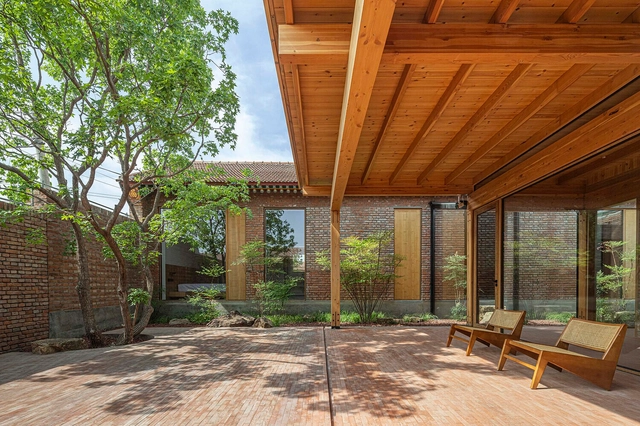
Courtyards have long been a fundamental aspect of traditional Chinese architecture, serving as central spaces around which domestic life is organized. These spaces play a vital role in creating a harmonious living environment, offering benefits that range from regulating indoor temperatures to enhancing social interactions and fostering a close connection with nature.


"You Have to Leave Some Space for the Future People to Interpret": In Conversation with Zhu Pei
Over the last eight years, I have interviewed Beijing-based architect and educator Zhu Pei several times. His persistent quest to combine traditional planning and construction principles with innovative formal and spatial sensibilities intrigues me. His latest projects, including Zijing International Conference Camp (2022) and Jingdezhen Imperial Kiln Museum (2020), are widely published and represent his most mature works. Yet, he is convinced that his best building is in the making. "This is going to be amazing! I feel so excited!" the architect told me, referring to his now under-construction Majiayao Ruins Museum and Observatory in Gansu province in Northwestern China. "I hate column-beam solutions. I want column-free spaces for the public building," he continued. Our conversation took place earlier this year on a video call, complete with dozens of relevant illustrations.
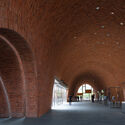
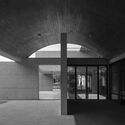
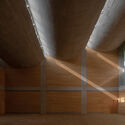

“I Let Architecture be Deeply Rooted in a Specific Culture": In Conversation with Zhu Pei
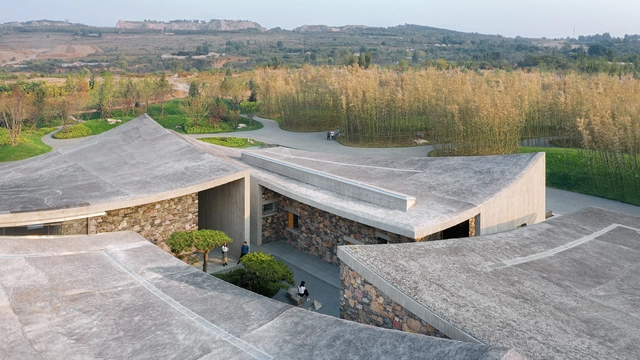
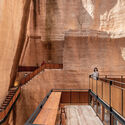
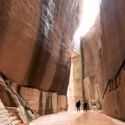
“This is going to be amazing! I feel so excited,” says Zhu Pei about his now under-construction Majiayao Ruins Museum and Observatory in Lintao, Gansu province. The Beijing-based architect designed his building like a deeply embedded cavernous space evoking a giant fragment of ancient pottery, resembling an archaeological site from the Neolithic Age discovered here a century ago. The building is so unusual that it cannot be described in common architectural terms. For example, a vast cast-in-place concrete hyperbolic shell lies prone on the ground, blocking the cold wind from the northwest in winter. The architect used the sand and gravel from the local Tao River to produce a special rough concrete with horizontal scratches on the surface, symbolizing the traces of thousands of years of erosion. All of Zhu’s buildings are quite remarkable. Yet, despite their novelties, they are rooted in culture, nature, and climate. They are designed based on his architectural philosophy, Architecture of Nature, articulated in five fundamental points: incomplete integrity, sponge architecture, cave and nest, sitting posture, and structure and form.


On the Work of Three Pioneering Chinese Architects: Wang Shu, Yung Ho Chang, and Liu Jiakun
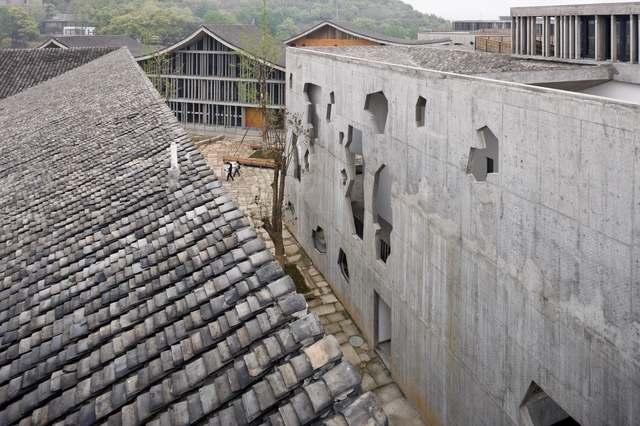
I first went to China in 2002, a year after the International Olympic Committee awarded the 2008 Summer Games to Beijing. That initial trip was about exploring nature, cuisine, ancient temples, archeological sites, and, in general, experiencing lifestyles in China, mainly outside of its major cities. I was motivated by the pure curiosity of a Western tourist driven to an Eastern country in search of the old world, the exotic, hoping to catch a glimpse of a rich traditional culture on the cusp of its inevitable radical transformation. At the time, there was no modern, or rather contemporary, architecture in China to speak of. There were only the promising first hints of the development of a potentially new architectural language being undertaken by just a handful of independent architects almost entirely under the radar.


ArchDaily China's 2022 Building of the Year Awards are Now Open for Nominations

As we successfully launched our 13th Building of the Year Awards earlier this year, we want to thank you for being part of our community for over 10 years. Together we have been growing and contributing to the architectural scene, aiming for a better world. Now, we are proud to announce the 6th edition of The ArchDaily Building of the Year China, celebrating the best architecture in China, as chosen by you, the reader.
By nominating and voting, you form part of an interdependent, impartial, distributed network of jurors and peers that has consistently helped us celebrate architecture of every scale, purpose, and condition, and architects of all profiles. Over the coming weeks, your votes will result in 700 Chinese projects filtered down to just 10 best projects in China.
The 2022 Building of the Year Awards China is brought to you thanks to Dornbracht, renowned for leading designs for architecture, which can be found internationally in bathrooms and kitchens.
Contemporary Social Housing in China: Playing with the Constraints
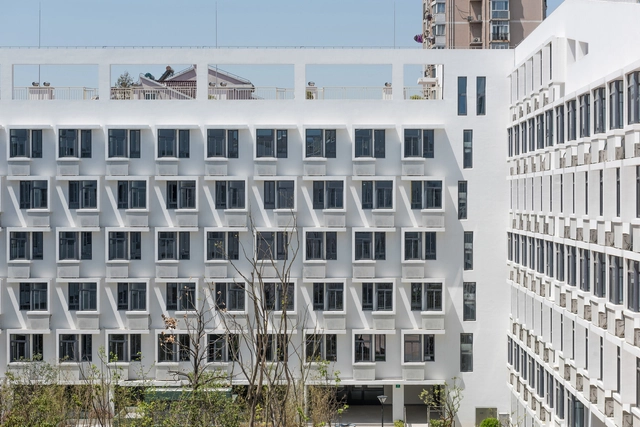
Saskia Sassen, the Robert S. Lynd Professor of Sociology at Columbia University, predicts in her co-authored book “The Quito Papers and the New Urban Agenda” that, in the future cities will become our crucial battlefield as we continue to fight against gentrification and growing degree of isolation in our communities. Sassen argues that, “Cities should be an inclusive space for both the affluent and the poor. Nevertheless, in reality our cities never achieved equality for all, because our cities were never designed that way. Still cities ought not to be a place that tolerates inequality or injustice”.
Witnessing the Growth of Xiangshan Campus of China Academy of Art: 2007 vs 2021
.jpg?1628842439&format=webp&width=640&height=580)
The Xiangshan campus of China Academy of Art was designed by the recipient of the 2012 Pritzker Architecture Prize, Shu Wang and Wenyu Lu from Amateur Architecture Studio. The studio was responsible for the overall project completion from master planning to architectural design and landscape design. On the north side of Xiangshan is the first phase of the campus. It was designed in 2001 and completed in 2004. It is a complex of ten buildings and two bridges, with a construction area of about 70,000 square meters. The second phase of the campus is located on the south side of Xiangshan, and it was designed in 2004 and completed in 2007. It consists of ten large buildings and two small buildings with a construction area of nearly 80,000 square meters.
The construction period of the two phases was 14 months each. A large number of craftmanship during the construction has produced many problems that could only be solved on-site, therefore the site was repeatedly touched and shaped by countless hands. In 2007, the photographer Iwan Baan recorded the campus after completion. In 2021, photographer Sai Zhao used the lens of original focal length to take pictures of the campus at the same location. Over the course of more than ten years, green plants have covered and sheltered the structure, and the building now has its own life.
Images of Ateliers Jean Nouvel’s Coastal TAG Art Museum Reflecting the Colors of Sunset
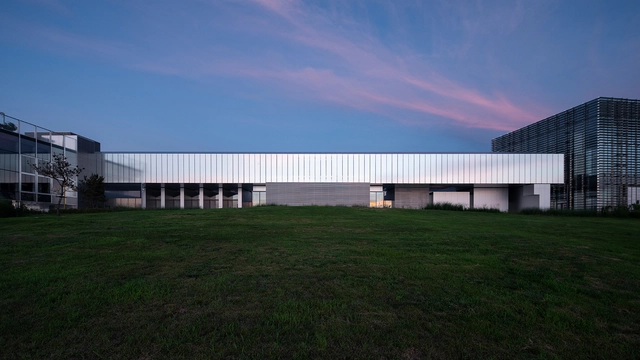
ACF has released a new series of images demonstrating the recently completed TAG Art Museum, designed by Ateliers Jean Nouvel, as part of the Artists’ Garden project collaborated with Shandong International Coastal Cultural Industry. The museum is located in the West Sea Bay in Qingdao, China. Strung along a covered promenade that weaves through planted gardens and woodland, running along the coastline towards a new marina, the structures consist of 12 interconnected exhibition halls.
Cafes and Bars in China: Examining the Spatial Routine of Drinking
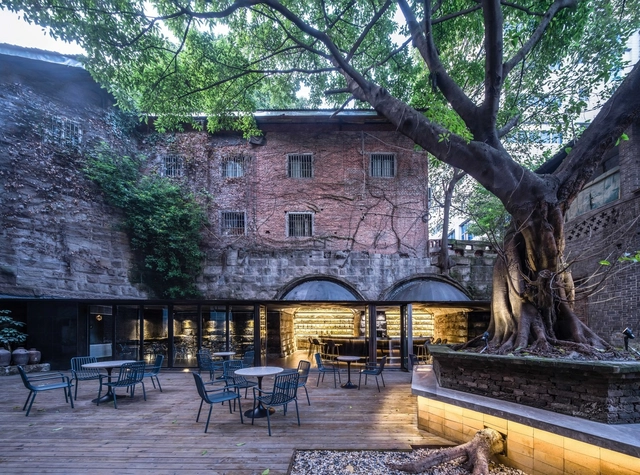
Both tea and alcohol in traditional China were similarly aestheticized, and both influenced the language of literature and art. People used to exchange alcohol as a gift in a way that they later would with tea. Today, more and more cities in China have embraced this drinking culture that passed down from generation to generation, and reinterpreted with a new contemporary fashion, which is constantly evolving in the urban cafes and bars.
"Transform the City into a Highly Complex Block System": SOM on TOD Projects
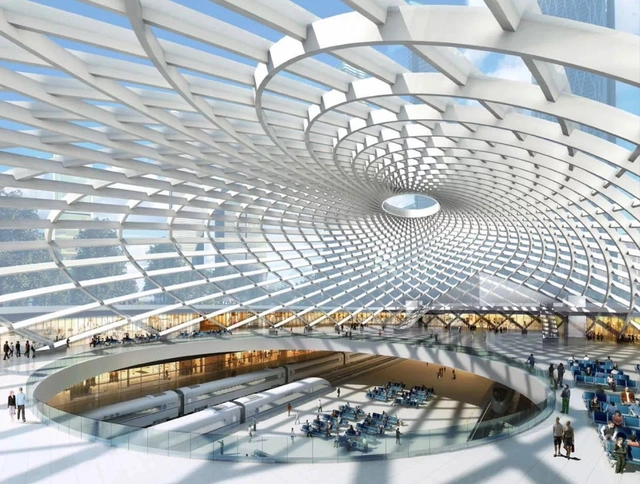
Archdaily had the chance to speak to SOM regarding the Transit-oriented development (TOD) projects. SOM has extensive engagement in planning, design and engineering on various means of conveyance, and TOD is definitely one of the speciality the SOM team has to offer. Through the interview, we will walk through the design strategies and their changes over the years of TOD Development, the challenges and new area of focus of TOD development, and most importantly, the interview will focus on the design strategy in developing TOD in China, where SOM has participated in many TOD projects, including the South Gateway of Guangzhou Central Axis, Guangzhou Nansha Pearl Bay and Xiong'an District Planing.
Escaping the Urban Jungle: 10 Exemplary Design of Guesthouses in China
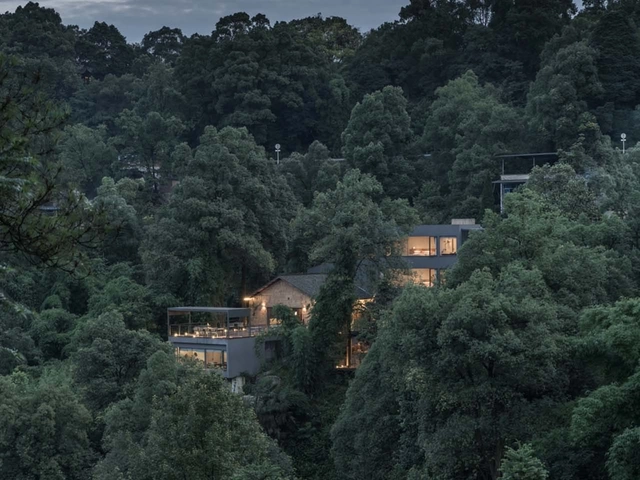
A border city can be classified as an urban agglomeration close to the boundary of two countries, states, or regions. Nowadays, as our cities are rapidly expanding and our transportation modes continually upgrading, the boundary between cities and rural areas has been constantly pushed and redefined.
Design Communities for Children: 10 Exemplary Kindergartens in China
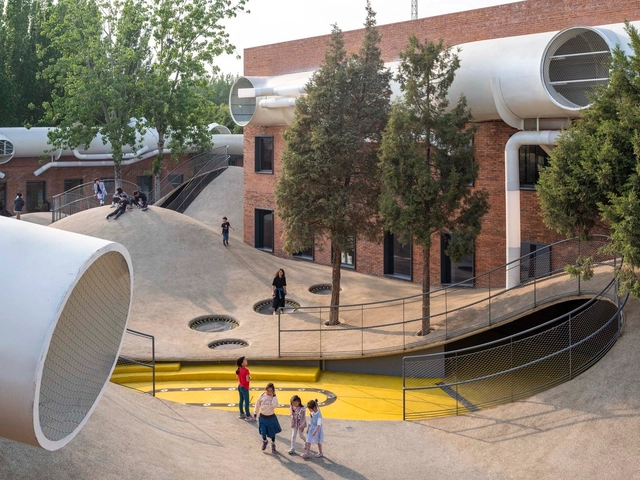
Bruce Jilk in his essay ‘Place Making and Change in learning environments” showcases a radical view of contemporary education which, he argues, is outdated and does not meet the needs of the modern world. Instead of providing for a world of individuals operating within a wider urban environment, schools have become internalized ghettos of childhood, cutting off from communities they are supposed to serve, centrally administered in a “one size fits all” ethos. Designers and architects around the world have always been seeking a more flexible architectural model which will allow much more creativity within the learning process and the environments which serve it.