1. ArchDaily
  2. Civic

Civic: The Latest Architecture and News

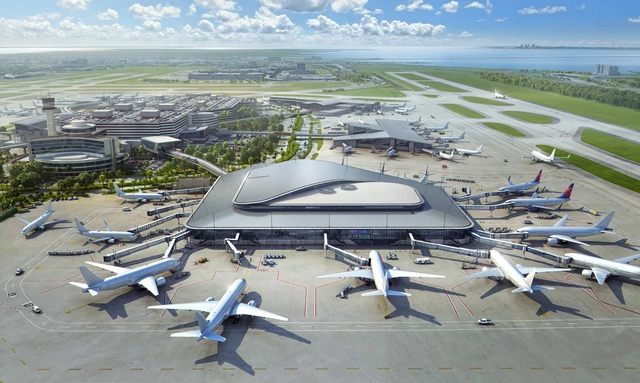
Rural Transportation Hubs: Infrastructure Design, Access, and Regional Mobility

Subscriber Access | 

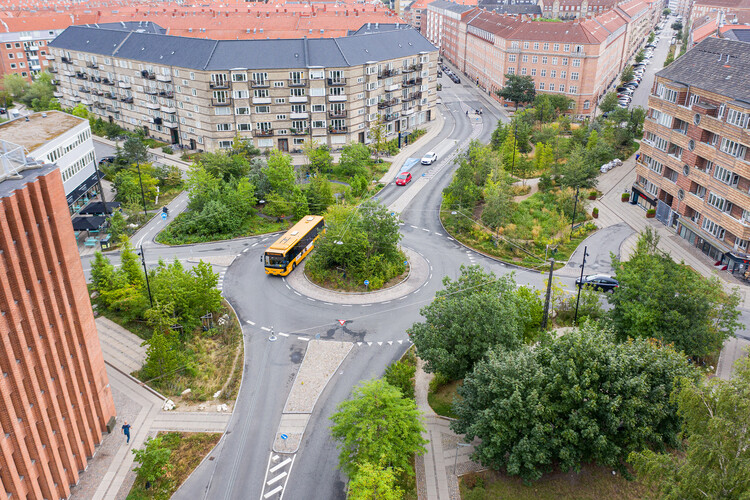
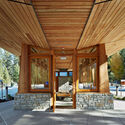
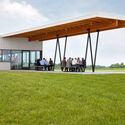
The future of transportation hubs in the United States will not be defined by iconic metropolitan airport terminals and expansive central train stations. Rural communities contain the majority of the nation's road miles, carry nearly half of all truck vehicle miles traveled, and originate two-thirds of rail freight. These realities position rural transportation hubs as vital regional access points and distribution centers that shape national mobility outside models of urban extensions.

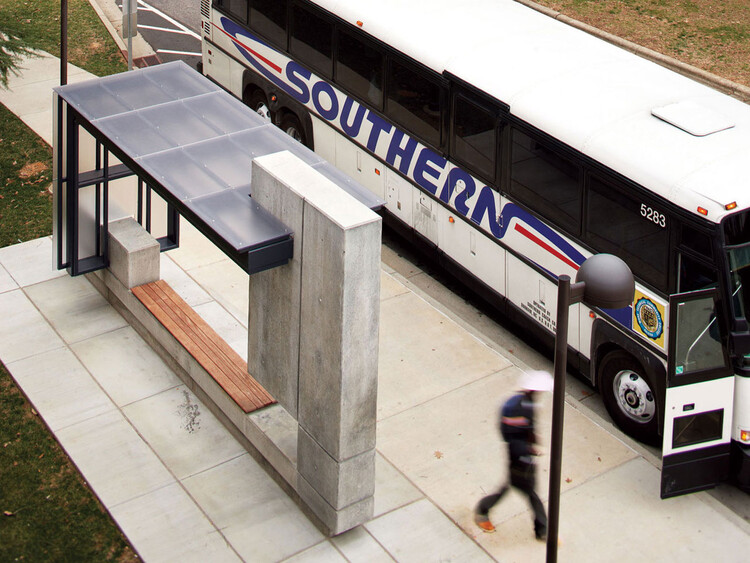
Rural transportation hubs in the United States are essential civic and logistical anchors whose success cannot be measured against urban metrics. Instead of replicating transport hubs of dense urban typologies, designers are developing architectural models that reflect rural realities: dispersed populations, freight-dominant infrastructure, modest multimodality, safety challenges, and social access needs. In many rural regions, a modest airport terminal sustains economic viability, a rail transfer facility connects resource-based industries to national markets, and a regional bus depot provides access to employment, education, and essential services.
Rural Transportation Hubs: Infrastructure Design, Access, and Regional Mobility - Image 1 of 4Rural Transportation Hubs: Infrastructure Design, Access, and Regional Mobility - Image 2 of 4Rural Transportation Hubs: Infrastructure Design, Access, and Regional Mobility - Image 3 of 4Rural Transportation Hubs: Infrastructure Design, Access, and Regional Mobility - Image 4 of 4Rural Transportation Hubs: Infrastructure Design, Access, and Regional Mobility - More Images+ 44

Beyond Imported Icons: Tao Ho and a Local Modernism for Hong Kong

Subscriber Access | 

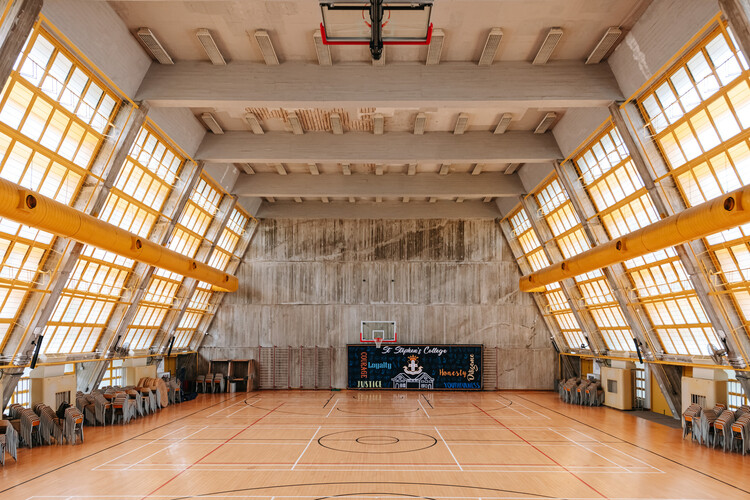
When Hong Kong's architectural story is told, it is often reduced to a handful of icons. Many people most readily name I.M. Pei—Pritzker Prize laureate and architect of the Bank of China Tower in Central (1990), as well as global works such as the Le Grand Louvre in Paris and the Miho Museum in Shiga. Looking elsewhere, one also encounters a long lineage of British and international architects whose imprints have shaped the city's institutional skyline: from Ron Phillips' civic works—most notably the former Murray Building (1969), now The Murray Hotel, and Hong Kong City Hall (1962)—to Norman Foster's infrastructural and corporate monuments, including the Hongkong and Shanghai Banking Corporation (HSBC) Tower (1986) and Hong Kong International Airport (1998), and, more recently, Zaha Hadid Architects' The Henderson (2024).

Yet within the same period as Pei and Foster, local architects were also producing buildings of enduring significance—works that carried the legacies of Bauhaus, but translated them into a language distinctly calibrated to Hong Kong's climate, density, and civic life. These projects may not always read as commercially prominent icons, yet they often register a sharper sense of social responsibility and public agenda. Among the most important figures in this lineage is the late architect Tao Ho, whose work and public role formed a quieter—but no less foundational—strand in Hong Kong's modern architectural heritage.

Beyond Imported Icons: Tao Ho and a Local Modernism for Hong Kong - Image 1 of 4Beyond Imported Icons: Tao Ho and a Local Modernism for Hong Kong - Image 2 of 4Beyond Imported Icons: Tao Ho and a Local Modernism for Hong Kong - Image 3 of 4Beyond Imported Icons: Tao Ho and a Local Modernism for Hong Kong - Image 4 of 4Beyond Imported Icons: Tao Ho and a Local Modernism for Hong Kong - More Images+ 14

Dispatched: Architecture of the American Post Office and the Privatization of Civic Space

Post offices stand among the most enduring monuments of civic life in the United States. Across towns and city centers, they carry the shifting architectural ambitions of the nineteenth and twentieth centuries, from Greek Revival formality to Beaux-Arts monumentality and Art Deco ornament. Architects and federal planners would give these buildings a clear public role and a powerful physical presence. Stone façades, monumental halls, and crafted interiors projected stability, trust, and permanence. The post office placed the federal government directly into the everyday landscape of American life.

Dispatched: Architecture of the American Post Office and the Privatization of Civic Space - Image 4 of 4Dispatched: Architecture of the American Post Office and the Privatization of Civic Space - Image 6 of 4Dispatched: Architecture of the American Post Office and the Privatization of Civic Space - Image 7 of 4Dispatched: Architecture of the American Post Office and the Privatization of Civic Space - Featured ImageDispatched: Architecture of the American Post Office and the Privatization of Civic Space - More Images+ 10

From Thessaloniki to Augsburg: Architecture Now and New Project Announcements by Populous, HENN, SLA, and More

Subscriber Access | 

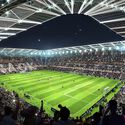
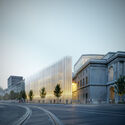
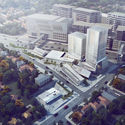
As cities worldwide navigate evolving social, environmental, and cultural priorities, recent project announcements showcase how architecture is increasingly conceived as both civic infrastructure and a catalyst for collective identity. From Populous' new stadium design in Thessaloniki that blurs the lines between sport and urban life, to HENN's transparent cultural stage in Augsburg that invites community participation, these projects illustrate architecture's expanding role beyond its immediate function. In Luxembourg, Schmidt Hammer Lassen's work for the European Investment Bank reimagines institutional spaces through sustainability and heritage, while SLA and GHD's new island community in Toronto pushes forward nature-based, climate-adaptive urbanism. This edition of Architecture Now brings together diverse yet interconnected efforts to shape how architecture can support long-term ecological, cultural, and civic impact.

From Thessaloniki to Augsburg: Architecture Now and New Project Announcements by Populous, HENN, SLA, and More - Image 1 of 4From Thessaloniki to Augsburg: Architecture Now and New Project Announcements by Populous, HENN, SLA, and More - Image 2 of 4From Thessaloniki to Augsburg: Architecture Now and New Project Announcements by Populous, HENN, SLA, and More - Image 3 of 4From Thessaloniki to Augsburg: Architecture Now and New Project Announcements by Populous, HENN, SLA, and More - Image 4 of 4From Thessaloniki to Augsburg: Architecture Now and New Project Announcements by Populous, HENN, SLA, and More - More Images+ 8

Architecture Now: Designing Future-Ready Spaces for Work, Culture, and Public Life

Subscriber Access | 

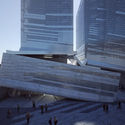
From Bangkok to Billund, a new wave of architectural project announcements is reshaping how spaces for work, culture, mobility, and public life are conceived. Across Norway, Thailand, the United States, Denmark, Australia, and Thailand, these projects reflect an increasing emphasis on technological integration, sustainable construction, and flexible, future-ready environments. Whether designing production hubs for digital creators, adaptable media campuses, or civic landscapes layered with history and ecological intent, each scheme offers insight into how architecture is evolving to support emerging industries, cultural programming, and new forms of public engagement. This edition of Architecture Now brings together a selection of recently announced projects that highlight the intersection of design, technology, and innovation in a global context.

Architecture Now: Designing Future-Ready Spaces for Work, Culture, and Public Life - Image 1 of 4Architecture Now: Designing Future-Ready Spaces for Work, Culture, and Public Life - Image 2 of 4Architecture Now: Designing Future-Ready Spaces for Work, Culture, and Public Life - Image 3 of 4Architecture Now: Designing Future-Ready Spaces for Work, Culture, and Public Life - Image 4 of 4Architecture Now: Designing Future-Ready Spaces for Work, Culture, and Public Life - More Images+ 10

Brutalism and Bureaucracy: An Architectural Language of Authority in the Postwar United States

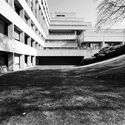
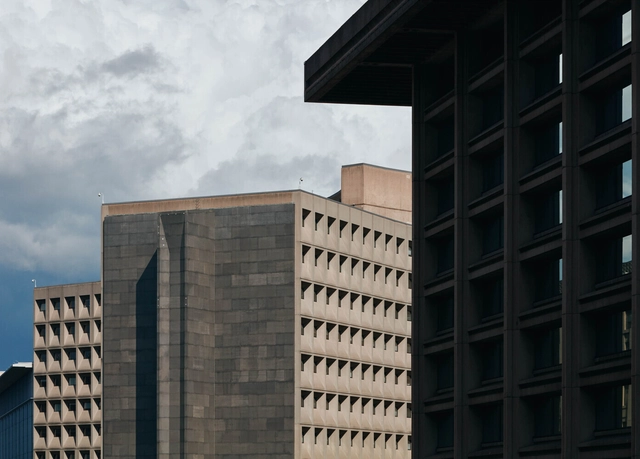
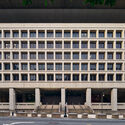
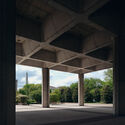
Brutalist architecture in the United States is a monument to collective postwar optimism and reassurance that the city and federal governments are in authority. Conceived as an embodiment of strength and efficiency, Brutalist structures were quickly adopted for the architectural language of civic and governmental institutions in the mid-to-late twentieth century in the United States. Towering monoliths of raw concrete rose across the nation, projecting an image of institutional permanence while simultaneously provoking debate over their social and psychological impact.

Brutalism and Bureaucracy: An Architectural Language of Authority in the Postwar United States - Image 1 of 4Brutalism and Bureaucracy: An Architectural Language of Authority in the Postwar United States - Image 2 of 4Brutalism and Bureaucracy: An Architectural Language of Authority in the Postwar United States - Image 3 of 4Brutalism and Bureaucracy: An Architectural Language of Authority in the Postwar United States - Image 4 of 4Brutalism and Bureaucracy: An Architectural Language of Authority in the Postwar United States - More Images+ 7

Renovation of Federal Reserve Board Headquarters Portends a Battle Over Civic Architecture

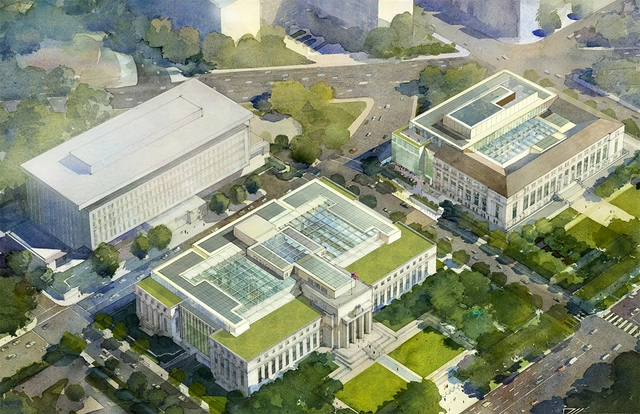
Paul Philippe Cret’s 1937 building for the Federal Reserve Board (FRB)—the Marriner S. Eccles Building—stands as a prime example of neoclassical civic architecture along Washington D.C.’s Constitution Avenue. But the white marble building may have prompted new proposed guidelines around federal architecture, if conversations swirling in meetings of the Commission of Fine Arts are any indication. Plans to renovate and expand the FRB complex—the Eccles Building is joined by the FRB-East Building, designed in 1933 as the US Public Health Service by Cret’s fellow Frenchman Jules Henri de Sibour—are currently under review at the National Capital Planning Commission (NCPC) and the Commission of Fine Arts (CFA).

TheeAe Unveils a Triangular Proposal for Australia’s Ryde Civic Center

TheeAe Unveils a Triangular Proposal for Australia’s Ryde Civic Center  - Buildings, Facade, Cityscape
Courtesy of TheeAe LTD.

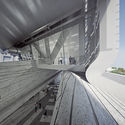
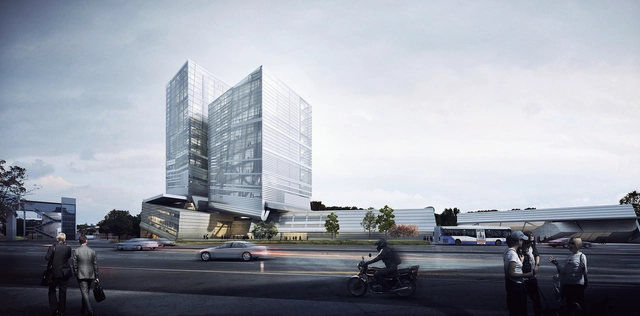
TheeAe has revealed their competition entry for a new civic center in Ryde, Australia. As its name indicates, ‘Trianglemnant’ builds upon the unique triangular site area, and consists of a series of overlapping trilateral forms that shape the building and surrounding public spaces.
Trianglemnant was put forward as part of the international design competition ‘Design our Ryde’, which invited architects to present proposals for a new civic center at the gateway to the municipality. Though the project was not one of the four shortlisted, its attempt to create a diverse public space is noteworthy.

Competition Proposal by Preliminary Research Office Thinks “Outside the Box”

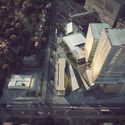
Preliminary Research Office has revealed their entry to a competition to design the new civic center for the city of Ryde, Australia. The project uses a series of boxes at different scales to inform the organization of both the building and the public spaces. Following a competition of 175 entries from 49 countries, the project did not make the shortlist. However, its approach addresses the fundamental needs of a civic center to be dynamic, flexible and human-scale.

Competition Proposal by Preliminary Research Office Thinks “Outside the Box” - Institutional Buildings, Facade, CityscapeCompetition Proposal by Preliminary Research Office Thinks “Outside the Box” - Institutional Buildings, Facade, CityscapeCompetition Proposal by Preliminary Research Office Thinks “Outside the Box” - Institutional Buildings, Facade, HandrailCompetition Proposal by Preliminary Research Office Thinks “Outside the Box” - Institutional Buildings, Facade, CityscapeCompetition Proposal by Preliminary Research Office Thinks “Outside the Box” - More Images+ 10

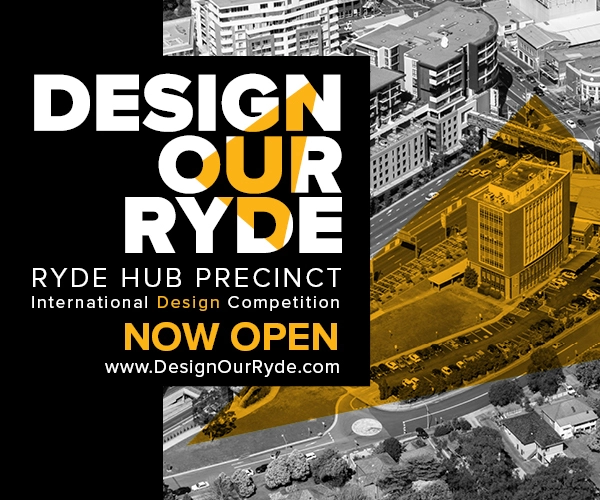
Call for Submissions: Design Our Ryde - International Design Competition

The Council of the City of Ryde, a suburb of Sydney, Australia, invites submissions for an iconic gateway concept – a bold vision of insightful and creative design to guide future development of its civic site.

Review: 'All Of This Belongs To You' - Civic Urbanism At London's Victoria & Albert Museum

Subscriber Access | 

The Victoria and Albert Museum (V&A), named after the Queen and Her Consort, has its foundations in the Great Exhibition of 1851 amidst the wealth, innovation and squalor of the Industrial Revolution. Britain was flooded by prosperity which allowed for the development of major new institutions to collect and exhibit objects of cultural significance or artistic value. The institute’s first director, Henry Cole, declared that it should be “a schoolroom for everyone,” and a democratic approach to its relationship with public life has remained the cornerstone of the V&A. Not only has it always been free of charge but it was also the first to open late hours (made possible by gas lighting), allowing a more comprehensive demographic of visitor.

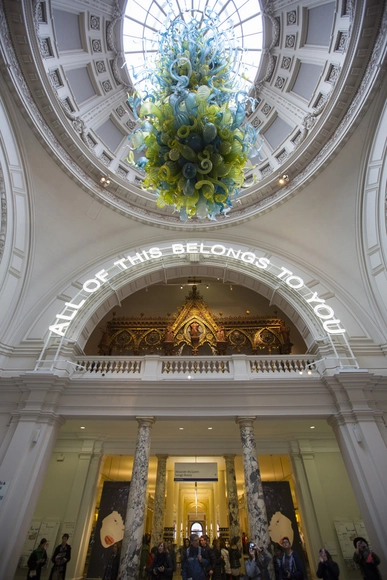
Their latest exhibition, which opens today, seeks to realign the museum’s vast collection and palatial exhibition spaces in South Kensington with these founding concepts. The interventions of All of This Belongs to You attempt to push the V&A’s position as an extension of London’s civic and cultural built environment to the fore, testing the museum’s ability to act as a 21st century public institution. To do this in London, a city where the notion of public and private is increasingly blurred, has resulted in a sequence of compelling installations which are tied together through their relevance either in subject matter, technique, or topicality.
Review: 'All Of This Belongs To You' - Civic Urbanism At London's Victoria & Albert Museum - Image 1 of 4Review: 'All Of This Belongs To You' - Civic Urbanism At London's Victoria & Albert Museum - Image 2 of 4Review: 'All Of This Belongs To You' - Civic Urbanism At London's Victoria & Albert Museum - Image 3 of 4Review: 'All Of This Belongs To You' - Civic Urbanism At London's Victoria & Albert Museum - Image 4 of 4Review: 'All Of This Belongs To You' - Civic Urbanism At London's Victoria & Albert Museum - More Images+ 4