1. ArchDaily
  2. Claude Parent

Claude Parent: The Latest Architecture and News

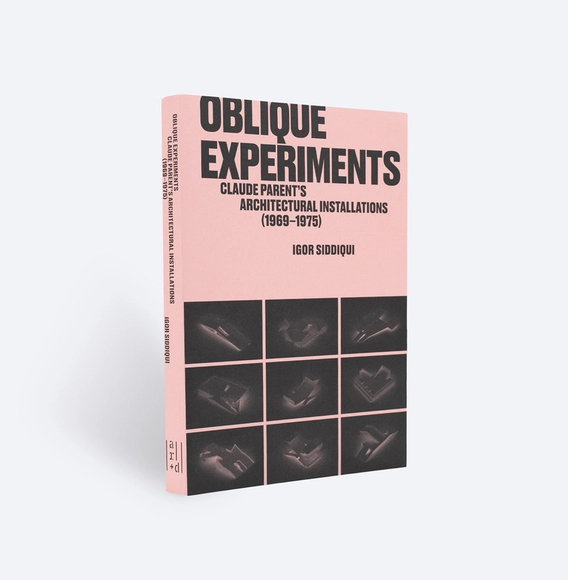
Oblique Experiments Claude Parent’s Architectural Installations (1969–1975)

With the radical proposition of life on inclined planes—a theory known as the oblique function—the French architect Claude Parent sought to free architecture of orthogonal form, renew its social relevance, and inspire people’s interest in the built environment. Oblique Experiments: Claude Parent’s Architectural Installations (1969–1975) explores the significance of a series of temporary interventions that he designed in an attempt to convert his theory into practice. Referred to as practicables, these installations incorporated oblique geometries, involved interdisciplinary collaboration, and made themselves at home in existing buildings, often inside of French cultural centers known as maisons de la culture. Using rarely published archival materials as well as new drawings produced by the book’s author, Oblique Experiments brings overdue attention to this series of architectural experiments with enduring intellectual and creative appeal. Moreover, the book prompts the reader to imagine the radical potential of obliqueness in a range of contemporary practices—beyond the literal prospect of life on sloped floors. As such, Oblique Experiments builds upon Parent’s work in order to imagine new forms of experimentation in architecture, design, and art.
A New Book Chronicles the Turbulent History of Architectural Complexity

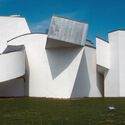
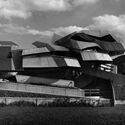
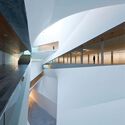
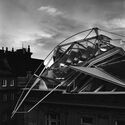
The marquee-busting title says it all: Joseph Giovannini’s Architecture Unbound is an ambitious attempt to explore the wilder shores of design and explain how and why maverick architects have dared greatly. It’s also a wide-ranging introduction to artists who laid the groundwork for architectural innovation a century ago; to the philosophers and theorists who mapped new ways of thinking, and to the complexities of chaos theory, parametric and software programs that have shaped exceptional buildings over the past few decades.

A New Book Chronicles the Turbulent History of Architectural Complexity - Image 1 of 4A New Book Chronicles the Turbulent History of Architectural Complexity - Image 2 of 4A New Book Chronicles the Turbulent History of Architectural Complexity - Image 3 of 4A New Book Chronicles the Turbulent History of Architectural Complexity - Image 4 of 4A New Book Chronicles the Turbulent History of Architectural Complexity - More Images+ 4

Claude Parent – Visionary Architect

On the occasion of the book release of Claude Parent: Visionary Architect (Rizzoli New York), we are pleased to invite you to discover the exhibition Claude Parent: Visionary Architect held at SCI-Arc’s Kappe Library, celebrating French architect Claude Parent’s work. This exhibition includes a full-scale ramp installation based on the architect’s own oblique apartment interior, and presents a selection of never before seen original drawings and sketches, as well as photographs of iconic projects and publications on Parent's work.

Claude Parent: Visionary Architect

A monograph on one of the most influential visionary architects of the twentieth century, Claude Parent, whose buildings and theoretical work directly influenced leading architects Hadid, Libeskind, Nouvel and Gehry. The influence of the idealistic French architect Claude Parent (1923-2016) extends far beyond the legacy he left in iconic commercial and residential built works such as the Villa Drusch in Versailles (1963), the church of Sainte-Bernadette du Banlay in Nevers (1966), and GEM shopping center in Sens (1970). The movement was at the heart of Parent's vision, and is nowhere more evident than in his drawings, many of which are published in this book for the first time-- drawings which, according to Frank Gehry, are "extraordinary--beautiful fantasies, full of poetry," and which Edwin Eathcote, writing for the Financial Times, described as "breathtaking... in their ambition they not only presage Daniel Libeskind and Zaha Hadid, they arguably surpass them." Parent's work manifests the oblique function theory he developed with Paul Virilio in 1963, that dictates that buildings should feature slopes, be wall-free where possible and have a predominance of space over the surface. Featuring contributions by some of today's most renowned architects, this long-overdue publication is a must-have for students of architecture and architects alike. Including initial sketches for his best known buildings and never-before-seen drawings of unbuilt works, Claude Parent: Visionary Architect reveals the genius of a man who unquestionably changed the history of architecture.

French "Utopian" Architect Claude Parent Dies Aged 93

Claude Parent, a celebrated French architect and Commandeur de la Légion d'honneur, died on the evening of the 27th February 2016, the day after his 93rd birthday. Born in 1923 in Neuilly-sur-Seine, Parent was a member of the Académie des Beaux-Arts in Paris and, throughout his career, developed a limited but extremely influential body of built work ranging from nuclear power stations to shockingly unconventional shopping centers, such as his project in Sens. Described as both a utopian and a 'supermodernist' in his own lifetime, the methodology he shaped has played a significant role for his peers of all generations and for contemporary artists and thinkers including Jean Nouvel, who began his professional life as a collaborator.