1. ArchDaily
  2. Contemporary Architecture

Contemporary Architecture: The Latest Architecture and News

Heritage After Failure: What We Will Keep From Today’s Architectural Mistakes

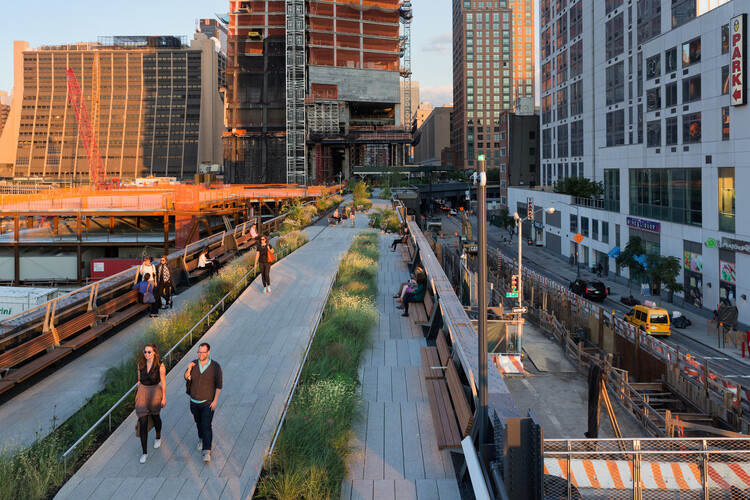
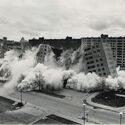
Architectural heritage is often described as what survives time. Yet survival does not explain why certain buildings are preserved while others disappear. Many works now protected as cultural heritage were once criticized, contested, or openly rejected; they were accused of being socially misguided, materially flawed, or symbolically excessive. Over time, however, these same shortcomings have become central to their meaning as heritage emerges as a slow and unstable process of interpretation.

Contemporary architecture operates under intense scrutiny, pressured by environmental responsibility, social equity, economic volatility, and accelerated technological change. Buildings are expected to perform ethically, efficiently, and symbolically, often simultaneously. As a result, architectural failure is no longer an exception but an increasingly common condition. Projects age faster, materials reveal limitations sooner, and urban strategies quickly fall out of sync with shifting political, social, and environmental realities.
Heritage After Failure: What We Will Keep From Today’s Architectural Mistakes - Image 1 of 4Heritage After Failure: What We Will Keep From Today’s Architectural Mistakes - Image 2 of 4Heritage After Failure: What We Will Keep From Today’s Architectural Mistakes - Image 3 of 4Heritage After Failure: What We Will Keep From Today’s Architectural Mistakes - Image 4 of 4Heritage After Failure: What We Will Keep From Today’s Architectural Mistakes - More Images+ 28

The Long Table as a Spatial Protocol: Designing Conditions for Gathering and Pause

A long table can sit almost anywhere and still do the same work. It can stretch beneath a market canopy, run along a school dining hall, or occupy the center of a shared living room, and it immediately changes the room's temperature.

That is why the long table is less an object than a spatial instrument. It does not guarantee a connection, and it rarely looks "inclusive" by default. Instead, it sets conditions: a shared edge, a common rhythm of arrival, a field of mutual visibility, or a rule that turns eating into a scene with others. Food studies describe this practice as commensality, the act of eating together and the social order it can create, reinforce, or contest. But what matters here is not a specific dimension or the table's function, but the way a long surface holds difference, conversation, and silence; intimacy and distance; the decision to join and the right to hesitate.

The Long Table as a Spatial Protocol: Designing Conditions for Gathering and Pause - Image 1 of 4The Long Table as a Spatial Protocol: Designing Conditions for Gathering and Pause - Image 2 of 4The Long Table as a Spatial Protocol: Designing Conditions for Gathering and Pause - Image 3 of 4The Long Table as a Spatial Protocol: Designing Conditions for Gathering and Pause - Image 4 of 4The Long Table as a Spatial Protocol: Designing Conditions for Gathering and Pause - More Images+ 22

Forum, Depot, Maze: Toward a Plural Ecology of Museums

Subscriber Access | 

This article is part of our new Opinion section, a format for argument-driven essays on critical questions shaping our field.

Traditionally, a museum visit is a calendared occasion with a clearly scripted sequence. Arrival is ceremonially marked—by grand stairs or thresholds, by ticketing and information desks, by an audio guide and a concise institutional preface about mission and history. That deliberate "special occasion" quality extends from how museums were long conceived: deliberately exceptional, tightly curated, and organized around a specific narrative arc. In this model, the museum assumes an authoritative voice—its knowledge deep, vetted, and to be respected rather than contested—while architecture and choreography reinforce a rather singular way of entering, learning, and remembering.

Forum, Depot, Maze: Toward a Plural Ecology of Museums - Image 1 of 4Forum, Depot, Maze: Toward a Plural Ecology of Museums - Image 2 of 4Forum, Depot, Maze: Toward a Plural Ecology of Museums - Image 3 of 4Forum, Depot, Maze: Toward a Plural Ecology of Museums - Image 4 of 4Forum, Depot, Maze: Toward a Plural Ecology of Museums - More Images+ 17

Níall McLaughlin Receives the 2026 RIBA Royal Gold Medal for Architecture

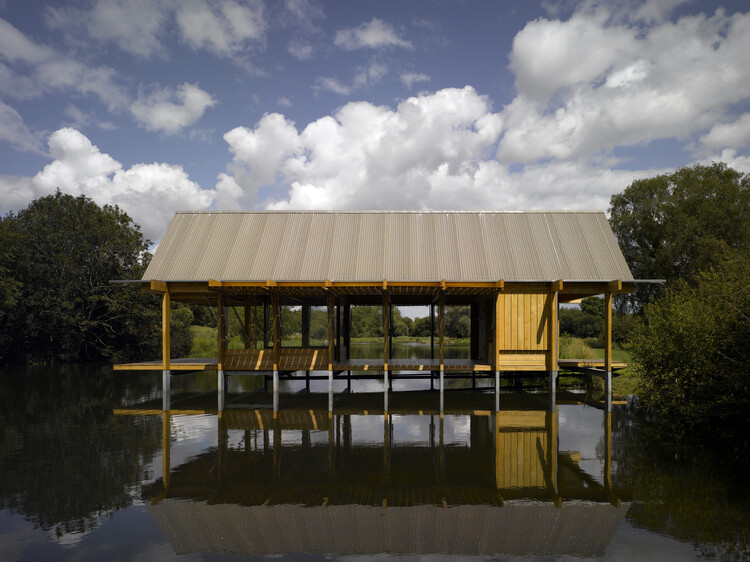
The Royal Institute of British Architects (RIBA) has announced that Irish architect, educator, and writer Níall McLaughlin will receive the 2026 Royal Gold Medal for Architecture. Awarded on behalf of His Majesty the King, the Royal Gold Medal is among the significant international distinctions in architecture, recognizing a sustained contribution to the advancement of the discipline through built work, education, and critical discourse. In announcing the award, RIBA noted McLaughlin's long-standing influence across architectural practice and pedagogy, citing a career that spans more than three decades and reflects a consistent engagement with the cultural, environmental, and social dimensions of architecture.

Níall McLaughlin Receives the 2026 RIBA Royal Gold Medal for Architecture - Image 1 of 4Níall McLaughlin Receives the 2026 RIBA Royal Gold Medal for Architecture - Image 2 of 4Níall McLaughlin Receives the 2026 RIBA Royal Gold Medal for Architecture - Image 3 of 4Níall McLaughlin Receives the 2026 RIBA Royal Gold Medal for Architecture - Image 4 of 4Níall McLaughlin Receives the 2026 RIBA Royal Gold Medal for Architecture - More Images+ 6

Foster + Partners Plans Airport-Led Urban Development Outside Luanda, Angola

Foster + Partners, in collaboration with Angola's Ministry of Transport, has unveiled the master plan for the Icolo e Bengo Aerotropolis, a large-scale development planned around the recently completed Dr. Antonio Agostinho Neto International Airport. The proposal organizes business, research, residential, and hospitality programs within a landscape-led framework structured around the airport. Development is planned to proceed in phases, beginning with the business and cultural district located to the north of the site.

Foster + Partners Plans Airport-Led Urban Development Outside Luanda, Angola - Image 1 of 4Foster + Partners Plans Airport-Led Urban Development Outside Luanda, Angola - Image 2 of 4Foster + Partners Plans Airport-Led Urban Development Outside Luanda, Angola - Image 3 of 4Foster + Partners Plans Airport-Led Urban Development Outside Luanda, Angola - Image 4 of 4Foster + Partners Plans Airport-Led Urban Development Outside Luanda, Angola - More Images+ 3

Experimentation, Learning, and Evolution in Architectural Design: Get to Know WORKac

Subscriber Access | 

WORKac is a New York-based firm founded in 2003 by Amale Andraos and Dan Wood. The firm has always believed in "the power of architecture and design to engage in environmental and social concerns, and to create new possibilities for the future." In that sense, the firm's principals define their approach to architecture as a constant evolution. For them, it is a continuous process of learning, questioning, and relearning, which is nurtured through the firm's engagement in local culture, climates, and histories, as well as discourse in the fields of ecology, landscape, and urbanism. In this way, they are able to bring these topics together with a focus on public, cultural, and civic projects that aim to reinvent how people live, work, and experience the world.

Experimentation, Learning, and Evolution in Architectural Design: Get to Know WORKac  - Image 1 of 4Experimentation, Learning, and Evolution in Architectural Design: Get to Know WORKac  - Image 2 of 4Experimentation, Learning, and Evolution in Architectural Design: Get to Know WORKac  - Image 3 of 4Experimentation, Learning, and Evolution in Architectural Design: Get to Know WORKac  - Image 4 of 4Experimentation, Learning, and Evolution in Architectural Design: Get to Know WORKac  - More Images+ 6

Active Envelopes: Integrating Solar Energy into Architectural Design

 | In Collaboration

When developing an architectural project, there are multiple possible points of departure. Some architects begin with volume, gradually carving form in dialogue with its context. Others start from the longitudinal section, while some organize the project around the functional layout of the plan. There is no right or wrong method, but rather distinct approaches that reflect different ways of thinking about and making architecture. Since the widespread adoption of solar panels and photovoltaic energy, however, a recurring pattern has emerged: these systems are almost always introduced later in the process, framed as technical optimizations or responses to regulatory and energy-efficiency requirements. As a result, they tend to be treated as secondary elements, often relegated to rooftops or less visible areas and detached from the architectural language of the building.

MVRDV and Buro Happold Reveal Design for the Lampegiet Theatre in Veenendaal, Netherlands

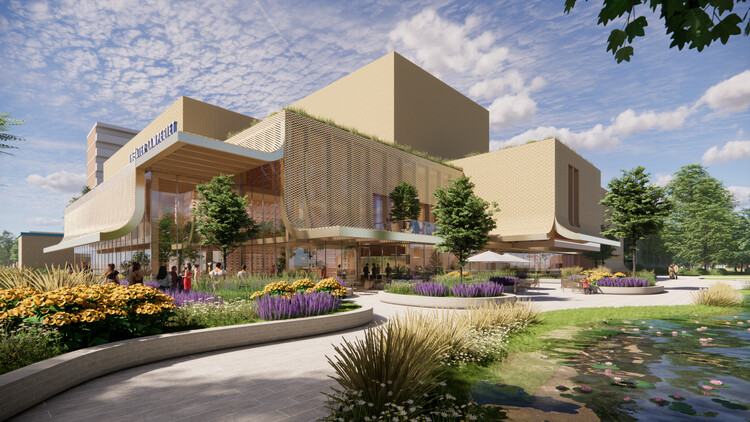
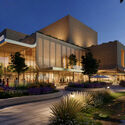
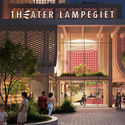
Designed by MVRDV in collaboration with Buro Happold, the new Lampegiet Theatre in Veenendaal, the Netherlands, is scheduled to replace the existing theatre building from 1988. Approved by the Veenendaal City Council in January 2026, the project is expected to begin construction in 2027 and reach completion in 2029. Conceived as a contemporary cultural venue that responds to both current performance requirements and the city's historical identity, the new theatre introduces a compact, multi-volume composition wrapped in a porous ceramic facade that allows the building to act as an illuminated urban landmark.

MVRDV and Buro Happold Reveal Design for the Lampegiet Theatre in Veenendaal, Netherlands - Image 1 of 4MVRDV and Buro Happold Reveal Design for the Lampegiet Theatre in Veenendaal, Netherlands - Image 2 of 4MVRDV and Buro Happold Reveal Design for the Lampegiet Theatre in Veenendaal, Netherlands - Image 3 of 4MVRDV and Buro Happold Reveal Design for the Lampegiet Theatre in Veenendaal, Netherlands - Image 4 of 4MVRDV and Buro Happold Reveal Design for the Lampegiet Theatre in Veenendaal, Netherlands - More Images+ 3

Riyadh Architecture City Guide: 16 Projects from Heritage to Urban Expansion

Subscriber Access | 

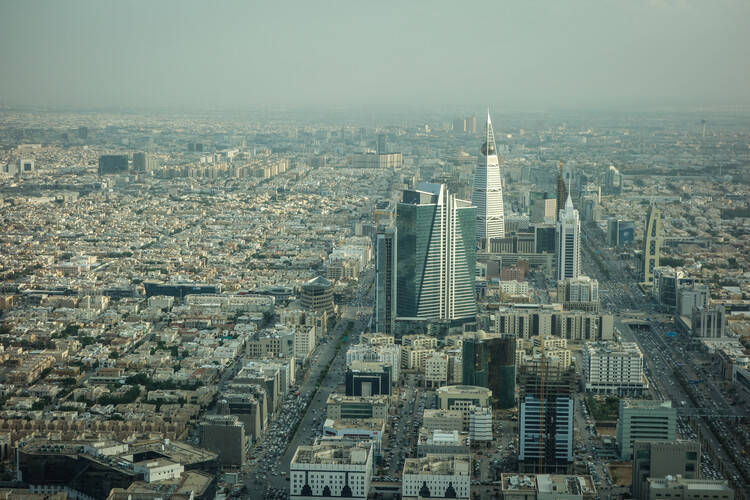
Once a Najdi settlement defined by mudbrick walls and courtyard houses, Riyadh has undergone one of the most radical urban transformations of the 20th and 21st centuries. The discovery of oil reserves, the consolidation of political power, and the rapid expansion of infrastructure reshaped the city from a regional capital into a sprawling metropolis almost within a single generation. As a result, Riyadh's urban fabric is marked by discontinuities, fragments of vernacular architecture coexist with mid-century institutional modernism, and a rapidly evolving contemporary skyline.

In recent decades, this layered condition has been further intensified by large-scale development strategies and cultural investment programs that position architecture as a tool for redefining national identity. International practices have played a decisive role in shaping key institutions, infrastructures, and landmarks, while local studios increasingly contribute projects that reinterpret climate, materiality, and social space within a contemporary framework.

Riyadh Architecture City Guide: 16 Projects from Heritage to Urban Expansion - Image 1 of 4Riyadh Architecture City Guide: 16 Projects from Heritage to Urban Expansion - Image 2 of 4Riyadh Architecture City Guide: 16 Projects from Heritage to Urban Expansion - Image 3 of 4Riyadh Architecture City Guide: 16 Projects from Heritage to Urban Expansion - Image 4 of 4Riyadh Architecture City Guide: 16 Projects from Heritage to Urban Expansion - More Images+ 17

Doors at Scale: Highlights from the Best Pivot Door Contest 2026

 | Sponsored Content

By shifting rotation away from traditional hinges and distributing weight vertically, pivot doors were developed to address a specific architectural challenge: how to move large, heavy door panels with precision, durability, and minimal visual interference. These systems allow doors to grow significantly in scale, weight, and material ambition, often blurring the line between door, wall, and architectural surface. Over time, this technical innovation has expanded the role of doors in architecture, allowing them to operate not only as points of access, but also as spatial thresholds, compositional devices, and expressive elements within the building envelope.

Highlighting this evolution, FritsJurgens established the Best Pivot Door Contest to showcase projects where engineering precision and architectural intent converge. Founded in the Netherlands, the company is internationally recognized for its concealed pivot systems capable of supporting exceptionally large and heavy doors. These systems give architects greater freedom in scale and materiality while maintaining precision, reliability, and architectural clarity.

Unearthing the Ground: Architecture and the Politics of the Subterranean

Subscriber Access | 

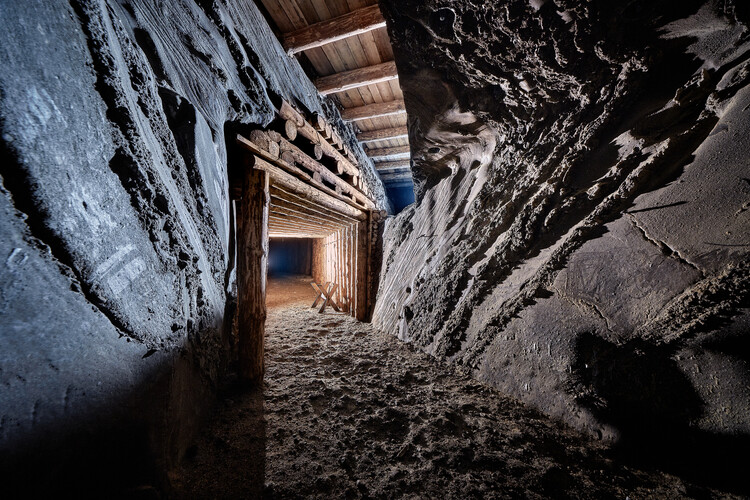
Beneath the visible surface of cities lies an invisible architecture. Subways, tunnels, water systems, data cables, and bunkers form a dense network that sustains urban life while remaining largely unseen. The ground beneath our feet is not a void but a complex territory that holds the infrastructures, memories, and anxieties of our age. In recent years, as land becomes scarce and climate pressures intensify, architects and urbanists have turned their gaze downward, rediscovering the subterranean as both a physical and conceptual frontier. To design underground is to engage with the unseen mechanisms that shape the world above.

The subterranean has long been a site where architecture intersects with politics, technology, and belief. From the catacombs of Rome to the industrial subways of modernity, descent has symbolized both protection and exposure. Twentieth-century urbanism transformed this gesture into a system: metros, shelters, and utilities redefined the city section as an instrument of governance. Beneath the promise of efficiency and progress, the underground absorbed the anxieties of an era of war, surveillance, and collapse. Its evolution reveals not only how societies build, but also how they fear.

Today, the ground has become the new frontier of urban expansion and ecological adaptation. As digital infrastructures, energy systems, and climatic buffers migrate below grade, architecture confronts a space both technical and metaphysical — essential yet marginal, invisible yet decisive. To think in sections rather than in plan is to recognise that contemporary cities no longer exist solely in their skylines but also in their depths. The challenge for architecture is not only to occupy that space, but to render it legible, to turn the unseen into knowledge, and the hidden into a new terrain of design.

Unearthing the Ground: Architecture and the Politics of the Subterranean - Image 1 of 4Unearthing the Ground: Architecture and the Politics of the Subterranean - Image 2 of 4Unearthing the Ground: Architecture and the Politics of the Subterranean - Image 3 of 4Unearthing the Ground: Architecture and the Politics of the Subterranean - Image 4 of 4Unearthing the Ground: Architecture and the Politics of the Subterranean - More Images+ 36

Snøhetta and BIAD Break Ground for the New Beijing Art Museum in Tongzhou

Snøhetta, in collaboration with the Beijing Institute of Architectural Design (BIAD), has won the international competition to design the Beijing Art Museum in Tongzhou District, Beijing. The project officially broke ground on December 31, 2025, with completion and public opening anticipated in 2029. Conceived as a new landmark for the eastern part of the city, the museum will form part of Tongzhou's cultural and civic development strategy as Beijing's sub-center. The commission marks Snøhetta's second major cultural project in the Chinese capital, following the Beijing Library, which opened to the public in 2023 and has since become a key reference for contemporary civic architecture in the city.

Between Sea and City: Contemporary Fish Market Architecture

Subscriber Access | 

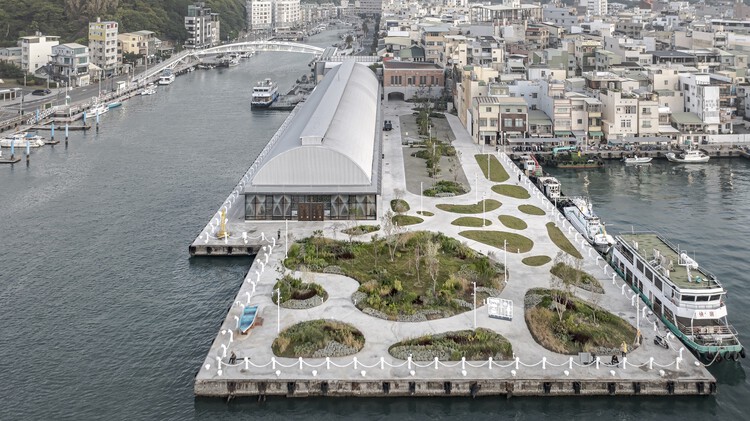
Throughout history, fish markets have played a singular role in mediating the relationship between city and sea. From the port agoras of antiquity, through medieval markets established along docks and estuaries, to the large covered structures of the 19th century, these spaces have been instrumental in shaping coastal cities. More than simple infrastructures for food supply, fish markets express cultural practices and modes of occupation rooted in proximity to water, consolidating themselves as intense and highly social public spaces. Within them, architecture, landscape, and social dynamics intertwine directly, revealing how the built environment can translate maritime traditions and reinforce the identity of coastal and port communities.
Between Sea and City: Contemporary Fish Market Architecture - Image 1 of 4Between Sea and City: Contemporary Fish Market Architecture - Image 2 of 4Between Sea and City: Contemporary Fish Market Architecture - Image 3 of 4Between Sea and City: Contemporary Fish Market Architecture - Image 4 of 4Between Sea and City: Contemporary Fish Market Architecture - More Images+ 11

The Everyday Legacy of Indian Modernism: Building for the Post-Independence Middle Class

Subscriber Access | 

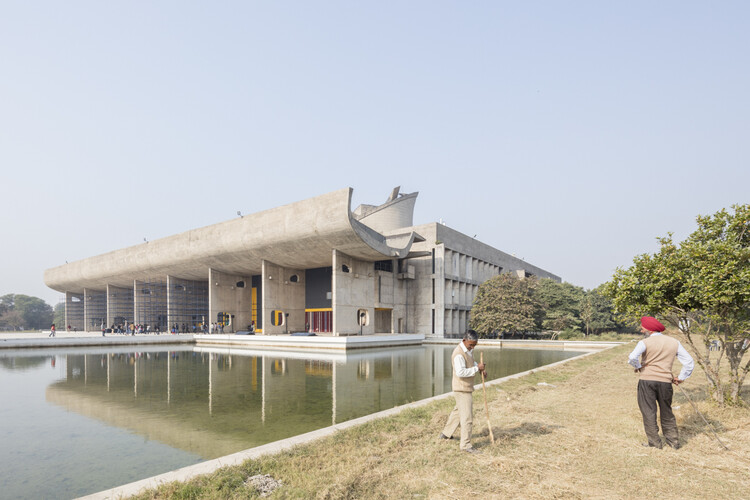
Indian modernism is often narrated through a narrow lens: a handful of iconic institutions, master architects, and formally radical experiments that came to symbolize the nation's post-Independence aspirations. Yet this version of history overlooks the far larger body of modernist architecture that quietly shaped everyday life across the country. Beyond celebrated campuses and canonical buildings exists a vast, dispersed landscape of housing blocks, offices, hostels, hospitals, markets, and townships — structures that were designed to function and endure.

The Everyday Legacy of Indian Modernism: Building for the Post-Independence Middle Class - Image 1 of 4The Everyday Legacy of Indian Modernism: Building for the Post-Independence Middle Class - Image 2 of 4The Everyday Legacy of Indian Modernism: Building for the Post-Independence Middle Class - Image 3 of 4The Everyday Legacy of Indian Modernism: Building for the Post-Independence Middle Class - Image 4 of 4The Everyday Legacy of Indian Modernism: Building for the Post-Independence Middle Class - More Images+ 6

2026 EU Mies Awards Reveal 40 Shortlisted Works Across 18 Countries

The European Commission and the Fundació Mies van der Rohe have announced the 40 shortlisted works for the 2026 European Union Prize for Contemporary ArchitectureMies van der Rohe Awards, selected from a total of 410 nominations. The shortlist brings together projects from 18 countries and 36 cities, offering an overview of contemporary architectural production across Europe. Among the shortlisted works, France accounts for nine projects, followed by Spain with seven and Denmark with four, with the remaining projects distributed across a wide range of European contexts. The finalists will be announced in February 2026, with the winners revealed in April 2026, ahead of the EUmies Awards Days in May.

2026 EU Mies Awards Reveal 40 Shortlisted Works Across 18 Countries - Image 1 of 42026 EU Mies Awards Reveal 40 Shortlisted Works Across 18 Countries - Image 2 of 42026 EU Mies Awards Reveal 40 Shortlisted Works Across 18 Countries - Image 3 of 42026 EU Mies Awards Reveal 40 Shortlisted Works Across 18 Countries - Image 4 of 42026 EU Mies Awards Reveal 40 Shortlisted Works Across 18 Countries - More Images+ 35

Rewriting Modernism Through Materials

Subscriber Access | 

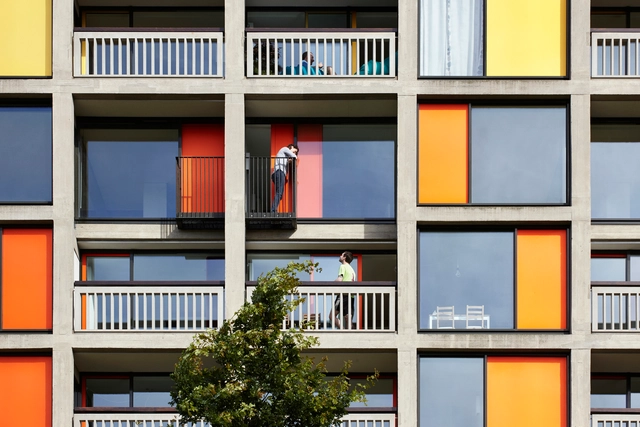
Park Hill, a large social housing complex in Sheffield, stands out as one of the most ambitious examples of modernist architecture in post-war Britain. Designed in 1961 by Jack Lynn and Ivor Smith, its innovative concept of "streets in the sky" aimed to combine high-density housing with the community spirit of traditional neighborhoods. By the late 20th century, the complex had fallen into severe neglect, marked by social problems and structural degradation that undermined both its functionality and reputation. Gradually, Park Hill became synonymous with the failure of modernism, carrying a heavy social stigma and marginalizing its residents.

Starting in the 2000s, significant efforts began to reverse this narrative through a two-phase revitalization process. The first phase, led by Urban Splash in collaboration with the architectural firms Hawkins\Brown and Studio Egret West, focused on preserving and enhancing the building's historical elements while introducing modern interventions to create a livable, functional, and attractive space. This stage demonstrated the potential of adaptive reuse in revitalizing communities and reclaiming architectural icons. The second phase of the renovation, carried out by the firm Mikhail Riches, sought to build on this initial work by introducing new elements that deepened the connection between the existing spaces and contemporary living. With an approach that combined historical sensitivity and architectural innovation, Mikhail Riches continued the process of transforming Park Hill into a landmark example of how modernist architecture can be adapted to meet current needs without losing its original identity.

SNOB Architects Designs Contemporary Office Building in Barcelona’s El Raval District

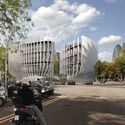
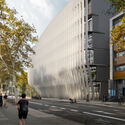
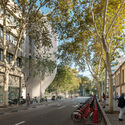
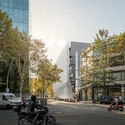
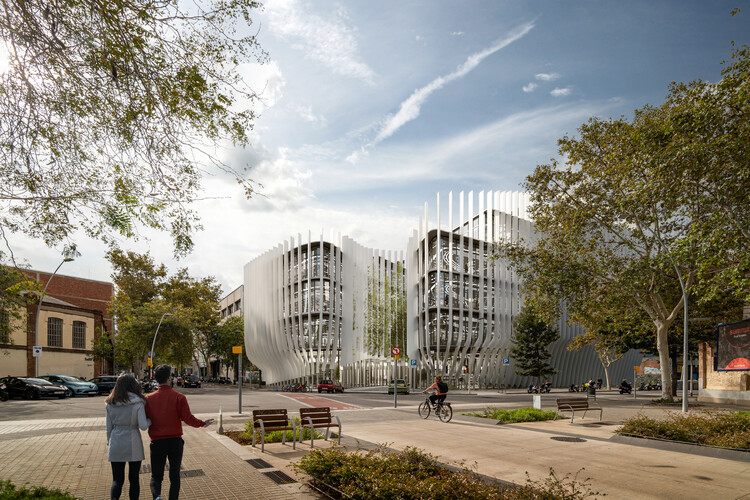
Located in Barcelona's El Raval district, the Futuristic Office Building by SNOB Architects introduces a contemporary office program within a consolidated and historically layered urban environment. Designed by the Lisbon-based practice and scheduled for completion around 2026, the project comprises approximately 12,000 square meters of gross built area. The building's height, massing, and proportions are calibrated in response to the surrounding fabric, reflecting the scale of adjacent structures while establishing a contemporary architectural language. Rather than presenting itself as an isolated object, the project is conceived as part of the existing city, contributing to the gradual transformation of El Raval through a controlled and context-aware architectural approach.

SNOB Architects Designs Contemporary Office Building in Barcelona’s El Raval District - Image 1 of 4SNOB Architects Designs Contemporary Office Building in Barcelona’s El Raval District - Image 2 of 4SNOB Architects Designs Contemporary Office Building in Barcelona’s El Raval District - Image 3 of 4SNOB Architects Designs Contemporary Office Building in Barcelona’s El Raval District - Image 4 of 4SNOB Architects Designs Contemporary Office Building in Barcelona’s El Raval District - More Images

Nine Stunning Renovated Apartments in Oscar Niemeyer-Designed Buildings

Subscriber Access | 

Living in residences designed by renowned modern architects is a dream sought after by many. Projects that have become iconic are major attractions for new residents who value both the authorial signature and history of the building, as well as the innovative architectural solutions that have contributed to the prominence of such projects. 

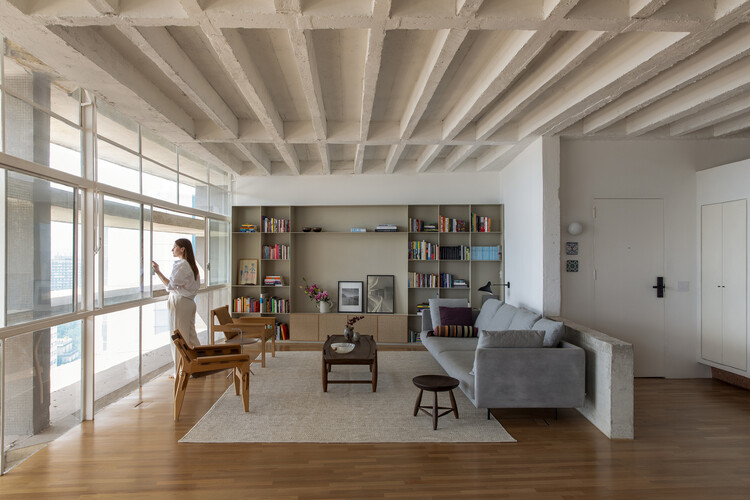
As for the work of Oscar Niemeyer, fluidity and flexibility may best express his plans and typologies. These features provide great potential for the architects working on renovations within these buildings. São Paulo’s Copan Building is a prime example: its 1160 units, spread over six blocks, vary from 25m² studio apartments to larger units of over 150m². Niemeyer’s extensive portfolio includes other residential landmarks in São Paulo — like the Montreal, California, and Eiffel buildings — plus others in Belo Horizonte and Brasília, even reaching as far as Berlin with the Interbau Apartment House.
Nine Stunning Renovated Apartments in Oscar Niemeyer-Designed Buildings - Image 1 of 4Nine Stunning Renovated Apartments in Oscar Niemeyer-Designed Buildings - Image 2 of 4Nine Stunning Renovated Apartments in Oscar Niemeyer-Designed Buildings - Image 3 of 4Nine Stunning Renovated Apartments in Oscar Niemeyer-Designed Buildings - Image 4 of 4Nine Stunning Renovated Apartments in Oscar Niemeyer-Designed Buildings - More Images+ 5