In 2026, Apple marked fifty years since its founding. Over the past two decades, Apple has developed a consistent architectural language that extends its brand into the built environment, transforming stores, workplaces, and public-facing spaces into active components of its identity. These environments guide movement, frame interaction, and condition the ways in which users encounter both products and the company itself.
From the handheld device to the urban interior, Apple has sought to maintain a high degree of control over form, material, and experience. Architecture becomes part of this system when the company begins to define how it is perceived and engaged with in physical space. Research on retail environments has shown how spatial layout, visibility, and circulation patterns can shape behavior and interaction, turning architecture into an interface between brand and user.
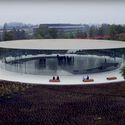
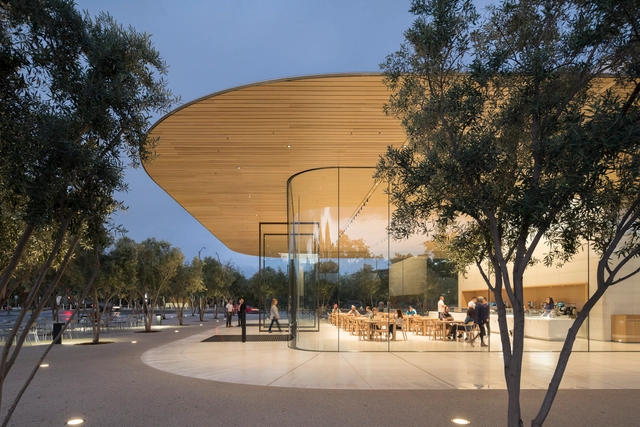
Ahead of the official launch of the Steve Jobs Theater, a 1000-capacity auditorium at the heart of the new Apple Campus in Cupertino, California, new details about its design and construction have been revealed. According to Bloomberg, the entrance to the venue stands beneath “a silver disc,” whose supporting—and structural—glazed panels lend it the appearance of floating 20 feet above ground.
https://www.archdaily.com/879278/apples-steve-jobs-theater-set-to-take-center-stage-ahead-of-new-product-launchAD Editorial Team
New footage from drone videographer Duncan Sinfield reveals that finishing touches are being applied to one of the Apple Campus's more important outward-facing buildings, and perhaps its most 'public' – the "Steve Jobs Theater". Designed and constructed using similar elements to the nearby office 'ring'—including large convex glazed panels and precise, rounded cladding panels—the theater's main function will be to host the company's world-renowned keynote addresses, in which they present new products.
https://www.archdaily.com/874648/new-drone-footage-captures-finishing-touches-being-applied-to-apples-steve-jobs-theaterAD Editorial Team
The "Spaceship" has landed and the dust, it appears, is starting to settle. In an article by Adam Rogers, which follows Wired's exclusive breakdown of the new Apple Campus in Cupertino, California, a convincing case is put forward against its design and wider masterplan. "You can’t understand a building without looking at what’s around it," Rogers argues – and most, including its architects, Foster+Partners, would surely be inclined to agree.
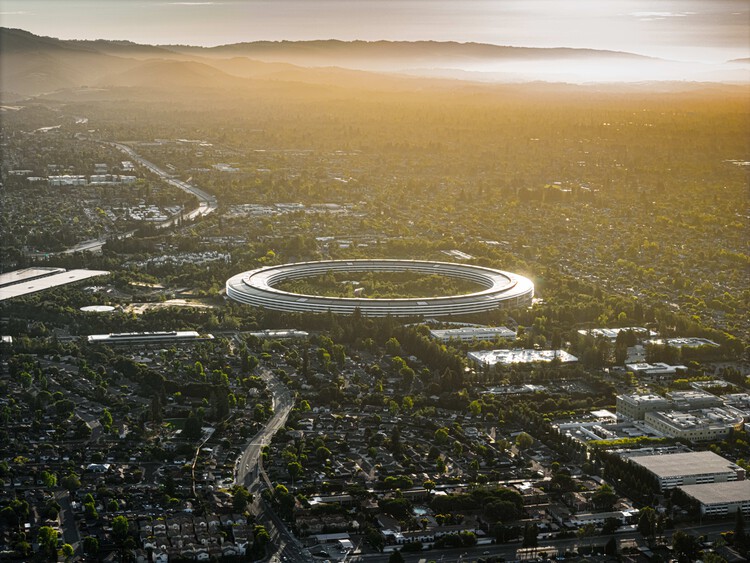
Whether you call it the Ring (too JRR Tolkien), the Death Star (too George Lucas), or the Spaceship (too Buckminster Fuller), something has alighted in Cupertino. And no one could possibly question the elegance of its design and architecture. This building is $5 billion and 2.8 million square feet of Steve Jobsian-Jony Ivesian-Norman Fosterian genius.
https://www.archdaily.com/873463/splendid-isolation-questions-raised-about-apple-cupertino-campus-foster-partnersAD Editorial Team
Apple today announced that Apple Park (also referred to as Apple Campus 2) will be ready to occupy beginning in April. Envisioned by Steve Jobs as a “center for creativity and collaboration,” the 175-acre campus will serve as a new home for more than 12,000 employees, who will be moved-in over a six month period. Construction on outer buildings and park spaces will continue through the summer.
As the finishing touches are applied to the long-awaited Apple Campus 2 (due to be completed in spring of this year), a new report from Reuters has revealed the fantastical strive for perfection demanded by Apple’s in-house project management team. Compiled from interviews with over 20 current and former workers on the project, the piece delves into the exceptional level of detail to which they have held their construction team, which is said to have been the cause of the delay from the project’s original 2016 completion date.
At the moment it may be little more than a colossal, doughnut-shaped hole in the ground, but this video is in fact the first glimpse of Apple's new Norman Foster-designed Campus in Cupertino. The video, shot using a GoPro camera mounted on a drone, shows that construction of the building's huge underground parking garage has begun, with concrete poured in a section of the trench. And, as we've come to expect from Apple, the fact that it's a construction site is no excuse for messiness, meaning that elements of the design are already starting to be legible, such as a wider trench marking the main entrance close to the drone's position. Watch the video above to see the huge campus under construction, and read on after the break for more information about the building's design.
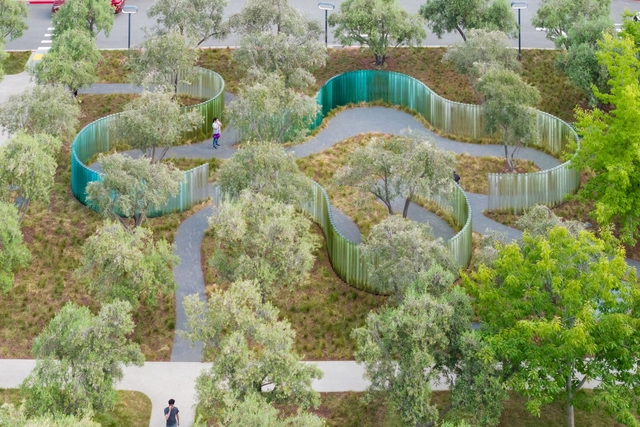
UPDATE: Did you know that Apple Campus 2 will be solely powered by renewable energy? Also, 80 percent of its 176-acre campus will be entirely dedicated to green space. Watch the newly released Norman Foster interview (above) to learn more about the project's sustainable features, as well as details about Steve Job's original inspiration. The following news was originally published as "New Images Released of Apple’s Recently Approved Cupertino Campus" on November 13, 2013.
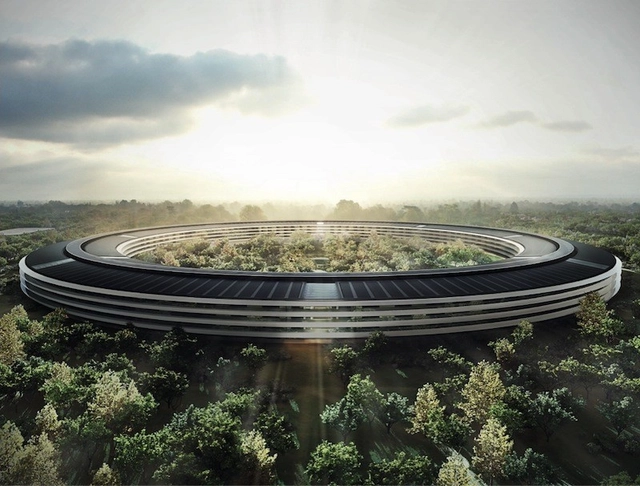
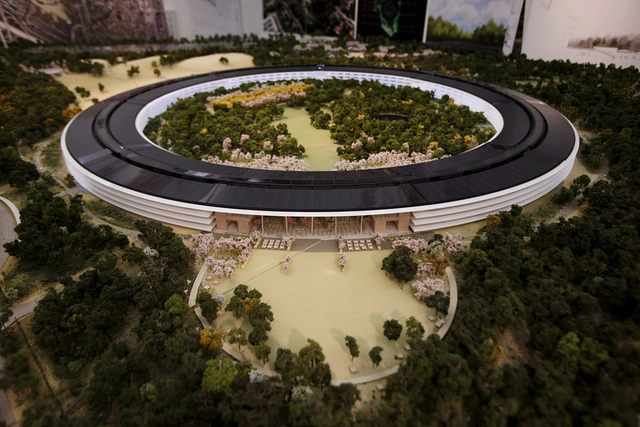
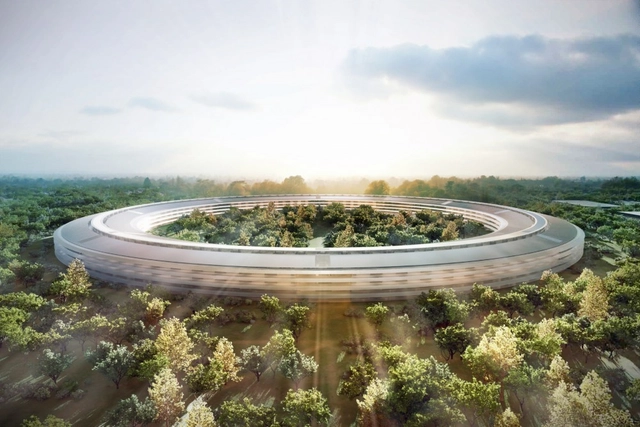
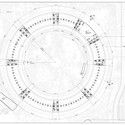
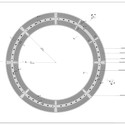
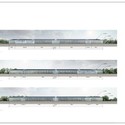
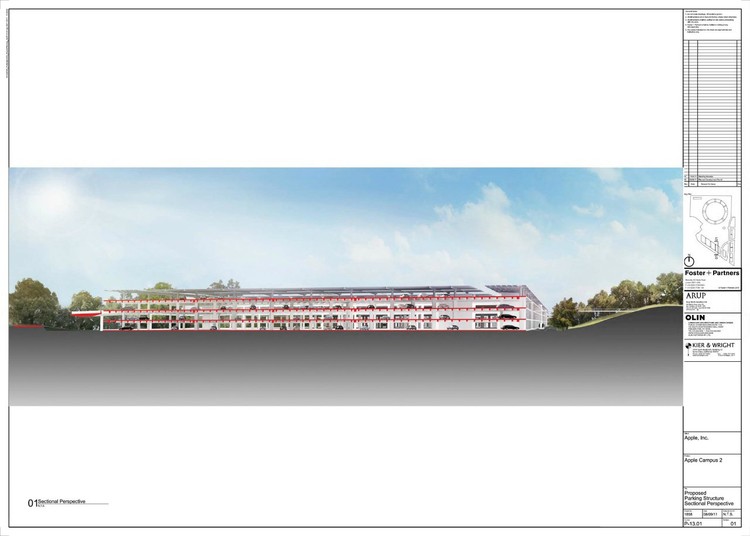
Provided by the City of Cupertino and released by Wired, the images depict just what Steve Job’s hoped for: a world-class, state-of-the-art office campus that promotes innovation through vibrant communal spaces and healthy employee amenities. From the net-positive main building to a private, subterranean auditorium placed within a forested, California-native landscape by OLIN, the Foster + Partners-designed Apple Campus 2 has the potential to be, as Job’s believed, “the best office building in the world.”
A collection of the newly released renderings, after the break...
It has been a long road for Foster + Partners's team since first taking on the design for Apple's new campus in 2009. Four years later, despite the criticism and budget concerns, plans for Apple’s corporate headquarters have been approved by Cupertino’s planning commission. A recent video from the Cupertino City Council reveals some insight into the design decisions, including statements by Sir Norman Foster. As Foster states in the video, CEO Steve Jobs called him "out of the blue" in 2009 and said, "It's Steve: Hi Norman, I need some help."
UPDATE: Although having already cleared a preliminary vote, the Apple HQ was given unanimous approval from the Cupertino council yesterday. One "largely perfunctory" vote remains for November 15th. Detailed images, after the break.
Richard Nieva (CNET) reports that plans for Apple's new corporate headquarters have been approved by Cupertino's planning commission (the final, deciding vote will be in November 2014). The "spaceship", designed by Foster + Partners in collaboration with Kier & Wright, will cover 2.8 million square feet, host up to 14,000 employees, include "a 600-seat restaurant with four-story glass sliding doors", be surrounded by over 6000 trees, and - to top it off - come with a price tag close to $5 billion.
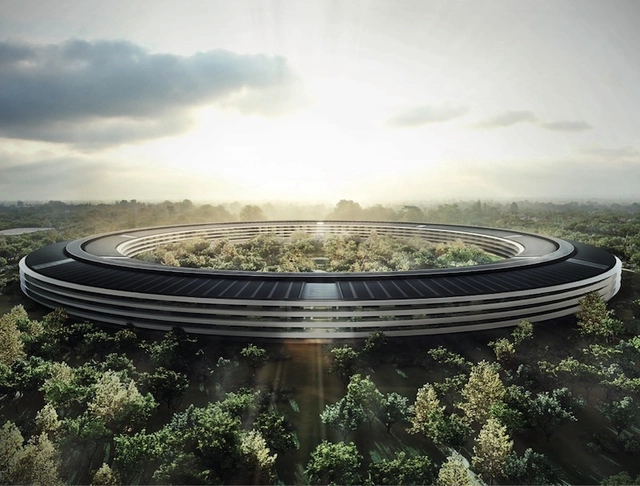
Abandoning Apple’s classic “white” detailing, architects Foster + Partners have opted to clad the 2.8 million square foot, circular monolith in black - a stylistic remedy that seems to be in line with the overarching campus goal to “provide a serene environment reflecting Apple’s brand values of innovation, ease of use and beauty.”
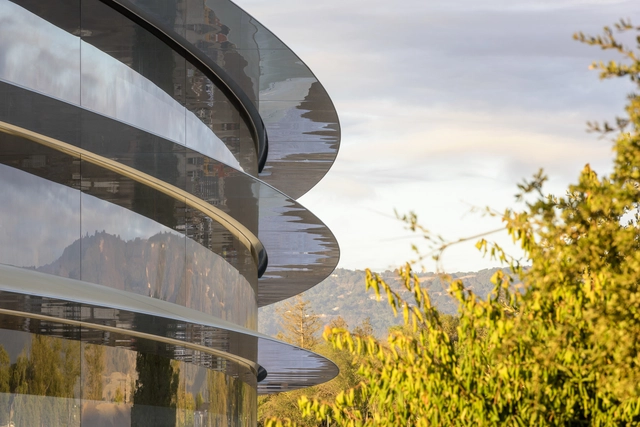
The estimated cost of Apple’s Cupertino City headquarters has escalated from an already hefty price of $3 billion to $5 billion (more than $1,500 per square foot), reportedly pushing back the original completion date to 2016. According to Bloomberg, Apple is working with lead architect Foster & Partners to shave $1 billion from the “ballooning budget”. Most of the cost is seemly due to Steve Job’s “sky-high requirements for fit and finish”, as the tech legend called for the 2.8 million square foot, circular monolith to be clad 40-foot panes of German concave glass, along with its four-story office spaces be lined with museum-quality terrazzo floors and capped with polished concrete ceilings.
Although lambasted for his ambitious plans and “doughnut-shaped” design, Steve Jobs wanted to create a masterpiece that looked as good as it functioned, just like his products. During a 2011 presentation to the Cupertino City Council, Jobs stated, “This is not the cheapest way to build something... there is not a straight piece of glass in this building.” He continued, “We have a shot... at building the best office building in the world. I really do think that architecture students will come here to see it.”
Apple has released updated plans revealing an ambitions solar installation for their proposed campus in Cupertino. Announced back in June, the campus will include an office, research and development building, research facilities, corporate auditorium, fitness center, a central plant and associated parking. Foster + Partners will collaborate with ARUP North America and local civil engineering firm Kier & Wright for the completion of the project.
Last week the Internet and architecture blogs went crazy after Steve Jobs presented the new Apple Campus to the city of Cupertino, California.
Rumors about Foster + Partners (an office with a high expertise on work environments) working with Apple on this new campus appeared on December last year on a Spanish newspaper, but there was never an official confirmation (or denial). But given that the actual project fits with the information we received from an anonymous tipster last December, it seems it could be right:
“I recently got a tour of Norman Foster’s office in London and saw some images of the Apple Campus design. I believe the main building will be a large donut shaped building with all the offices and labs surrounding a large garden. It was a very pure form which connects to some of the recent Apple stores, but I was surprised that it didn’t really scream Apple to me. Of course it could have been a very preliminary design that wasn’t fully resolved yet. Anyway, I just thought I would pass on some info.”
During Steve Job’s presentation to the city of Cupertino we could see this round building, and Jobs outlined several facts on how this new campus for 12,000 people will improve the 98-acre site, such as taking parking underground to reduce the footprint, increasing landscaping from 20% to 80%, and planting more trees (3,700 now, 6,000 in the future). It even includes its own natural gas based energy generation plant (as seen on the drawings) with the electrical grid as backup.
“It’s a pretty amazing building. It’s a little like a spaceship landed. It’s got this gorgeous courtyard in the middle… It’s a circle. It’s curved all the way around. If you build things, this is not the cheapest way to build something. There is not a straight piece of glass in this building. It’s all curved. We’ve used our experience making retail buildings all over the world now, and we know how to make the biggest pieces of glass in the world for architectural use. And, we want to make the glass specifically for this building here. We can make it curve all the way around the building… It’s pretty cool.”
We reached Steve Jobs over the past weekend to get more details about the project and he said that he wasn´t interested in presenting the project on ArchDaily at this time, possibly because the project still needs to be approved by the city. We hope to bring you more details later on, so you can have an informed opinion.
More images from the presentation after the break.