1. ArchDaily
  2. Eero Saarinen

Eero Saarinen: The Latest Architecture and News

Architecture as Soft Power: Cultural Diplomacy and Its Role in Shaping Architectural Production

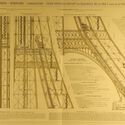
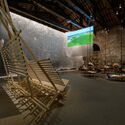
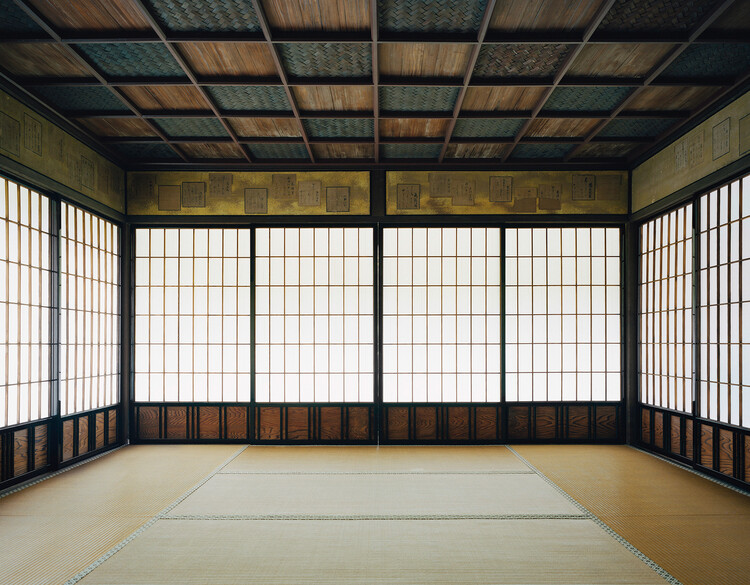
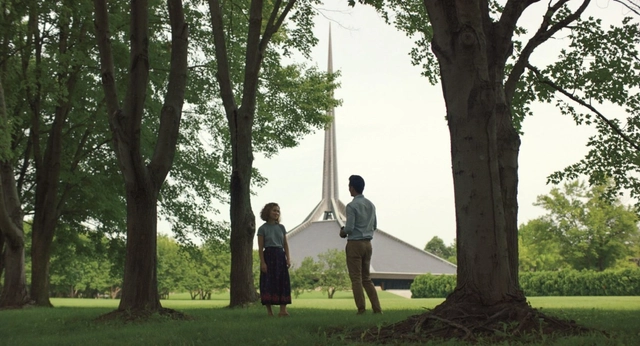
Cultural diplomacy refers to the use of cultural expression and creative exchange to foster understanding and build relationships between nations. In this context, architecture has long played a distinctive role. Beyond its functional and aesthetic dimensions, it serves as a medium of communication, a language through which countries express identity, values, and ambition on the global stage.

Architecture operates as a form of soft power — persuasive rather than coercive — enabling nations to project influence through material presence. From modernist embassies in the post-war era to monumental pavilions at world expositions, governments and institutions have recognized the built environment's potential to shape perception. By commissioning prominent architects and adopting specific design languages, countries have used architecture to signal modernity, tradition, innovation, or stability.
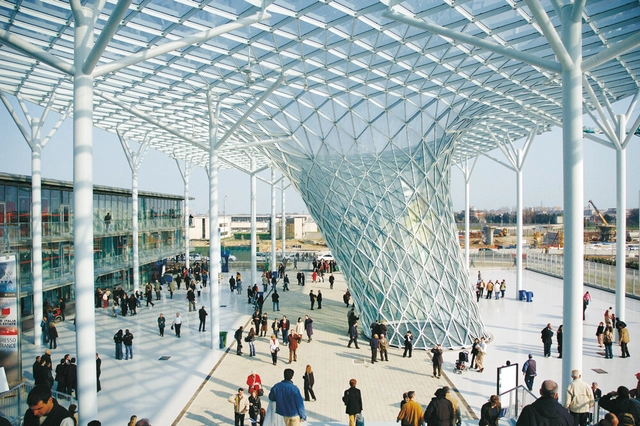
Architecture as Soft Power: Cultural Diplomacy and Its Role in Shaping Architectural Production - Image 1 of 4Architecture as Soft Power: Cultural Diplomacy and Its Role in Shaping Architectural Production - Image 2 of 4Architecture as Soft Power: Cultural Diplomacy and Its Role in Shaping Architectural Production - Image 3 of 4Architecture as Soft Power: Cultural Diplomacy and Its Role in Shaping Architectural Production - Image 4 of 4Architecture as Soft Power: Cultural Diplomacy and Its Role in Shaping Architectural Production - More Images+ 20

Architecture Now: International Projects by HOK, COLL-BARREU, and Knight Architects Reshape Public Space

Subscriber Access | 

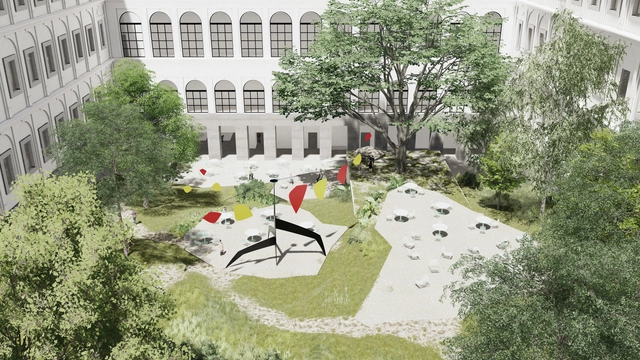
This month's architecture news spotlights a global wave of adaptive reuse, large-scale infrastructure, and public realm transformation. From airport expansions to museum reconfigurations, architects worldwide are rethinking how civic spaces serve communities in the 21st century. Notable developments include Sasaki, SLA, and MVVA being shortlisted to reimagine Toronto's Downsview Airport into a pedestrian-oriented public corridor, and HOK's 2.8 million-square-foot expansion of Dulles International Airport to accommodate future growth while honoring Saarinen's original vision. In Melbourne, Fraser & Partners received planning approval for a heritage-led redevelopment of the Boiler House precinct, while COLL-BARREU ARQUITECTOS completed a subtle reconfiguration of public access at Madrid's Reina Sofía Museum. Finally, in Canada, Knight Architects revealed the "Motion" design for the Alexandra Bridge replacement, an arching structure shaped by ecological references and inclusive public space. Read on for the latest updates shaping architecture today.

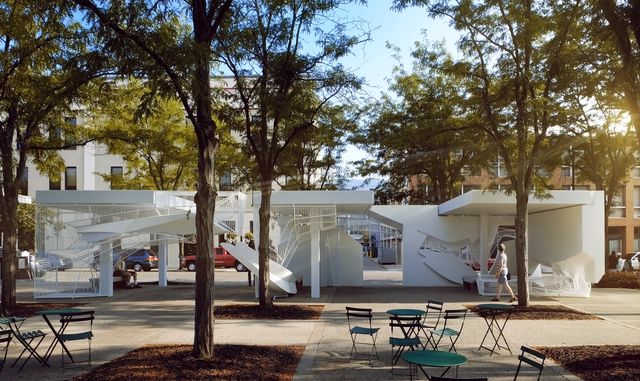
Architecture Now: International Projects by HOK, COLL-BARREU, and Knight Architects Reshape Public Space - Image 1 of 4Architecture Now: International Projects by HOK, COLL-BARREU, and Knight Architects Reshape Public Space - Image 2 of 4Architecture Now: International Projects by HOK, COLL-BARREU, and Knight Architects Reshape Public Space - Image 3 of 4Architecture Now: International Projects by HOK, COLL-BARREU, and Knight Architects Reshape Public Space - Image 4 of 4Architecture Now: International Projects by HOK, COLL-BARREU, and Knight Architects Reshape Public Space - More Images+ 4

Exploring the Legacy of Modernism in Landscape Architecture

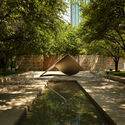
Modernist landscape architecture marked a radical shift from traditional garden designs, emphasizing simplicity, functionality, and a stronger connection between people and their environments. From the 1930s through the 1960s, this movement saw the emergence of visionary landscape architects who integrated form and function in ways that redefined outdoor spaces. Their designs responded to the rapidly evolving urban landscapes of the time, prioritizing usability and creating environments that could accommodate modern life. The enduring influence of these principles continues to shape contemporary practices, while also presenting unique challenges in preservation as these landscapes age.

Exploring the Legacy of Modernism in Landscape Architecture - Image 1 of 4Exploring the Legacy of Modernism in Landscape Architecture - Image 2 of 4Exploring the Legacy of Modernism in Landscape Architecture - Image 3 of 4Exploring the Legacy of Modernism in Landscape Architecture - Image 4 of 4Exploring the Legacy of Modernism in Landscape Architecture - More Images+ 18

Architecture Classics: La Pagoda / Miguel Fisac

Where does the process of mythification of a work in architecture reside? What are the conditions inherently linked to the resource of memory? Firstly, the appearance of an intrinsic value within the architecture, such as highlighting the taste for the projected building. This would be accompanied by the historical factor—the echoes of the era in which it was built. If we add to all this a demolition loaded with theatricality and social drama, the building becomes something more, becoming part of the vast mythical territory of memory. Miguel Fisac's 'Pagoda,' which began construction in 1965, was demolished in just a few days in July 1999, being just over thirty years old at the time of its demolition.

Affectionately known as the 'Pagoda' by the people of Madrid, evidencing its similarity to Asian constructions, it was not held in the same esteem by the architects of the time. In the rise and fall of the JORBA Laboratories, the original name of the project, purely tragic elements converge: denunciations moved by religious conspiracies, neglect by the administrations, speculative businesses, professional jealousy, and rulers incapable of appreciating the quality of architecture that, today, becomes myth or martyr; the object of unjust destruction.

Abandoned Airport near Athens, Greece, Set to be Transformed into Europe’s Largest Coastal Park

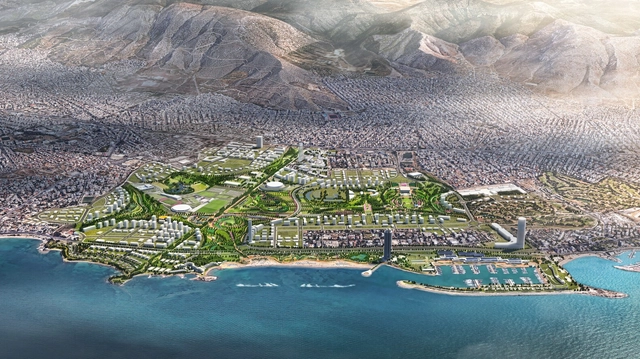
The Athens International Airport was decommissioned in 2001, leading to two decades of work for the local government to establish funding and a governance mechanism to transform the 600 acres of unused space into Europe's largest coastal park. The site has a layered history, from prehistoric settlements to the construction of the airport in the 20th century and the site being used for as an Olympic venue in 2004. Architecture office Sasaki is leading the design to transform the site again and create the Ellinikon Metropolitan Park, a restorative landscape and climate-positive design that will serve as a park, playground, and cultural center for the city of Athens. Developers are planning to break ground early next year.

Abandoned Airport near Athens, Greece, Set to be Transformed into Europe’s Largest Coastal Park - Image 1 of 4Abandoned Airport near Athens, Greece, Set to be Transformed into Europe’s Largest Coastal Park - Image 2 of 4Abandoned Airport near Athens, Greece, Set to be Transformed into Europe’s Largest Coastal Park - Image 3 of 4Abandoned Airport near Athens, Greece, Set to be Transformed into Europe’s Largest Coastal Park - Image 4 of 4Abandoned Airport near Athens, Greece, Set to be Transformed into Europe’s Largest Coastal Park - More Images+ 22

When Architectural History Meets Personal History

This article was originally published on Common Edge.

Writer Eva Hagberg and I have known each other for a long time. Way back, in a year I can’t remember, I assigned her one of her first magazine assignments. Literally, dozens of other assignments followed. So it was with some anticipation, and a bit of surprise, that I received her new book When Eero Met His Match: Aline Louchheim Saarinen and the Making of an Architect (Princeton University Press), an intriguing hybrid text, one-part Aline and Eero biography, one part memoir of Hagberg’s experiences as a design writer and publicist. (I am briefly mentioned in the book.) The book’s main argument is that Aline Saarinen largely invented the role of the architectural publicist. Recently I traveled out to the Brooklyn Navy Yard to talk to a very pregnant Eva about the impetus for her new book, its dual structure, and the journalistic ethics of Aline Saarinen.

Timeless Design Icons: How to Style your Home Sustainably

Sustainability is on everyone's lips these days – but mostly with a view to the future and the question of how it is possible to use fewer resources, produce more sustainably and reduce waste. However, sustainability can also be lived with a view to the past or the present – namely with a domestic environment that consists of durable furniture designs that outlast trends and never go out of fashion. In the third part of our series on design icons, we put Philippe Starck, Eero Saarinen, Achille Castiglioni, Patricia Urquiola and Max Bill in the spotlight with their evergreen furniture icons, which can be found on architonic.com.

New York City Architecture Guide: Discover 10 Must-See Landmarks and 20 Contemporary Attractions

Subscriber Access | 

As the largest city in the United States, New York City is one of the most diverse and vibrant cities in the world, recognized by many as the center for global media, culture, fashion art, and finance. The city was founded in 1624 by settlers from the Dutch Republic and has since grown into “the city that never sleeps”.

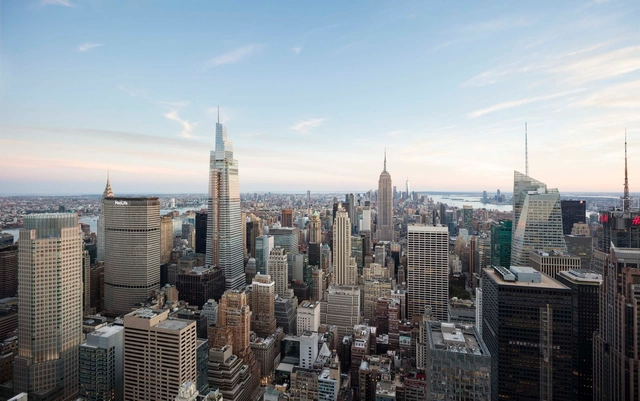
While almost every style of architecture exists in New York City, the metropolis is most well known for its skyscrapers, both in historical styles such as Neoclassical and Art Deco and in their varied contemporary expressions. The first building to bring the world's tallest title to New York was the New York World Building, in 1890. Later, New York City was home to the world's tallest building for 75 continuous years, starting with the Park Row Building in 1899.

New York City Architecture Guide: Discover 10 Must-See Landmarks and 20 Contemporary Attractions - Image 1 of 4New York City Architecture Guide: Discover 10 Must-See Landmarks and 20 Contemporary Attractions - Image 2 of 4New York City Architecture Guide: Discover 10 Must-See Landmarks and 20 Contemporary Attractions - Image 3 of 4New York City Architecture Guide: Discover 10 Must-See Landmarks and 20 Contemporary Attractions - Image 4 of 4New York City Architecture Guide: Discover 10 Must-See Landmarks and 20 Contemporary Attractions - More Images+ 26

Materialising a Vision: Structural Engineering and Architecture

Recent years have seen an increased acknowledgement of the collective endeavour that is architecture and a better valuing of the different professions that participate in the design process. Within every extraordinary building, structural engineering plays an essential role in delivering the architectural vision. The article highlights the past and present contributions of engineering to the built environment, personalities that have stood in the shadow of architects delivering their design intent, and the collaboration between engineers and architects today.

Materialising a Vision: Structural Engineering and Architecture - Image 1 of 4Materialising a Vision: Structural Engineering and Architecture - Image 2 of 4Materialising a Vision: Structural Engineering and Architecture - Image 3 of 4Materialising a Vision: Structural Engineering and Architecture - Image 4 of 4Materialising a Vision: Structural Engineering and Architecture - More Images+ 3

Modern, Low-Budget and Easy to Build Living Spaces: the Case Study House Program

Between 1945 and 1966, the Case Study Houses program, following the Weißenhof-siedlung exposition, commissioned a study of economic, easy-to-build houses. The study included the creation of 36 prototypes that were to be built leading up to post-war residential development. The initiative by John Entenza, editor of Arts & Architecture magazine, brought a team to Los Angeles that featured some of the biggest names in architecture at the time, including Richard Neutra, Charles & Ray Eames, Pierre Koenig, and Eero Saarinen, among others.

The program's experiment not only defined the modern home and set it apart from its predecessors, but it also pioneered new construction materials and methods in residential development that continue to influence international architecture to this day. Take a detailed look at some of the program's most emblematic work together with recommendations for facing contemporary challenges. 

Etheral Luminosity from Above: General Motors Technical Center

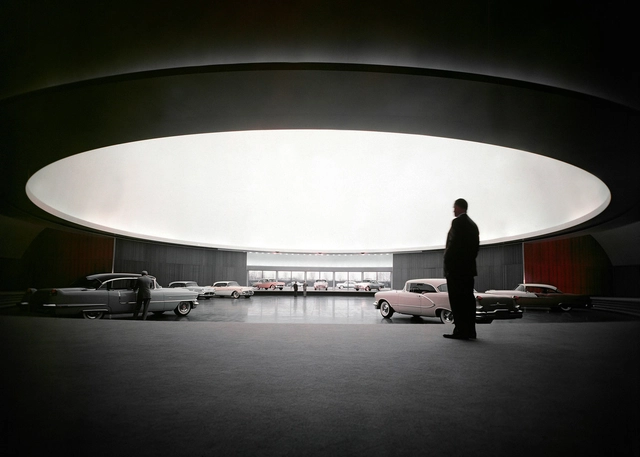
The General Motors Technical Center fascinates with architecture filled with an abundance of light. Interior offices and showrooms evoke the impression of a calm overcast sky for a human environment and beauty. The campus designed by Eero Saarinen represents an influential icon of midcentury design. Susan Skarsgard's book "Where Today Meets Tomorrow" opens intriguing perspectives to the origin of the American landmark.

Etheral Luminosity from Above: General Motors Technical Center - Image 1 of 4Etheral Luminosity from Above: General Motors Technical Center - Image 2 of 4Etheral Luminosity from Above: General Motors Technical Center - Image 3 of 4Etheral Luminosity from Above: General Motors Technical Center - Image 4 of 4Etheral Luminosity from Above: General Motors Technical Center - More Images+ 6

The Challenges of Preserving a Small, Local - and Globally Famous - Design Legacy

On its outskirts, you'd be forgiven for assuming that Columbus, Indiana is a suburban American town like any other. But travel downtown and you're suddenly greeted with an unexpected variety of modern architecture. The small midwestern city has for the past half-century been a kind of laboratory for contemporary architecture, attracting designers as diverse as Kevin Roche and IM Pei. Children attend school in a building designed by Richard Meier, congregants attend services in a church designed by Eliel Saarinen.

AD Classics: TWA Flight Center / Eero Saarinen

This article was originally published on June 16, 2016. To read the stories behind other celebrated architecture projects, visit our AD Classics section.

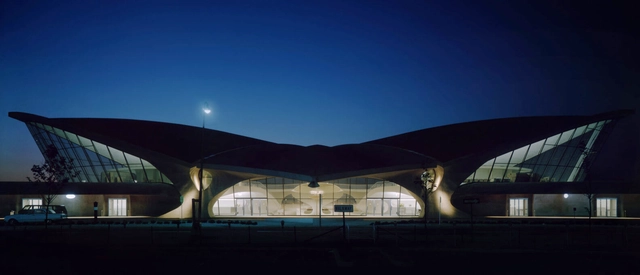
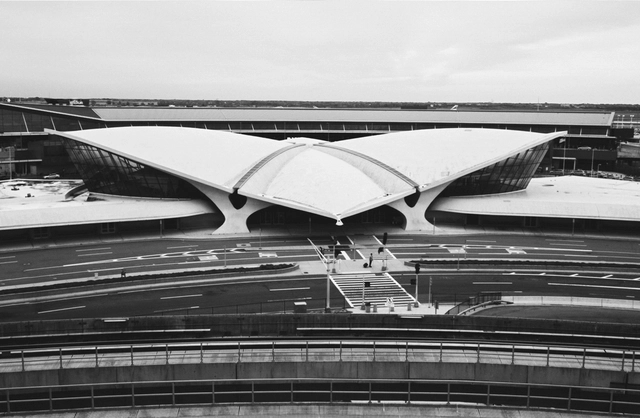
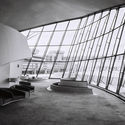
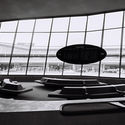
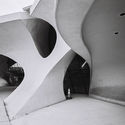
Built in the early days of airline travel, the TWA Terminal is a concrete symbol of the rapid technological transformations which were fueled by the outset of the Second World War. Eero Saarinen sought to capture the sensation of flight in all aspects of the building, from a fluid and open interior, to the wing-like concrete shell of the roof. At TWA’s behest, Saarinen designed more than a functional terminal; he designed a monument to the airline and to aviation itself.

This AD Classic features a series of exclusive images by Cameron Blaylock, photographed in May 2016. Blaylock used a Contax camera and Zeiss lenses with Rollei black and white film to reflect camera technology of the 1960s.

AD Classics: TWA Flight Center / Eero Saarinen - Facade, ArchAD Classics: TWA Flight Center / Eero Saarinen - ChairAD Classics: TWA Flight Center / Eero Saarinen - Image 3 of 5AD Classics: TWA Flight Center / Eero Saarinen - Arch, FacadeAD Classics: TWA Flight Center / Eero Saarinen - More Images+ 21

Architecture: the Unsung Hero of Your Favorite Film

Subscriber Access | 

How does the built environment--whether fictitious or entirely founded in reality--impact how we experience and process film? From lesser-known indies to blockbuster movies, the ways in which architecture and the built environment inform everything from scene and setting, to dialogue and character development has far-reaching effects on the audience’s cinematic experience. Below, a roundup of everything from recent releases to classic cinephile favorites uncovers the myriad ways in which film utilizes architecture as a means of achieving a more authentic and all-encompassing form of storytelling.

This Week in Architecture: Our Faith in Design, from McDonalds' Golden Arches to Churches in Kerala

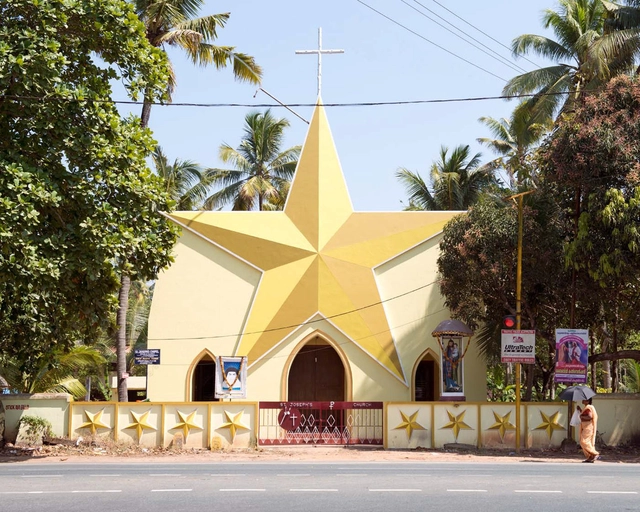
As August draws to a close and our holidays - be they from work or school - already start to feel like distant memories, perhaps it's a good moment to reflect on our faith in what we do. Sometimes design affords us the ability to oversee massive and exciting change. Sometimes projects don't work out, despite our best efforts. And sometimes, design isn't as capable of making change as we believe it to be. This week's stories touched on our faith in design in a range of ways, from the literal (such as the bright churches of Kerala) to the more abstract (how much good taste in fast food design actually equates to good tastes.) Read on for this week's review. 

This Week in Architecture: Our Faith in Design, from McDonalds' Golden Arches to Churches in Kerala - Image 1 of 4This Week in Architecture: Our Faith in Design, from McDonalds' Golden Arches to Churches in Kerala - Image 2 of 4This Week in Architecture: Our Faith in Design, from McDonalds' Golden Arches to Churches in Kerala - Image 3 of 4This Week in Architecture: Our Faith in Design, from McDonalds' Golden Arches to Churches in Kerala - Image 4 of 4This Week in Architecture: Our Faith in Design, from McDonalds' Golden Arches to Churches in Kerala - More Images+ 4

Eliel and Eero Saarinen: The Sweeping Influence of Architecture's Greatest Father-Son Duo

Subscriber Access | 
Eliel and Eero Saarinen: The Sweeping Influence of Architecture's Greatest Father-Son Duo - Image 5 of 4
St Louis Gateway Arch. Image © Flickr user jeffnps licensed under CC BY 2.0

It is rare for a father and son to share the same birthday. Even rarer is it for such a duo to work in the same profession; rarer still for them both to achieve international success in their respective careers. This, however, is the story of Eliel and Eero Saarinen, the Finnish-American architects whose combined portfolio tells of the development of modernist architectural thought in the United States. From Eliel’s Art Nouveau-inspired Finnish buildings and modernist urban planning to Eero’s International Style offices and neo-futurist structures, the father-son duo produced a matchless body of work culminating in two individual AIA Gold Medals.

Eliel and Eero Saarinen: The Sweeping Influence of Architecture's Greatest Father-Son Duo - Image 1 of 4Eliel and Eero Saarinen: The Sweeping Influence of Architecture's Greatest Father-Son Duo - Image 2 of 4Eliel and Eero Saarinen: The Sweeping Influence of Architecture's Greatest Father-Son Duo - Image 3 of 4Eliel and Eero Saarinen: The Sweeping Influence of Architecture's Greatest Father-Son Duo - Image 4 of 4Eliel and Eero Saarinen: The Sweeping Influence of Architecture's Greatest Father-Son Duo - More Images+ 17

How Surrealism Has Shaped Contemporary Architecture

Subscriber Access | 
How Surrealism Has Shaped Contemporary Architecture - Image 1 of 4
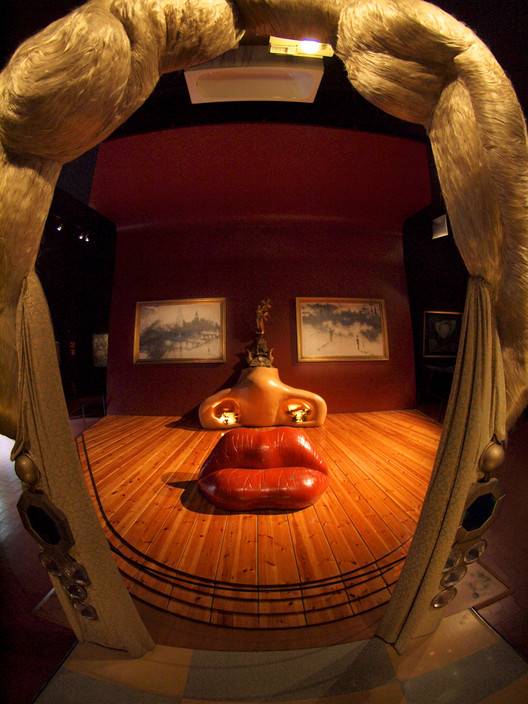
1974 installation of Mae West’s Face which May be Used as a Surrealist Apartment by Salvador Dali. Image © Flickr user Torrenega licensed under CC BY 2.0

In 1924 writer André Breton penned the Surrealist Manifesto, which called to destabilize the divides between dreams and reality, between objectivity and subjectivity. For many architects who had been—and continue to be—interested in the fundamental role of the built environment, Breton’s surrealist thinking provided a rich resource to examine the role architecture plays in forming reality. Since then, from Salvador Dali and Frederick Kiesler to Frank Gehry, Surrealism has profoundly shaped architecture in the 20th century.
Hotel Transformation of Saarinen's TWA Terminal Tops Out

Construction on the transformation of Eero Saarinen’s iconic TWA Flight Center into the new TWA Hotel has hit major milestone, as the project has now topped out.

Hotel Transformation of Saarinen's TWA Terminal Tops Out - Image 1 of 4Hotel Transformation of Saarinen's TWA Terminal Tops Out - Image 2 of 4Hotel Transformation of Saarinen's TWA Terminal Tops Out - Image 3 of 4Hotel Transformation of Saarinen's TWA Terminal Tops Out - Image 4 of 4Hotel Transformation of Saarinen's TWA Terminal Tops Out - More Images+ 6