1. ArchDaily
  2. Floors

Floors: The Latest Architecture and News

The Illusion of Level: Detailing for Water in “Flat” Architecture

Subscriber Access | 

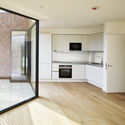
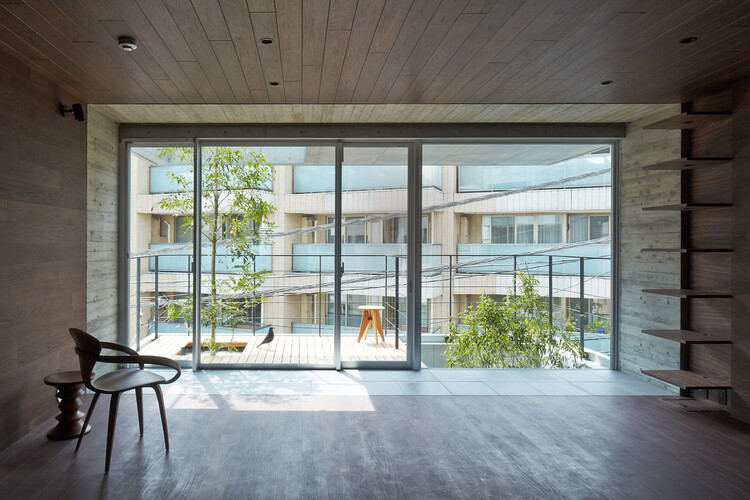
We walk on "flat" ground every day and rarely think twice—but how flat is it, really? In the city, curbs are chamfered, sidewalks pitch toward grates, and roadways are crowned to shed water into shallow gutters. In suburbs and on unpaved paths, irregular terrain is the norm. Inside buildings, by contrast, we pursue near-perfect horizontality—structural frames, slabs, and finishes are all disciplined to create level walking surfaces in the name of safety and accessibility. Yet flatness is inherently at odds with water. A closer look reveals a quiet repertoire of accommodations: slight falls at entries, thresholds raised a few millimeters, wet areas with barely perceptible pitches. The floor is read as flat, but it is in fact carefully tuned—micro-topographies masquerading as plane—to manage water without calling attention to themselves.

What are the common ways architects "keep things flat" while actually managing water—the perennial enemy of buildings? A useful way to look at it is by zooming into three recurring conditions: exterior or roof decking, bathrooms and other wet rooms, and exterior ground planes. Each relies on a slightly different toolkit—pedestal systems over sloped waterproofing, micro-gradients to floor traps, hidden perimeter drains, split slopes—to maintain the illusion of a seamless, level surface. Studying these situations side by side reveals just how much design effort goes into reconciling perceptual flatness with the messy reality.
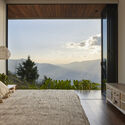
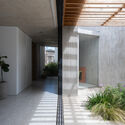
The Illusion of Level: Detailing for Water in “Flat” Architecture - Image 1 of 4The Illusion of Level: Detailing for Water in “Flat” Architecture - Image 2 of 4The Illusion of Level: Detailing for Water in “Flat” Architecture - Image 3 of 4The Illusion of Level: Detailing for Water in “Flat” Architecture - Image 4 of 4The Illusion of Level: Detailing for Water in “Flat” Architecture - More Images+ 15

Transparent Future: Transforming Corporate Spaces with Interactive Glass Design

 | Sponsored Content

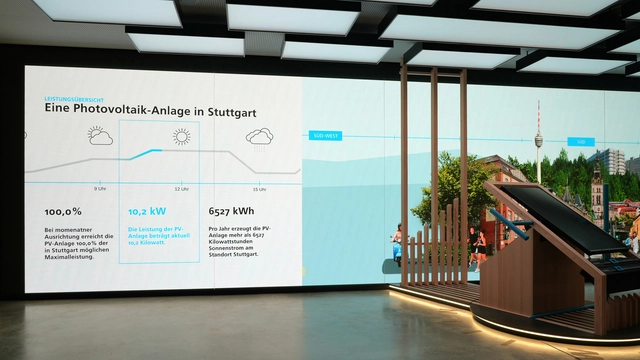
The likelihood that your next favorite basketball game unfolds atop a customizable and interactive glass floor is relatively high. Even more so, the chances that this glass marvel is crafted by ASB GlassFloor are markedly greater. In the ever-evolving world of sports and corporate architecture, innovative design elements are increasingly capturing the spotlight. One such marvel making waves is the glass floor—a feature that, while seemingly a novelty, has become a staple in high-profile arenas across the globe. Beyond illuminating sports arenas, ASB GlassFloor has plenty of tricks up its sleeves to dazzle the world. Venturing into the corporate world is just one of those clever moves. 

Prioritizing Comfort in Interiors: Nature-inspired Floors Made of Wood and Cork

Subscriber Access | 

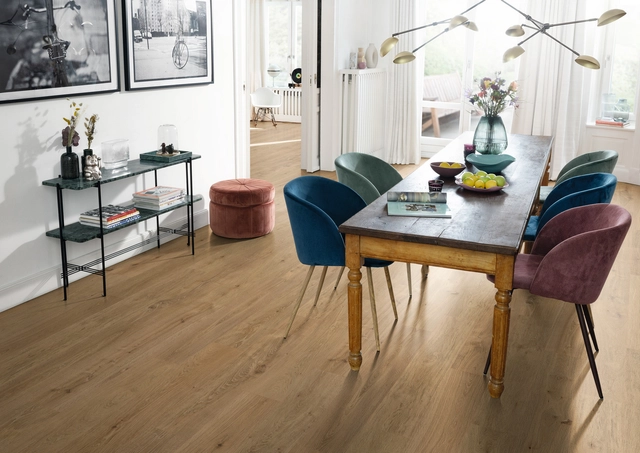
Greatly driven by the Covid-19 pandemic, interior design trends that prioritize comfort and well-being have become more prominent than ever in recent years. With former confinement restrictions and the rise of hybrid work, the amount of time spent indoors to carry out daily functions has risen drastically, forcing many to adapt their living spaces accordingly. As a result, demand has focused on residential interiors that foster calmness, peace and warmth, as well as on products and design elements that successfully meet these new needs. But how to achieve this? While there are many ways to promote comfort inside the home, one method has been indisputably proven to be the most successful: bringing nature in.

Gothic Construction Techniques Inspire ETH Zurich's Lightweight Concrete Floor Slabs

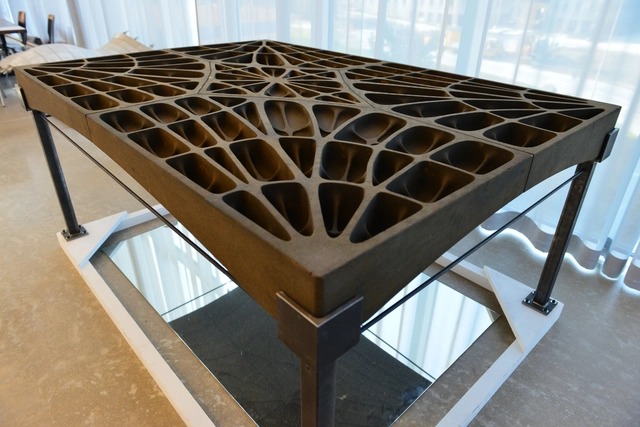
With the intention of maximizing available space and avoiding steep construction costs, researchers from ETH Zurich’s Department of Architecture have devised a concrete floor slab that with a thickness of a mere 2cm, remains load bearing and simultaneously sustainable. Inspired by the construction of Catalan vaults, this new floor system swaps reinforced steel bars for narrow vertical ribs, thus significantly reducing the weight of construction and ensuring stability to counter uneven distributions on its surface.

As opposed to traditional concrete floors that are evidently flat, these slabs are designed to arch to support major loads, reminiscent of the vaulted ceilings found in Gothic cathedrals. Without the need for steel reinforcing and with less concrete, the production of CO2 is minimized and the resulting 2cm floors are 70% lighter than their typical concrete counterparts.

Gothic Construction Techniques Inspire ETH Zurich's Lightweight Concrete Floor Slabs  - Image 1 of 4Gothic Construction Techniques Inspire ETH Zurich's Lightweight Concrete Floor Slabs  - Image 2 of 4Gothic Construction Techniques Inspire ETH Zurich's Lightweight Concrete Floor Slabs  - Image 3 of 4Gothic Construction Techniques Inspire ETH Zurich's Lightweight Concrete Floor Slabs  - Image 4 of 4Gothic Construction Techniques Inspire ETH Zurich's Lightweight Concrete Floor Slabs  - More Images