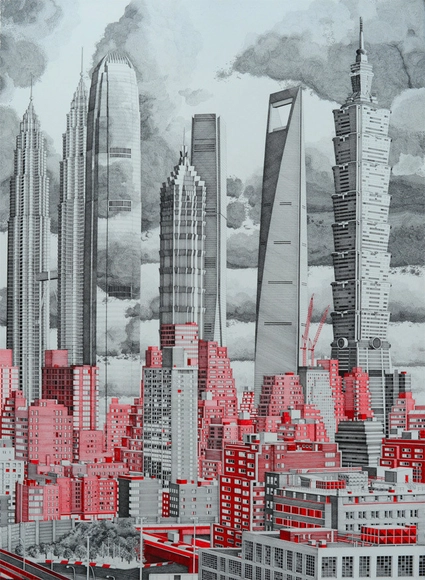
The year 2021 has been a turbulent one –coronavirus rages on, and the design and construction industries have been forced to keep adapting two years into a global pandemic. As virtual methods of working and communicating continue to be tweaked and honed, a plethora of virtual events has meant that architectural discourse outside the western canon and Eurocentric gaze, in a small way, has been able to claim space front and center in the global architectural conversation.
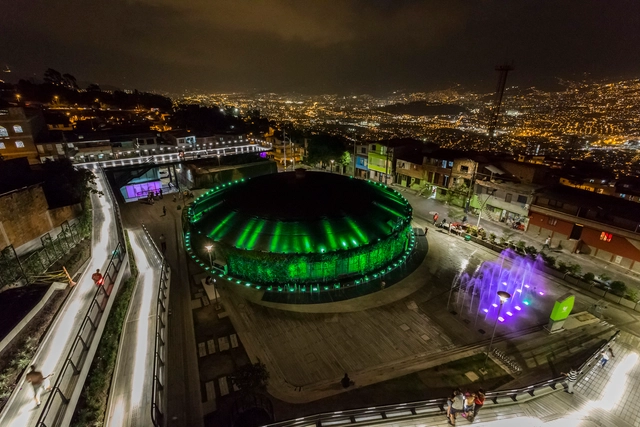
UVA La Esperanza in Medellin, Colombia. Image Courtesy of EPM
Social Urbanism: Reframing Spatial Design – Discourses from Latin America, a new book by Maria Bellalta, ASLA, dean of the School of Landscape Architecture at the Boston Architectural College, is a welcome addition to the growing number of publications on the social justice-oriented form of urbanism, architecture, and public space emanating from Medellín and Colombia. The achievements of social urbanism have rightfully become synonymous with Medellín in the world of landscape architecture, urban planning and design, and architecture.
Before the pandemic, the world was already facing a series of global transformations in the field of construction, where emerging countries were at the forefront of a powerful economic shift. As the world's population is expected to reach the 10-billion milestone before 2100, the construction sector should be able to understand and adapt to the megatrends that are reshaping the globe.
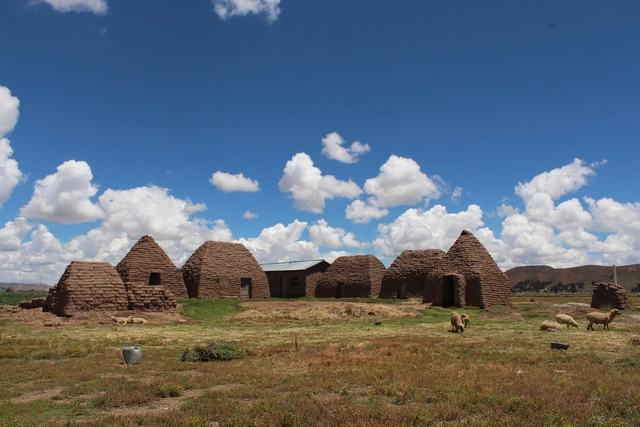
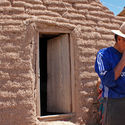
As a part of the XV Taller Social Latinoamericano architectural conference that took place in Puno, Peru, we visited the Iruito Tupi zone in Huancané province alongside Francisco Mariscal, Director of the Puno Cultural Center. For the conference, Mariscal gave a presentation on the history of putucos, pre-Columbian houses made with a mixture of earth and grass.
History has the habit of repeating itself; using the same script, just with different names, figures, and places. Some 10,000 years ago, the Altiplano and the Titicaca lake basin, wedged between modern day Peru and Bolivia, became home to hunters and gatherers who subsisted on the herds of llamas and vicuñas as well as the bounty of birds and fish.
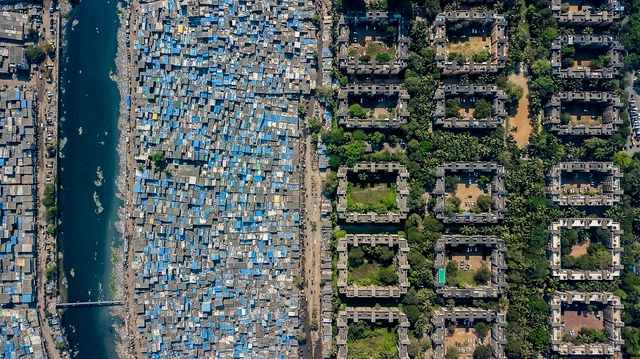
Across the world, urban clusters have —to a greater or lesser extent— social and economic differences. Reflected in space, these imbalances of income and access to education, health, sanitation, and infrastructure generate ruptures more or less visible —although drastically felt.
Although a daily reality for some, socio-spatial inequalities can often go unnoticed. Photographer Johnny Miller states, "Discrepancies in how people live are sometimes hard to see from the ground... Oftentimes, communities of extreme wealth and privilege will exist just meters from squalid conditions and shack dwellings." Miller's photo series 'Unequal Scenes' seeks "to portray the most 'Unequal Scenes' in [the world] as objectively as possible."
"Rethink the City; New Approaches to Global and Local Urban Challenges" is a free online course given by Delft University of Technology in the Netherlands. After two successful versions with more than 17.000 participants, a new version will start on February 19, 2020. The course received the Excellence in Teaching Award 2017 bestowed by AESOP (Association of European Schools of Planning).
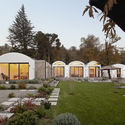
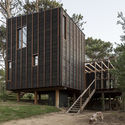
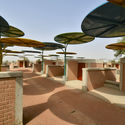
Countries that are part of the so-called “global south” have undergone many transformations in their cities and urban contexts in recent years due to the economic and social challenges they face. Urban growth, sustainable development, quality of life and health in emerging cities, and the development of their own cultural identity have been some of the issues that local architecture had to incorporate.
Young architects have understood the importance of making an architecture that is deeply rooted in their own territory while giving this architecture a clear local identity. By generating new typologies and using their own resources and materials, they have presented innovative, site-specific, and, above all, solutions with a new fresh focus towards what represents them as creators of this architecture.
Lahoud, who is also Dean of the School of Architecture at the Royal College of Art, has defined the theme for the inaugural edition —Rights of Future Generations— as an instance to "question how inheritance, legacy, and the state of the environment are passed from one generation to the next, how present decisions have long-term intergenerational consequences, and how other expressions of co-existence, including indigenous ones, might challenge dominant western perspectives."
Back in 2008, ArchDaily embarked on a challenging mission: to provide inspiration, knowledge, and tools to the architects tasked with designing cities. In an effort to further align our strategy with these challenges, we recently introduced monthly themes in order to dig deeper into topics we find relevant in today’s architectural discourse. From architects who don't design to reframing climate change as a global issue, we are celebrating our 11th birthday by asking 11 editors and curators to choose ArchDaily's most inspiring articles.
Videos
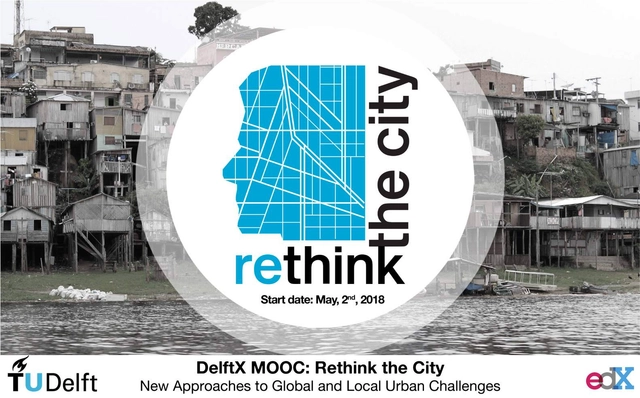
MOOC Rethink the City: New Approaches to Global and Local Urban Challenges
The Massive Online Open Course (MOOC) Rethink the City. New Approaches to Global and Local Urban Challenges, is a free online course taught by the Faculty of Architecture and the Built Environment of Delft University of Technology. The course starts on May, 2nd, 2018. The first version of the course received the Excellence in Teaching Award 2017 bestowed by AESOP (Association of European Schools of Planning).
There's an old, weary tune that people sing to caution against being an architect: the long years of academic training, the studio work that takes away from sleep, and the small job market in which too many people are vying for the same positions. When you finally get going, the work is trying as well. Many spend months or even years working on the computer and doing models before seeing any of the designs become concrete. If you're talking about the grind, architects know this well enough from their training, and this time of ceaseless endeavor in the workplace only adds to that despair.
Which is why more and more architects are branching out. Better hours, more interesting opportunities, and a chance to do more than just build models. Furthermore, the skills you learn as an architect, such as being sensitive to space, and being able to grasp the cultural and societal demands of a place, can be put to use in rather interesting ways. Here, 3 editors at ArchDaily talk about being an architect, why they stopped designing buildings, and what they do in their work now.
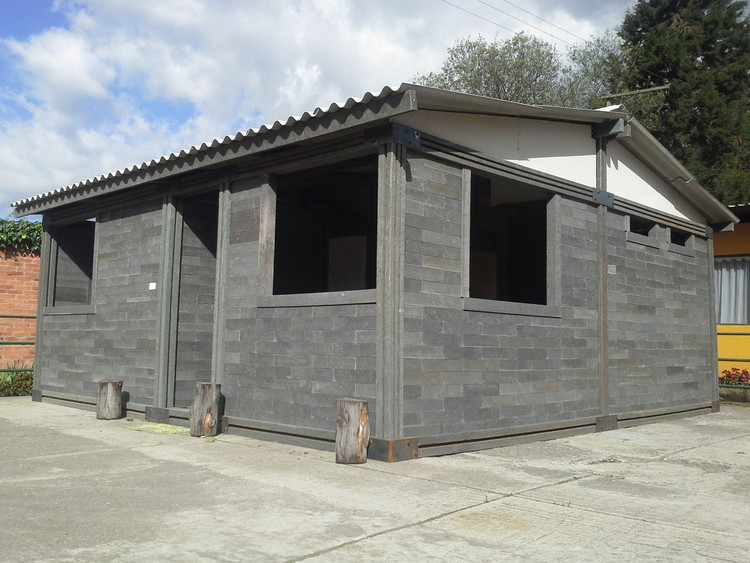
Ten years ago when Colombian Fernando Llanos tried to build his own house in Cundinamarca, he realized that moving the materials from Bogota was going to be very difficult. After mulling it over, he decided to build his house out of plastic, and after a series of trials and errors, he ended up meeting architect Óscar Méndez, who developed his thesis on the same subject, and together they founded the company Conceptos Plásticos (Plastic Concepts) in 2011.
The innovative local company managed to patent its system of bricks and pillars made of recycled plastic, which is then put together like Lego pieces in a construction system that lets you build houses up to two stories high in five days.
As the common phrase attests, “history is written by the victors.” We therefore know that the story of the West is that of Europe and the United States, while the other actors in world history are minimized or invisible: it happened to the Chinese and Japanese during World War II, to the Ottoman Empire in sixteenth-century Europe, and to racial majorities in the common reading of Latin American independence. The same thing happens in architecture.
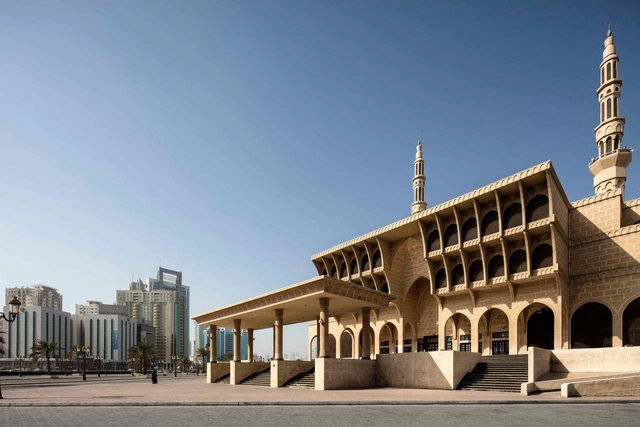
The current boom of the Global South is based not only on new work, but rather on the recognition of an invisible architecture which was apparently not worthy of publication in the journals of the 1990s. The world stage has changed, with the emergence of a humanity that is decentralized yet local; globalized, yet heterogeneous; accelerated, yet unbalanced. There are no longer red and blue countries, but a wide variety of colors, exploding like a Pollock painting.
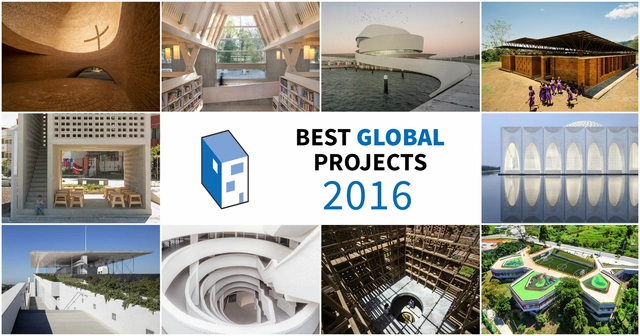
This serves as a preamble to consider the outstanding projects of 2016 according to the British critic Oliver Wainwright, whose map of the world appears to extend from New York in the West to Oslo in the East, with the exception of Birzeit in Palestine. The Global South represents more than 40% of the global economy and already includes most of the world’s megacities, yet has no architecture worthy of recognition? We wanted to highlight the following projects in order to expand the western-centric world view, enabling us to truly comprehend the extent of architectural innovation on a global scale.
5,000 3D cameras to help preserve the architecture of a country torn by war; A team of Latin American architects that moved into Venezuela’s most dangerous neighborhoods in order to design and build with the community; A legendary architect who understood architecture’s relationship to the transformation of technology -- and whose projects have celebrated technology across a trajectory of multiple decades. These are the projects, initiatives and people who have proven to be leaders in 2015.
ArchDaily’s editorial team wanted to recognize these projects for their commitment to promoting practices in architecture that serve many, in all corners of the globe -- from Bolivia to London, from Chicago to Venice, from public spaces in favelas to projected drone-ports in Africa. These are the stories that have inspired us in 2015, and whose influence we hope to continue to see into 2016.
https://www.archdaily.com/778937/architectures-most-inspiring-leaders-projects-and-people-in-2015AD Editorial Team
The architecture world is a very different place compared to what it was ten years ago - a fact that is all too obvious for today's young architects, who bore the brunt of the financial crisis. But how can recent graduates harness such rapid change to make a positive impact? This article written by ArchDaily en Español's Nicolás Valencia explores the impact of the financial crisis on architecture in the Global South and in particular in the Spanish-speaking world, finding that it may be the inalienable right of the architect "to give yourself room to fail or to quit."
For some years now, three figures have been floating around that are worrisome to Chilean architects and architectural students: every year 48 architectural schools enroll 3,500 students and give degrees to another 1,400 in a completely saturated market. The future appears bleak, the professional internships are depressing, and among those who already have degrees, we're all too familiar with the exploitative offices that not only offer their employees zero contracts (or health insurance of any kind, all the while praying that nobody gets injured) but also make them work much more than they agreed to with paltry salaries and labor unions that have seen better days. Meanwhile at the universities, talking about money in studios, or about flesh and blood clients, has become a taboo subject. “Students, don't let money tarnish the beauty of the discipline” they tell you. Of course, not only does it not get tarnished, but we've gotten to the point where many don't even know how much to charge for a plan drawing, let alone for an actual project.















.jpg?1450380794&format=webp&width=640&height=580)