1. ArchDaily
  2. Great Britain

Great Britain: The Latest Architecture and News

London’s Southbank Centre Receives National Heritage Protection After 35-Year Campaign

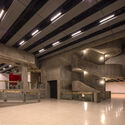
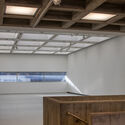
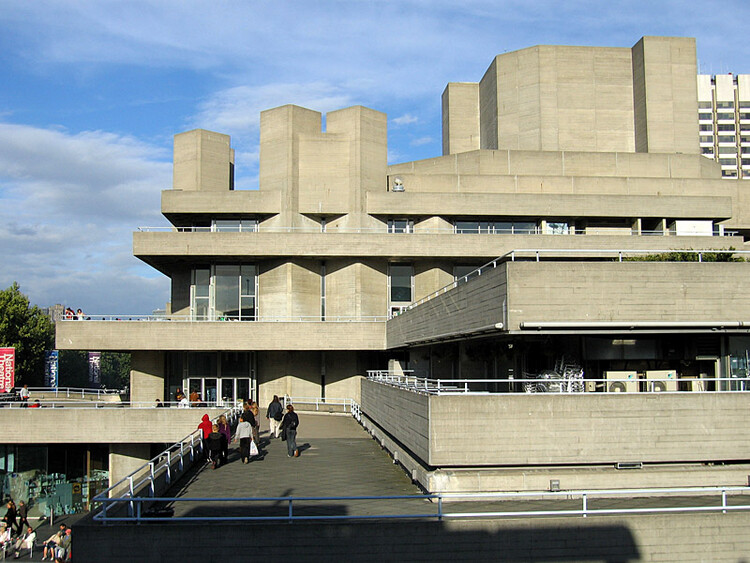
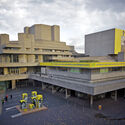
The Southbank Centre is a cultural complex in London built between 1963 and 1968 and widely regarded as a representative example of British Brutalism. Today, the site hosts a wide range of events, including visual arts, theatre, dance, classical and contemporary music, literature, poetry, and debate. The building was designed by a team from the Architects' Department of the London County Council, led by architect Norman Engleback. It became a controversial example of modern architecture following its opening in October 1967, when engineers voted Queen Elizabeth Hall "the supreme ugly" in a poll of new buildings, and the Daily Mail referred to it as "Britain's ugliest building." Fifty-nine years later, on February 10, 2026, the complex was granted Grade II listed status by the UK government's Department for Culture, Media and Sport (DCMS), following a 35-year campaign advocating for its protection as modern architectural heritage.

London’s Southbank Centre Receives National Heritage Protection After 35-Year Campaign - Image 1 of 4London’s Southbank Centre Receives National Heritage Protection After 35-Year Campaign - Image 2 of 4London’s Southbank Centre Receives National Heritage Protection After 35-Year Campaign - Image 3 of 4London’s Southbank Centre Receives National Heritage Protection After 35-Year Campaign - Image 4 of 4London’s Southbank Centre Receives National Heritage Protection After 35-Year Campaign - More Images+ 3

One Month Until Closing: 10 Must-See National Pavilions at the 2025 Venice Architecture Biennale

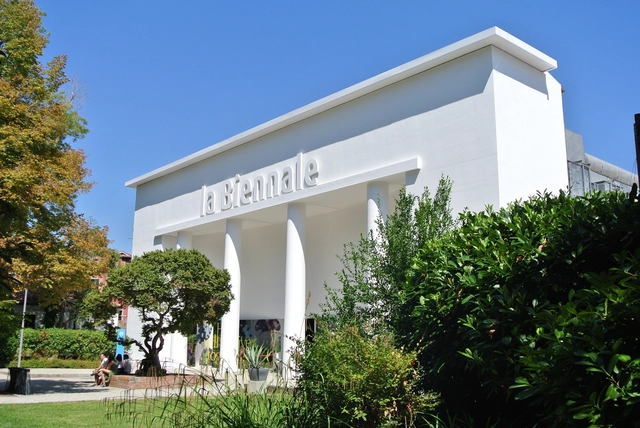
As the 19th International Architecture Exhibition enters its final month before closing on November 23, the 2025 Venice Architecture Biennale continues to reaffirm its position as one of the most influential global platforms for contemporary architectural discourse. Opened to the public on May 10 under the curatorship of Italian architect Carlo Ratti, this edition, titled "Intelligens. Natural. Artificial. Collective." brings together over 750 participants across 65 national pavilions, 11 collateral events, and numerous parallel initiatives throughout the city. Structured around the themes of Natural, Artificial, and Collective Intelligence, the Biennale examines how architecture can respond to the intertwined challenges of climate adaptation, technological transformation, and social collaboration.

One Month Until Closing: 10 Must-See National Pavilions at the 2025 Venice Architecture Biennale - Image 1 of 4One Month Until Closing: 10 Must-See National Pavilions at the 2025 Venice Architecture Biennale - Image 2 of 4One Month Until Closing: 10 Must-See National Pavilions at the 2025 Venice Architecture Biennale - Image 3 of 4One Month Until Closing: 10 Must-See National Pavilions at the 2025 Venice Architecture Biennale - Image 4 of 4One Month Until Closing: 10 Must-See National Pavilions at the 2025 Venice Architecture Biennale - More Images+ 6

Public Pools as Public Spaces: The Role of Swimming and Bathing in Cities

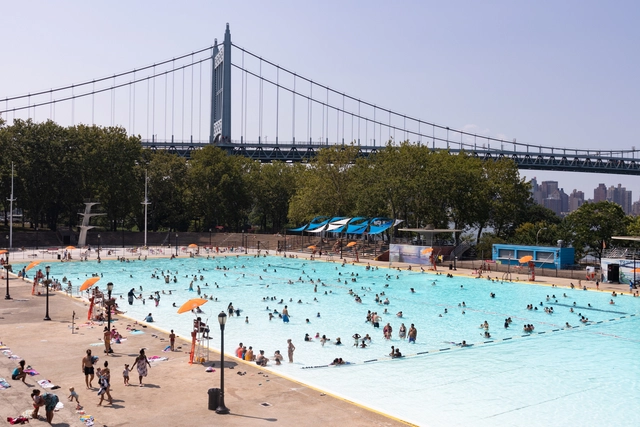
When one thinks of public spaces, the image of a pool rarely comes to mind. Public spaces are the center of civic life, places where most interactions, activities, and behaviors follow strict social and cultural norms to ensure the safety and comfort of all users. In contrast, swimming and bathing represent something more intimate and primordial, a sensorial experience distinct from any other. In addition to the health benefits, the act of floating in space creates a break from everyday life and its constraints.

As social spaces, public baths, and pools offer an even more unusual experience. Here, regular conduct rules and norms no longer apply. Social nudity becomes the new norm, and, as people strip off their clothes, they also lose their status markers, transforming the pool into an egalitarian oasis. Across history, these often-discredited spaces offered a heightened social experience, fostering connections and bringing a new element to dense urban environments. As a typology present since antiquity, public baths and pools have also been a disputed space, as a manifestation of difficult topics such as gender and racial segregation, gentrification, and surveillance in contrast to the freedom they promise.

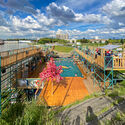
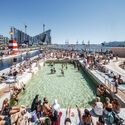
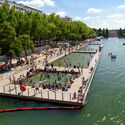
Public Pools as Public Spaces: The Role of Swimming and Bathing in Cities - Image 1 of 4Public Pools as Public Spaces: The Role of Swimming and Bathing in Cities - Image 2 of 4Public Pools as Public Spaces: The Role of Swimming and Bathing in Cities - Image 3 of 4Public Pools as Public Spaces: The Role of Swimming and Bathing in Cities - Image 4 of 4Public Pools as Public Spaces: The Role of Swimming and Bathing in Cities - More Images+ 13

The Cultural Significance of Greenhouses: A Complicated Identity

The greenhouse is a commonplace architectural typology, a frequent fixture in a host of cities, built to shield plants from the elements — from excess heat or cold or to prolong the growing season of crops. Evidence of the presence of greenhouses in some form stretches as far back as the 1450s during the Korean Joseon dynasty, but it is in the 1700s that the greenhouse was born as a specific architectural form. Glassmaking improved, and thus the largely transparent, wide-span structures we know today were born. Nestled under the intricate iron metalwork of greenhouses are also wider stories — of control and undeserved wealth, and resistance.

The Cultural Significance of Greenhouses: A Complicated Identity  - Image 1 of 4The Cultural Significance of Greenhouses: A Complicated Identity  - Image 2 of 4The Cultural Significance of Greenhouses: A Complicated Identity  - Image 3 of 4The Cultural Significance of Greenhouses: A Complicated Identity  - Image 5 of 4The Cultural Significance of Greenhouses: A Complicated Identity  - More Images+ 5

"Dancing Before the Moon" : British Council Announces Pavilion for the 2023 Venice Biennale

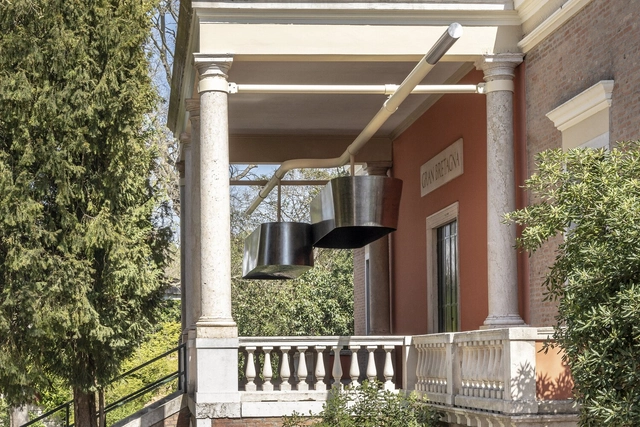
Many collaborators around the world have started submitting their pavilion concepts, all under the theme of the Biennale: The Laboratory of the Future for the 18th International Architecture Exhibition of La Biennale di Venezia. This year, the British Pavilion will be curated by Jayden Ali, Joseph Henry, Meneesha Kellay, and Sumitra Upham. The exhibition, Dancing Before the Moon will display several installations that include new creations from six designers and artists.

"Dancing Before the Moon" : British Council Announces Pavilion for the 2023 Venice Biennale - Image 1 of 4"Dancing Before the Moon" : British Council Announces Pavilion for the 2023 Venice Biennale - Image 2 of 4"Dancing Before the Moon" : British Council Announces Pavilion for the 2023 Venice Biennale - Image 3 of 4"Dancing Before the Moon" : British Council Announces Pavilion for the 2023 Venice Biennale - Image 4 of 4Dancing Before the Moon : British Council Announces Pavilion for the 2023 Venice Biennale - More Images+ 15

Curatorial Team Selected for British Pavilion at the 2023 Venice Biennale

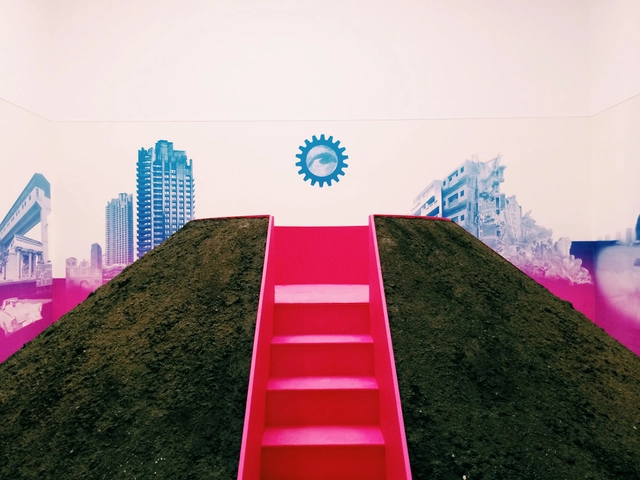
The British Council has announced that Jayden Ali, Joseph Henry, Meneesha Kellay and Sumitra Upham will be the curatorial team that will represent Great Britain at the 18th International Architecture Exhibition - La Biennale di Venezia. The team will transform the British Pavilion into celebratory spaces that "embrace collective construction methods and processes that avoid exploiting people and the planet". The 18th International Architecture Exhibition will be held from May 20th until November 26th, 2023.

Curators of 2021 Venice Architecture Biennale on the Future of the Built Environment in Design and the City Podcast

In this two-part episode of Design and the City - a podcast on how to make cities more livable – reSITE covers the 17th Venice Architecture Biennale, exploring the question of “How will we live together". Part-one looks into the works of the U.S, Nordic, and Luxembourg Pavilion curators, focusing on their use of timber construction as an answer to the exhibition's theme. Part-two features curator Hashim Sarkis and Greg Lindsay, along with the British and Austrian pavilion curators, as they explore the topic of accessibility.

Curators of 2021 Venice Architecture Biennale on the Future of the Built Environment in Design and the City Podcast - Image 1 of 4Curators of 2021 Venice Architecture Biennale on the Future of the Built Environment in Design and the City Podcast - Image 2 of 4Curators of 2021 Venice Architecture Biennale on the Future of the Built Environment in Design and the City Podcast - Image 3 of 4Curators of 2021 Venice Architecture Biennale on the Future of the Built Environment in Design and the City Podcast - Image 4 of 4Curators of 2021 Venice Architecture Biennale on the Future of the Built Environment in Design and the City Podcast - More Images+ 25

From Festivals to Schools, Cathedrals, and Bomb Sites: The Story of Mid-Century Modernism in Britain

The term “mid-century modern” conjures up images of a sharp-suited Don Draper, slender teak cabinets, and suave chairs from Scandinavia. That is, at least, one perspective of the design movement and a view more of 1950s-era Manhattan offices than anything else. But in Britain, mid-century modernism manifested as something slightly different, coming in the form of schools, cathedrals, housing, and an era-defining festival, all eloquently described and illustrated by the prolific architectural historian Elain Harwood in Mid-Century Britain: Modern Architecture 1938-1963.

7N Architects Selected by Network Rail and RIBA to Shape Britain's Future Railways

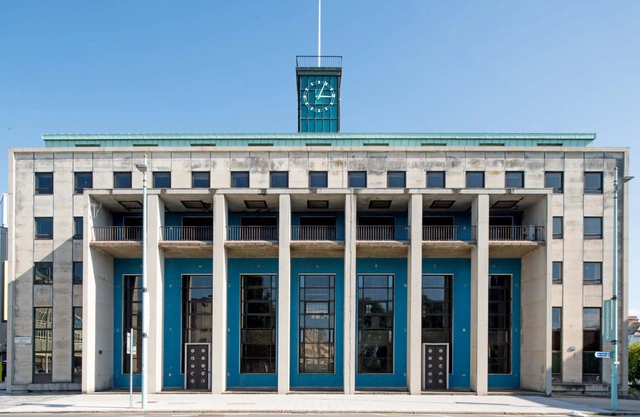
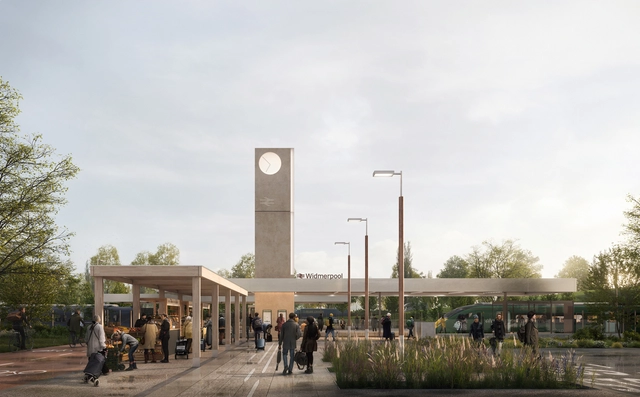
RIBA and Network Rail recently announced the winner of the Re-imagining Railways design competition, which invited architects, engineers and designers to rethink small and medium-sized train stations to improve the travel experience. The winning design, signed by Edinburgh-based architectural practice 7N Architects, features a reinterpreted clock tower serving as a local landmark and a modular station layout that can be adapted to a variety of sites.

The British Pavilion at the 2021 Venice Architecture Biennale Explores How to Make Public Space More Inclusive

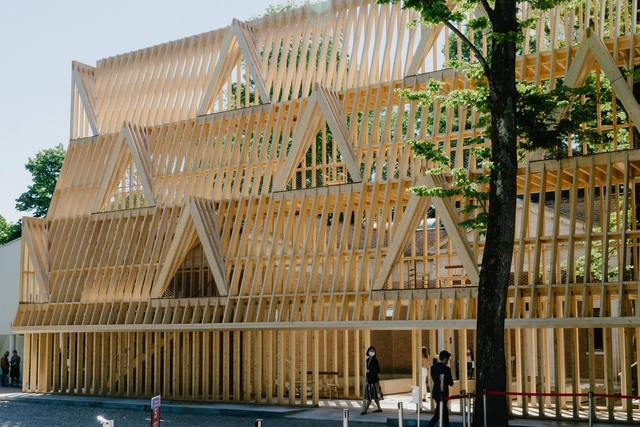
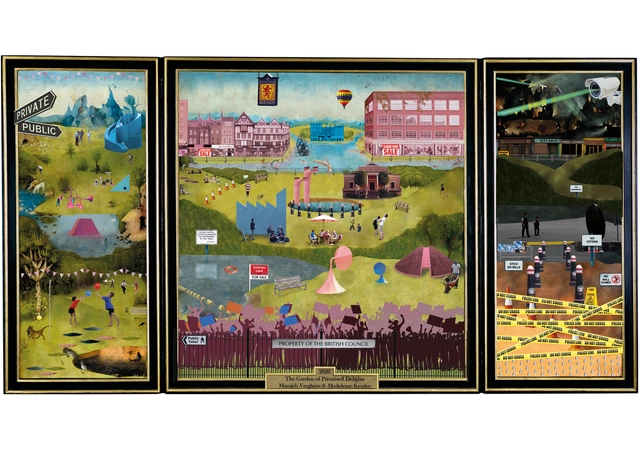
Curated by Manijeh Verghese and Madeleine Kessler, co-founders of multi-scalar design practice Unscene Architecture, the British Pavilion exhibition entitled The Garden of Privatised Delights, at the 17th International Architecture Exhibition – La Biennale di Venezia, will be open to the public from the 22nd of May until the 21st of November 2021. Commissioned by the British Council, the exhibition “reimagines how to make public space more inclusive, countering the rapid rise of privately-owned public space with an inspiring, alternative vision that urges both sectors to work together to create better-designed spaces for all”.

Manijeh Verghese and Madeleine Kessler to Represent the UK at the Venice Biennale 2020

The British Council has announced that curators Manijeh Verghese and Madeleine Kessler will represent the UK at the 17th International Architecture Exhibition at the Venice Biennale 2020. Selected from a shortlist of nine proposals, the winning project entitled “The Garden of Privatised Delights”, explores the creeping epidemic of privatized public spaces across cities in the UK.

Construction Works Begin on Hugh Broughton's Discovery Building at Rothera Research Station in Antarctica

A new building in Antarctica breaks ground at the Rothera Research Station. Designed by Hugh Broughton Architects, the project commissioned by the Natural Environment Research Council (NERC), aims to facilitate the British Antarctic Survey’s (BAS) ongoing climate-related research.

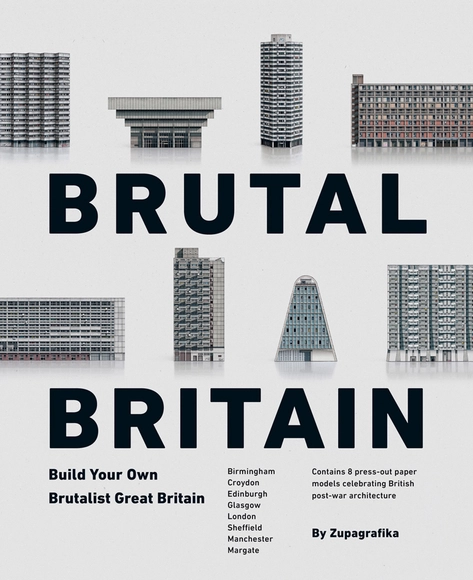
Brutal Britain: Build Your Own Brutalist Great Britain

High-rise tower blocks, prefab panel housing estates, streets in the sky, new towns; some of the concrete constructions that once shaped the cityscapes of post-war Britain have stood the test of time, while others are long gone.

RIBA Agrees Upon Major Changes To UK Architectural Education

Exactly one year ago an important event took place. A gathering of seventy student delegates, organised by the Architecture Students Network (ASN), met to discuss the future of architectural education. Their meeting was sparked by the latest directive from the European Union which seeks to “establish more uniformity across Europe by aligning the time it takes to qualify”, making mutual recognition of the architect’s title easier between countries.

The ASN’s discussions concluded that the course content throughout the UK system of ‘Part I, II, and III’, and the duration of said course, urgently needs to be re-evaluated in order to reflect the changing needs of the profession - especially in light of the recent rise in tuition fees and associated university costs. Back then, a spokesperson for the ASN said that “it really felt like momentum for change has finally reached a tipping point.”

Sam Jacob & Wouter Vanstiphout on Curating "A Clockwork Jerusalem"

The British Pavilion at the 2014 Venice Biennale takes the large scale projects of the 1950’s, 60’s and 70’s and explores the "mature flowering of British Modernism at the moment it was at its most socially, politically and architecturally ambitious but also the moment that witnessed its collapse." The exhibition tells the story of how British modernity emerged out of an unlikely combination of interests and how "these modern visions continue to create our physical and imaginative landscapes." To those who know the UK's architectural heritage, this cultural and social history is delivered in a way which feels strangely familiar, whilst uncovering fascinating hidden histories of British modernity that continue to resonate in the 21st century.

We caught up with Sam Jacob, co-founder of FAT Architecture (of which this exhibition is their final project), and Wouter Vanstiphout, partner at Rotterdam-based Crimson Architectural Historians, outside the British Pavilion to discuss the ideas behind, and significance of, A Clockwork Jerusalem.

Sam Jacob & Wouter Vanstiphout on Curating "A Clockwork Jerusalem" - Cultural Architecture
© James Taylor-Foster

Lines Drawn: UK Architecture Students Network Discuss the Future of Architectural Education

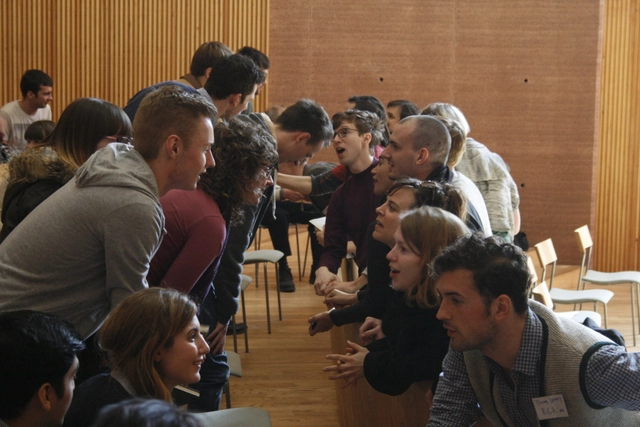
Lines Drawn, the latest gathering of student delegates by the Architecture Students Network (ASN), recently met at the Centre for Alternative Technology (CAT) to discuss the future of architectural education. Seventy RIBA Part 1, 2 and 3 students (including those on their placement years) from across twenty two schools of architecture gathered together to address and unify their voice in calling for improvements to the current pedagogy of UK’s architectural education to reflect a changing society.

The weekend conference provoked questions surrounding the merits and pitfalls of the Part 1, 2 and 3 British route to qualification, raising aspirations of a more flexible education system. Sparked by the latest directive from the European Union (EU), which seeks to "establish more uniformity across Europe by aligning the time it takes to qualify" and by making mutual recognition of the architect's title easier between countries, the discussions centred around how architecture students' opinions can be harnessed at this critical moment of change to have voices heard.

Continue reading for ArchDaily's exclusive pre-coverage of the ASN's report.

Richard Rogers' Pre-Fab Y-Cube Takes on UK Housing Crisis

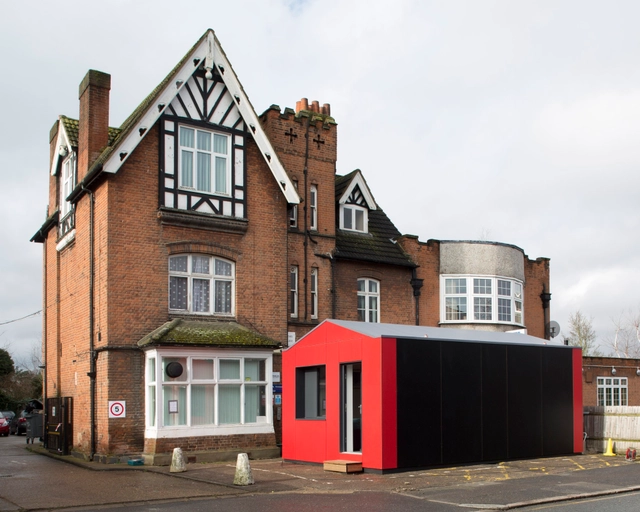
The Y-Cube, a £30,000 factory-built 26 square meter flat which can be easily transported and craned into place, has been prototyped and successfully tested in the UK. The YMCA asked Rogers Stirk Harbour + Partners to create the Y-Cube, an affordable alternative for residents moving on from the non-profit’s hostels. And now, the YMCA wants more of these one-bedroom dwellings.

“The beauty is that the units can be moved off site as quickly as they are installed,” says Andy Redfearn of the YMCA, “as we operate on short-term leases – we expect people to stay [in the Y-Cube] for between three to five years, giving them time to skill up and save for a deposit.”

Britain's New Baseline School Design Sacrifices Style for Savings

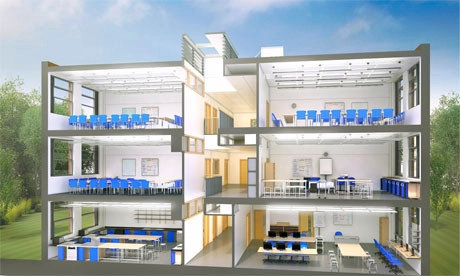
Britain's Education Secretary Michael Gove and the Department for Education have released blueprints for the baseline design for schools that they believe "demonstrate good practice that can be achieved within [a] set cost and area allowances." The government's goal is to reduce the cost of new school buildings from the previous £21m to less than £14m each for the replacement of 261 of the most run-down schools in the country.

These new schools, however, will be 15% smaller than the ones designed originally under the Building Schools for the Future (BSF) program, potentially compromising important spaces such as corridors, assembly halls, canteens and atriums. Many teachers have expressed concern for these changes, as they could lead to congestion, bad behavior among students and would "undermine attempts to maximize the value for money of school buildings by making them available for community functions after hours."

Architects and the architecture community at large are also worried about the design implications of such a standardized school building prototype - how will it interact with the existing school buildings and how could restricted design affect Britain's educational system?

More after the break...