1. ArchDaily
  2. Human Scale

Human Scale: The Latest Architecture and News

The Metrics We Use Decide the Cities We Build: Urban Indicators and Lived Experience

Subscriber Access | 

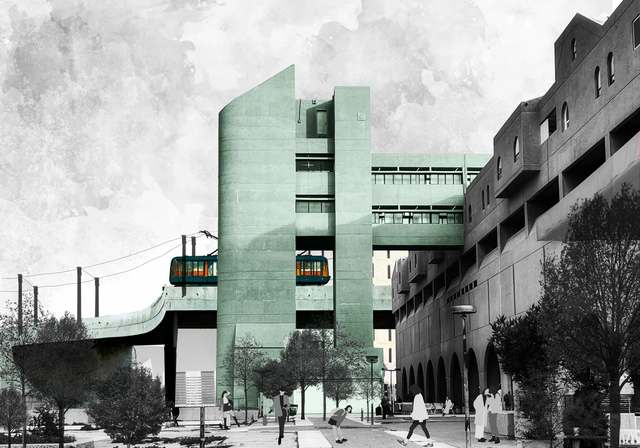
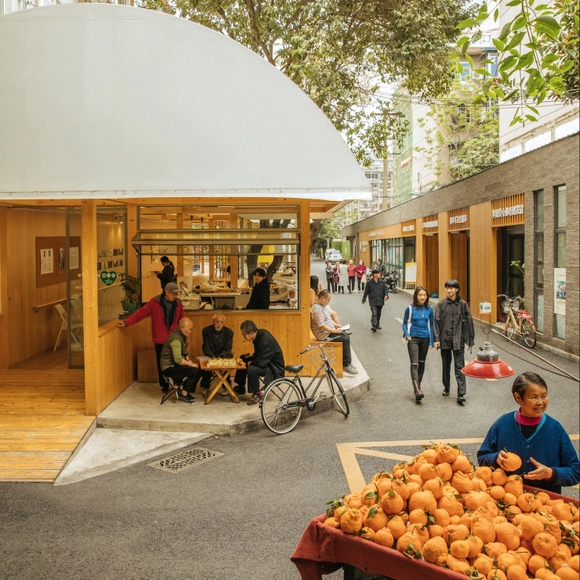
Modern cities are running on performance indicators. They move millions of people each day, concentrate capital, separate land uses, and sustain complex systems of logistics and consumption. In that sense, the city functions as a system to be continually adjusted and optimized.

Today's dominant metrics are familiar and widely witnessed: vehicles per hour, average commute times, floor area ratios, parking turnover, housing starts, and tax revenue per parcel of land. These figures describe a city that is legible through efficiency. They are inherited from an industrial logic, where urban space is treated more like a production mechanism than a lived-in environment. In this framing, cities begin to mimic the needs and metrics of a machine.

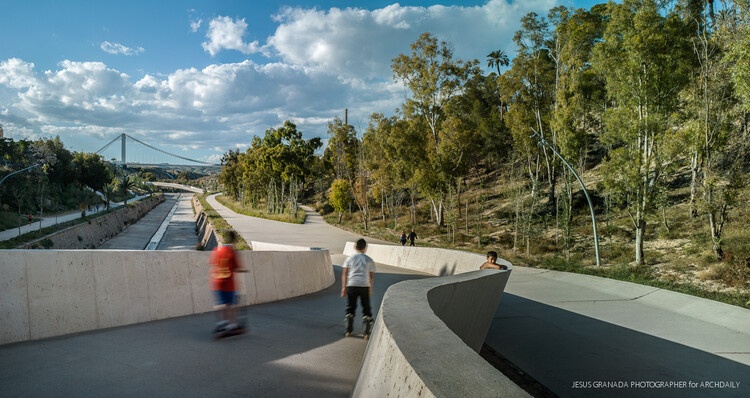
The Metrics We Use Decide the Cities We Build: Urban Indicators and Lived Experience - Image 1 of 4The Metrics We Use Decide the Cities We Build: Urban Indicators and Lived Experience - Image 2 of 4The Metrics We Use Decide the Cities We Build: Urban Indicators and Lived Experience - Image 3 of 4The Metrics We Use Decide the Cities We Build: Urban Indicators and Lived Experience - Image 4 of 4The Metrics We Use Decide the Cities We Build: Urban Indicators and Lived Experience - More Images+ 2

Podium–Tower Urbanism in Southeast Asia: Density, Management, and the Disappearing Street

Subscriber Access | 

If elevated networks reveal a city that increasingly walks above the street, the podium–tower is the typology that often makes that condition feel inevitable. Across Southeast Asia, podium–tower projects have become one of the dominant languages of metropolitan growth: a system that concentrates housing, jobs, retail, and transit connections into highly legible and managed parcels. From an urban planning perspective, the model can be remarkably effective—absorbing congestion, formalizing circulation, and delivering density quickly. Yet as it spreads, the typology also raises a quieter question: what does it optimize for, and what does it erode—especially at the level of the street, where urban life is meant to be negotiated rather than curated?
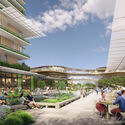
At its simplest, the podium–tower is a hybrid structure consisting of a high-coverage, low-rise podium supporting one or more slender vertical towers. The podium typically carries the logistical and commercial weight of the development—retail, parking, loading, drop-offs, back-of-house services, and often amenity decks—while the tower stacks private programs above, whether residential, office, hotel, or mixed use. The promise is twofold: maximize urban density while maintaining a "human-scaled" street wall, and separate the messy logistics of city life from the quieter domain of living and work.

Podium–Tower Urbanism in Southeast Asia: Density, Management, and the Disappearing Street - Image 1 of 4Podium–Tower Urbanism in Southeast Asia: Density, Management, and the Disappearing Street - Image 2 of 4Podium–Tower Urbanism in Southeast Asia: Density, Management, and the Disappearing Street - Image 3 of 4Podium–Tower Urbanism in Southeast Asia: Density, Management, and the Disappearing Street - Image 4 of 4Podium–Tower Urbanism in Southeast Asia: Density, Management, and the Disappearing Street - More Images+ 14

Courtyardism: A Vision for a More Balanced Urban Future in the Greater Bay Area by Wang Weijen Architecture

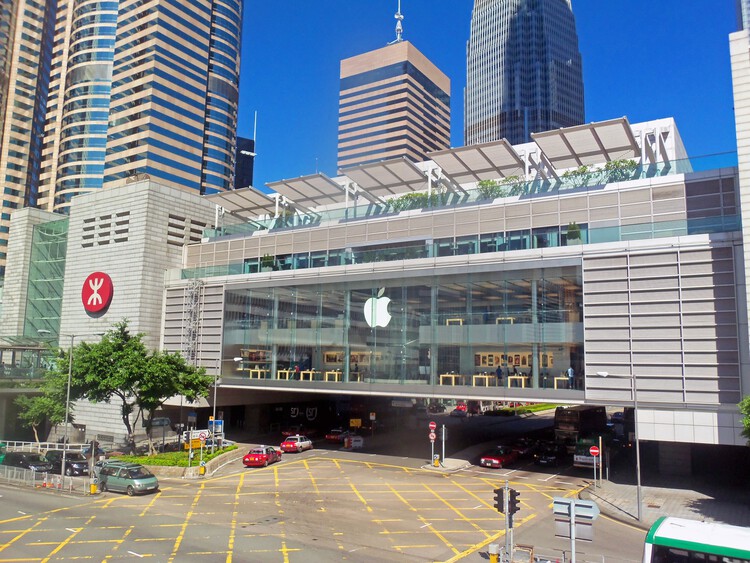
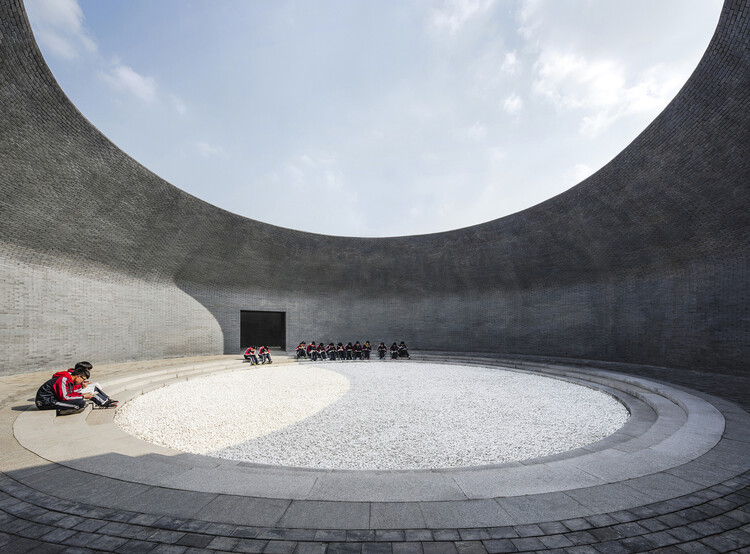
Situated in one of the fastest-developing regions over the past decade—the southern part of China, including Hong Kong and the Greater Bay Area—urban growth has been driven by an overwhelming wave of commercial ambition. Projects here are often designed for maximum density, height, and efficiency, resulting in developments of enormous scale that can easily span several acres. Prioritizing transit-oriented development, these complexes frequently take the form of sprawling malls built directly above major transportation hubs. Designed to disorient and prolong foot traffic to encourage economic activities, these mega-structures have become commonplace in cities like Hong Kong and Shenzhen.

While this typology of megastructures offers clear advantages—economic efficiency, high development returns, and convenience for transit users—it almost invariably ignores its urban context and environment. These developments often turn a blind eye, deliberately so, to their environmental footprint and the city's walkability. At such overwhelming scales, the human walking experience is diminished, if not outright neglected. Pedestrians become interiorized—trapped within the insulated world of these complexes.

Courtyardism: A Vision for a More Balanced Urban Future in the Greater Bay Area by Wang Weijen Architecture - Image 1 of 4Courtyardism: A Vision for a More Balanced Urban Future in the Greater Bay Area by Wang Weijen Architecture - Image 2 of 4Courtyardism: A Vision for a More Balanced Urban Future in the Greater Bay Area by Wang Weijen Architecture - Image 3 of 4Courtyardism: A Vision for a More Balanced Urban Future in the Greater Bay Area by Wang Weijen Architecture - Image 4 of 4Courtyardism: A Vision for a More Balanced Urban Future in the Greater Bay Area by Wang Weijen Architecture - More Images+ 26

Romanian Pavilion at the 2025 Venice Biennale Explores Architecture Through the Human Figure

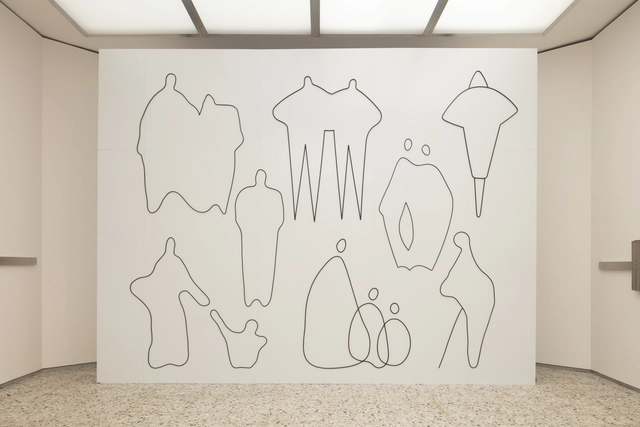
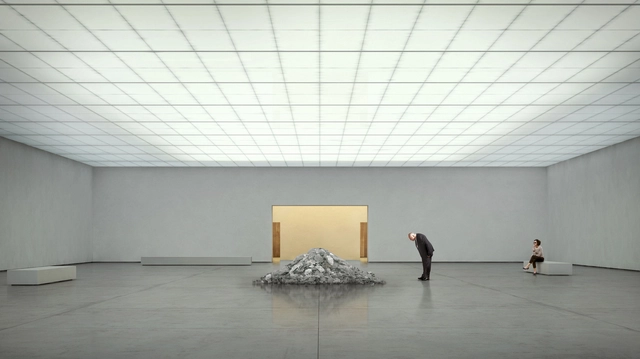
Romanian Pavilion at the 19th International Architecture Exhibition – La Biennale di Venezia presents HUMAN SCALE, an exhibition and research initiative that explores the intersection of architecture and visual arts. Curated by Cosmina Goagea, the project brings together the work of contemporary artist Vlad Nancă and architecture duo Muromuro Studio. On view at both the Romanian Pavilion in the Giardini della Biennale and the New Gallery of the Romanian Institute of Culture and Humanistic Research in Venice, the exhibition explores how architectural representations not only shape but also convey collective ideas and social aspirations.

Romanian Pavilion at the 2025 Venice Biennale Explores Architecture Through the Human Figure - Image 1 of 4Romanian Pavilion at the 2025 Venice Biennale Explores Architecture Through the Human Figure - Image 2 of 4Romanian Pavilion at the 2025 Venice Biennale Explores Architecture Through the Human Figure - Image 3 of 4Romanian Pavilion at the 2025 Venice Biennale Explores Architecture Through the Human Figure - Image 4 of 4Romanian Pavilion at the 2025 Venice Biennale Explores Architecture Through the Human Figure - More Images

Designing for Companionship: Reimagining Urban Life with Pets

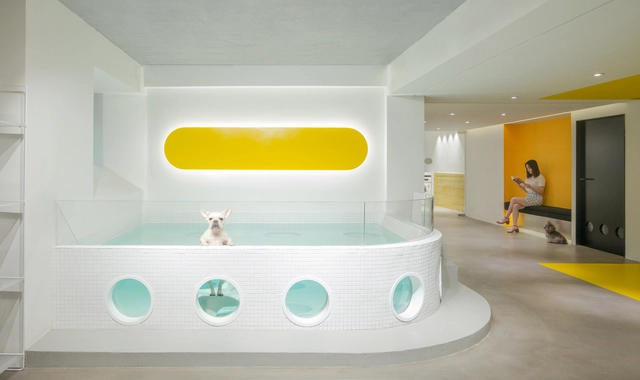
Humans and pets have long shared a deep and inseparable bond—and today, how we live alongside them is becoming increasingly important. Beyond offering companionship, pets are now often regarded as life partners, providing powerful support for mental health and emotional well-being. Yet it is not only the emotional connection that matters: the way we design and curate spaces for cohabitation with them plays a critical role in shaping meaningful spatial relationships between humans and their animal companions.

Whether through custom-designed furniture or more seamlessly integrated solutions like wall cavities and built-in nooks, an increasing amount of attention is being paid to how we can better coexist with pets in our homes. This shift reflects more than just affluence or pet ownership; it signals a broader evolution of companionship—one rooted in mutual support, emotional health, and shared environments.

Designing for Companionship: Reimagining Urban Life with Pets - Image 1 of 4Designing for Companionship: Reimagining Urban Life with Pets - Image 2 of 4Designing for Companionship: Reimagining Urban Life with Pets - Image 3 of 4Designing for Companionship: Reimagining Urban Life with Pets - Image 4 of 4Designing for Companionship: Reimagining Urban Life with Pets - More Images+ 15

The Power of Scale: How Proportions Shape Human Experience

The way we perceive and experience spaces extends beyond aesthetics—they directly influence our emotions, thoughts, and even creativity. Spacious environments with high ceilings often evoke a sense of freedom and inspiration, while smaller, enclosed spaces encourage focus and introspection. This is not merely a subjective impression but a scientifically studied phenomenon. In the 1960s, anthropologist Edward T. Hall introduced the term "Cathedral Effect" to describe how ceiling height impacts cognition and behavior. More recent research has expanded on this idea, demonstrating how architecture shapes decision-making and emotional states in various contexts.

The Power of Scale: How Proportions Shape Human Experience - Image 1 of 4The Power of Scale: How Proportions Shape Human Experience - Image 2 of 4The Power of Scale: How Proportions Shape Human Experience - Image 3 of 4The Power of Scale: How Proportions Shape Human Experience - Image 4 of 4The Power of Scale: How Proportions Shape Human Experience - More Images+ 13

Foster + Partners Unveils Xicen Science & Technology Center in Shanghai, China

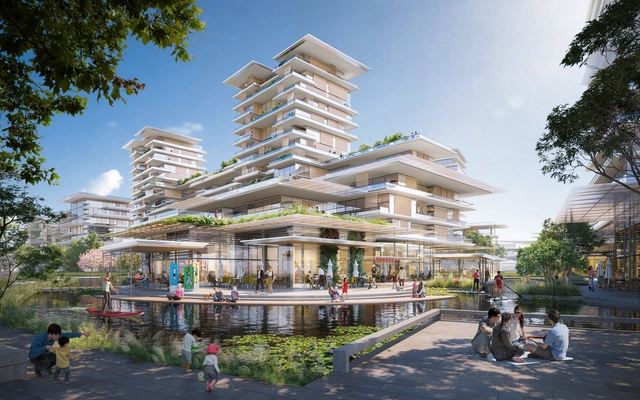
Foster + Partners has just unveiled the designs for the Xicen Science & Technology Center at the heart of the Yangtze River Delta Region in Shanghai, China. The project is strategically located along the Shanghai – Huzhou development axis, ensuring connectivity to the city center through high-speed rail links. Drawing inspiration from the timeless allure of the surrounding water towns, the center blends new and existing waterways to create a community featuring residential, commercial, and recreational spaces.

Foster + Partners Unveils Xicen Science & Technology Center in Shanghai, China - Image 1 of 4Foster + Partners Unveils Xicen Science & Technology Center in Shanghai, China - Image 2 of 4Foster + Partners Unveils Xicen Science & Technology Center in Shanghai, China - Image 3 of 4Foster + Partners Unveils Xicen Science & Technology Center in Shanghai, China - Image 4 of 4Foster + Partners Unveils Xicen Science & Technology Center in Shanghai, China - More Images+ 2

Letter From Ljubljana, Slovenia: The Human-Centered Urbanism of Jože Plečnik

This article was originally published on Common Edge.

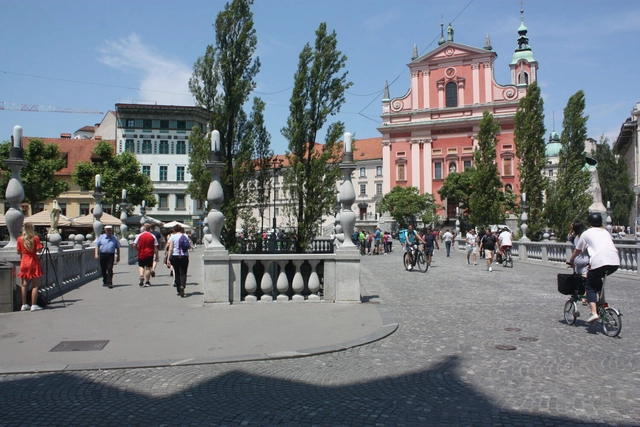
Recently I traveled to Ljubljana, Slovenia, in search of the religious architecture of the celebrated (but largely unknown in the U.S.) Slovenian architect Jože Plečnik (1872–1957). I write a lot about the architecture of spirituality, and I was curious about Plečnik’s churches and chapels—what the architect’s idiosyncratic form of classicism said about faith in a Modern age. What I didn’t expect to find was the universal nature of Plečnik’s work as an urbanist: a re-maker of the Slovenian capital that holds lessons for us today.

Letter From Ljubljana, Slovenia: The Human-Centered Urbanism of Jože Plečnik - Image 1 of 4Letter From Ljubljana, Slovenia: The Human-Centered Urbanism of Jože Plečnik - Image 2 of 4Letter From Ljubljana, Slovenia: The Human-Centered Urbanism of Jože Plečnik - Image 3 of 4Letter From Ljubljana, Slovenia: The Human-Centered Urbanism of Jože Plečnik - Image 4 of 4Letter From Ljubljana, Slovenia: The Human-Centered Urbanism of Jože Plečnik - More Images+ 6

Kuwait Pavilion at La Biennale di Venezia Explores Consequences of Modernist Urban Planning on Historic Built Environment

The Kuwait Pavilion, titled 'Rethinking Rethinking Kuwait,' at the 18th International Architecture Exhibition — La Biennale di Venezia, delves into innovative architectural and urban design methods arising from space and time. The project is an ongoing exploration addressing the consequences of modernist urban planning, which erased much of Kuwait's historic built environment.

Kuwait Pavilion at La Biennale di Venezia Explores Consequences of Modernist Urban Planning on Historic Built Environment - Image 1 of 4Kuwait Pavilion at La Biennale di Venezia Explores Consequences of Modernist Urban Planning on Historic Built Environment - Image 2 of 4Kuwait Pavilion at La Biennale di Venezia Explores Consequences of Modernist Urban Planning on Historic Built Environment - Image 3 of 4Kuwait Pavilion at La Biennale di Venezia Explores Consequences of Modernist Urban Planning on Historic Built Environment - Image 4 of 4Kuwait Pavilion at La Biennale di Venezia Explores Consequences of Modernist Urban Planning on Historic Built Environment - More Images+ 1

Architecture Not to Scale: Viewing the Familiar With an Unfamiliar Eye

Scale is a term that has dominated the architectural profession for as long as built structures have existed. In the literal sense, scale defines the measurable standards that we have come to know and accept —the widths of door frames, a car turn radius, and of course, a means of producing measurable drawings. In a more abstract and figurative representation, scale describes a feeling of individual experiences when comparing themselves or a familiar object to something unfamiliar.

What Kind of City is a People-Oriented City? Ranking Chinese Cities

What kind of city is a people-oriented city? This is a difficult question to answer because humanistic cities evaluate the city by "people”, and people are extremely diverse, producing individual different evaluation standards. For example, a city that is friendly to car drivers, may not be so friendly to pedestrians.

Nonetheless, there is a general perception that some cities seem to be more friendly to people than others. Why is this the situation?

What Kind of City is a People-Oriented City? Ranking Chinese Cities  - Image 1 of 4What Kind of City is a People-Oriented City? Ranking Chinese Cities  - Image 2 of 4What Kind of City is a People-Oriented City? Ranking Chinese Cities  - Image 3 of 4What Kind of City is a People-Oriented City? Ranking Chinese Cities  - Image 4 of 4What Kind of City is a People-Oriented City? Ranking Chinese Cities  - More Images+ 10

Children's Scale: A Brief History of Kid's Furniture

Children's Scale: A Brief History of Kid's Furniture - Image 1 of 4Children's Scale: A Brief History of Kid's Furniture - Image 2 of 4Children's Scale: A Brief History of Kid's Furniture - Image 3 of 4Children's Scale: A Brief History of Kid's Furniture - Image 4 of 4Children's Scale: A Brief History of Kid's Furniture - More Images+ 48

Children's furniture is all furniture –fixed or mobile– that is designed according to the ergonomic guidelines and anatomical dimensions of children specifically. Following this definition, we can identify two types of furniture: (1) those that facilitate a relationship between the caregiver and the child, and (2) those that allow the child to use them independently.

The big difference between these two types is that the first has dimensions that mainly adapt to the ergonomics of the adult, while the second is designed to meet the ergonomic needs of the child at each stage of their development. Since the growth of children occurs relatively quickly, it is common for the furniture of this second group to be multifunctional or even extendable.

Psychology of Scale: People, Buildings and Cities

In the introduction of Cities for People, Jan Gehl stated clearly that most cities have neglected the human aspect when planning the built space. While technologies have allowed us to build large, our focus shifted from creating architecture for humans to erecting structures that look like they are meant for a different kind of species. Top-down urban planning decisions have ignored scales adapted to the senses and organic growth, and new ideologies prioritized speed, functionality, and profitability.

Dictating our city experience, scale, this major spatial component related to the human dimension, stimulates our senses, and influences our well-being. In this article, we lay down historical changes and underline scientific facts to highlight how scale can impact our daily city life, guided by Eden of the Orient, a series of photos by Belgian photographer Kris Provoost, portraying a battle of scale in Hong Kong.

Psychology of Scale: People, Buildings and Cities - Image 1 of 4Psychology of Scale: People, Buildings and Cities - Image 2 of 4Psychology of Scale: People, Buildings and Cities - Image 3 of 4Psychology of Scale: People, Buildings and Cities - Image 4 of 4Psychology of Scale: People, Buildings and Cities - More Images+ 10

The Human Scale: India At Eye Level

The human scale can best be described as the relationship between a body and its surroundings and a body is nothing if not the undeniable connection between our sensorial experience within the material world and how we perceive it within our own minds.  

"The Section Is Where the Exterior and the Interior Comes Together": An Interview With Neri&Hu

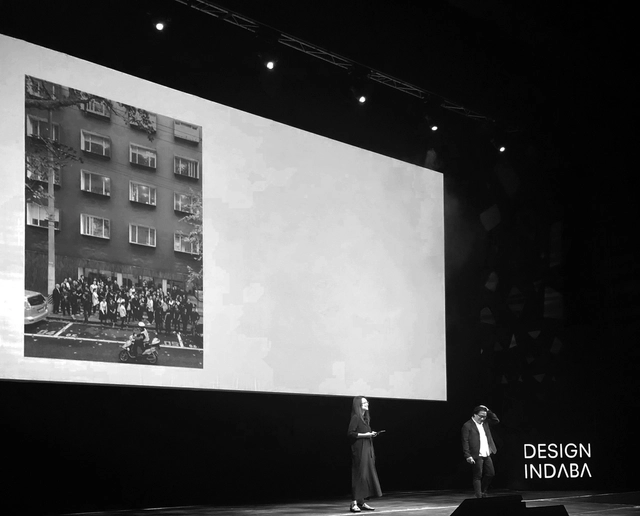
During the latest Design Indaba Festival, we have the chance to interview Lyndon Neri and Rossana Hu, from Neri&Hu Design and Research Office, a Shanghai-based inter-disciplinary architectural design practice, about their work and way of thinking about architecture.

Representation of the Human Scale in 20 Architectural Sections

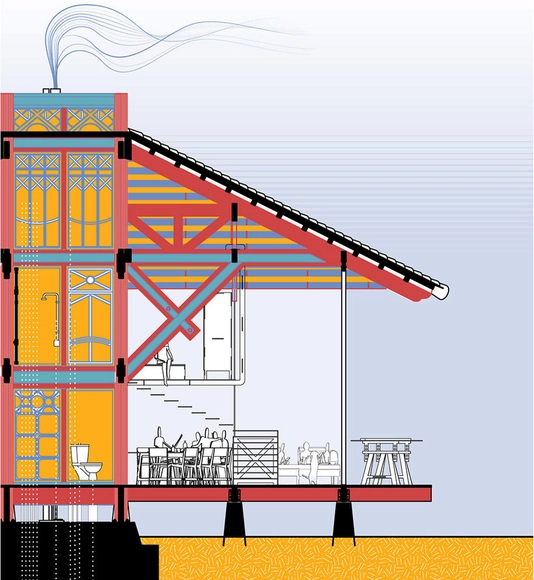
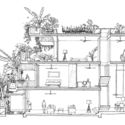
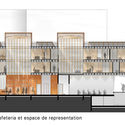
Rendered floor plans and sections are a kind of translation of technical construction drawings into a language more accessible to people who are not familiar with architectural design. In other words, they are responsible for introducing the human scale to the project, not only through the human figure but also by displaying furniture, textures, and other aspects of architecture that are more realistic and humanizing, making the representation more understandable.

Representation of the Human Scale in 20 Architectural Sections - Image 3 of 4Representation of the Human Scale in 20 Architectural Sections - Image 9 of 4Representation of the Human Scale in 20 Architectural Sections - Image 19 of 4Representation of the Human Scale in 20 Architectural Sections - Image 20 of 4Representation of the Human Scale in 20 Architectural Sections - More Images+ 16

The Last Shall Be First: The Importance of Human Figures in Renders

In architecture, professionals must constantly deal with the challenge of representing a project clearly and understandably before it is built, making the space somehow more perceptible to people who are often not specialized in the field. Rendering is one of the most popular methods of three-dimensional representation among architects because it portrays the project more realistically. Reality, however, implies the presence of people and their ways of inhabiting spaces, which can be depicted through human figures, that must be coherent with the intended picture and interpretation of the architecture, the place it is located in, and the way it is inhabited.

The Last Shall Be First: The Importance of Human Figures in Renders - Image 1 of 4The Last Shall Be First: The Importance of Human Figures in Renders - Image 3 of 4The Last Shall Be First: The Importance of Human Figures in Renders - Image 4 of 4The Last Shall Be First: The Importance of Human Figures in Renders - Image 7 of 4The Last Shall Be First: The Importance of Human Figures in Renders - More Images+ 3

Heatherwick Discusses Design on a Human Scale in First Episode of ReSITE Podcast

Design and the City is a podcast by reSITE, raising questions and proposing solutions for the city of the future. In the first episode, Thomas Heatherwick founder of Heatherwick Studios discusses the notion of Designing on a Human Scale, describes his conceptual approach and introduces his latest venture in the heart of historic Prague. Joining the interview is ArchDaily editor, Christele Harrouk.

Heatherwick Discusses Design on a Human Scale in First Episode of ReSITE Podcast - Image 1 of 4Heatherwick Discusses Design on a Human Scale in First Episode of ReSITE Podcast - Image 2 of 4Heatherwick Discusses Design on a Human Scale in First Episode of ReSITE Podcast - Image 3 of 4Heatherwick Discusses Design on a Human Scale in First Episode of ReSITE Podcast - Image 4 of 4Heatherwick Discusses Design on a Human Scale in First Episode of ReSITE Podcast - More Images+ 4