1. ArchDaily
  2. Inside Outside

Inside Outside: The Latest Architecture and News

Milan Architecture City Guide: 43 Projects from Historic Landmarks to Contemporary Designs

Subscriber Access | 

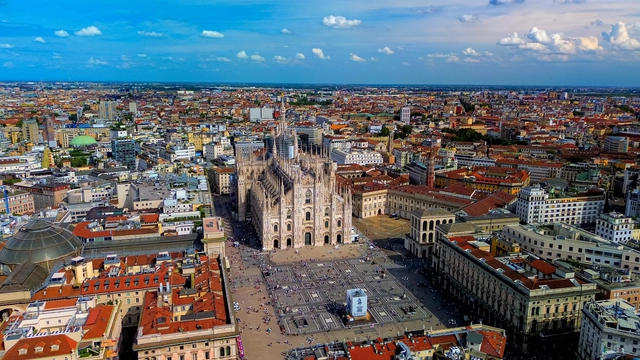
Milan, a global hub of fashion and finance, increasingly asserts itself as a leading center for architecture and design. Its status as Italy's second-largest city underpins its vibrant cultural scene, attracting both established and emerging creative talent. Additionally, Milan is home to esteemed educational institutions recognized for their focus on heritage preservation and conservation. Its cultural and design significance is increasingly pronounced, as a growing number of creators are relocating to establish their presence in this vibrant creative hub.

Among Milan's most iconic landmarks are the flamboyant Gothic Duomo di Milano, the historically and artistically significant Santa Maria delle Grazie, and the ornate Galleria Vittorio Emanuele II, along with numerous Renaissance and Baroque sites. The city also boasts some of the most innovative modern and contemporary architecture, showcasing a unique dialogue between tradition and modernity. This synergy is exemplified by the contributions of architects like Aldo Rossi, Gio Ponti, Stefano Boeri, Mario Cucinella, Zaha Hadid, Grafton Architects, Herzog & de Meuron, and Foster and Partners.

The following guide highlights key historical landmarks alongside exemplary contemporary architecture curated by ArchDaily. This guide serves as an indispensable resource for those planning to explore Milan during the 2026 Design Week, presenting a blend of essential sites designed by renowned local and international architects.
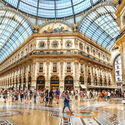
Milan Architecture City Guide: 43 Projects from Historic Landmarks to Contemporary Designs - Image 5 of 4Milan Architecture City Guide: 43 Projects from Historic Landmarks to Contemporary Designs - Image 6 of 4Milan Architecture City Guide: 43 Projects from Historic Landmarks to Contemporary Designs - Image 28 of 4Milan Architecture City Guide: 43 Projects from Historic Landmarks to Contemporary Designs - Image 48 of 4Milan Architecture City Guide: 43 Projects from Historic Landmarks to Contemporary Designs - More Images+ 52

The Illusion of Level: Detailing for Water in “Flat” Architecture

Subscriber Access | 

We walk on "flat" ground every day and rarely think twice—but how flat is it, really? In the city, curbs are chamfered, sidewalks pitch toward grates, and roadways are crowned to shed water into shallow gutters. In suburbs and on unpaved paths, irregular terrain is the norm. Inside buildings, by contrast, we pursue near-perfect horizontality—structural frames, slabs, and finishes are all disciplined to create level walking surfaces in the name of safety and accessibility. Yet flatness is inherently at odds with water. A closer look reveals a quiet repertoire of accommodations: slight falls at entries, thresholds raised a few millimeters, wet areas with barely perceptible pitches. The floor is read as flat, but it is in fact carefully tuned—micro-topographies masquerading as plane—to manage water without calling attention to themselves.

What are the common ways architects "keep things flat" while actually managing water—the perennial enemy of buildings? A useful way to look at it is by zooming into three recurring conditions: exterior or roof decking, bathrooms and other wet rooms, and exterior ground planes. Each relies on a slightly different toolkit—pedestal systems over sloped waterproofing, micro-gradients to floor traps, hidden perimeter drains, split slopes—to maintain the illusion of a seamless, level surface. Studying these situations side by side reveals just how much design effort goes into reconciling perceptual flatness with the messy reality.

The Illusion of Level: Detailing for Water in “Flat” Architecture - Image 1 of 4The Illusion of Level: Detailing for Water in “Flat” Architecture - Image 2 of 4The Illusion of Level: Detailing for Water in “Flat” Architecture - Image 3 of 4The Illusion of Level: Detailing for Water in “Flat” Architecture - Image 4 of 4The Illusion of Level: Detailing for Water in “Flat” Architecture - More Images+ 15

Is Sustainability the New Luxury? In Conversation with Andrea Boschetti on Karl Lagerfeld Villas in Marbella

Subscriber Access | 

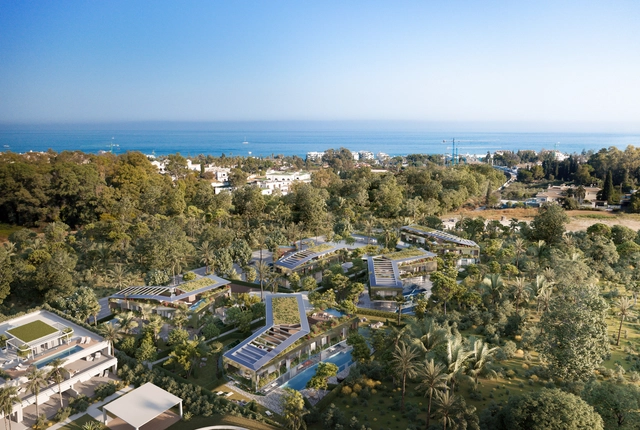
During the past couple of years, luxury and fashion brands began venturing into architecture. Some built museums, foundations, and cultural organizations while others shaped residential structures that translated their identity into space. Following this same concept, KARL LAGERFELD, along with Spanish Developer Sierra Blanca Estates and the Design and Branding Firm The One Atelier, have developed the fashion house’s first “luxury architectural project”, the Karl Lagerfeld Villas in Marbella, Spain. Designed by The One Atelier, of which Andrea Boschetti is Head of Design, the project has low carbon impact, aligned with the brand’s commitment to the Fashion Pact - a global sustainability initiative that seeks to transform the fashion industry through objectives in climate, biodiversity, and ocean protection.

Asking what is “luxury architecture” and questioning why fashion brands are expanding into architecture, ArchDaily met with Andrea Boschetti to further understand the architect and urban planner’s take on the subject.

Is Sustainability the New Luxury? In Conversation with Andrea Boschetti on Karl Lagerfeld Villas in Marbella - Image 1 of 4Is Sustainability the New Luxury? In Conversation with Andrea Boschetti on Karl Lagerfeld Villas in Marbella - Image 2 of 4Is Sustainability the New Luxury? In Conversation with Andrea Boschetti on Karl Lagerfeld Villas in Marbella - Image 3 of 4Is Sustainability the New Luxury? In Conversation with Andrea Boschetti on Karl Lagerfeld Villas in Marbella - Image 4 of 4Is Sustainability the New Luxury? In Conversation with Andrea Boschetti on Karl Lagerfeld Villas in Marbella - More Images+ 3

Stefano Boeri-led Team Wins Competition for the Parco del Ponte in Genoa

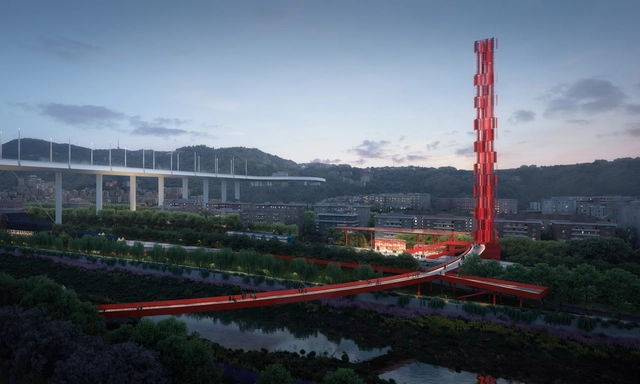
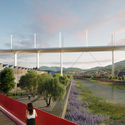
Stefano Boeri Architetti, Metrogramma Milano and Inside Outside have won the competition for the Parco del Ponte in Genoa, Italy. The urban project is located under the new bridge, designed by Renzo Piano to replace the Morandi Bridge that collapsed in August 2018.

Stefano Boeri-led Team Wins Competition for the Parco del Ponte in Genoa - Image 1 of 4Stefano Boeri-led Team Wins Competition for the Parco del Ponte in Genoa - Image 2 of 4Stefano Boeri-led Team Wins Competition for the Parco del Ponte in Genoa - Image 3 of 4Stefano Boeri-led Team Wins Competition for the Parco del Ponte in Genoa - Image 4 of 4Stefano Boeri-led Team Wins Competition for the Parco del Ponte in Genoa - More Images+ 9

OMA and Inside Outside "Honor Generosity" with a Field of Engraved Columns in Dubai

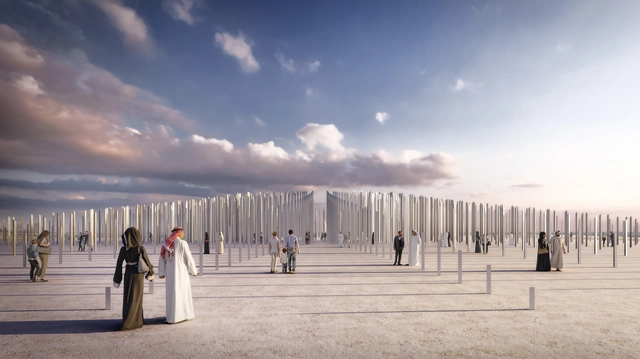
OMA and Inside Outside have collaborated on the design of a vast monument in Dubai, titled “Ethar – Honoring Generosity.” The installation consists of a field of 1,680 triangular-shaped recycled aluminum columns arrayed like a magnetic field, engraved with stories from Arabic scholars, scientists, and thinkers.

The installation was designed to celebrate the “unique culture of charitable giving in the United Arab Emirates with a physical installation that is part of the urban landscape of Dubai.” Designed for a site on Jumeirah Beach, the monument’s character can also be adapted for various contexts, whether dispersed throughout the city or appearing in key urban locations as a symbol of Emirati culture.

OMA and Inside Outside "Honor Generosity" with a Field of Engraved Columns in Dubai - Image 1 of 4OMA and Inside Outside "Honor Generosity" with a Field of Engraved Columns in Dubai - Image 2 of 4OMA and Inside Outside "Honor Generosity" with a Field of Engraved Columns in Dubai - Image 3 of 4OMA and Inside Outside "Honor Generosity" with a Field of Engraved Columns in Dubai - Image 4 of 4OMA and Inside Outside Honor Generosity with a Field of Engraved Columns in Dubai - More Images+ 1

Construction Begins on Project to Transform Railway Hangar into a Mixed-Use Library in The Netherlands

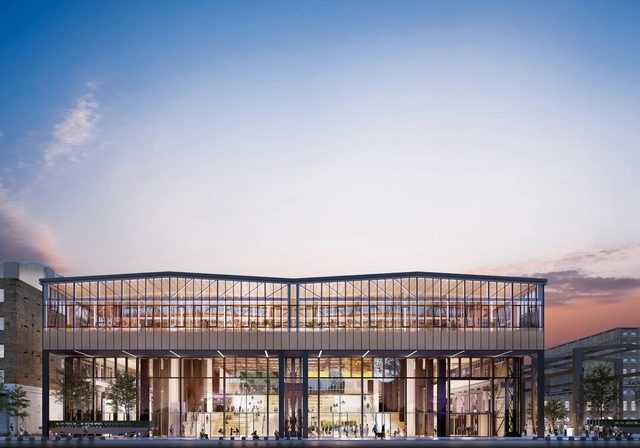
Construction has begun on the LocHal, a new mixed-use complex in Tillburg, The Netherlands. Designed by CIVIC Architects (a submember of The Cloud Collective) in collobaration with Braaksma & Roos architecten, Arup and Inside Outside, the project will be located in a former Dutch Railways hangar and maintenance facility, serving as a catalyst for the redevelopment of the city’s 75 hectare railway district. Opening up the area to the public, LocHal will offer visitors a large public hall and plaza, work spaces, conference areas, galleries, a library, a music hall and restaurant.

Construction Begins on Project to Transform Railway Hangar into a Mixed-Use Library in The Netherlands - FacadeConstruction Begins on Project to Transform Railway Hangar into a Mixed-Use Library in The Netherlands - Facade, Beam, Stairs, HandrailConstruction Begins on Project to Transform Railway Hangar into a Mixed-Use Library in The Netherlands - BeamConstruction Begins on Project to Transform Railway Hangar into a Mixed-Use Library in The Netherlands - BeamConstruction Begins on Project to Transform Railway Hangar into a Mixed-Use Library in The Netherlands - More Images+ 9

OBR with Michel Desvigne Wins Competition to Design New Central Park in Prato, Italy

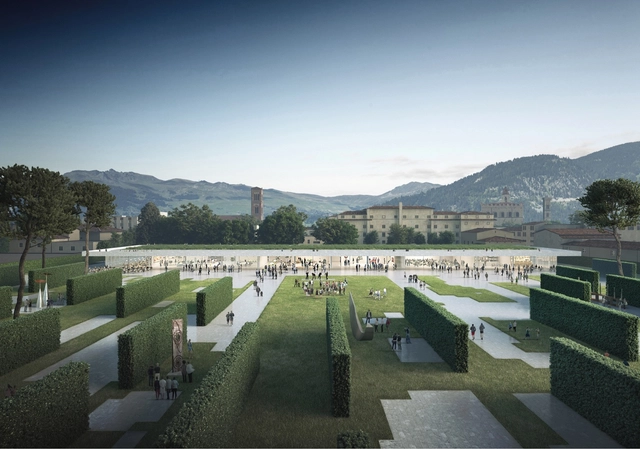
OBR Paolo Brescia and Tommaso Principi and Michel Desvigne Paysagiste have been announced of the winners of first prize in the international competition to design the new Parco Centrale (Central Park) in Prato, Italy.

The 230-team competition asked architects to design a new 3-hectare urban park in Prato’s historical city center on the site of the former city hospital, within the perimeter of the city walls. The project is intended to meet the needs of a contemporary city while driving socio-economic development of the city center through “enhancements to its touristic vocation, sustainability and accessibility.”

The jury, chaired by architect Bernard Tschumi, unanimously selected the winning proposal for “its ability to offer to the city of Prato an original, innovative and practical solution.” Commented Tschumi on the design, “The project is remarkable in the way it understands and celebrates the history of Prato and of its medieval walls. At the same time, it looks to the future and to the development of the city and its diverse population.”

The jury also released the full rankings of the 10 finalist teams. Learn about the winning design and see the entries from all 10 of the finalists, after the break.

On View: Inside Outside's "Museological Reconstruction" of Rotterdam's Iconic Sonneveld House

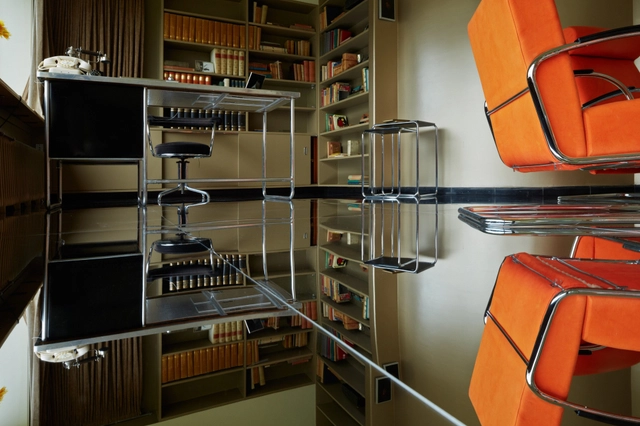
Inside Rotterdam's Sonneveld House everything is in order: books arranged nearly on shelves, chairs tucked under tables, rugs set square on the bedroom floor. The house is a pristine tableau depicting what the interior would have looked like whilst inhabited by the eponymous Albertus Sonneveld and his family.

Yet something interesting lies underfoot, thanks to an intervention by Inside Outside that sees the entire floor of the home covered with a single, continuous mirror. Read more about the installation and view selected images after the break.