1. ArchDaily
  2. Junya Ishigami + Associates

Junya Ishigami + Associates: The Latest Architecture and News

Why Do We Want to Float? The Psychology of Lightness in Architecture

In 1962, the architect Buckminster Fuller envisioned a floating city that would free humanity from its dependence on the Earth. The speculative project consisted of enormous geodesic spheres that would naturally levitate in air warmed by the sun and be anchored to mountaintops. Designed to house thousands of people, Fuller’s Cloud Nine aimed to ease land ownership pressures, address housing shortages, and contribute to environmental preservation.

More than half a century later, we remain far from realizing Fuller’s vision. Creating a truly floating structure on the Earth’s surface is still, for now, an unattainable ideal. While supports continue to be necessary, we manipulate their position, intensity, and number, developing structural “acrobatics” to at least approach the idea of overcoming gravity — a desire that has long fascinated humanity.

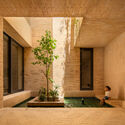
Why Do We Want to Float? The Psychology of Lightness in Architecture - Image 1 of 4Why Do We Want to Float? The Psychology of Lightness in Architecture - Image 2 of 4Why Do We Want to Float? The Psychology of Lightness in Architecture - Image 3 of 4Why Do We Want to Float? The Psychology of Lightness in Architecture - Image 4 of 4Why Do We Want to Float? The Psychology of Lightness in Architecture - More Images+ 17

UIA 2026 Barcelona Reveals Program Structured Around Six Thematic “Becomings”

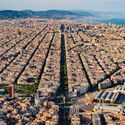
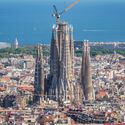
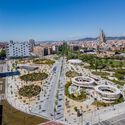
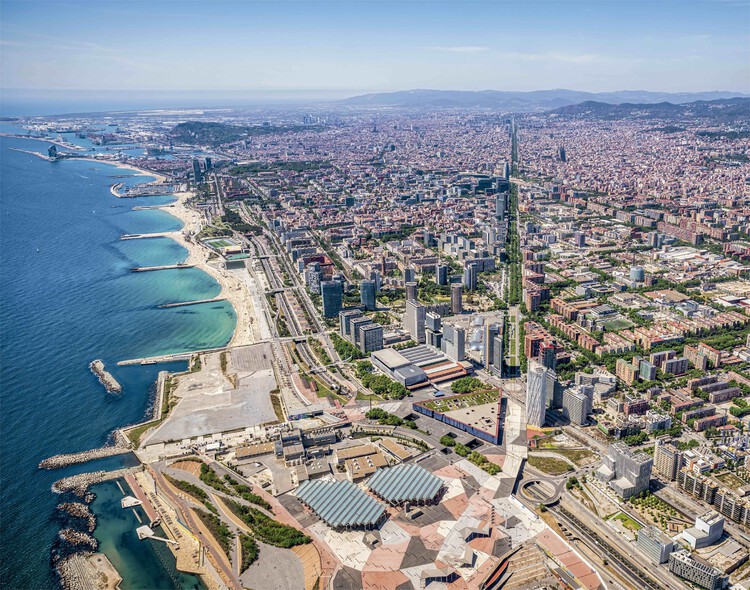
More than three decades after previously hosting the event, Barcelona is set to welcome the UIA World Congress of Architects 2026 Barcelona (UIA2026BCN), bringing the global architectural community back to the city between 28 June and 2 July 2026. Organized under the theme "Becoming. Architectures for a Planet in Transition," the Congress is expected to gather approximately 10,000 participants from over 130 countries, including practitioners, researchers, and students. Rather than being confined to a single venue, the event will unfold across multiple locations along the Mediterranean seafront, among them the Three Chimneys complex, positioning the city itself as an active platform for exchange, discussion, and public programming.

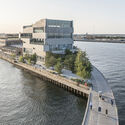
UIA 2026 Barcelona Reveals Program Structured Around Six Thematic “Becomings” - Image 1 of 4UIA 2026 Barcelona Reveals Program Structured Around Six Thematic “Becomings” - Image 2 of 4UIA 2026 Barcelona Reveals Program Structured Around Six Thematic “Becomings” - Image 3 of 4UIA 2026 Barcelona Reveals Program Structured Around Six Thematic “Becomings” - Image 4 of 4UIA 2026 Barcelona Reveals Program Structured Around Six Thematic “Becomings” - More Images+ 13

ArchDaily’s Readers Select Who Should Win the 2026 Pritzker Prize

As the architecture community looks ahead to the announcement of the 2026 laureate of the Pritzker Architecture Prize, anticipation once again gathers around what is widely regarded as the profession's highest honor. Founded in 1979 by Jay Pritzker and administered by the Hyatt Foundation, the prize recognizes a living architect whose body of work demonstrates a consistent and significant contribution to humanity and the built environment.

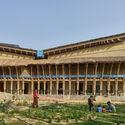
ArchDaily’s Readers Select Who Should Win the 2026 Pritzker Prize - Image 1 of 4ArchDaily’s Readers Select Who Should Win the 2026 Pritzker Prize - Image 2 of 4ArchDaily’s Readers Select Who Should Win the 2026 Pritzker Prize - Image 3 of 4ArchDaily’s Readers Select Who Should Win the 2026 Pritzker Prize - Image 4 of 4ArchDaily’s Readers Select Who Should Win the 2026 Pritzker Prize - More Images+ 7

Shaping Desire: How Architects Redefine Commercial Spaces

Subscriber Access | 

In contemporary architecture, commercial spaces have become more than points of sale; they are stages where identity, image, and experience converge. Stores, showrooms, and branded interiors often operate as laboratories where architects experiment with form, material, and light, translating corporate narratives into spatial experiences. In this context, the architect emerges as a mediator of desire, shaping atmospheres that guide perception, evoke emotion, and subtly influence behavior. This role reveals a complex intersection between design and capitalism: the creation of spaces that sell not only products, but also aspirations, lifestyles, and cultural meaning. By transforming commerce into an architectural performance, these projects invite reflection on how the discipline negotiates its agency in a world where visibility and image have become as essential as function.

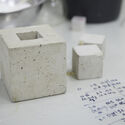
Shaping Desire: How Architects Redefine Commercial Spaces - Image 1 of 4Shaping Desire: How Architects Redefine Commercial Spaces - Image 2 of 4Shaping Desire: How Architects Redefine Commercial Spaces - Image 3 of 4Shaping Desire: How Architects Redefine Commercial Spaces - Image 4 of 4Shaping Desire: How Architects Redefine Commercial Spaces - More Images+ 55

Rethinking the Flat Datum: Designing Space with Incline and Intent

Subscriber Access | 

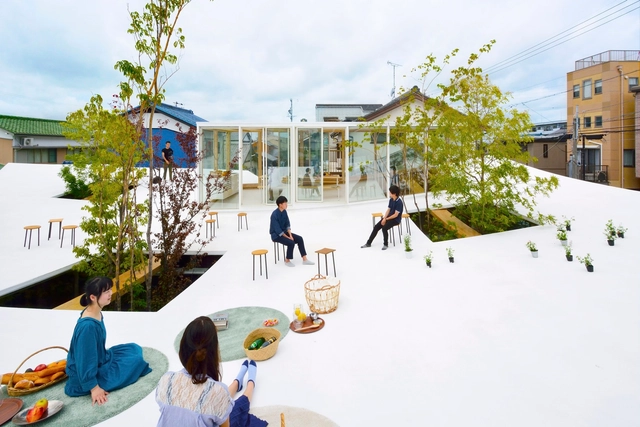
Historically, architecture and the built environment have insisted on creating flat, hard surfaces. In earlier eras, walking without paved ground meant mud-caked shoes, uneven footing, tripping hazards, standing water after rain, and high maintenance. Hence, as we shaped cities, we prioritized a smooth, continuous, solid horizontal datum. The benefits are real: easier walking, simpler cleaning, and straightforward programming—furniture, equipment, and partitions all prefer a level base. This universal preference for building on flat ground remains the norm and, for many practical reasons, will likely continue to be.

What's less recognized is that making a truly flat surface is surprisingly difficult—and many well-executed "flat" floors aren't perfectly flat at all. They are often gently sloped, calibrated to precise gradients for drainage. While interior spaces do not always require this, many ground floors and wet areas do incorporate subtle inclines as a safeguard—whether for minor flooding or to manage water that overflows from the street or plumbing when one of the discharge systems is malfunctioning.

Rethinking the Flat Datum: Designing Space with Incline and Intent - Image 1 of 4Rethinking the Flat Datum: Designing Space with Incline and Intent - Image 2 of 4Rethinking the Flat Datum: Designing Space with Incline and Intent - Image 3 of 4Rethinking the Flat Datum: Designing Space with Incline and Intent - Image 4 of 4Rethinking the Flat Datum: Designing Space with Incline and Intent - More Images+ 49

Understanding Soft Architecture: The Shift from Monument to Moment

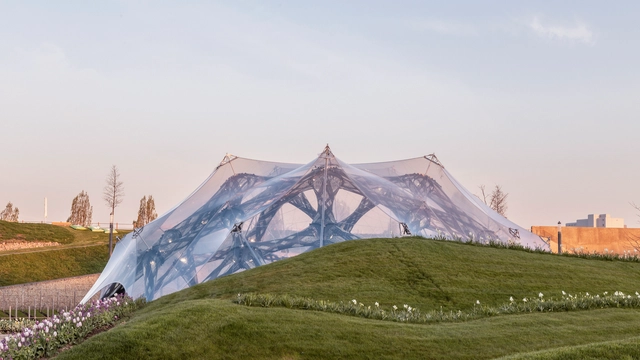
In recent years, architecture has increasingly embraced adaptability, flexibility, and responsiveness as core design principles. This evolution reflects a shift from traditional notions of static, permanent structures to dynamic environments that can adjust to changing needs and conditions. Central to this transformation is the concept of "soft architecture", which leverages pliable materials and innovative systems to create spaces that are functional, sustainable, and user-centric. Soft architecture takes shape through membranes that breathe, façades that move, structures that inflate or fold, and surfaces that bend rather than break. It involves designing for transformation — not only in how a building performs environmentally, but also in how it can accommodate shifting functions, user interactions, or temporary occupations. This approach to building challenges traditional notions of durability and control, proposing instead a more responsive and open-ended architecture. It reflects a growing awareness that buildings, like the societies they serve, must be able to evolve.

Understanding Soft Architecture: The Shift from Monument to Moment - Image 1 of 4Understanding Soft Architecture: The Shift from Monument to Moment - Image 2 of 4Understanding Soft Architecture: The Shift from Monument to Moment - Image 3 of 4Understanding Soft Architecture: The Shift from Monument to Moment - Image 4 of 4Understanding Soft Architecture: The Shift from Monument to Moment - More Images+ 53

Taming Nature: How Architecture is Redefining Its Relationship with the Environment

Integrating natural elements into architectural design has long been a fundamental pursuit in creating comfortable, sustainable environments that enhance both individual well-being and the relationship between buildings and their surrounding context. In areas with vast landscapes, incorporating natural elements is essential for seamlessly connecting architecture with its site. Conversely, in dense urban environments dominated by built structures, introducing greenery becomes also increasingly vital, reintroducing nature into the so-called "concrete jungle."

However, beyond conventional landscape features—such as water fountains, green walls, gardens, or courtyards—architects are redefining what it means to build with nature. The focus has shifted toward deeply integrating architecture with its natural surroundings, creating immersive spatial experiences that blur the boundaries between the built and the organic - in a way, "taming" nature. When successfully executed, these designs go beyond fostering well-being or promoting a healthy lifestyle; they evoke a profound sense of tranquility, power, and harmony, transforming the way we perceive and inhabit space.

Taming Nature: How Architecture is Redefining Its Relationship with the Environment - Image 1 of 4Taming Nature: How Architecture is Redefining Its Relationship with the Environment - Image 2 of 4Taming Nature: How Architecture is Redefining Its Relationship with the Environment - Image 3 of 4Taming Nature: How Architecture is Redefining Its Relationship with the Environment - Image 4 of 4Taming Nature: How Architecture is Redefining Its Relationship with the Environment - More Images+ 23

Tatiana Bilbao, Alison Brooks, Michel Rojkind and Jun'ya Ishigami Among Architects Elevated to AIA Honorary Fellowship

The American Institute of Architects (AIA), a professional organization dedicated to supporting architects and advancing the field of architecture, has announced the elevation of 93 architects to its College of Fellows. This recognition is awarded to individuals who have made significant contributions to the profession and society. This year's class includes 83 AIA member-architects and 10 international architects granted Honorary Fellowship. The newly elevated Fellows will be recognized at the AIA Conference on Architecture & Design 2025 (AIA25) in Boston.

Tatiana Bilbao, Alison Brooks, Michel Rojkind and Jun'ya Ishigami Among Architects Elevated to AIA Honorary Fellowship - Image 1 of 4Tatiana Bilbao, Alison Brooks, Michel Rojkind and Jun'ya Ishigami Among Architects Elevated to AIA Honorary Fellowship - Image 2 of 4Tatiana Bilbao, Alison Brooks, Michel Rojkind and Jun'ya Ishigami Among Architects Elevated to AIA Honorary Fellowship - Image 3 of 4Tatiana Bilbao, Alison Brooks, Michel Rojkind and Jun'ya Ishigami Among Architects Elevated to AIA Honorary Fellowship - Image 4 of 4Tatiana Bilbao, Alison Brooks, Michel Rojkind and Jun'ya Ishigami Among Architects Elevated to AIA Honorary Fellowship - More Images+ 5

Among the Honorary Fellows are Tatiana Bilbao (Mexico), Alison Brooks (United Kingdom), Jun'ya Ishigami (Japan), Kain Bon Albert Chan (China), Hu Li (China), Lyndon Uykim Neri (China), Michel Rojkind (Mexico), Masaharu Rokushika (Japan), Brinda Somaya (India), and Kerstin Thompson (Australia), recognized for their contributions to the global architectural landscape.

ArchDaily's Best Architectural Projects of 2024

Throughout the year, ArchDaily's team of curators works on expanding and populating our project library. Located all around the world, each curator carefully considers the best works emanating from their respective regions in an effort to have a diverse representation of the most inspiring and innovative built works. The team looks to new rising practices, new technologies, and the vernacular revival of traditional construction techniques. Seeking socially driven initiatives, as well as major works by renowned architects, the overall offers a holistic view of the built world today and is relayed through the yearly project review.

ArchDaily's Best Architectural Projects of 2024 - Image 1 of 4ArchDaily's Best Architectural Projects of 2024 - Image 2 of 4ArchDaily's Best Architectural Projects of 2024 - Image 3 of 4ArchDaily's Best Architectural Projects of 2024 - Image 4 of 4ArchDaily's Best Architectural Projects of 2024 - More Images+ 96

Pioneering Change: The Obel Award Recognizes Transformative Innovations Since 2019

The Obel Award is an international prize seeking to highlight unconventional and original initiatives within the architectural profession. Supported by the Henrik Frode Obel Foundation, each annual award is centered around a specific theme. By exploring a different challenge of the built environment each year, the award remains open to a wide range of solutions and architectural innovations, honoring those contributions that have a positive impact on both people and the planet.

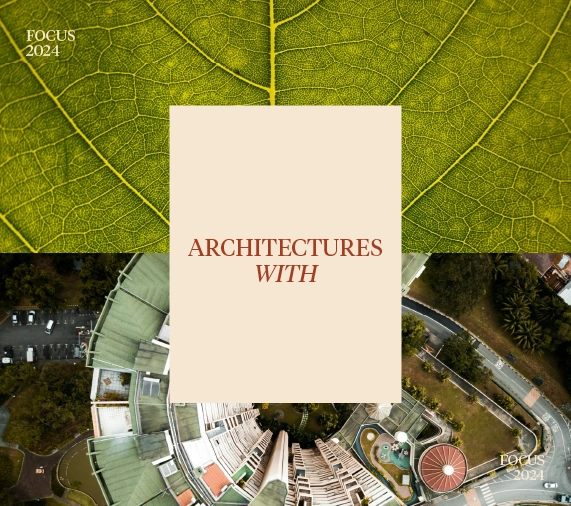
"Architectures WITH," the recently announced theme of the 2024 edition, explores participatory design, co-creation, and interdisciplinary collaboration, challenging traditional roles in architecture to foster inclusive, adaptable environments. It aims to empower all stakeholders and enhance collective intelligence in architecture.

Pioneering Change: The Obel Award Recognizes Transformative Innovations Since 2019 - Image 1 of 4Pioneering Change: The Obel Award Recognizes Transformative Innovations Since 2019 - Image 2 of 4Pioneering Change: The Obel Award Recognizes Transformative Innovations Since 2019 - Image 3 of 4Pioneering Change: The Obel Award Recognizes Transformative Innovations Since 2019 - Image 4 of 4Pioneering Change: The Obel Award Recognizes Transformative Innovations Since 2019 - More Images+ 2

The Obel Award Announces Theme for its 6th Cycle, the 2024 Edition

The Obel Award is an international prize for architectural achievement presented annually by the Henrik Frode Obel Foundation. Each year, the jury selects a specific theme and grants an award to a promising solution. For the 2024 edition, the prize that honors architectural contributions that positively impact both people and the planet will be focused on “Architecture With”.

Previous emphasis included Adaptations, Emissions, Cities, Mending, and Well-being. In 2023, the fifth cycle recognized ‘Living Breakwaters’ in New York, a green infrastructure project off the shore of Staten Island, by SCAPE Landscape Architecture and its founder Kate Orff. In 2022, the Obel was awarded to Seratech, a carbon-neutral concrete solution, in 2021, the concept of the 15-minute city received the prize for its value in creating sustainable and people-centric urban environments, and in 2020, Studio Anna Heringer was acknowledged for Anandaloy, in Bangladesh, an unconventional, multifunctional building that hosts a therapy center for people with disabilities on the ground floor and a textile studio on the top floor producing fair fashion and art. Finally, in its first edition, fixated on well-being, the Obel Award was granted to the Art Biotop Water Garden project in Tochigi, Japan, by Junya Ishigami & Associates.

12 Architect-Designed Products Showcased During Milan Design Week 2024

Subscriber Access | 

This year's Milan Design Week brought together designers, architects, producers, and key figures from the design world. The events were divided between the Salone del Mobile at Rho Fiera, a trade fair with over 1950 exhibitors, and Fourisalone, featuring various events across Milan. With numerous installations throughout the city and a wide range of events, conferences, and debates, Milan Design Week stands as one of the most significant design-focused events worldwide. For architects, this represents an opportunity to not only exchange ideas but also to actively contribute through collaborations and explorations across disciplines.

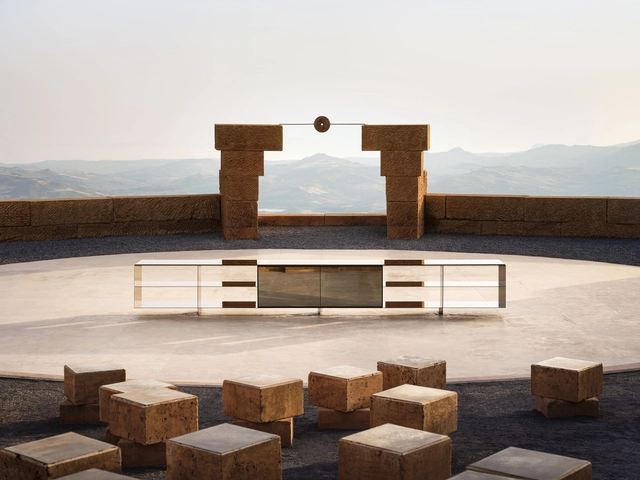
This year, many internationally recognized architects have entered collaborations with furniture and light design companies, exploring the intersection of design and architecture. Despite the change in scale, many of these products reflect the recognizable architectural language of their designers, offering an insight into the principles that guide their practice. In addition to aesthetic explorations, many of the products selected are tackling important themes of interest, from the need to develop more sustainable materials with a reduced carbon footprint, to the potential impact of new technologies such as artificial intelligence.

12 Architect-Designed Products Showcased During Milan Design Week 2024 - Image 1 of 412 Architect-Designed Products Showcased During Milan Design Week 2024 - Image 2 of 412 Architect-Designed Products Showcased During Milan Design Week 2024 - Image 3 of 412 Architect-Designed Products Showcased During Milan Design Week 2024 - Image 4 of 412 Architect-Designed Products Showcased During Milan Design Week 2024 - More Images+ 52

Discover the Main Locations and Events to Visit During Milan Design Week 2024

Subscriber Access | 

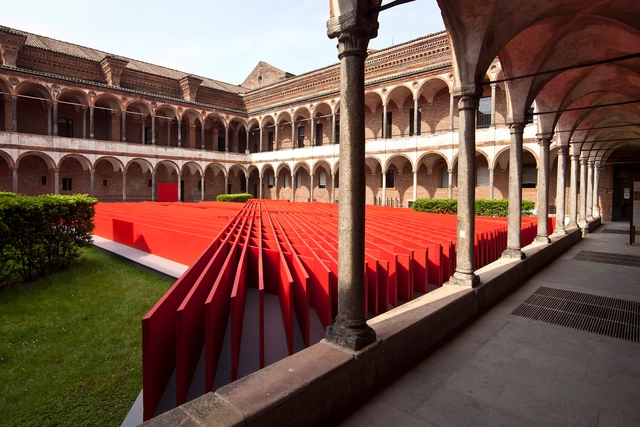
Milan Design Week stands as one of the most important events in the global design calendar, serving not only as a showcase of innovation but also as a catalyst for critical discourse and creative exchange. This year, the event unfolds with a multitude of exhibitions, installations, and talks happening throughout Milano during the week of April 15-21, 2024. By bringing together diverse voices, perspectives, and talents, Milan Design Week becomes relevant for architects and serves as a nexus for interdisciplinary dialogue. To help you better navigate the plethora of events, conferences, and installations, this article highlights the main venues hosting activities revenant for architects and designers, from the expansive trade fair Salone del Mobile in Rho Fiera to design districts across the city and unexpected locations hidden in Palazzo courtyards or reimagined industrial heritage sites.

Discover the Main Locations and Events to Visit During Milan Design Week 2024 - Image 1 of 4Discover the Main Locations and Events to Visit During Milan Design Week 2024 - Image 2 of 4Discover the Main Locations and Events to Visit During Milan Design Week 2024 - Image 3 of 4Discover the Main Locations and Events to Visit During Milan Design Week 2024 - Image 4 of 4Discover the Main Locations and Events to Visit During Milan Design Week 2024 - More Images+ 7

The Power of Emotions: How Does Space Move Us?

"The taste of the apple lies in the contact of the fruit with the palate, not in the fruit itself," Jorge Luis Borges once said. The taste is not something inherent in itself; its experience is the result of an encounter. Similarly, emotions are not contained within architecture, but are only felt through the encounter of the body with the space, when it becomes a place. How does the environment affect how we feel? This is the question that drives the duo of artists and filmmakers Ila Bêka and Louise Lemoine in their latest endeavor, the book "The Emotional Power of Space," which will be released on May 17th in an event preceding the opening of the Venice Architecture Biennale 2023.

The 15 Winners of the 2023 ArchDaily Building of the Year Awards

After another successful selection process, with over 150,000 votes cast during the last 3 weeks, the collective intelligence of our community has helped us to highlight and recognize the best recent architecture projects. The 75 finalists, which is already a winners list, are a testament to the innovative and diverse ways in which architecture responds to the challenges of our built environment.

The scale of this award is a reflection of how important architecture is today, as the deepening complexity of our world places increasing pressure and demands upon our built environment. To deal with issues such as the climate crisis, energy scarcity, population density, social inequality, housing shortages, fast-moving urbanization, diminished local identity, and a lack of diversity, architecture needs to open itself. We are happy to see how the question posed by this award has gained global attraction. Voices from outside of the architectural profession stated: “This is what we consider good architecture”, due to its impact and symbolism, as seen on Globo or El País. Architectural recognition goes beyond its usual professional borders, and is able to motivate, rejoice and excite an ever growing number of people who understand the importance of our built environment and its impact on quality of life.

The winners are a concrete example of what society recognizes as good architecture, but also of what it demands from it. We take the responsibility to continue building on the spirit of the award, strengthening the expert’s choice and the contribution that our community makes based on their preferences and selections throughout the year, together with the voice of a wider community.

The ArchDaily Building of the Year Awards is brought to you thanks to Dornbracht, renowned for leading designs for architecture, which can be found internationally in bathrooms and kitchens.


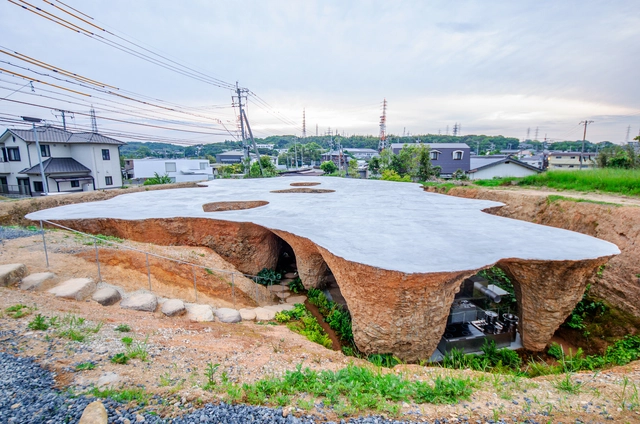
House & Restaurant / junya ishigami + associates

House & Restaurant / junya ishigami + associates - Exterior Photography, Houses, FacadeHouse & Restaurant / junya ishigami + associates - Exterior Photography, Houses, Garden, Arch, FacadeHouse & Restaurant / junya ishigami + associates - Interior Photography, Houses, Arch, TableHouse & Restaurant / junya ishigami + associates - Interior Photography, Houses, Garden, Arch, ArcadeHouse & Restaurant / junya ishigami + associates - More Images+ 49

Art Biotop Water Garden Recognized with Inaugural Obel Award

The inaugural Obel Award has been awarded to Art Biotop Water Garden by Junya Ishigami+Associates. Announced at a ceremony at the Utzon Center in Aalborg, Denmark, the award recognizes architectural achievement and is presented annually by The Henrik Frode Obel Foundation. The prize is 100,000 Euros and an artwork by leading artist Tomás Saraceno.
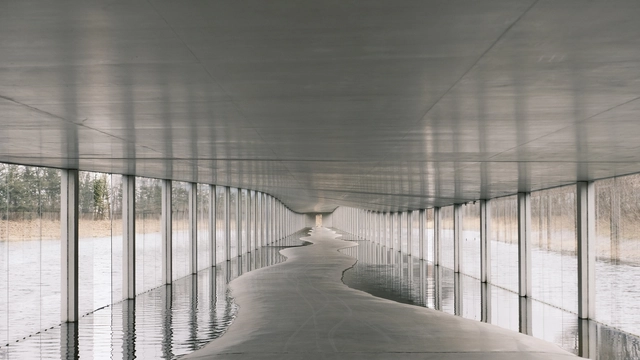
Art Biotop Water Garden Recognized with Inaugural Obel Award - Image 1 of 4Art Biotop Water Garden Recognized with Inaugural Obel Award - Image 2 of 4Art Biotop Water Garden Recognized with Inaugural Obel Award - Image 3 of 4Art Biotop Water Garden Recognized with Inaugural Obel Award - Image 4 of 4Art Biotop Water Garden Recognized with Inaugural Obel Award - More Images+ 3

Step Inside a 360° Virtual Tour of the Serpentine Pavilion

For those around the world unable to attend the opening of Junya Ishigami’s Serpentine Pavilion in London, photographer Nikhilesh Haval of nikreations has published a virtual tour of the structure. Similar to previous productions of Frida Escobedo’s 2018 Pavilion, BIG’s 2016 Pavilion, and SelgasCano’s 2015 Pavilion, the virtual tour allows viewers to experience the “free space” philosophy that defines the pavilion, playing with our perspectives of the built environment against the backdrop of a natural landscape.