

-
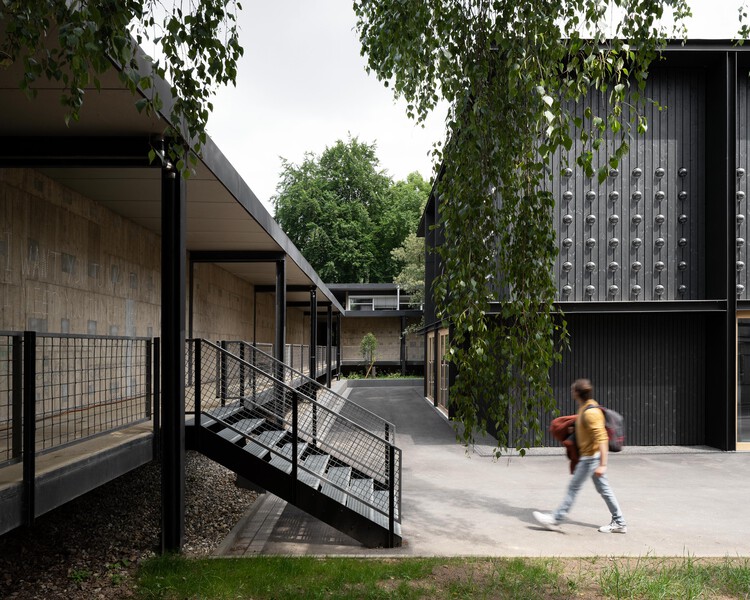
Architects: Innauer-Matt Architekten
- Area: 470 m²
- Year: 2022
-
Manufacturers: FSB Franz Schneider Brakel, Georg Bechter Licht, Gerhard Gieseke Bau- und Möbeltischlerei, Glas Marte, HUFCOR Deutschland, +4


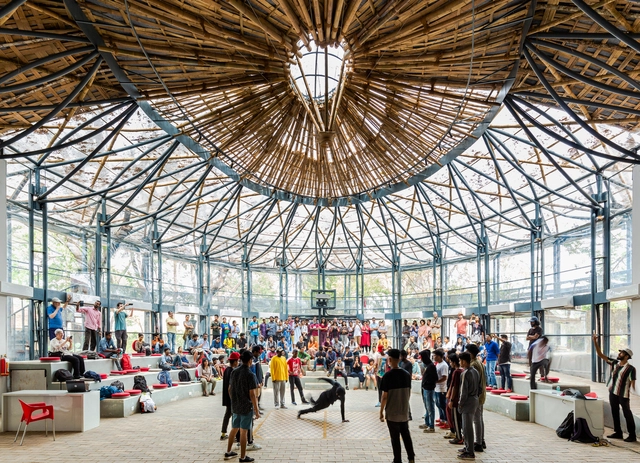
Along India's southwest coast dotted with a mix of colonial architecture and ancient heritage, the city of Kochi stands as a relic of foreign influence. A previously colonized town by the Portuguese, Dutch, and British now breathes new life into its built landscape. Across the world, in the German city of Kassel, the scars of World War II are etched into the environment, deep under its revived cultural soul. Both Kochi and Kassel, though worlds apart in geography and history, shared a commonality: the power of art and festivals to heal. In the aftermath of historical trauma, these cities found renewal in the creative expression of artists from around the globe.
.jpg?1499719299&format=webp&width=640&height=580)
Argentine artist Marta Minujín has created a full-scale replica of one of the world’s most famous structures, the Parthenon in Athens, constructed out of censored books as a symbol of resistance to political repression. Currently on display at the Documenta 14 art festival in Kassel, Germany, the 100,000 books that make up the monument have been sourced entirely from donations, allowing people from all over the world to contribute titles they feel a personal connection to.
Collaborating with students from Kassel University, Minujín selected more than 170 titles banned in various countries across the world. These books were then strapped to the steel structure with plastic sheeting, protecting them from the elements and allowing sunlight to filter through the building.

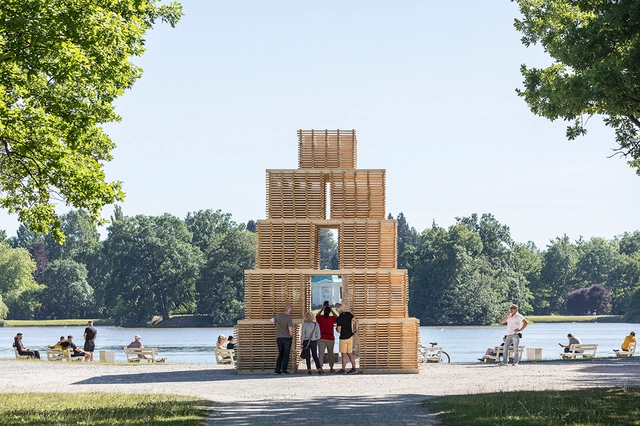
Held every five years, the competition for this year’s pavilion called for a temporary building which may be easily disassembled and relocated to another site. The modular pavilion by Prechteck exists of different parts, housing different functions, all singular cells, but the strongest in coexistence with its neighboring parts. The main concept is that during the 5 years, each cell can be assembled in a different German city and serve as an info booth to the next. At the beginning of the next five years, the parts get transported back and get reconnected on site. More images and architects’ description after the break.