1. ArchDaily
  2. Marrakech

Marrakech: The Latest Architecture and News

Cultural Centers Beyond the Building: 6 Unbuilt Projects Integrating Landscape

Subscriber Access | 

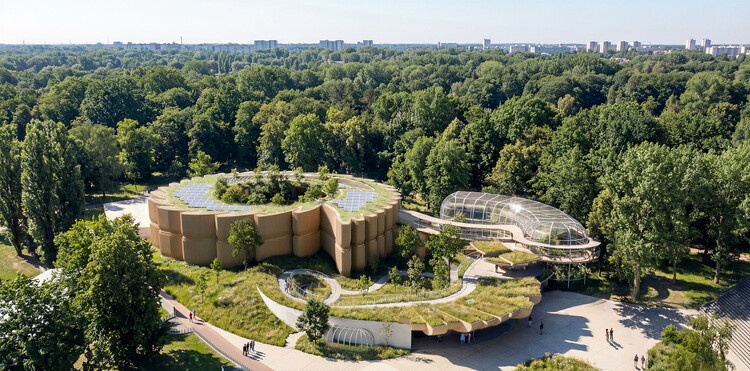
Cultural centers continue to serve as a productive ground for unbuilt architectural exploration, reflecting how architects are rethinking the role of public institutions in relation to landscape, experience, and program hybridity. In this Unbuilt edition, submitted by the ArchDaily community, the selected projects bring together a range of proposals that expand the definition of the cultural center beyond a singular building. These works position architecture as a spatial framework that mediates between research, exhibition, retreat, and public life, often embedded within or distributed across natural and urban contexts.

Across varied geographies, from northern Norway and Oslo to Łódź, Vienna, Marrakech, and New Tashkent, the projects demonstrate diverse responses to cultural infrastructure. They include landscape-integrated complexes shaped by topography and climate, bridges that combine gallery and public circulation, zoological pavilions structured as immersive sequences, adaptive reuse of military buildings into performance spaces, courtyard-based environments rooted in local traditions, and climate-responsive institutions informed by environmental analysis. Together, these proposals explore how cultural programs can be organized through movement, spatial layering, and relationships between interior and exterior conditions.
Cultural Centers Beyond the Building: 6 Unbuilt Projects Integrating Landscape - Image 13 of 4Cultural Centers Beyond the Building: 6 Unbuilt Projects Integrating Landscape - Image 10 of 4Cultural Centers Beyond the Building: 6 Unbuilt Projects Integrating Landscape - Image 7 of 4Cultural Centers Beyond the Building: 6 Unbuilt Projects Integrating Landscape - Image 26 of 4Cultural Centers Beyond the Building: 6 Unbuilt Projects Integrating Landscape - More Images+ 31

The Legacy of Brutalism on Morocco’s Post-independence Architectural Landscape

Subscriber Access | 

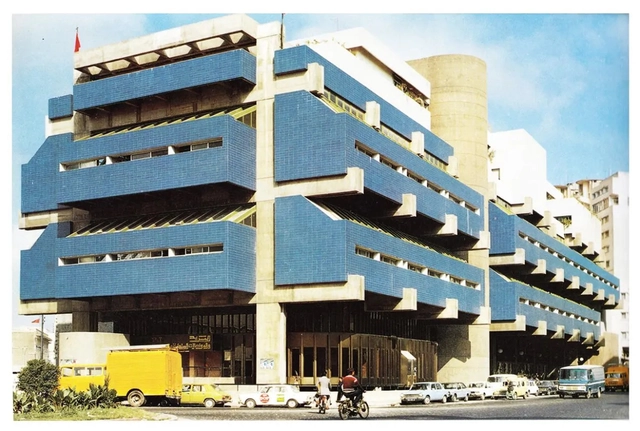
Several events have shaped Morocco since its independence. One of them is the Architects’ transition from serving the declining French empire to serving the newly independent Moroccan nation. Upon gaining independence in 1956, young Moroccan and foreign architects were tasked with constructing a self-sufficient Morocco. The demand for modern infrastructure, new administrative buildings, and improved education and health facilities led to a construction boom. This boom provided architects and planners the opportunity to express their vision.

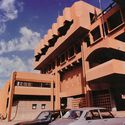
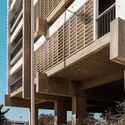
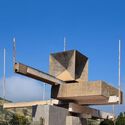
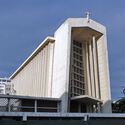
Inspired by the popularity of modernism in Europe, architects experimented with buildings that embodied brutalism. This architectural style was not only a rebellion against the colonial vision of urban design in Morocco, but also a symbol of architectural unity in the urban landscape. Buildings were created in various typologies with the characteristic of exposed concrete, showcasing its inherent qualities of strength, durability, and functionality. These buildings, which can be seen in cities such as Agadir, Casablanca, Tangier, and parts of Marrakesh, represent a dialogue between brutalism and Moroccan culture, environment, and climate.

The Legacy of Brutalism on Morocco’s Post-independence Architectural Landscape - Image 1 of 4The Legacy of Brutalism on Morocco’s Post-independence Architectural Landscape - Image 2 of 4The Legacy of Brutalism on Morocco’s Post-independence Architectural Landscape - Image 3 of 4The Legacy of Brutalism on Morocco’s Post-independence Architectural Landscape - Image 4 of 4The Legacy of Brutalism on Morocco’s Post-independence Architectural Landscape - More Images+ 13

Villa LOHA / E-H Atelier d'Architectures

Villa LOHA / E-H Atelier d'Architectures - Exterior Photography, HousesVilla LOHA / E-H Atelier d'Architectures - Interior Photography, Houses, FacadeVilla LOHA / E-H Atelier d'Architectures - Interior Photography, Houses, Table, ChairVilla LOHA / E-H Atelier d'Architectures - Exterior Photography, HousesVilla LOHA / E-H Atelier d'Architectures - More Images+ 35

Marrakech, Morocco

Modern Morocco: Building a New Vernacular

Modern Morocco: Building a New Vernacular - Image 1 of 4Modern Morocco: Building a New Vernacular - Image 2 of 4Modern Morocco: Building a New Vernacular - Image 3 of 4Modern Morocco: Building a New Vernacular - Image 4 of 4Modern Morocco: Building a New Vernacular - More Images+ 7

Modern Moroccan architecture is reinterpreting vernacular traditions. Taking its name from the Arabic al-maġhrib, or the “place the sun sets; the west”, the kingdom is a sovereign state home to numerous examples of Islamic design, as well as detailed art and ornamentation found within geometric patterns, friezes and open courtyards.

How the Auditorium at Marrakech’s Yves St Laurent Museum is Designed for Maximum Flexibility

Subscriber Access | 
How the Auditorium at Marrakech’s Yves St Laurent Museum is Designed for Maximum Flexibility - Image 11 of 4
Section

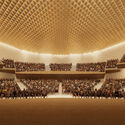
Theatre Projects consultants, together with the architectural office Studio KO, have designed a multipurpose auditorium of 115 seats, with the aim of hosting conferences, screenings, concerts, theater, and cinema.

The auditorium is part of the new Museum Yves Saint Laurent Marrakech, and incorporates a series of elements and technologies that allow for high-quality sound and lighting, as well as ensuring total flexibility of the room to adapt to all required uses.

How the Auditorium at Marrakech’s Yves St Laurent Museum is Designed for Maximum Flexibility - Image 1 of 4How the Auditorium at Marrakech’s Yves St Laurent Museum is Designed for Maximum Flexibility - Image 2 of 4How the Auditorium at Marrakech’s Yves St Laurent Museum is Designed for Maximum Flexibility - Image 3 of 4How the Auditorium at Marrakech’s Yves St Laurent Museum is Designed for Maximum Flexibility - Image 4 of 4How the Auditorium at Marrakech’s Yves St Laurent Museum is Designed for Maximum Flexibility - More Images+ 7

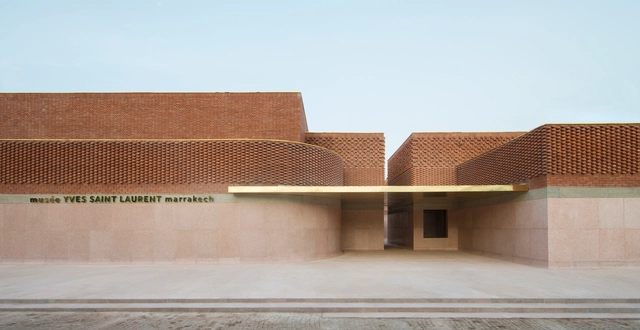
Studio KO's Yves Saint Laurent Museum Opens in Marrakech

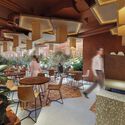
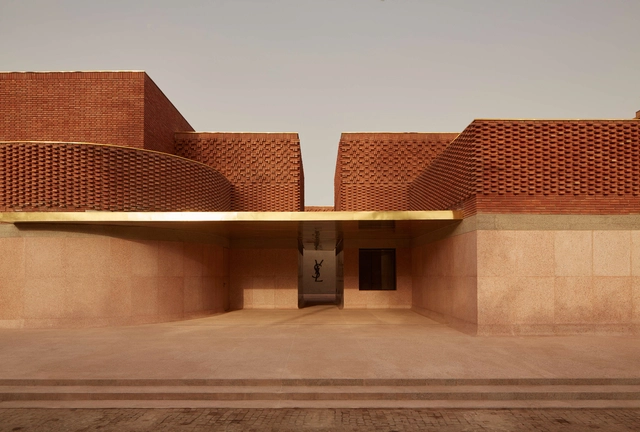
A new museum dedicated to the life and work of French fashion icon Yves Saint Laurent has opened in the Moroccan city of Marrakech. Designed by Studio KO, the building sits a short distance away from Jardin Majorelle – the home acquired by Saint Laurent and Pierre Bergé in 1980. With a large permanent exhibition space designed by scenographist Christophe Martin, showcasing the collections of it's namesake, the museum also features temporary exhibition spaces, a research library and archives, an auditorium, bookstore, and a terrace café.

Studio KO's Yves Saint Laurent Museum Opens in Marrakech - Image 1 of 4Studio KO's Yves Saint Laurent Museum Opens in Marrakech - Image 2 of 4Studio KO's Yves Saint Laurent Museum Opens in Marrakech - Image 3 of 4Studio KO's Yves Saint Laurent Museum Opens in Marrakech - Image 4 of 4Studio KO's Yves Saint Laurent Museum Opens in Marrakech - More Images

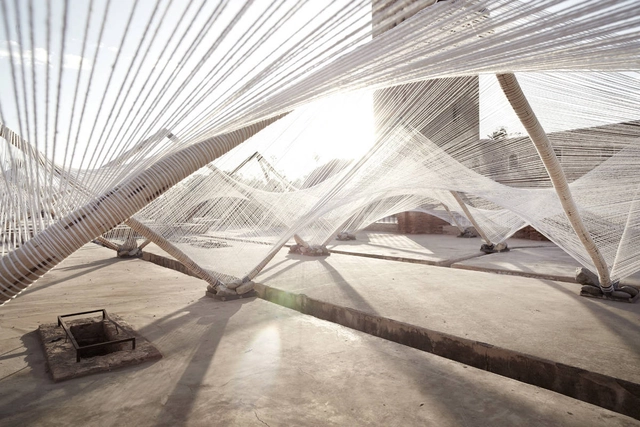
COP22 Village / OUALALOU+CHOI

COP22 Village / OUALALOU+CHOI  - Interior Photography, Temporary Installations, Arcade, ArchCOP22 Village / OUALALOU+CHOI  - Interior Photography, Temporary Installations, Beam, Table, ChairCOP22 Village / OUALALOU+CHOI  - Temporary InstallationsCOP22 Village / OUALALOU+CHOI  - Temporary InstallationsCOP22 Village / OUALALOU+CHOI  - More Images+ 14

  • Architects: OUALALOU+CHOI
  • Area Area of this architecture project Area:  93000
  • Year Completion year of this architecture project Year:  2016
  • Manufacturers Brands with products used in this architecture project
    Manufacturers:  IASO, Serge Ferrari
  • Professionals: OUALALOU+CHOI

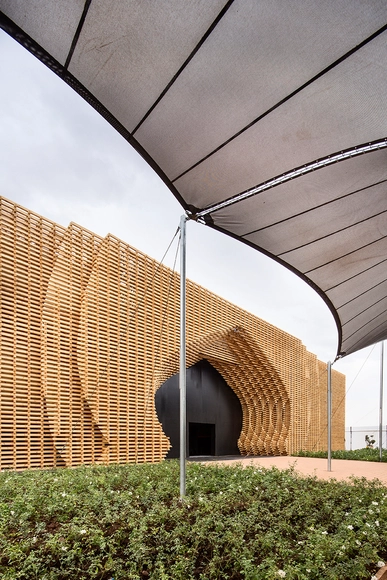
Higher Atlas / Barkow Leibinger

Higher Atlas / Barkow Leibinger - InstallationHigher Atlas / Barkow Leibinger - Installation, FacadeHigher Atlas / Barkow Leibinger - Installation, LightingHigher Atlas / Barkow Leibinger - Installation, FacadeHigher Atlas / Barkow Leibinger - More Images+ 5

Marrakech, Morocco