1. ArchDaily
  2. memorial architecture

memorial architecture: The Latest Architecture and News

Concrete Memory: 12 Postwar Monuments Across Eastern Europe

Subscriber Access | 

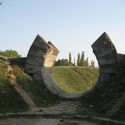
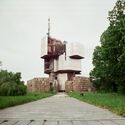
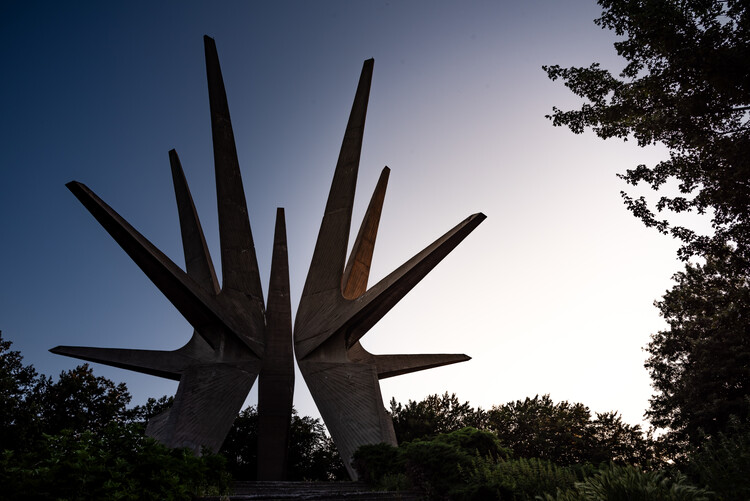
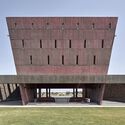
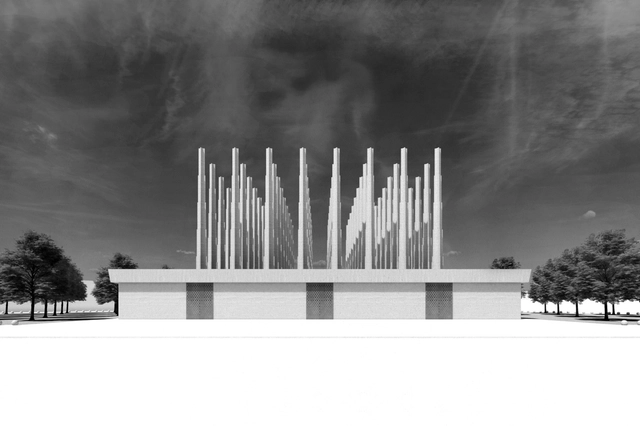
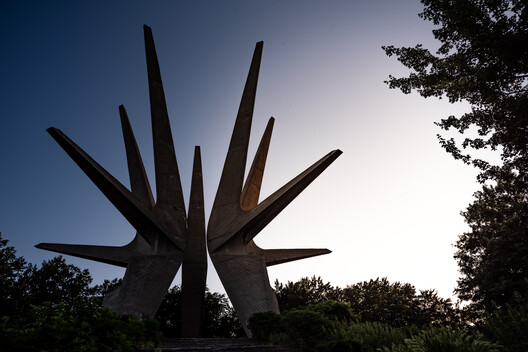
A monument is usually the most conservative building a state will commission. It is expected to stabilize memory, to make history legible, and to give public form to a shared narrative. Eastern Europe's twentieth century produced an entire body of work from the Baltic to the Balkans that resisted precisely those expectations, challenging the conventional relationship between monument, memory, and representation. Commonly grouped under the name spomeniks, these architectural exercises are perhaps the best-known examples of a much broader landscape of memorial architecture that emerged across the region. These were societies emerging from occupation, civil conflict, or revolution, and none of them possessed a single symbolic language capable of accommodating the complexity of their histories. Rather than searching for new heroes or new icons, many architects and artists turned to space itself as the medium through which remembrance could be constructed.

These monuments occupy an unusual position between sculpture and architecture. At one scale, they read as deliberate abstract compositions arranged with the clarity of a drawing by Kandinsky. At another, they seem less resolved, as if testing the limits of a spatial language still in formation. Their forms often appear caught between certainty and experimentation, the same monument readable as a controlled geometric object and as an open-ended search for how collective memory might inhabit space. But these readings coexist and give many of these works their enduring ambiguity.
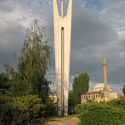
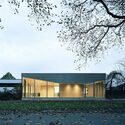
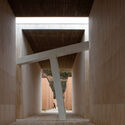
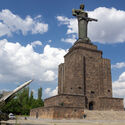
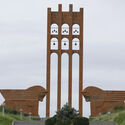
Concrete Memory: 12 Postwar Monuments Across Eastern Europe - Image 1 of 4Concrete Memory: 12 Postwar Monuments Across Eastern Europe - Image 2 of 4Concrete Memory: 12 Postwar Monuments Across Eastern Europe - Image 3 of 4Concrete Memory: 12 Postwar Monuments Across Eastern Europe - Image 4 of 4Concrete Memory: 12 Postwar Monuments Across Eastern Europe - More Images+ 11

Cities of the Dead: 10 Projects Exploring Burial Architecture

Subscriber Access | 

Death is a certainty, but its architecture has never been stable. Every period and culture has invented a different way of placing the dead in the world (close or far, visible or screened, monumental or almost anonymous), and those choices have always carried social and political weight. Cemeteries are where that weight becomes legible in space, turning belief and regulation into boundaries, paths, and names.

In that sense, a cemetery behaves like a piece of city-making. It needs access, limits, and an internal order that can grow without losing clarity. It depends on ground and water management as much as on symbolism, and on administration as much as on form. But its real architectural problem is how to make a large, evolving territory readable while preserving the intimacy of a visit. Names must be locatable; routes must remain legible; trees grow, paths shift, stones weather, records accumulate. What looks fixed is, in practice, a living system designed to be used and revisited, long after the first grief has passed.

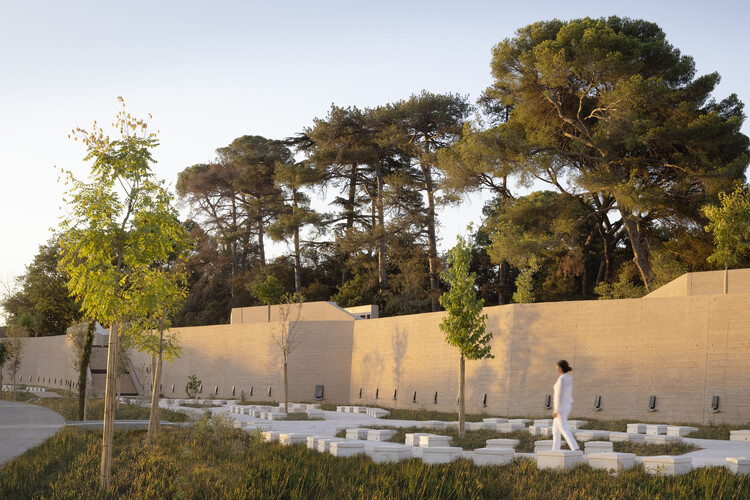
Cities of the Dead: 10 Projects Exploring Burial Architecture - Image 1 of 4Cities of the Dead: 10 Projects Exploring Burial Architecture - Image 2 of 4Cities of the Dead: 10 Projects Exploring Burial Architecture - Image 3 of 4Cities of the Dead: 10 Projects Exploring Burial Architecture - Image 4 of 4Cities of the Dead: 10 Projects Exploring Burial Architecture - More Images+ 14

Designing with Memory: Rafayel Israelyan’s Enduring Legacy in Armenia

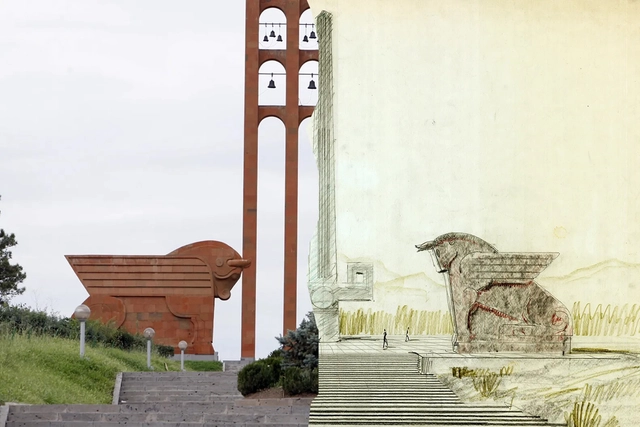
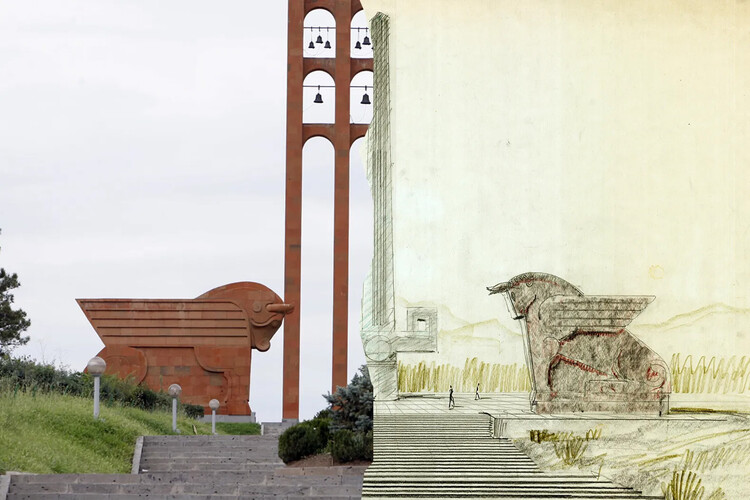
In a time when much global architecture can feel disconnected from local identity, the work of Rafayel Israelyan stands out for being rooted in place, culture, and memory. Working in mid-20th-century Armenia, Israelyan created architecture that is more than functional or monumental; it is culturally resilient. His use of traditional Armenian motifs, materials, and symbolic forms gave his designs a second life after the fall of the Soviet Union, when many buildings across post-Soviet states were abandoned or demolished. Armenia, by contrast, preserved many of his works, likely because their design approach not only served a specific moment in time, but also told a larger story. Long before concepts like sustainability or critical regionalism became popular, Israelyan understood that buildings gain meaning and endurance when they reflect the specific identity and characteristics of their place.

Designing with Memory: Rafayel Israelyan’s Enduring Legacy in Armenia - Image 1 of 4Designing with Memory: Rafayel Israelyan’s Enduring Legacy in Armenia - Image 2 of 4Designing with Memory: Rafayel Israelyan’s Enduring Legacy in Armenia - Image 3 of 4Designing with Memory: Rafayel Israelyan’s Enduring Legacy in Armenia - Image 4 of 4Designing with Memory: Rafayel Israelyan’s Enduring Legacy in Armenia - More Images+ 5

The St. Pauli Bunker Reopens as a Green Destination in Hamburg, Germany

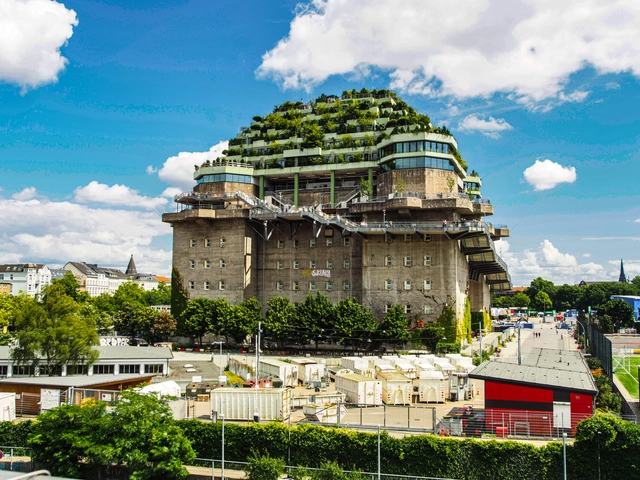
Dating from the1940s, the air raid shelter in Hamburg’s St. Pauli district has been reimagined as a „green mountain,” with expansive gardens covering the top of the wartime structure. Known as the Hochbunker, translated as ‘high bunker,’ the location has undergone a substantial restoration and refurbishment process introducing restaurants, event spaces, and a hotel, together with a rooftop urban park. The bunker has opened to the public on July 5, 2025, with the purpose of reconnecting the community with the iconic structure and its complex history.

The St. Pauli Bunker Reopens as a Green Destination in Hamburg, Germany - Image 1 of 4The St. Pauli Bunker Reopens as a Green Destination in Hamburg, Germany - Image 2 of 4The St. Pauli Bunker Reopens as a Green Destination in Hamburg, Germany - Image 3 of 4The St. Pauli Bunker Reopens as a Green Destination in Hamburg, Germany - Image 4 of 4The St. Pauli Bunker Reopens as a Green Destination in Hamburg, Germany - More Images+ 10

On the Ongoing Hostilities: Architectural Institutions Rally in Support of Ukraine

Subscriber Access | 

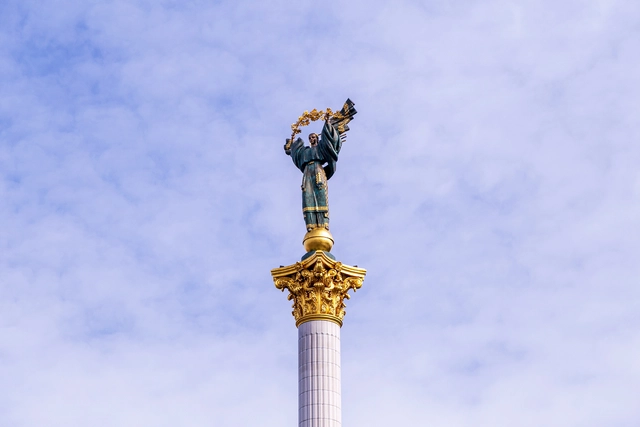
On the 24th of February 2022, Russia launched a large-scale invasion of Ukraine. Set to become Europe’s largest refugee crisis and armed conflict in this century, so far, this war has mobilized people across the world in order to exert pressure on authorities and put a stop to the armed hostilities. Individuals, as well as institutions in the architectural field, have taken part in these acts of solidarity, issuing statements, condemning actions, and even halting their work in Russia. From the UIA to MVRDV to Russian Institutions such as Strelka, the architecture world is denouncing the acts of violence and supporting an immediate cease of fire.

On the Ongoing Hostilities: Architectural Institutions Rally in Support of Ukraine - Image 1 of 4On the Ongoing Hostilities: Architectural Institutions Rally in Support of Ukraine - Image 2 of 4On the Ongoing Hostilities: Architectural Institutions Rally in Support of Ukraine - Image 3 of 4On the Ongoing Hostilities: Architectural Institutions Rally in Support of Ukraine - Image 4 of 4On the Ongoing Hostilities: Architectural Institutions Rally in Support of Ukraine - More Images

'Body Absent', a Temporary Memorial to Raise Awareness About Human Rights

Subscriber Access | 

Human Rights Day is celebrated every year on the 10th of December. After visiting numerous sites that commemorate the scenes of regrettable crimes against humanity and violence, one common observation can be made: the place of memory is not only a building. In fact, it is more about the encounter, the appropriation, and the gesture.

Adjaye Associates Reveals Conceptual Design for the Martyrs Memorial in Niamey, Niger

Adjaye Associates has recently designed a project in Niamey, Niger to honor all those that lost their lives in the fight against terrorism on the country’s southern and western borders. The Martyrs Memorial is in fact “tangible documentation of the continuous fight against extremist entities and the soldiers who have fallen in the process”.

Adjaye Associates Reveals Conceptual Design for the Martyrs Memorial in Niamey, Niger - Image 1 of 4Adjaye Associates Reveals Conceptual Design for the Martyrs Memorial in Niamey, Niger - Image 2 of 4Adjaye Associates Reveals Conceptual Design for the Martyrs Memorial in Niamey, Niger - Image 3 of 4Adjaye Associates Reveals Conceptual Design for the Martyrs Memorial in Niamey, Niger - Image 4 of 4Adjaye Associates Reveals Conceptual Design for the Martyrs Memorial in Niamey, Niger - More Images+ 5

How Will Future Generations Respond to Modern-Day Memorial Architecture?

Subscriber Access | 
How Will Future Generations Respond to Modern-Day Memorial Architecture? - Image 3 of 4
The Memorial to the Murdered Jews of Europe / Peter Eisenman. Image © Flickr user Jean-Pierre Dalbéra licensed under CC BY 2.0

Graveyards full of names that have long been forgotten, plaques etched with portraits that you ignore on your morning jog, monuments with friezes that depict the triumphs of war—all these are examples of memorial architecture, which once held intense emotional meaning for certain individuals or groups of people, but have now gradually become tourist attractions or anachronistic sites within a changed landscape.

Since the horrors of World War II memorial architecture has changed drastically, from monuments focusing on names, heroes, and patriotism to abstract symbols of mourning and loss. How will this shift in the design of memorials change the way we experience them in the present and, more importantly, in the future? When generations pass away and the memorialized event becomes almost forgotten, how will we experience and remember?