1. ArchDaily
  2. Mirror

Mirror: The Latest Architecture and News

Behind the Mirror: Smart Space-Saving Solutions for Modern Restrooms

 | Sponsored Content

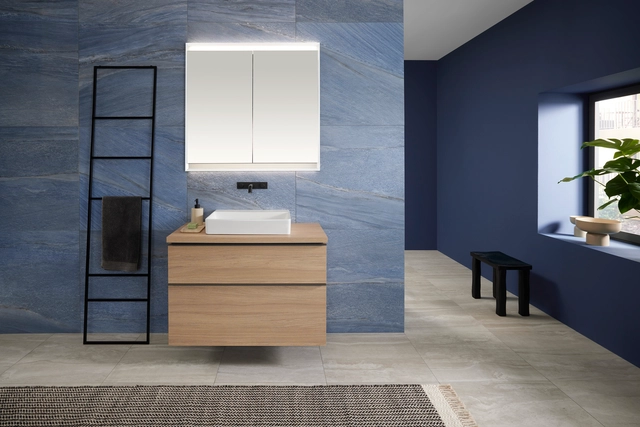
In public restroom design, innovation goes far beyond aesthetics—it transforms the entire user experience. One of the most exciting trends today is integrating all functional elements—hand dryers, faucets, soap dispensers, and paper dispensers—behind the mirror.

This approach creates a cleaner, minimalist look while optimizing space and enhancing hygiene. All devices remain fully functional but hidden: users simply place their hands where indicated on the mirror, and the equipment activates automatically—no physical contact required.
Mix and Match: Creating a Personalized Bathroom Experience

 | Sponsored Content

Not all people share the same routines, habits, or customs, yet we all have the same fundamental needs, regardless of age, social class, gender, culture, or religion. Designing bathroom spaces involves considering parameters of accessibility, technology, cleanliness, comfort, and durability, while offering efficient and sustainable solutions that ensure optimal performance. But what does functionality in architecture really mean? How do usage patterns evolve over time? Geberit products showcase various design proposals through their Mix and Match approach that blend furniture, sinks, and other bathroom accessories, all conceived to meet the diverse requirements of their users.

Oversized Mirrors in Architecture: The Illusion of Larger and Brighter Spaces

Subscriber Access | 

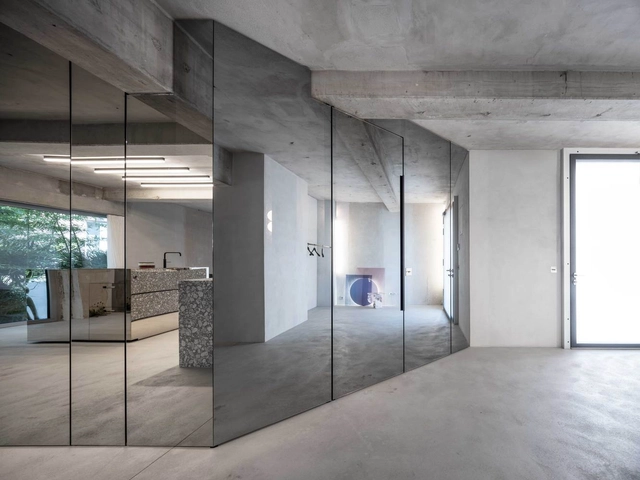
Humans have always been fascinated by reflections. Although they are no more than light bouncing back after striking a surface, there will always be something mystical and fascinating about them –whether it be a lake mirroring a beautiful landscape or a small hand mirror reflecting our face. This explains why some ancient cultures considered mirrors to be sacred objects with magical powers, while others associated them with portals leading to an unknown world. Since then, mirrors have evolved to adopt many valuable functions that are indispensable in everyday life, being found in cars, medical equipment and, of course, in countless architectural applications, especially in interiors. Experimenting with the reflection and perception of space has become an easy way for architects, designers and homeowners to transform any room. And when looking to maximize this impact, the power of exceptionally large mirrors is unparalleled. After all, the bigger the mirror, the bigger the impact.

Using Mirrors to Extend and Transform Interiors

Subscriber Access | 

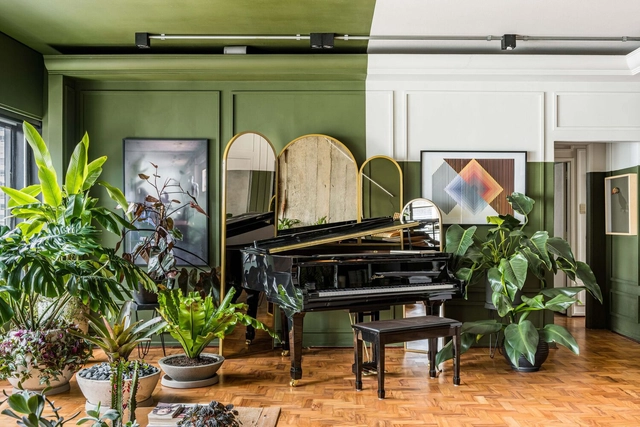
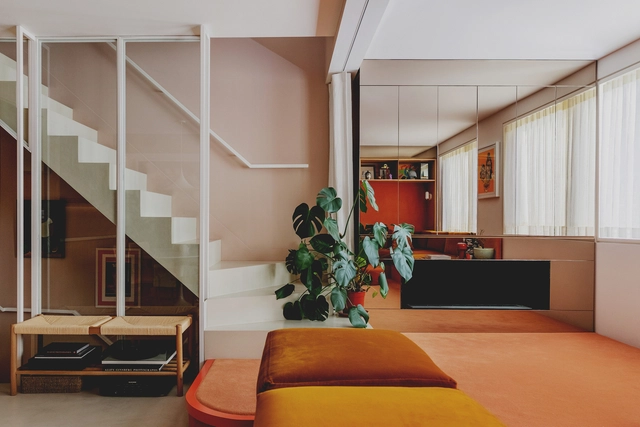
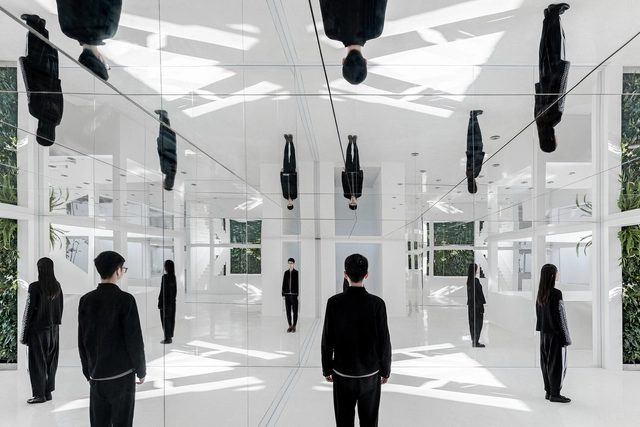
One of the most common decorative objects in projects, mirrors have existed since the Badarian civilization, around 4,000 BC. With several transformations in its material and manufacture, the mirror is a decorative object and can also serve as a design strategy.

Using Mirrors to Extend and Transform Interiors - Image 1 of 4Using Mirrors to Extend and Transform Interiors - Image 2 of 4Using Mirrors to Extend and Transform Interiors - Image 3 of 4Using Mirrors to Extend and Transform Interiors - Image 4 of 4Using Mirrors to Extend and Transform Interiors - More Images+ 12

Gaining Perspective: 15 Projects that Explore Interior Glass Use

Subscriber Access | 

Despite the initially slow and arduous process of molding glass into shape, mankind has used the material for thousands of years. According to archaeological evidence, the first human-made glass tools and jewelry were found in Eastern Mesopotamia and Egypt around 3500BC — and after the invention of the blowpipe in Syria in the 1st century BC and the Western Industrial Revolution made mass production easier, the material's signature traits of transparency and durability could finally be applied on a large scale in architecture and design.

Fast forward to the present day, and the use of glass for building facades and windows is well documented. But what about once we move inside? By treating glass for different levels of transparency, cleverly positioning it within a room, or employing its reflective surface to their advantage, interiors can benefit just as much from the material as exteriors.

Gaining Perspective: 15 Projects that Explore Interior Glass Use - Image 1 of 4Gaining Perspective: 15 Projects that Explore Interior Glass Use - Image 2 of 4Gaining Perspective: 15 Projects that Explore Interior Glass Use - Image 3 of 4Gaining Perspective: 15 Projects that Explore Interior Glass Use - Image 4 of 4Gaining Perspective: 15 Projects that Explore Interior Glass Use - More Images+ 11

4 Questions to Ask When Choosing a Mirror for the Home

Subscriber Access | 

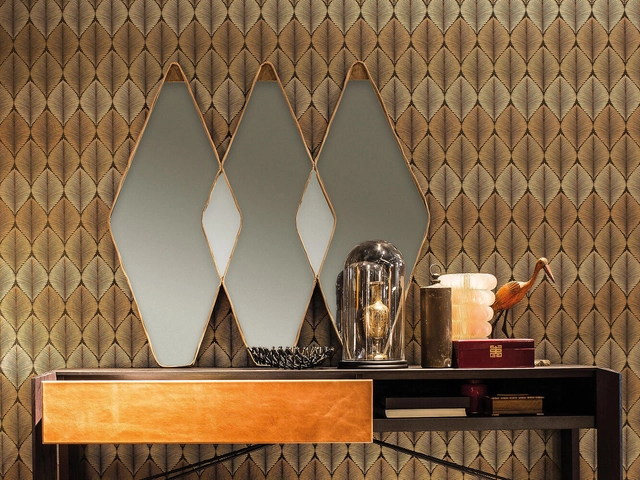
With different shapes, sizes, and styles suiting different locations, functions, and personalities, mirrors can be used as points of self-reflection for dressing and beautifying, but also for multiplying light and space in naturally dark or narrow environments, or simply as strikingly decorative objects. Here are the right questions to ask when lost.

Mirrors in Architecture: Possibilities of Reflected Space

Subscriber Access | 

Humans have used mirrors since as early as 600 BCE, employing highly polished obsidian as a basic reflective surface. Over time, people began to use small pieces of gold, silver, and aluminum in a similar manner, both for their reflective properties and for decoration. By the 1st century CE, people had started using glass to make mirrors, but it was only during the European Renaissance that Venetian manufacturers began making mirrors by applying metallic backings to glass sheets, remaining the most common general method of mirror manufacturing today. Since then, mirrors have continued to play both a decorative and functional role in architecture, serving a clean, modern aesthetic despite its ancient origins. Below, we investigate how mirrors are made, provide a brief history of mirrors in architecture, and offer several tips for architects looking to use mirrors in their designs.

No-Boundary Toilet / ZHUBO-AAO

No-Boundary Toilet / ZHUBO-AAO - Park, Garden, Facade
Exterior night. Image © Chao Zhang

No-Boundary Toilet / ZHUBO-AAO - Park, Garden, Facade, ForestNo-Boundary Toilet / ZHUBO-AAO - Park, Garden, Facade, Arch, ForestNo-Boundary Toilet / ZHUBO-AAO - Park, Garden, ForestNo-Boundary Toilet / ZHUBO-AAO - ParkNo-Boundary Toilet / ZHUBO-AAO - More Images+ 23

  • Architects: ZHUBO DESIGN
  • Area Area of this architecture project Area:  30
  • Year Completion year of this architecture project Year:  2018
  • Professionals: Vector space

On Cottesloe Beach, Gjøde & Partnere Arkitekter Create a Floating Desert Island for Sculpture By The Sea

On The Desert Island in Cottesloe Beach, Australia, a 72-meter wall of mirrors partitions out a section of the sand, creating a cove of its own. The wall faces the Indian Ocean, and the curved reflection of sand merging with the soft-blue waters and the horizon beyond creates an illusion of an enclosed space; a desert island floating in an endless sea.

Conceived of by the Danish architecture studio Gjøde & Partnere Arkitekter, the installation was part of the annual Sculpture By The Sea exhibition in Australia last month. It is the largest free public sculpture exhibition in the world, and anyone can submit their ideas. As beachgoers stumbled upon this panorama of the shore upon sand, they danced, took photos, and watched the sunset from the wavering reflections of the mythical island.

On Cottesloe Beach, Gjøde & Partnere Arkitekter Create a Floating Desert Island for Sculpture By The Sea - Image 4 of 4On Cottesloe Beach, Gjøde & Partnere Arkitekter Create a Floating Desert Island for Sculpture By The Sea - Image 5 of 4On Cottesloe Beach, Gjøde & Partnere Arkitekter Create a Floating Desert Island for Sculpture By The Sea - Image 6 of 4On Cottesloe Beach, Gjøde & Partnere Arkitekter Create a Floating Desert Island for Sculpture By The Sea - Image 11 of 4On Cottesloe Beach, Gjøde & Partnere Arkitekter Create a Floating Desert Island for Sculpture By The Sea - More Images+ 10