1. ArchDaily
  2. modernism

modernism: The Latest Architecture and News

Learn About Open Floor Plans Via These 6 Iconic Residences

Subscriber Access | 

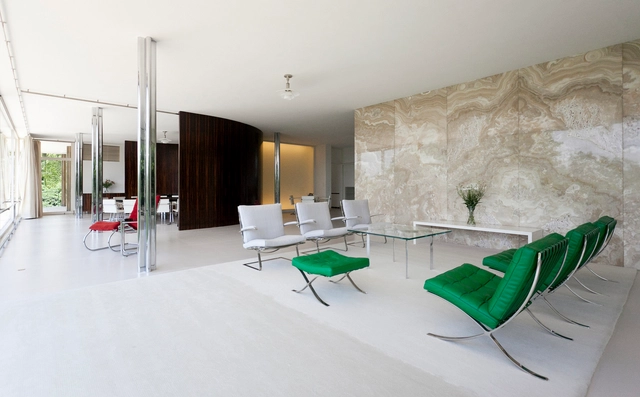
Le Corbusier's "Five Points of Architecture" functioned in the twentieth century as the go-to guide for architectural production; it is also a significant work in understanding the legacy of modern architecture. Horizontal windows, free design of the facade, pilotis, roof gardens, and perhaps the most significant point, free design of the ground plan form the Franco-Swiss architect's manifesto. In terms of design practice, this last point means distinguishing structure and wrapper, which allows the free disposal of dividing walls that no longer fulfill a structural function.

Residential projects were once characterized by a clear division of environments linked to domestic dynamics, now filtered by modern discourse, the house became flexible and capable of new spatial articulations.

To better understand the modern domestic space, we gathered some of the most emblematic examples of residences and their floor plans.

The House of Soviets: Why Should This Symbolic Work of Soviet Brutalism be Preserved?

Subscriber Access | 
The House of Soviets: Why Should This Symbolic Work of Soviet Brutalism be Preserved? - Featured Image
© Maria Gonzalez

The House of Soviets: Why Should This Symbolic Work of Soviet Brutalism be Preserved? - Image 1 of 4The House of Soviets: Why Should This Symbolic Work of Soviet Brutalism be Preserved? - Image 2 of 4The House of Soviets: Why Should This Symbolic Work of Soviet Brutalism be Preserved? - Image 3 of 4The House of Soviets: Why Should This Symbolic Work of Soviet Brutalism be Preserved? - Image 4 of 4The House of Soviets: Why Should This Symbolic Work of Soviet Brutalism be Preserved? - More Images+ 15

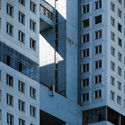
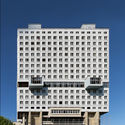
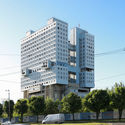
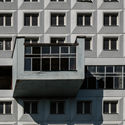
The House of Soviets is a Russian brutalist building designed by architect Yulian L. Shvartsbreim. Located in the center of Kaliningrad, the building has been abandoned since mid-construction. However, its inhabitants recognize it as the most important urban landmark in their city. They usually refer to the structure as "the face of the robot," since its strange shape conjures images of a robot buried up to its neck, only showing its face.

“City of Light”: The Story of Willem Dudok’s De Bijenkorf Rotterdam

Subscriber Access | 

Produced by Dutch journalist Peter Veenendaal, City of Light is a documentary that covers the design, construction, and social effects of Willem Marinus Dudok’s De Bijenkorf in Rotterdam, the Netherlands. De Bijenkorf opened in Rotterdam in 1930, and after barely surviving the Second World War, it was destroyed in 1960 to make way for a Metro Station and a new store designed by Marcel Breuer and largely forgotten. City of Light presents Dudok’s shopping center as an important model for retail architecture that came about during the formative years of the shopping mall, and includes interviews with historians, former employees, and local enthusiasts to bring the building back to life.

Despite being relatively unknown today, Dudok’s De Bijenkorf was important not only for the architectural community, but also for the city of Rotterdam. In Veenendaal’s documentary, architectural historian Herman van Bergeijk remarks that at the time of its construction, De Bijenkorf was the “largest and most modern department store in Europe." The store was immensely popular with locals; according to the video over 70,000 people visited on opening day to explore the building, and over time, it became an icon of Rotterdam's growing commercial success.

Proyecto Helicoide: Reviving Venezuela's Unfinished Modernist Utopia

Subscriber Access | 

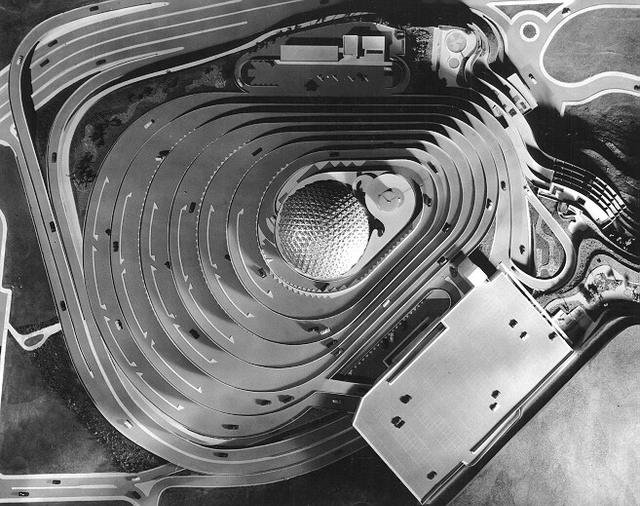
Although construction was never completed, El Helicoide (The Helix) in Caracas remains one of the most important relics of the Modern movement in Venezuela. The 73,000-square-meter project, designed in 1955 by Jorge Romero Gutiérrez, Peter Neuberger, and Dirk Bornhorst, takes the form of a double spiral topped by a large geodesic dome designed by Buckminster Fuller. It is characterized by a series of ascending and descending ramps intended to carry visitors to its variety of programmatic spaces, including 320 shops, a 5-star hotel, offices, a playground, a television studio, and a space for events and conventions.

Today, Proyecto Helicoide aims to rescue the urban history and memory of the building through a series of exhibitions, publications, and educational activities. 

VIDEO: Fernando Romero, In Residence

Subscriber Access | 

In Residence: Fernando Romero on Nowness.com

NOWNESS has released the latest in their "In Residence" series, a collection of short videos that interview designers in their homes. This time, internationally renowned Mexican Architect Fernando Romero presents his Mexico City villa, designed by Francisco Artias in 1955, which he describes as "the ultimate modernity dream come true."

Is The Demolition of Prentice Hospital Another "Penn Station Moment"?

Subscriber Access | 

This article, by Michael R. Allen, was originally published on Next City as "Prentice Hospital Could Become Modernism's 'Penn Station Moment'"

When the concrete cloverleaf of Prentice Hospital sprouted from the Chicago ground in 1975, its award-winning design met the praise of critics and the admiration of many Chicagoans. Architect Bertrand Goldberg drew from Brutalism, but with a symmetry and grace that distinguished Prentice from more angular works in that style.

This week, as Goldberg’s famous work is pulled apart by wreckers, nothing about its loss seems symmetrical or graceful. Within 40 years, the building transitioned from a proud symbol of civic renewal and design innovation to the victim of old-fashioned Chicago politics. The controversy surrounding the demolition of Prentice, however, injected the preservation movement into an urban design discussion with a presence not seen in a long time.