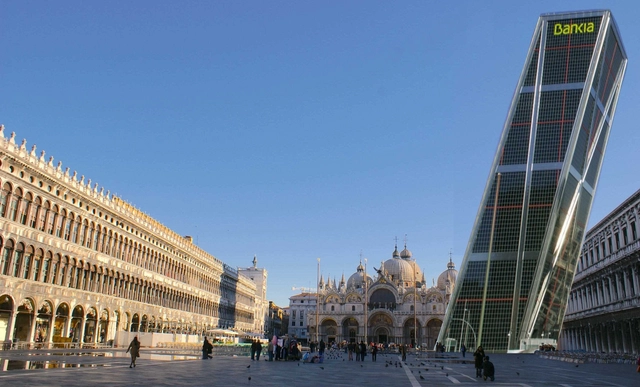
Imagine the following scenario. It is 1902, and to the great shock and distress of the citizens of Venice, the beautiful campanile tower in its Piazza San Marco has just collapsed. That very evening, the city’s communal council votes to approve 500,000 Lire for the prompt rebuilding, “com’era, dov’era” — “as it was, where it was”. Future residents and visitors alike may now continue to enjoy this beautiful structure, which had also been restored and added to many times previously.
But then an authority from far away steps up to speak. “Our regulations do not allow this! Our funding policies require that ‘a project shall use contemporary design’ — which means that you may use only current styles of which we approve, and you may not use the local traditional styles of Venice. That would be a ‘falsification of history’, a ‘mingling of the false with the genuine’, and we decree that this would have harmful consequences!” The project does not go forward, and something entirely “contemporary” is built instead.
For the 1957 International Builders Fair, Oscar Niemeyer developed the Interbau Apartment House, a modernist eight-storey building that sits on V-shaped pillars in the city of Berlin. While the building's facade consists of uniform windows and loggias clad with primary-colored mosaics, it is interrupted by enclosed pathways that connect the structure to the external elevator.
Architectural photographer Bahaa Ghoussainy explored the building and highlighted the complementary relationship between its uniform modernity and dynamic suspensions.
Architecture theorist, historian, and curator Beatriz Colomina talks about our discipline and its difficulty to accept the work as the result of a collaborative effort. When asked about sexism and gender issues within architecture, Colomina broadens the discussion and tackles the historical myth of architecture as the product of one single, brilliant - and always masculine - mind. A fiction that has obscured the role of a number of women, and whole teams, committed to the design process.
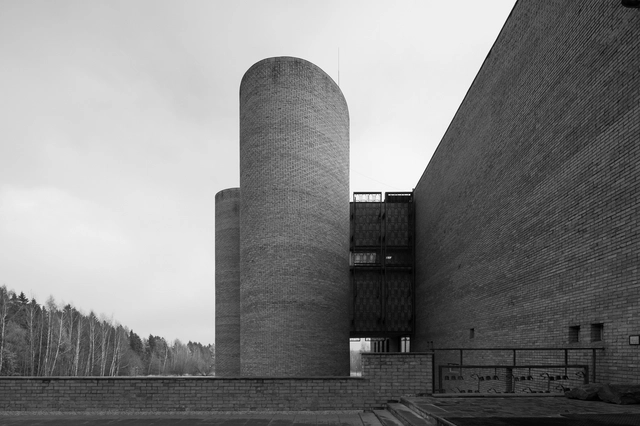
In recent years, people started to regain interest in a movement that dates back to the last century; a movement, first introduced during the 1940s and 1950s, through the works of Le Corbusier and Alison and Peter Smithson. With monolithic structures, modular shapes, and impressive massing, Brutalism highlights architectural integrity. This movement is highly characterized by rough, raw, and pure surfaces that underline the essence of the substances in question. Spread across the globe, architects have adopted and developed their own vision of this modern movement, creating contextual variations.
In the midst of all the chaos currently taking place in the city of Beirut, we look back on the Lebanese capital’s hidden Brutalist gems. To shed the light on a movement that's often neglected and forgotten, Architect Hadi Mroue created a series of images that highlight the Lebanese Brutalism movement as well as its evolution as an important part of the Lebanese modern heritage.
After the success of the original guide-book on underrated Soviet architecture, Garage Museum of Contemporary Art is publishing an English version of the bestselling guide: Moscow: A Guide to Soviet Modernist Architecture 1955–1991in a new digitalized format with six new chapters.
Modern architecture, visible in contemporary production, is usually related to the use of guidelines established by Le Corbusier's five points of architecture. Despite being widely known and debated for years, these points continue to be revisited and rethought in projects from various places and contribute to the creation of interesting buildings in various programs.
Amey Kandalgaonkar has unveiled a project which reimagines the traditional Chinese pagoda in a modernist style. The Shanghai-based designer created the fictional reinterpretation as a homage to a building form largely untouched by Modernism, featuring raw brut concrete, minimal ornamentation, and bold geometric moves.
https://www.archdaily.com/916524/amey-kandalgaonkar-reimagines-traditional-chinese-pagodas-for-a-modernist-eraNiall Patrick Walsh
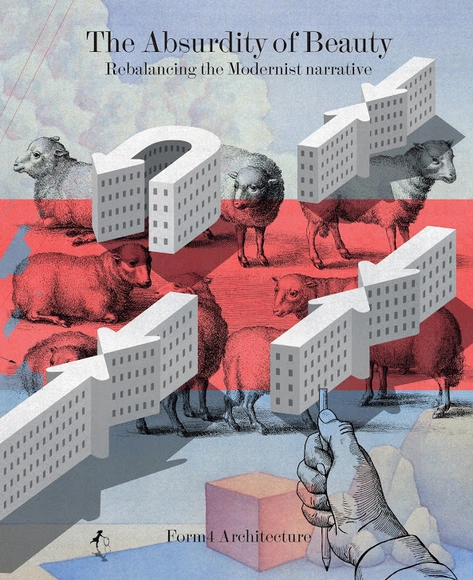
John Marx, AIA, Co-Founding Principal and Chief Artistic Officer of Form4 Architecture, has debuted The Absurdity of Beauty: Rebalancing the Modernist Narrative, which challenges the philosophies of Modernism and posits how these discussions can inspire a new era of urbanism and abundance.
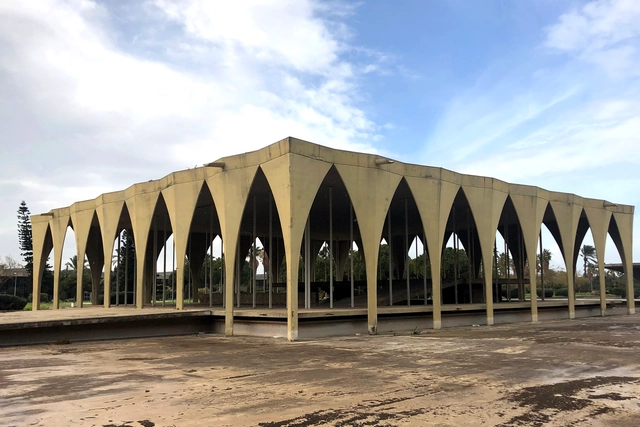
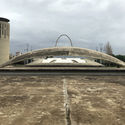
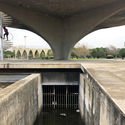
Lebanon is home to several outstanding structures, influenced by centuries of architectural styles. However, one of the most intriguing projects in the Middle Eastern country lies in the northern city of Tripoli, a culturally-rich historical city with structures once inhabited by Romans, Crusaders, Phoenicians, and Ottomans. The Rachid Karami International Exhibition Center, designed by Oscar Niemeyer, reflects the slow deterioration from Lebanon’s pre-war golden age to post-war depression. The country's iconic modernist site has suffered after years of neglect and reportedly will require upwards of 15 million dollars to restore.
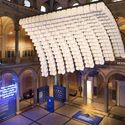
How does our built environment affect us? This major exhibition spanning two galleries examines the positive and negative influence buildings have on our health and wellbeing. From Dickensian London to the bold experiments of postwar urban planners, and from healing spaces for cancer patients to the role architecture can play in global healthcare provision, we look anew at the buildings that surround and shape us.
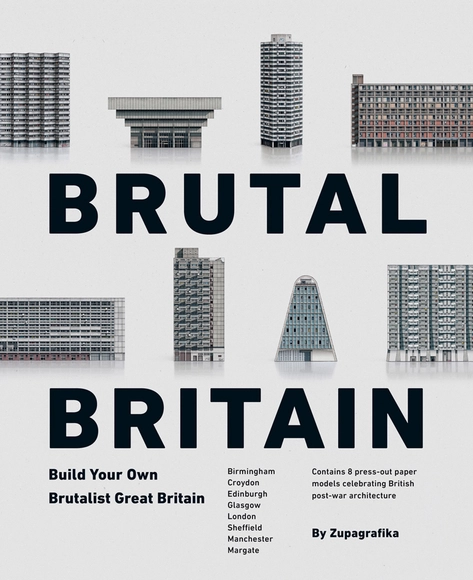
High-rise tower blocks, prefab panel housing estates, streets in the sky, new towns; some of the concrete constructions that once shaped the cityscapes of post-war Britain have stood the test of time, while others are long gone.
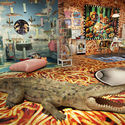
A recent exhibition at the MAK Vienna - Austrian Museum of Applied Arts / Contemporary Art, is showcasing the works of Sagmeister & Walsh, a NYC-based design firm investigating what makes beauty so appealing.
Titled "Beauty," the exhibition explores the notion that beauty operates as an independent function, and that in itself, it can be the primary motive for architecture: form is a function. In collaboration with the YouTube channel and design studio Kurzgesagt (In A Nutshell), this video released along with the exhibition explains why beautiful things make us happy.
“A model by Corbusier is the only image that brings to my mind the idea of immediate suicide.” - Ivan Chtcheglov
Despite their pranks and dirty politics, the Situationists may have been right after all. The death of architecture students will not be a result of excessive studio work, but will rather occur from the sermonizing repetition of modernist ideals that continue to be taught. In Le Corbusier's manifesto, Vers une Architecture (Toward An Architecture), he advocates for the adoption of modern architecture as the solution to 20th-century global crises, in a way that now seems rather limiting.
If the discipline doesn't move past the black-and-white photographs of the Barcelona Pavilion or the reductionist designs of the Bauhaus, students will continue to produce what may now be incorrectly associated with the “right architecture.” In order to break away from these stereotypes of what architecture should be, here are six explorations of building, curating and writing that resist these notions:
This article was originally published on June 16, 2016. To read the stories behind other celebrated architecture projects, visit our AD Classics section.
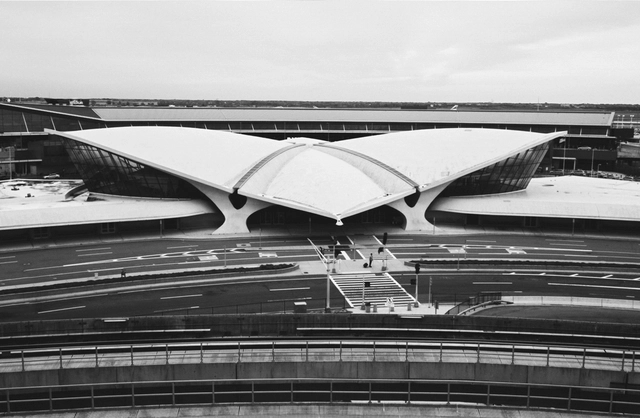
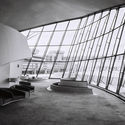
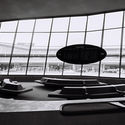
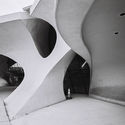
Built in the early days of airline travel, the TWA Terminal is a concrete symbol of the rapid technological transformations which were fueled by the outset of the Second World War. Eero Saarinen sought to capture the sensation of flight in all aspects of the building, from a fluid and open interior, to the wing-like concrete shell of the roof. At TWA’s behest, Saarinen designed more than a functional terminal; he designed a monument to the airline and to aviation itself.
This AD Classic features a series of exclusive images by Cameron Blaylock, photographed in May 2016. Blaylock used a Contax camera and Zeiss lenses with Rollei black and white film to reflect camera technology of the 1960s.
This article was originally published on August 15, 2016. To read the stories behind other celebrated architecture projects, visit our AD Classics section.
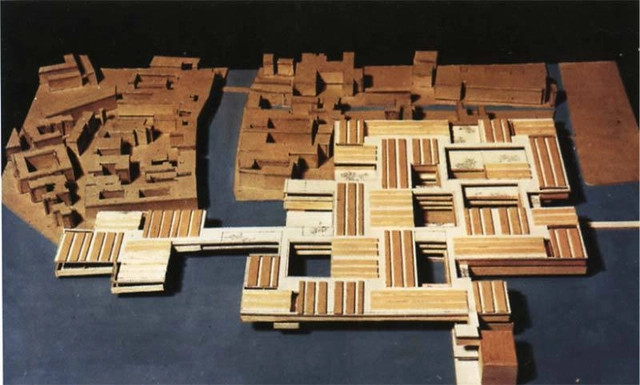
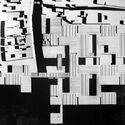
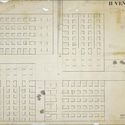
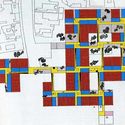
Le Corbusier made an indelible mark on Modernist architecture when he declared “une maison est une machine-à-habiter” (“a house is a machine for living”). His belief that architecture should be as efficient as machinery resulted in such proposals such as the Plan Voisin, a proposal to transform the Second Empire boulevards of Paris into a series of cruciform skyscrapers rising from a grid of freeways and open parks.[1] Not all of Le Corbusier’s concepts, however, were geared toward such radical urban transformation. His 1965 proposal for a hospital in Venice, Italy, was notable in its attempt at seeking aesthetic harmony with its unique surroundings: an attempt not to eradicate history, but to translate it.
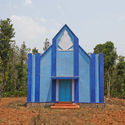
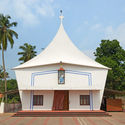
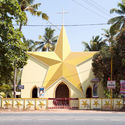
Photographer Stefanie Zoche of Haubitz-Zoche has captured a series of vibrant images showcasing the “hybrid modernism” churches of the Southern Indian region of Kerala. The images below, also available on the artist’s website, depict the blend of modernist influences and local architectural elements that defined many Indian churches following the country's 1947 independence.
As Zoche explains, the post-independence Indian church establishment sought to differentiate itself from the historic colonial building style, and hence drew inspiration from the modernist icon Le Corbusier. The buildings in Zoche’s gallery often display an “effusively sculptural formal language and a use of intense color” with Christian symbols “directly transposed into a three-dimensional, monumental construction design.”
It is rare for a father and son to share the same birthday. Even rarer is it for such a duo to work in the same profession; rarer still for them both to achieve international success in their respective careers. This, however, is the story of Eliel and Eero Saarinen, the Finnish-American architects whose combined portfolio tells of the development of modernist architectural thought in the United States. From Eliel’s Art Nouveau-inspired Finnish buildings and modernist urban planning to Eero’s International Style offices and neo-futurist structures, the father-son duo produced a matchless body of work culminating in two individual AIA Gold Medals.


.jpg?1575455535&format=webp&width=640&height=580)
.jpg?1575455403 "© Bahaa Ghoussainy")
.jpg?1575455498 "© Bahaa Ghoussainy")
.jpg?1575455479 "© Bahaa Ghoussainy")
.jpg?1575455317 "© Bahaa Ghoussainy")
.jpg?1575455535)
.jpg?1573123210&format=webp&width=640&height=580)


















_MWAA.jpg?1534522436 "© MWAA")

_Ezra_Stoller.jpg?1534522458 "© <a href='https://www.flickr.com/photos/gabyu/305710396'>Ezra Stoller via Flikr user gabyu</a> licensed under <a href='https://creativecommons.org/licenses/by-nd/2.0/'>CC BY-ND 2.0</a>")