Buildner has announced the results of its competition, the Last Nuclear Bomb Memorial No.6. This competition is held each year to support the universal ban on nuclear weapons. In 2017, on the 75th anniversary of the 1945 bombings of Nagasaki and Hiroshima, which claimed the lives of over 100,000 people, the United Nations adopted the Treaty on the Prohibition of Nuclear Weapons.
Buildner has announced the results of its competition, the Last Nuclear Bomb Memorial No.5. This competition is held each year to support the universal ban on nuclear weapons. In 2017, on the 75th anniversary of the 1945 bombings of Nagasaki and Hiroshima, which claimed the lives of over 100,000 people, the United Nations adopted the Treaty on the Prohibition of Nuclear Weapons.
In recognition of this treaty, Buildner invites conceptual designs for a memorial to be located on any known decommissioned nuclear weapon testing site. The conceptual memorial is intended to reflect the history and ongoing threat of nuclear weapons, aiming to promote public awareness of nuclear disarmament.
The challenge is intended to bring attention to the history and dangers of nuclear weapons. Participants are tasked with designing a space that commemorates nuclear warfare victims and conveys the need for a nuclear-free future. As a 'silent' competition, submissions are not allowed to include any text, titles, or annotations.
The next edition of this competition, the Last Nuclear Bomb Memorial No. 6, has been launched with an early bird registration deadline of June 12, 2025.
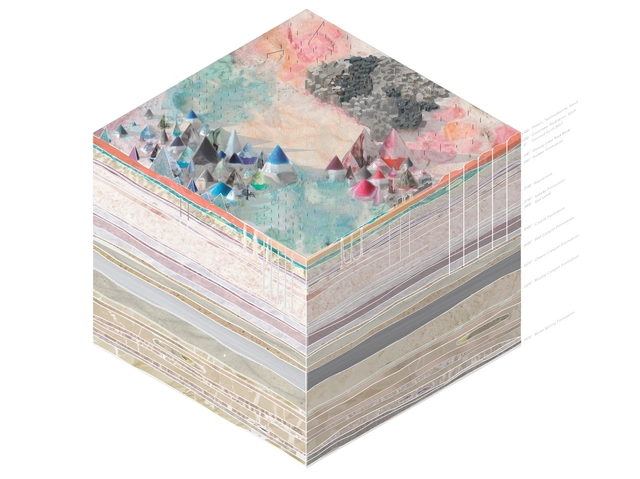
7017: 5,000-Year Geologic Axonometric Projection (12,000’ H x 12,000’ W x 9,500’ D) . Image Courtesy of Arch Out Loud
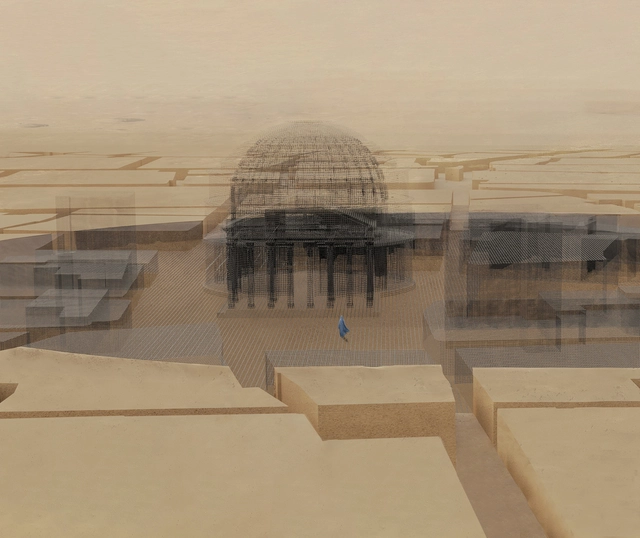
Architectural research initiative, arch out loud, have released winners for their international competition to design a landmark for a nuclear waste site in New Mexico. As part of the brief, participants were required to design a timeless piece of architecture that could stand for 10,000 years to warn future generations of the unstable by-products of nuclear weapon production that are buried 2,150 feet beneath the surface.
In the competition, many entrants engaged with the local geology of the site where the waste isolation pilot plant (WIPP) is situated for the landmark that would withstand millenniums. Testbed, the winner of the competition, proposed ex-situ mineral sequestration by reacting olivine or basalt with carbon dioxide to form inert and solid carbonate material to capture the gas, that would act as an ‘artificial tree.' The other proposals questioned the site and the underlying issues regarding human involvement with nuclear activities and the consequences, designing structures that heavily juxtaposed the natural landscape.
How do we design architecture with a message that could endure for millennia ?
Since the Cold War, one of the most challenging and urgent tasks facing governments around the world has been the disposal of transuranic nuclear waste. As a by-product from nuclear weaponry production, transuranic waste is not only harmful, but also boasts a formidable decay process lasting thousands of years. To address this issue, millions of barrels of highly radioactive waste have been buried in repositories deep beneath the earth’s surface. One such disposal site is the Waste Isolation Pilot Plant (WIPP) in New Mexico, United States. To ensure public safety, it is imperative that the site remain undisturbed for the duration of the waste’s decay process.