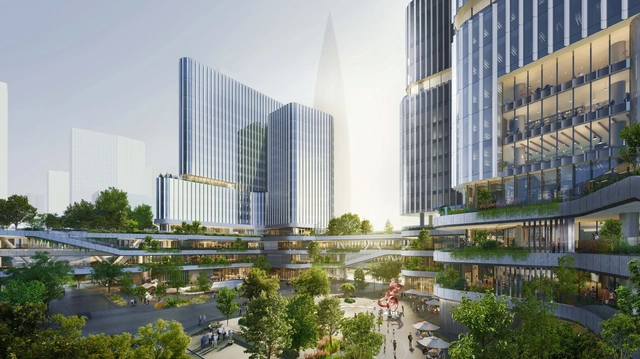
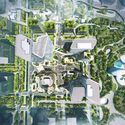
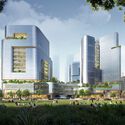
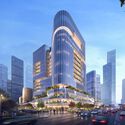
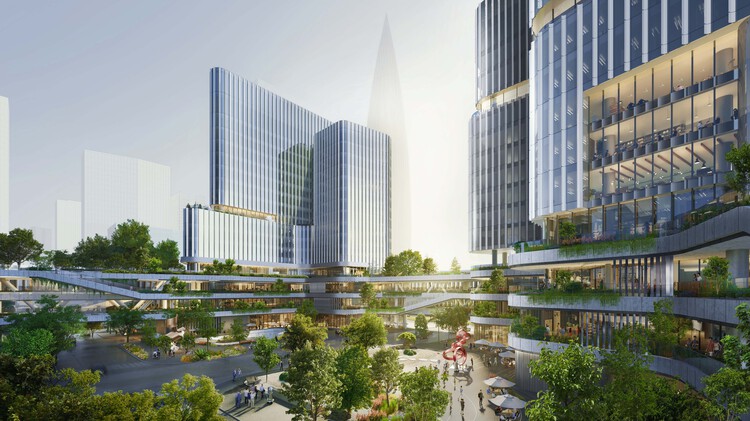
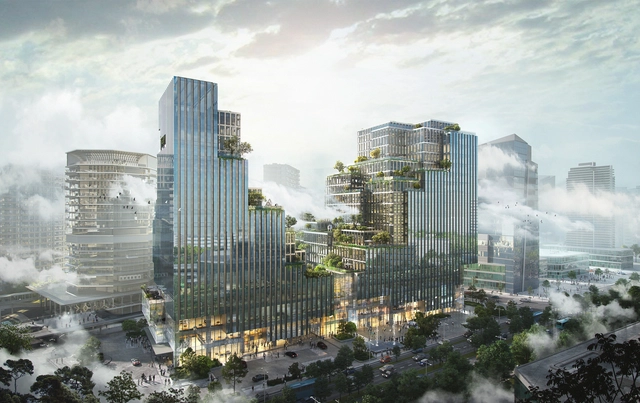
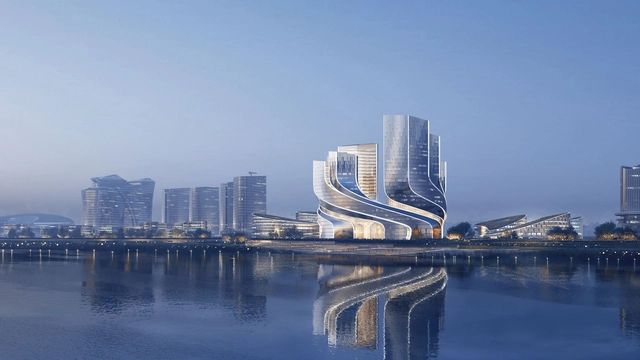
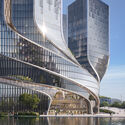
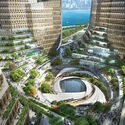
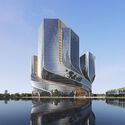
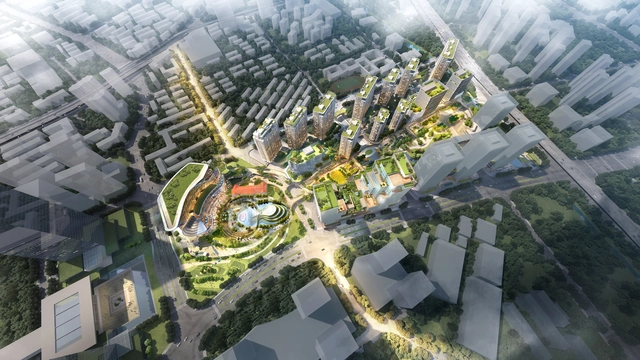
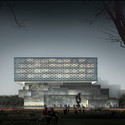
Houhai Hybrid Campus design. Render. Image Courtesy of Büro Ole Scheeren
The international firm Büro Ole Scheeren has unveiled images of the Houhai Hybrid Campus, a new urban complex in Shenzhen's Houhai district. The development is situated in a strategic area within the original Shenzhen Special Economic Zone (SEZ), bridging the city's commercial center and its bayfront. The release of the Hybrid Campus images coincided with the 45th anniversary of Shenzhen's designation as a Special Economic Zone, a milestone marking the city's transformation from a fishing village into a global innovation hub. Currently under construction, the Hybrid Campus integrates work, living, culture, commerce, leisure, recreation, and nature into a unified urban complex, scheduled to open in late 2026.
Büro Ole Scheeren has revealed their design for an 800,000 sq ft development following the concept of live-work-lay in Hangzhou, China. Titled Urban Glen, the project situated between West Lake and the Qiantang River comprises two towers connected by a central plinth. This feature, inspired by Hangzhou's hilly landscapes, becomes a built topography of terraces and exterior environments, aimed at optimizing natural light and the quality of both indoor and outdoor spaces. The Glen will house a variety of amenities, including ballrooms, meeting spaces, restaurants, and retail, all interwoven with public art from New World Development's extensive collection.
Büro Ole Scheeren has won the international competition for the design of Tencent’s new global headquarters in Shenzhen, China. The new structure, occupying a 14-hectare site, will become part of a new urban development along Qianhai Bay. Envisioned as a centerpiece within the future technology and financial district, Büro Ole Scheeren’s Tencent Helix will become the center of the multinational company’s expanding ecosystem.
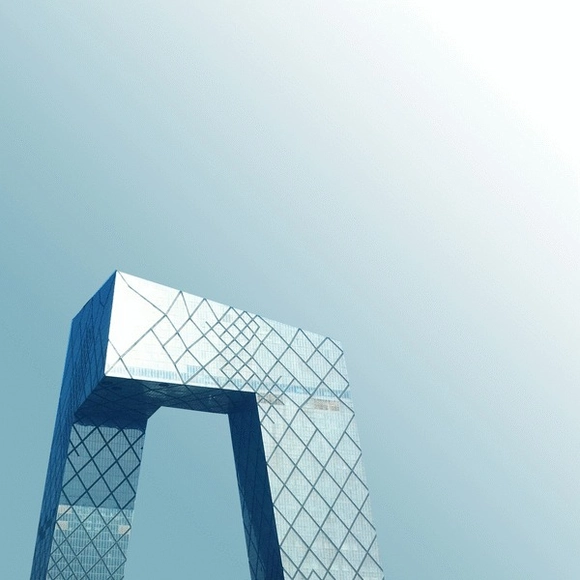
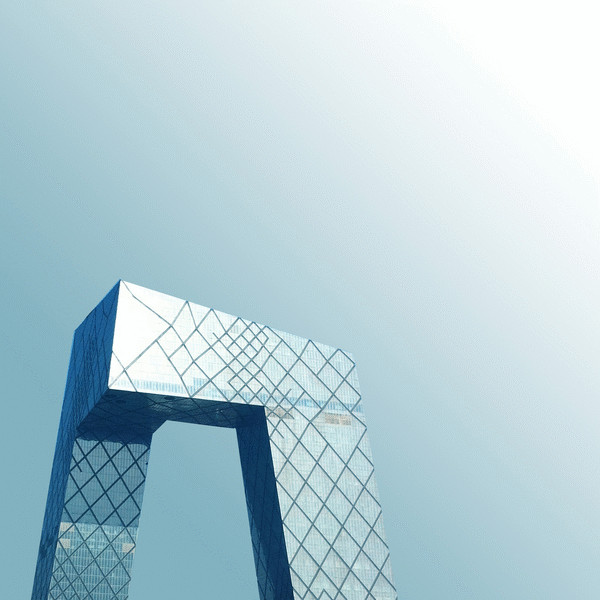
Captivated by cinematographic references and the narrative space, Ole Scheeren's work stands out by its disruptive solutions to the present social challenges and the cities we live in. With more than 30 years of career in the architecture field, Ole Scheeren has won several awards and one of its most iconic works includes the CCTV Headquarters in Beijing when was director and partner at OMA, before founding Büro Ole Scheeren.
In this interview, documented at the World Architecture Festival 2022, Scheeren discusses the importance of the narrative of a project and the quality architecture has by building the stages where people live: "the fictional anticipation of life".
Ana Pinto da Silva, Co-Founder & CEO at Minka Homes & Communities, will give the closing keynote address at the World Architecture Festival (WAF) in Lisbon on Friday 2 December 2022. She will follow a stellar line-up of the industry’s most influential figures shaping the global architecture agenda over the three-day event, including Ole Scheeren, Christina Seilern and Reinier de Graaf. The festival runs from 30 November to 2 December.
https://www.archdaily.com/990979/jean-mah-ole-scheeren-and-ana-pinto-da-silva-join-line-up-of-speakers-at-world-architecture-festival-2022-in-lisbonArchDaily Team
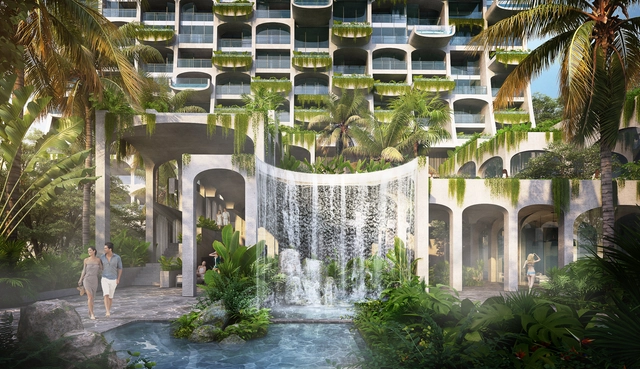
Büro Ole Scheeren has unveiled its design for a hotel resort in Cebu, one of the most popular destinations in the Philippines. Taking inspiration from the island’s natural landscape and traditional architecture, the project brings together lush greenery, pools and waterfalls within a volume wrapped in arches reminiscent of local structures. The design team describes the project as “a journey through the rainforest”, where architecture, interior design and landscape converge into a multi-sensory experience.
Shigeru Ban, Pritzker Prize-winner, and Ole Scheeren, RIBA silver medalist, were appointed for the Hangzhou Wangjiang New Town master plan. Creating new art and cultural destination in the historical city, the project in collaboration with New World Development and K11 Group seeks to build a landmark that meets the needs of the new generation.
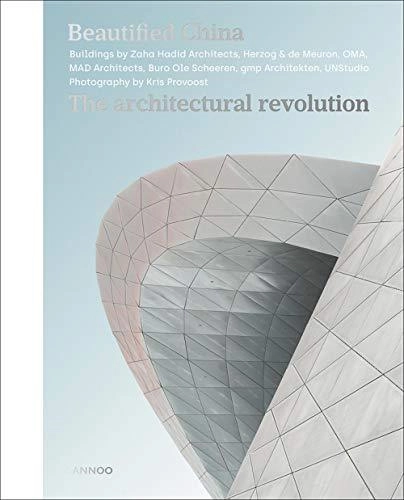
A photo essay by Belgian architectural photographer Kris Provoost capturing the boldest and most iconic structures of the architectural revolution in China.
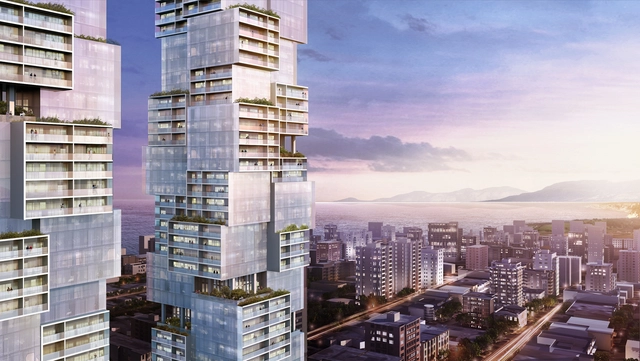
Buro Ole Scheeren recently revealed their design for two new towers to be built between Davie and Robson Villages in Vancouver,Canada. Named “Barclay Village,” the project combines residential units (with 30 percent of the units reserved for social housing), a variety of public amenities, and green terraces. The design was inspired by the "texture and scale of the surrounding urban fabric and folds the typologies of the two historic villages."
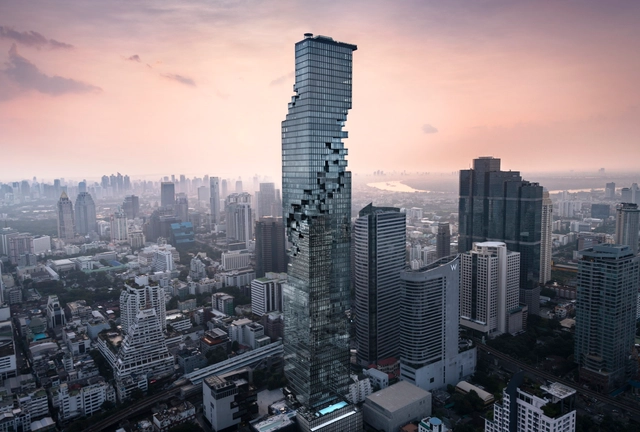
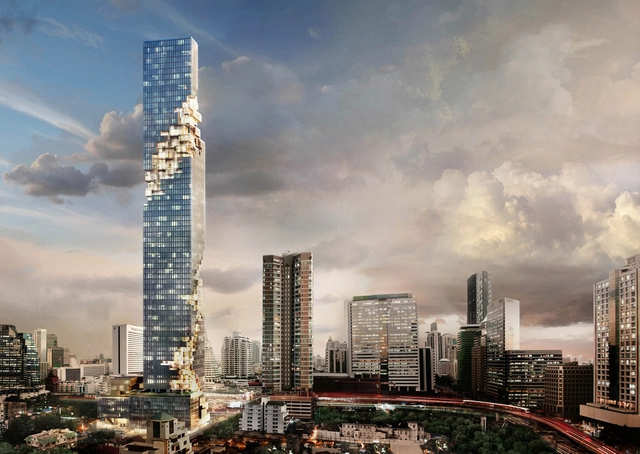
The project began as a design by Ole Scheeren for local firm Pace Development, and was completed by his own firm following his departure from OMA in 2010. The architects describe the project:
The design of MahaNakhon dismantles the typical tower and podium typology, creating a skyscraper that melds with the city by gradually ‘dissolving’ as it flows downward to meet the ground. A series of cascading indoor/outdoor terraces at the base of the tower accommodates retail and entertainment facilities, evoking the shifting protrusions of a mountain landscape.
A simultaneous celebration of their cultural iconicity and distillation from their various contexts, Beautified China is a photographic essay by Kris Provoost (one-half of the vlogging duo behind #donotsettle) that tracks the evolution of Chinese architectural landmarks over the course of the past 7 years. Beginning his investigation with the 2010 World Expo in Shanghai, Provoost considers a decade of architecture proposed for China by the profession’s biggest names, many of which have been built now with monumental reputations in rising cities.
As long as there have been buildings mankind has sought to construct its way to the heavens. From stone pyramids to steel skyscrapers, successive generations of designers have devised ever more innovative ways to push the vertical boundaries of architecture. Whether stone or steel, however, each attempt to reach unprecedented heights has represented a vast undertaking in terms of both materials and labor – and the more complex the project, the greater the chance for things to go awry.
Hong Kong- and Beijing-based Büro Ole Scheeren is expanding with the opening of two new offices in Berlin and Bangkok. As its founder, German architect Ole Scheeren says, the expansion will extend the practice's range of work with projects in Europe and North America. "Büro Ole Scheeren’s Berlin studio will act as a European base for work across the western hemisphere, while Büro Ole Scheeren in Bangkok, together with its subsidiary HLS, is charged with the further design development and construction supervision of the MahaNakhon tower, soon to be completed as Thailand’s tallest skyscraper," says the practice.
Participating in the What Can Design Do conference in Amsterdam, Ole Scheeren took time, along with several other creators, to discuss the impact of the working environment. Playfully dubbed, “Pod Sessions,” each talk takes place in De Vorm’s contemporary Pod chair, the PET plastic improving acoustics and signature Dutch felt providing comfort. In his Pod Session, Ole Scheeren, founder of Buro OS and lead designer on the CCTV Building in China, talks about the nature of a transitional workplace, the importance of collaboration, offices as a creative tool and the necessity of having a personal presence in a project. Having participated in projects across the world, Scheeren frequently moves to the site of his latest projects, as was the case with the CCTV Building.
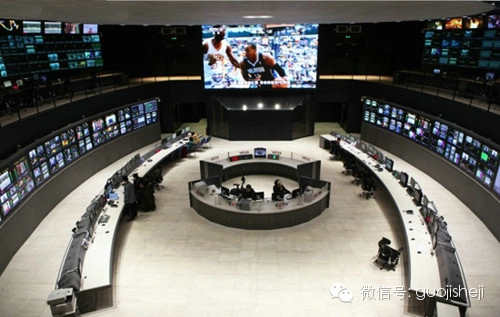
Since the building's construction concluded in 2012, images of OMA's CCTV Headquarters have permeated the media. But inside views of this mutant skyscraper -- characterized by a soaring 72 meter cantilever -- have remained rare. Until now, that is. Images originally published by International Design and shared on WeChat by 广电独家 reveal the interior of OMA's CCTV Headquarters, including Emmy-winning set designer Jim Fenhagen's news studios.
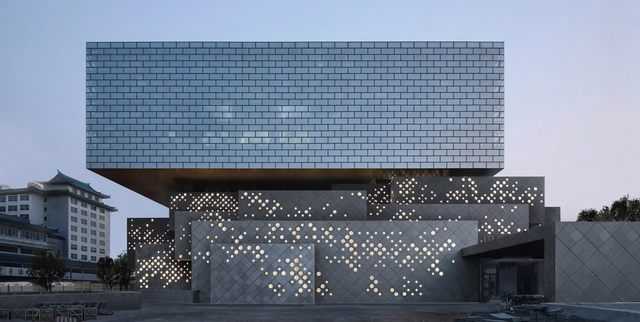
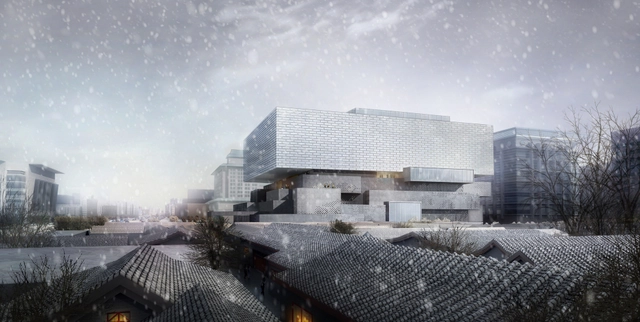
The Guardian Art Center features none of the dramatic cantilevers and futuristic formal experimentation of Büro Ole Scheeren's other works. Instead the "hybrid art space" - located in the heart of Beijing, just a stone's throw from the Forbidden City - references the scale and materiality of the adjacent traditional buildings. The lower floors, containing an auction house and a museum with a 1,700 square meter exhibition-events space, comprise an aggregation of small "pixelated" blocks, clad in stone with a pattern of perforations derived from a 700-year-old Chinese landscape painting. Though the upper portion of the building, containing a 120-room hotel and a restaurant, is larger in scale, it is broken down by a facade of oversized glass "bricks," again a reference to the materials of the hutong next door and a "humble and non-elitist symbol in Chinese culture," according to the press release.
To find out more about this intriguing building, we spoke to Ole Scheeren, who assured us that in spite of its appearance, the Guardian Art Center is just as radical as his previous works. Read on after the break for the full interview.
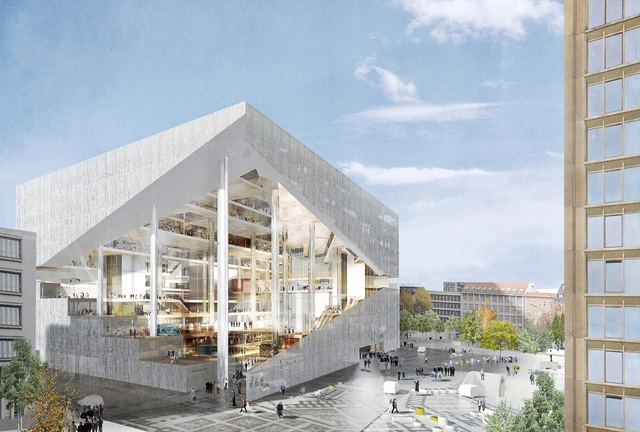
For the recent Axel Springer SE Media Campus in Berlin, OMA's proposal (shown) is up against designs by two of OMA's past employees.. Image Courtesy of Axel Springer SE
It is difficult to even imagine an architectural practice more influential than OMA. Not only has Koolhaas' practice completed high-profile buildings worldwide, but it has also been the incubator for some of the world's most famous architects, with many striking out alone after a period working under Rem. This article in the Wall Street Journal profiles some of the latest crop of "graduates", including Bjarke Ingels and Ole Scheeren, who have founded their own practices in the last decade and are now acting as some of OMA's biggest competitors. You can read the full article here.