1. ArchDaily
  2. Parc de la Villette

Parc de la Villette: The Latest Architecture and News

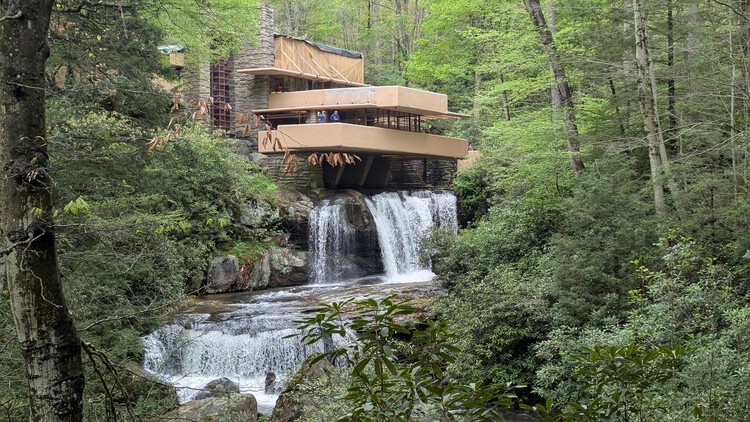
Frank Lloyd Wright’s Fallingwater Restoration and Salone del Mobile.Milano 2026: This Week’s Review

This week marked World Health Day, observed annually on April 7 by the World Health Organization. This year's edition issued the call to "Stand with science," inviting renewed engagement with scientific knowledge as a foundation for collective action across disciplines. In architecture and urban design, this imperative resonates through projects that translate research into spatial strategies: from the deployment of digital twins to inform urban planning and decision-making, to rewilding initiatives that integrate biodiversity as a tool to mitigate climate change, and materially informed practices that engage resource-conscious construction. Within this broader framework, recent works also foreground architecture's social agency at multiple scales, including a landscape-driven cancer support center in Kent that aligns wellbeing with environmental sensitivity, an urban installation in Brescia operating as a civic awareness device around life in prison and pathways to reintegration, and the transformation of a street in Mantua into a pedestrian-oriented, biodiversity-rich public space.
Frank Lloyd Wright’s Fallingwater Restoration and Salone del Mobile.Milano 2026: This Week’s Review - Image 1 of 4Frank Lloyd Wright’s Fallingwater Restoration and Salone del Mobile.Milano 2026: This Week’s Review - Image 2 of 4Frank Lloyd Wright’s Fallingwater Restoration and Salone del Mobile.Milano 2026: This Week’s Review - Image 3 of 4Frank Lloyd Wright’s Fallingwater Restoration and Salone del Mobile.Milano 2026: This Week’s Review - Image 4 of 4Frank Lloyd Wright’s Fallingwater Restoration and Salone del Mobile.Milano 2026: This Week’s Review - More Images+ 30

Parc de la Villette Opens New Urban Farm and Rewilded Landscapes in Paris

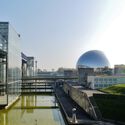
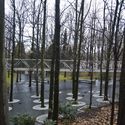
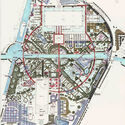
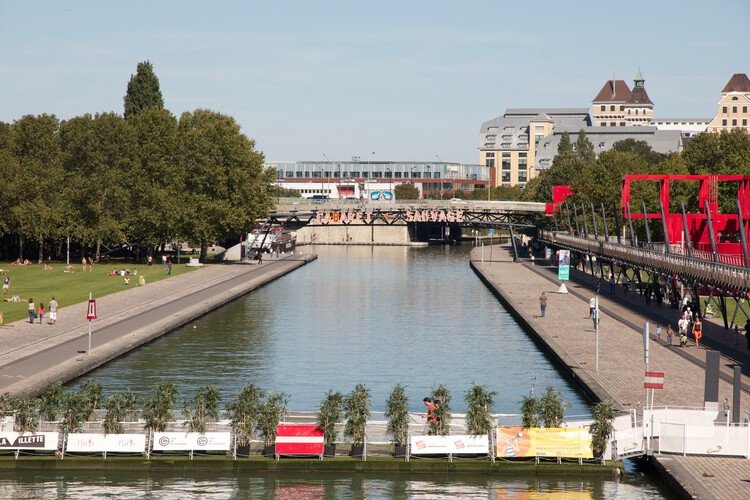
Paris's 19th arrondissement Parc de la Villette is undergoing a major transformation, combining a newly opened urban farm with restored biodiversity as part of a strategy to adapt the 55.5-hectare park to climate change. Masterplanned by Bernard Tschumi in 1982 and opened to the public in 1987, the park stands as a landmark of European modernism in public space design, breaking from the traditional concept of the metropolitan park. With a 15,000-square-meter extension, this major green lung in northeast Paris is reimagining its lawns as a living laboratory for environmental education, where animals, plants, and humans coexist. The extensive renovation follows the addition of Tschumi's HyperTent in 2022, a hyperbolic paraboloid structure functioning as a new ticket booth on the podium of Folie L4, and marks the park's most significant transformation since its inauguration.

Parc de la Villette Opens New Urban Farm and Rewilded Landscapes in Paris - Image 1 of 4Parc de la Villette Opens New Urban Farm and Rewilded Landscapes in Paris - Image 2 of 4Parc de la Villette Opens New Urban Farm and Rewilded Landscapes in Paris - Image 3 of 4Parc de la Villette Opens New Urban Farm and Rewilded Landscapes in Paris - Image 4 of 4Parc de la Villette Opens New Urban Farm and Rewilded Landscapes in Paris - More Images

Paris 20th-Century Architecture City Guide: From Le Corbusier’s Modern Villas to Brutalist Estates

The 20th century saw a period of experimentation and innovation at an unprecedented pace, a direction that also marked the architectural expressions of the time. Paris, as one of Europe’s leading centers for artistic and cultural expression, was also the epicenter for the formation of new architectural styles, from Le Corbusier’s modern architecture revolution to expressions of the High-Tech style as seen in the design of Renzo Piano and Richard Rogers’ Centre Pompidou. The social transformation found its expression through Brutalist public institutions or residential ensembles, like the ones designed by Renée Gailhoustet and Jean Renaudie at Irvy-Sur-Seine, while political movements attracted architects from across the ocean, including Oscar Niemeyer, who created his first European building in the French capital.

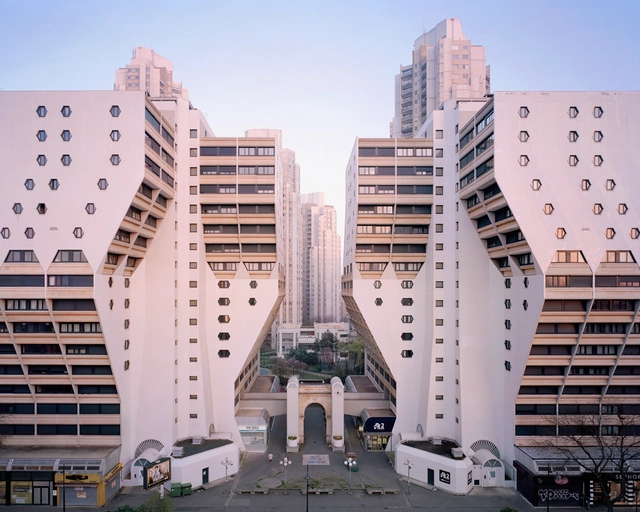
Paris 20th-Century Architecture City Guide: From Le Corbusier’s Modern Villas to Brutalist Estates - Image 1 of 4Paris 20th-Century Architecture City Guide: From Le Corbusier’s Modern Villas to Brutalist Estates - Image 2 of 4Paris 20th-Century Architecture City Guide: From Le Corbusier’s Modern Villas to Brutalist Estates - Image 3 of 4Paris 20th-Century Architecture City Guide: From Le Corbusier’s Modern Villas to Brutalist Estates - Image 5 of 4Paris 20th-Century Architecture City Guide: From Le Corbusier’s Modern Villas to Brutalist Estates - More Images+ 19

Bernard Tschumi Architects Designs New Addition for Parc de la Villette

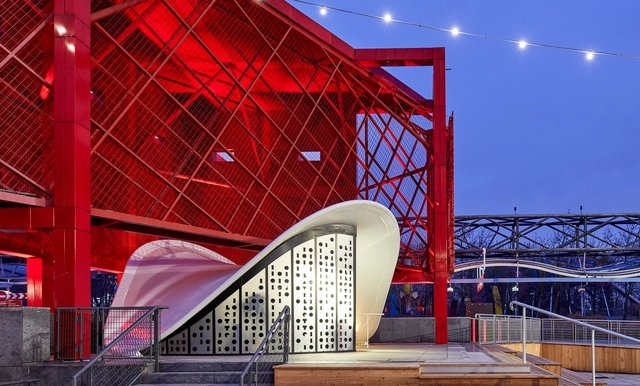
Bernard Tschumi's HyperTent, a hyperbolic paraboloid structure, is the latest addition to the iconic Parc de la Villette. Prompted by the opening of L'Espace Chapiteaux, a space for contemporary circus performances, the new ticket booth located on the podium of Folie L4, originally a music venue, carefully negotiates its presence within the context. The morphology of the project allows for the two structures to coexist without interfering. At the same time, the materiality of the HyperTent makes for an iconic presence in juxtaposition with the adjacent folie.

Bernard Tschumi Architects Designs New Addition for Parc de la Villette - Image 1 of 4Bernard Tschumi Architects Designs New Addition for Parc de la Villette - Image 2 of 4Bernard Tschumi Architects Designs New Addition for Parc de la Villette - Image 3 of 4Bernard Tschumi Architects Designs New Addition for Parc de la Villette - Image 4 of 4Bernard Tschumi Architects Designs New Addition for Parc de la Villette - More Images+ 5