1. ArchDaily
  2. Pavillion

Pavillion: The Latest Architecture and News

Designing for Presence: When Architecture Invites Us to Stay

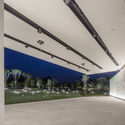
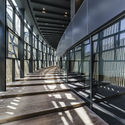
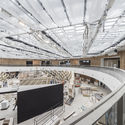
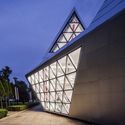
Architecture is increasingly asked to do less, not more. In environments shaped by constant movement, noise, and expectation, spaces that allow people to stay, pause, and be present have become both rarer and more necessary. Many public and semi-public places are designed to keep people moving, consuming, or reacting, leaving little room for lingering, observation, or simply being without a reason.

In response, a growing body of work is shifting attention away from activation and toward presence. Rather than asking users to interact or participate, these spaces create conditions that support staying. Comfort, continuity, and openness allow people to remain without pressure or obligation, making presence a spatial quality rather than an activity.

Designing for Presence: When Architecture Invites Us to Stay - Image 1 of 4Designing for Presence: When Architecture Invites Us to Stay - Image 2 of 4Designing for Presence: When Architecture Invites Us to Stay - Image 3 of 4Designing for Presence: When Architecture Invites Us to Stay - Image 4 of 4Designing for Presence: When Architecture Invites Us to Stay - More Images+ 25

Architecture in Rhythm with Time: Designing Through Solar, Lunar, and Biological Cycles

Subscriber Access | 

As the solstice marks the shortest day of the year in the Northern Hemisphere, it also draws attention to something architecture has long negotiated but often overlooked: time. Beyond form or function, buildings and spaces are continuously shaped by cycles of light and darkness, seasonal shifts, and environmental rhythms that affect how they are inhabited.

In recent years, a growing number of architectural projects have begun to work explicitly with these cycles. Rather than designing spaces to function in a single, fixed way, architects are creating environments that change throughout the day, across seasons, or in response to natural phenomena such as the sun's path, lunar phases, wind patterns, or circadian rhythms. These projects operate in dialogue with time, appearing, transforming, and activating differently depending on environmental conditions.

Architecture in Rhythm with Time: Designing Through Solar, Lunar, and Biological Cycles - Image 1 of 4Architecture in Rhythm with Time: Designing Through Solar, Lunar, and Biological Cycles - Image 2 of 4Architecture in Rhythm with Time: Designing Through Solar, Lunar, and Biological Cycles - Image 3 of 4Architecture in Rhythm with Time: Designing Through Solar, Lunar, and Biological Cycles - Image 4 of 4Architecture in Rhythm with Time: Designing Through Solar, Lunar, and Biological Cycles - More Images+ 11

The Venice Biennale Over Time: Classic Projects and Stories from Architecture’s Most Iconic Exhibition

Since 1895, the Venice Biennale has invited the world to witness the evolving landscape of contemporary art. In 1980, the event expanded its reach with the launch of the Architecture Biennale, which quickly became one of the discipline’s most influential global platforms. Today, alternating annually between contemporary art and architecture, the Biennale affirms itself as a space where disciplines and ideas intersect. Always timely and provocative, it fuels essential debates on the role of art and architecture in the contemporary world. Among its most recent editions are the 17th Architecture Biennale, themed How Will We Live Together? (2021), curated by Hashim Sarkis; The Laboratory of the Future (2023), by Lesley Lokko; and Intelligens. Natural. Artificial. Collective (2025), curated by Carlo Ratti and open to the public until the end of November.

The Venice Biennale Over Time: Classic Projects and Stories from Architecture’s Most Iconic Exhibition - Image 1 of 4The Venice Biennale Over Time: Classic Projects and Stories from Architecture’s Most Iconic Exhibition - Image 2 of 4The Venice Biennale Over Time: Classic Projects and Stories from Architecture’s Most Iconic Exhibition - Image 3 of 4The Venice Biennale Over Time: Classic Projects and Stories from Architecture’s Most Iconic Exhibition - Image 4 of 4The Venice Biennale Over Time: Classic Projects and Stories from Architecture’s Most Iconic Exhibition - More Images+ 10

The Spanish Pavilion at Expo Osaka 2025 Draws Inspiration From the Ocean and Sun

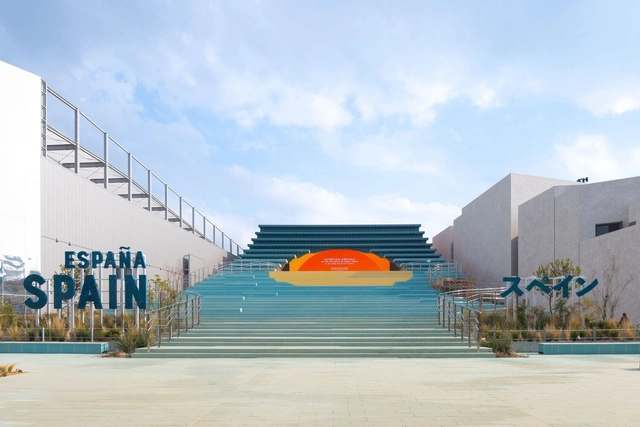
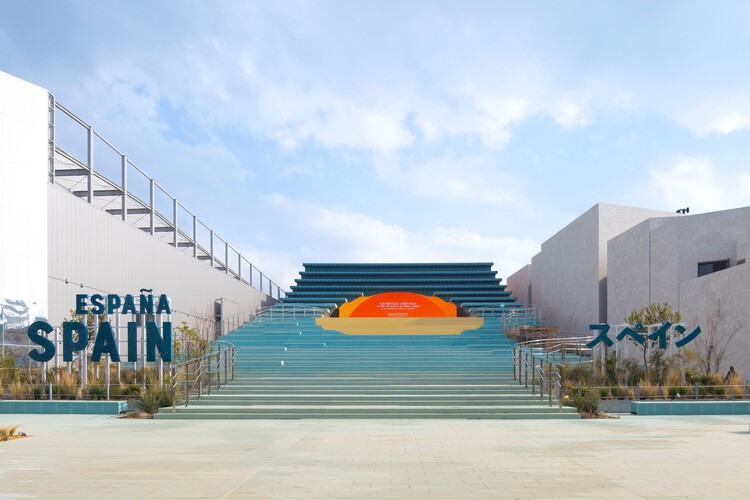
The Spanish Pavilion at the Expo Osaka 2025 is designed by the architecture and design practices Néstor Montenegro (EXTUDIO), Enorme Studio, and Smart and Green Design. This comes after being selected in the public competition organized by the Spanish Cultural Action (AC / E), the institution responsible for representing the country in Universal and International Expositions. Located in the northern section of the 65-hectare Pavilion World, within the thematic area of Connecting Lives, the pavilion highlights the key concepts of Oceand and Sun, Sustainability and Circularity, and Craftsmanship Knowledge. The exhibition will be open throughout the event, until October 13, 2025.

The Spanish Pavilion at Expo Osaka 2025 Draws Inspiration From the Ocean and Sun - Image 1 of 4The Spanish Pavilion at Expo Osaka 2025 Draws Inspiration From the Ocean and Sun - Image 2 of 4The Spanish Pavilion at Expo Osaka 2025 Draws Inspiration From the Ocean and Sun - Image 3 of 4The Spanish Pavilion at Expo Osaka 2025 Draws Inspiration From the Ocean and Sun - Image 4 of 4The Spanish Pavilion at Expo Osaka 2025 Draws Inspiration From the Ocean and Sun - More Images+ 1

Absorb, Filter, Store: 9 Projects Showcasing How Sponge Cities Adapt to Climate Challenges

Subscriber Access | 

The concept of "sponge cities" has gained prominence since it was introduced by Chinese landscape architect Kongjian Yu, founder of Turenscape, and was officially adopted as a national policy in China in 2013 to combat urban flooding. This approach prioritizes nature-based infrastructure such as wetlands, rain gardens, and permeable pavements, creating landscapes with porous soil where native plants can thrive with minimal maintenance. When it rains, these systems absorb and slow down water flow, reducing flood risks. In contrast, traditional concrete- and pipe-based drainage solutions, though widely used, are costly, rigid, and require frequent maintenance, sometimes even making cities more vulnerable to flooding due to blockages and overflows.

Absorb, Filter, Store: 9 Projects  Showcasing How Sponge Cities Adapt to Climate Challenges - Image 1 of 4Absorb, Filter, Store: 9 Projects  Showcasing How Sponge Cities Adapt to Climate Challenges - Image 2 of 4Absorb, Filter, Store: 9 Projects  Showcasing How Sponge Cities Adapt to Climate Challenges - Image 3 of 4Absorb, Filter, Store: 9 Projects  Showcasing How Sponge Cities Adapt to Climate Challenges - Image 4 of 4Absorb, Filter, Store: 9 Projects  Showcasing How Sponge Cities Adapt to Climate Challenges - More Images+ 5

Building Among the Branches: A Showcase of Contemporary Treehouse Architecture

Subscriber Access | 

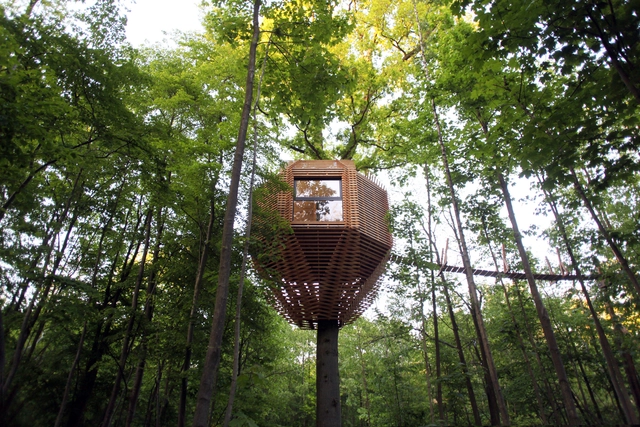
Despite their whimsical appearance, treehouses offer a unique platform for structural innovations and design explorations. Traditional treehouses rely on the trunks of trees for structural support, but, in order to ease the load supported by the tree, contemporary projects often introduce additional systems, such as stilts to maintain the image while offering additional support. One of the key advantages of elevating them in this way is the reduced environmental footprint. Treehouses can be designed to leave the forest floor untouched, preserving small-scale ecosystems. By freeing up the ground below, they minimize disruptions to native flora and fauna, allowing nature to thrive undisturbed. Similarly, many architects use the local topography to create seamless connections, incorporating ramps, stairs, or bridges that integrate with the landscape. These solutions not only improve accessibility but also enhance the overall experience creating an architectural promenade that moves between the treehouse and its surroundings.

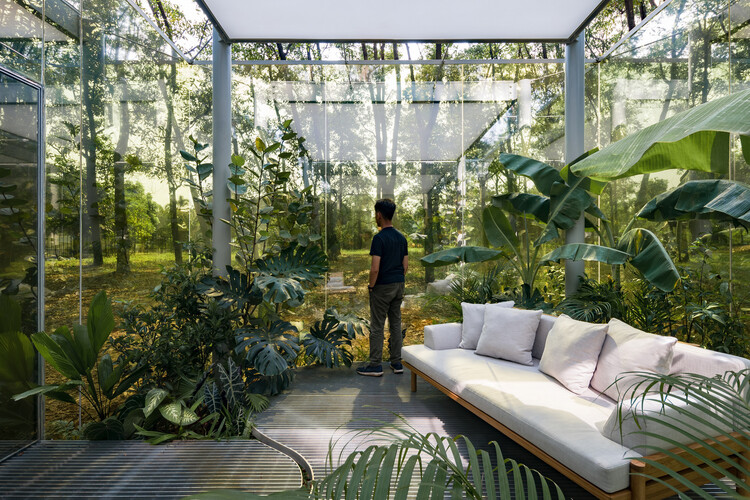
"This sensitivity to the environment is reflected not only in the structural design but also in the careful selection of materials. The use of natural materials like wood, also helps the structure blend with its environment. Some designers have gone further by employing alternative materials such as mirrored panels to reflect the surrounding forest and mask the treehouse's presence entirely, demonstrating that the choice of material can contribute to creating a project that feels like an extension of its setting rather than an imposition on it. This collection highlights notable examples from Sweden, Denmark, Indonesia, and France, showcasing their diverse approaches.

Building Among the Branches: A Showcase of Contemporary Treehouse Architecture - Image 1 of 4Building Among the Branches: A Showcase of Contemporary Treehouse Architecture - Image 2 of 4Building Among the Branches: A Showcase of Contemporary Treehouse Architecture - Image 3 of 4Building Among the Branches: A Showcase of Contemporary Treehouse Architecture - Image 4 of 4Building Among the Branches: A Showcase of Contemporary Treehouse Architecture - More Images+ 6

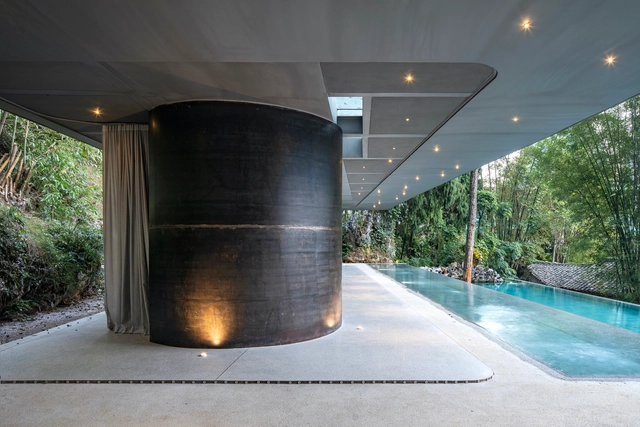
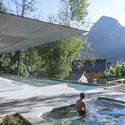
Glassless House, Pavilion and Pool for XY Yun House / Atelier Liu Yuyang Architects

Glassless House, Pavilion and Pool for XY Yun House / Atelier Liu Yuyang Architects - HotelsGlassless House, Pavilion and Pool for XY Yun House / Atelier Liu Yuyang Architects - HotelsGlassless House, Pavilion and Pool for XY Yun House / Atelier Liu Yuyang Architects - HotelsGlassless House, Pavilion and Pool for XY Yun House / Atelier Liu Yuyang Architects - HotelsGlassless House, Pavilion and Pool for XY Yun House / Atelier Liu Yuyang Architects - More Images+ 47

Guangxi, China

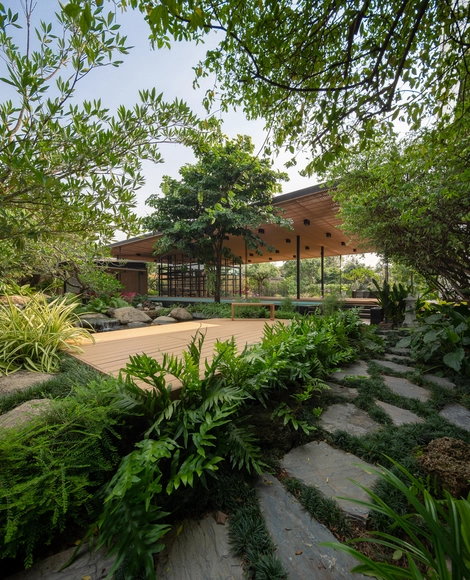
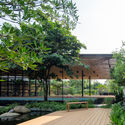
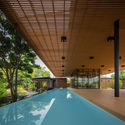
Baan Nonthaburi / Plan Architect

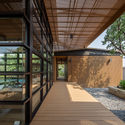
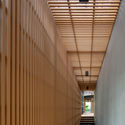
Baan Nonthaburi / Plan Architect - Exterior Photography, Pavilion, FacadeBaan Nonthaburi / Plan Architect - PavilionBaan Nonthaburi / Plan Architect - PavilionBaan Nonthaburi / Plan Architect - Interior Photography, Pavilion, BeamBaan Nonthaburi / Plan Architect - More Images+ 17

Nonthaburi, Thailand
  • Architects: Plan Architect
  • Area Area of this architecture project Area:  384
  • Year Completion year of this architecture project Year:  2018
  • Manufacturers Brands with products used in this architecture project
    Manufacturers:  American Standard, Ampelite, Bluescope, Desjoyaux, Thaisun

Air Mountain Pavilion / Aether Architects

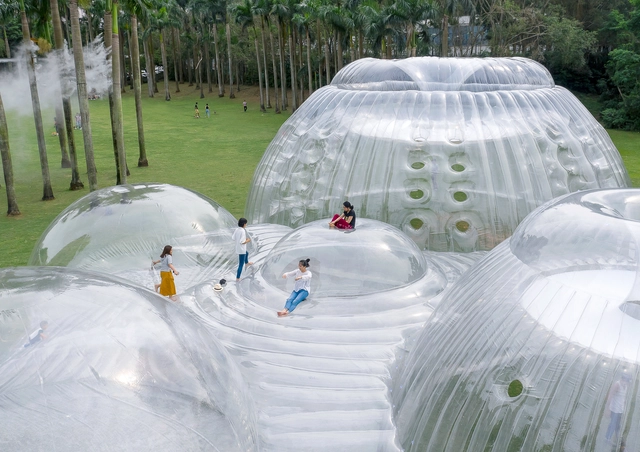
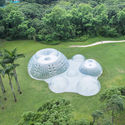
Air Mountain Pavilion / Aether Architects  - PavilionAir Mountain Pavilion / Aether Architects  - PavilionAir Mountain Pavilion / Aether Architects  - Exterior Photography, PavilionAir Mountain Pavilion / Aether Architects  - Drawings, Pavilion, LightingAir Mountain Pavilion / Aether Architects  - More Images+ 9

Shenzhen, China
  • Architects: Aether Architects
  • Area Area of this architecture project Area:  520
  • Year Completion year of this architecture project Year:  2019

2018 Taichung World Flora Exposition -Blossom Pavilion / / MAYU Architects

2018 Taichung World Flora Exposition -Blossom Pavilion /  / MAYU Architects - Exterior Photography, Museums & Exhibit , Facade2018 Taichung World Flora Exposition -Blossom Pavilion /  / MAYU Architects - Museums & Exhibit 2018 Taichung World Flora Exposition -Blossom Pavilion /  / MAYU Architects - Museums & Exhibit 2018 Taichung World Flora Exposition -Blossom Pavilion /  / MAYU Architects - Drawings, Museums & Exhibit , Beam2018 Taichung World Flora Exposition -Blossom Pavilion /  / MAYU Architects - More Images+ 21

Horizontal Vertigo: Argentinian Pavilion at the Venice Biennale 2018

As part of our 2018 Venice Architecture Biennale coverage, we present the completed Argentinian Pavilion. Below, the curatorial team describes the exhibition in their own words. 

Horizontal Vertigo
, Argentinian Pavilion at the Venice Biennale 2018, delves into the notions of humanity and democratic spirit as proposed by Freespace, by establishing a cross-cutting dialog between geography, place, and architecture.

The exhibition, curated by the architects Javier Mendiondo, Pablo Anzilutti, Francisco Garrido and Federico Cairoli, is an invitation to rethink our territory as a collective construction and discover architecture in its capacity to convey unexpected generosity in every project.

The People's Station / People's Architecture Office

The People's Station / People's Architecture Office - Arts & Architecture
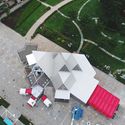
Bird-eye view. © Rui Zhu

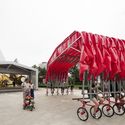
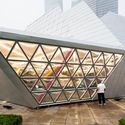
The People's Station / People's Architecture Office - Arts & ArchitectureThe People's Station / People's Architecture Office - Arts & ArchitectureThe People's Station / People's Architecture Office - Arts & ArchitectureThe People's Station / People's Architecture Office - Arts & ArchitectureThe People's Station / People's Architecture Office - More Images+ 42

PVC Pipes and Umbrellas Come Together in Vibrant Dandelion-esque Dome in Singapore

Subscriber Access | 

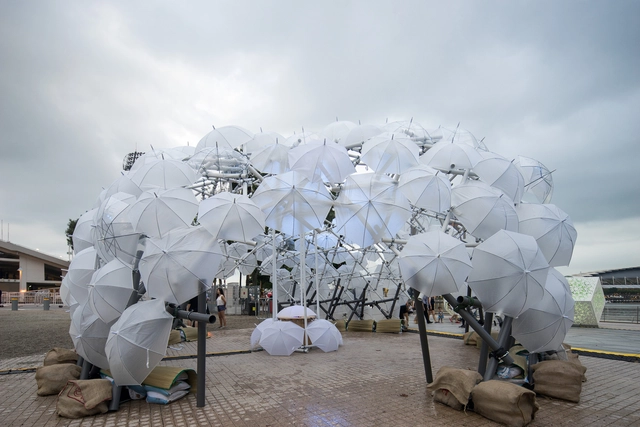
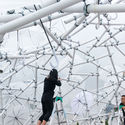
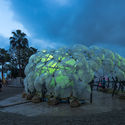
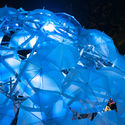
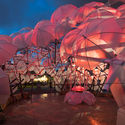
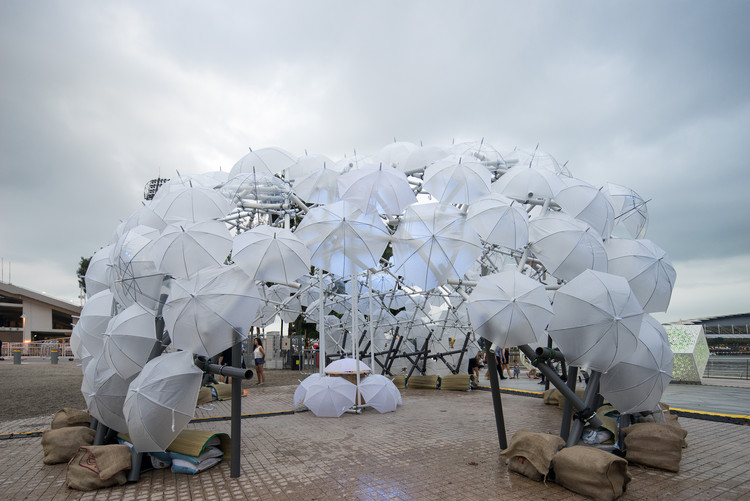
Dande-lier – a pavilion designed for the Marina Bay waterfront promenade in Singapore uses PVC pipes and translucent umbrellas to form a reciprocal dome – reimagining everyday items as architectural components. The result is an ethereal shelter, referential of the commonly seen umbrella in Singapore and resembling a dandelion from afar. At night the project becomes a chandelier, lit up in an array of colors.

PVC Pipes and Umbrellas Come Together in Vibrant Dandelion-esque Dome in Singapore - Image 1 of 4PVC Pipes and Umbrellas Come Together in Vibrant Dandelion-esque Dome in Singapore - Image 2 of 4PVC Pipes and Umbrellas Come Together in Vibrant Dandelion-esque Dome in Singapore - Image 3 of 4PVC Pipes and Umbrellas Come Together in Vibrant Dandelion-esque Dome in Singapore - Image 4 of 4PVC Pipes and Umbrellas Come Together in Vibrant Dandelion-esque Dome in Singapore - More Images+ 9

Cardboard Pavilion "Get High Without Drugs" Wins FAB FEST Prize

Subscriber Access | 

Quirky, innovative and visceral, Get High without Drugs was awarded first place in the fabrication category at this year’s International FAB FEST* in London.

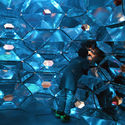
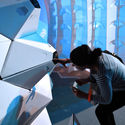
Mollusk-like and mysterious from the outside, the form of the pavilion emerges from the combination of a zonohedron and a dome. Seventy-two hexagonal surfaces were formulated into fold-able nets that could then be digitally fabricated from flat-sheets and assembled into load-bearing modules. A puzzle-like routine drove the assembly of the modules into the pavilion’s dome-like form.

Cardboard Pavilion "Get High Without Drugs" Wins FAB FEST Prize - Image 1 of 4Cardboard Pavilion "Get High Without Drugs" Wins FAB FEST Prize - Image 2 of 4Cardboard Pavilion "Get High Without Drugs" Wins FAB FEST Prize - Image 3 of 4Cardboard Pavilion "Get High Without Drugs" Wins FAB FEST Prize - Image 4 of 4Cardboard Pavilion Get High Without Drugs Wins FAB FEST Prize - More Images+ 17

This Pavillion Lives and Dies Through Its Sustainable Agenda

Subscriber Access | 

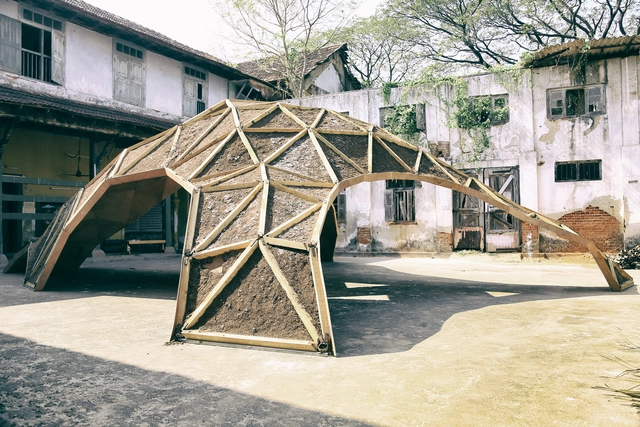
Are the concrete buildings we build actually a sign of architectural progress? Defunct housing projects abandoned shopping malls, and short-sighted urban projects are more often than not doomed to a lifetime of emptiness after they have served their purpose. Their concrete remains and transforms into a lingering reminder of what was once a symbol of modern ambition. Stadiums and their legacies, in particular, come under high scrutiny of how their giant structures get used after the games are over, with few Olympic stadiums making successful transitions into everyday life. With a new approach to sustainability, the Shell Mycelium pavilion is part of a manifesto towards a more critical take on building. Say the designers on their position: “We criticize these unconscious political choices, with living buildings, that arise from nature and return to nature, as though they never existed.”

The Shell Mycelium Pavillion is a collaboration between BEETLES 3.3 and Yassin Areddia Designs and offers an alternative to conscious design through temporary structures. Located at the MAP Project space at the Dutch Warehouse, the pavillion formed part of the Kochi Muziris Biennale 2016 Collateral in India.

More Than 2,000 Unique Robotically Manufactured Bricks Generate Variable Walls in This Pavilion

Subscriber Access | 

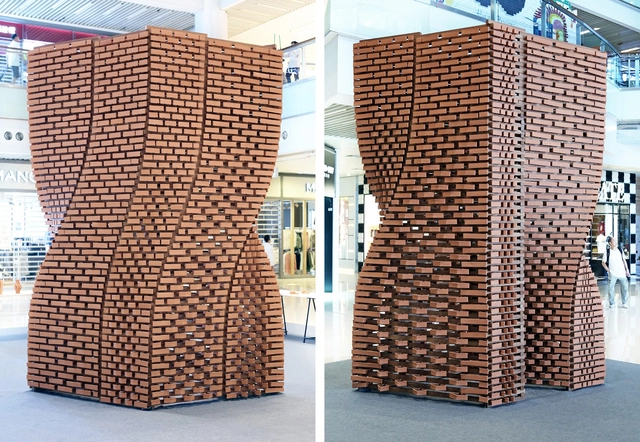
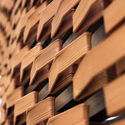
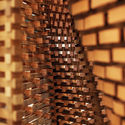
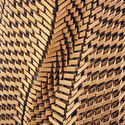
Developed by researchers and students from the Faculty of Architecture at HKU and supported by Sino Group, the 'Ceramic Constellation Pavilion' is built on a wooden structure that supports a series of "walls" formed by about 2,000 clay bricks. Each of these individual components is unique and has been manufactured using robotic technology and 3D printing, allowing to generate different types of transparency and opacity in their different faces.

More Than 2,000 Unique Robotically Manufactured Bricks Generate Variable Walls in This Pavilion - Image 1 of 4More Than 2,000 Unique Robotically Manufactured Bricks Generate Variable Walls in This Pavilion - Image 2 of 4More Than 2,000 Unique Robotically Manufactured Bricks Generate Variable Walls in This Pavilion - Image 3 of 4More Than 2,000 Unique Robotically Manufactured Bricks Generate Variable Walls in This Pavilion - Image 4 of 4More Than 2,000 Unique Robotically Manufactured Bricks Generate Variable Walls in This Pavilion - More Images+ 27

Could This Micro Dwelling in Disguise Help Solve the Housing Crisis?

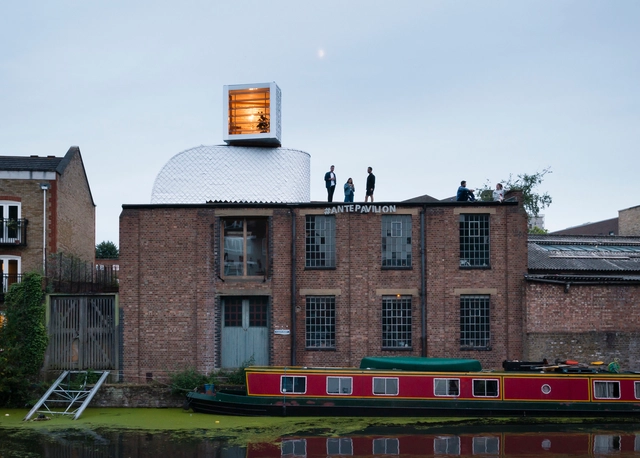
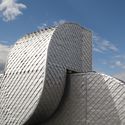
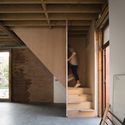
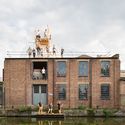
London’s first Antepavillion officially opened to the public last weekend, kicking off an annual series of experimental structures set to explore alternative ways of living in the city. Designed and built by emerging studio PUP Architects, the proposal beat out 128 other entries as the winner of a competition held by the Architecture Foundation. Calling for proposals that engaged with issues of sustainability and recycling, PUP's design, dubbed H-VAC is built using prefab elements made in-house by a team of volunteers. The pavilion's tongue-in-cheek appearance resembling an air duct is a playful subversion of planning legislation, exploiting loopholes for mechanical rooftop equipment to be built without planning permission.

Could This Micro Dwelling in Disguise Help Solve the Housing Crisis? - Image 1 of 4Could This Micro Dwelling in Disguise Help Solve the Housing Crisis? - Image 2 of 4Could This Micro Dwelling in Disguise Help Solve the Housing Crisis? - Image 3 of 4Could This Micro Dwelling in Disguise Help Solve the Housing Crisis? - Image 4 of 4Could This Micro Dwelling in Disguise Help Solve the Housing Crisis? - More Images+ 38

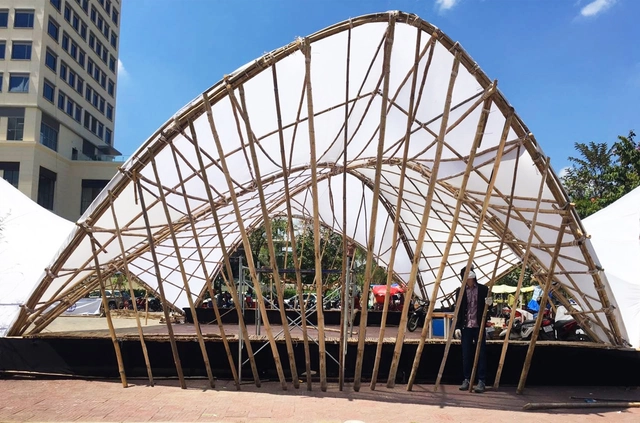
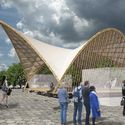
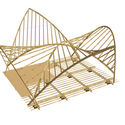
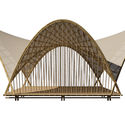
Bamboo Showcases its Flexibility in Hyperbolic Pavillion

A team of architects from Florence, Italy have won CAMBOO’s bamboo design competition showcasing the material for its strong and sustainable construction qualities. Held in Phnom Penh, Cambodia, the CAMBOO festival sought to find an innovative design for a landmark pavilion as a centerpiece during the event. Architects Roberto Bologna, Fernando Barth, Chiara Moretti and Denny Pagliai beat out 125 entries with their winning “Hyperbamboo” pavilion, which was chosen for its “intelligent and well thought out use of bamboo as a construction material.”


Bamboo Showcases its Flexibility in Hyperbolic Pavillion - Image 1 of 4Bamboo Showcases its Flexibility in Hyperbolic Pavillion - Image 2 of 4Bamboo Showcases its Flexibility in Hyperbolic Pavillion - Image 3 of 4Bamboo Showcases its Flexibility in Hyperbolic Pavillion - Image 4 of 4Bamboo Showcases its Flexibility in Hyperbolic Pavillion - More Images+ 15