1. ArchDaily
  2. Penn Station

Penn Station: The Latest Architecture and News

Public Pools as Public Spaces: The Role of Swimming and Bathing in Cities

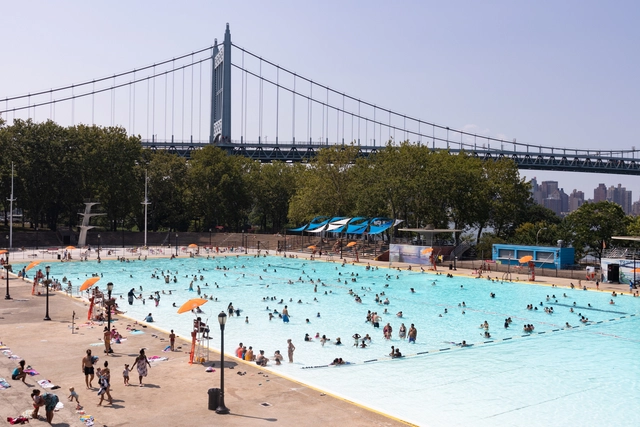
When one thinks of public spaces, the image of a pool rarely comes to mind. Public spaces are the center of civic life, places where most interactions, activities, and behaviors follow strict social and cultural norms to ensure the safety and comfort of all users. In contrast, swimming and bathing represent something more intimate and primordial, a sensorial experience distinct from any other. In addition to the health benefits, the act of floating in space creates a break from everyday life and its constraints.

As social spaces, public baths, and pools offer an even more unusual experience. Here, regular conduct rules and norms no longer apply. Social nudity becomes the new norm, and, as people strip off their clothes, they also lose their status markers, transforming the pool into an egalitarian oasis. Across history, these often-discredited spaces offered a heightened social experience, fostering connections and bringing a new element to dense urban environments. As a typology present since antiquity, public baths and pools have also been a disputed space, as a manifestation of difficult topics such as gender and racial segregation, gentrification, and surveillance in contrast to the freedom they promise.


Public Pools as Public Spaces: The Role of Swimming and Bathing in Cities - Image 1 of 4Public Pools as Public Spaces: The Role of Swimming and Bathing in Cities - Image 2 of 4Public Pools as Public Spaces: The Role of Swimming and Bathing in Cities - Image 3 of 4Public Pools as Public Spaces: The Role of Swimming and Bathing in Cities - Image 4 of 4Public Pools as Public Spaces: The Role of Swimming and Bathing in Cities - More Images+ 13

AD Classics: Pennsylvania Station / McKim, Mead & White

This article was originally published on February 11, 2014. To read the stories behind other celebrated architecture projects, visit our AD Classics section.

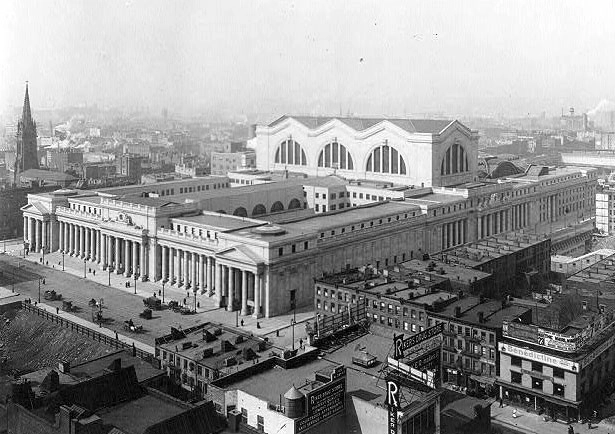
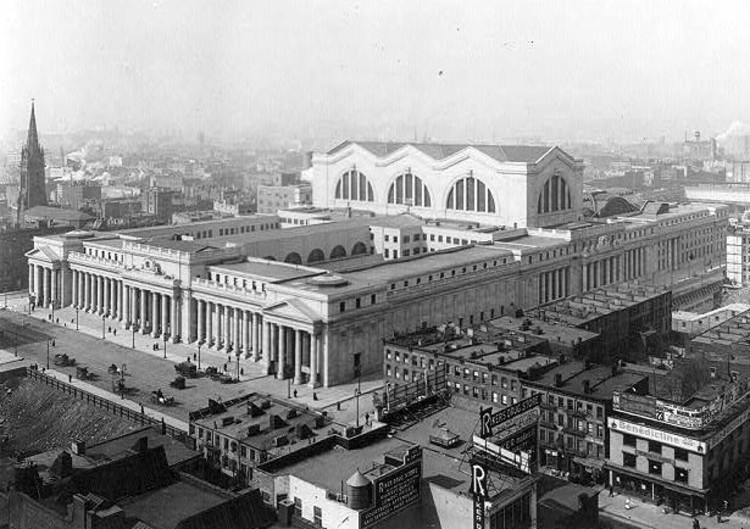
New York City’s original Pennsylvania Station was a monument to movement and an expression of American economic power. In 1902, the noted firm McKim, Mead and White was selected by the President of the Pennsylvania Railroad to design its Manhattan terminal. Completed in 1910, the gigantic steel and stone building covered four city blocks until its demolition in 1963, when it ceded to economic strains hardly fifty years after opening.

AD Classics: Pennsylvania Station / McKim, Mead & White - Train StationAD Classics: Pennsylvania Station / McKim, Mead & White - Train StationAD Classics: Pennsylvania Station / McKim, Mead & White - Train StationAD Classics: Pennsylvania Station / McKim, Mead & White - Train StationAD Classics: Pennsylvania Station / McKim, Mead & White - More Images+ 35

Construction Begins on Penn Station's Moynihan Train Hall Transformation

Construction has begun on Penn Station’s fast-tracked Moynihan Train Hall project has begun, announced New York State Governor Andrew Cuomo in a press conference.

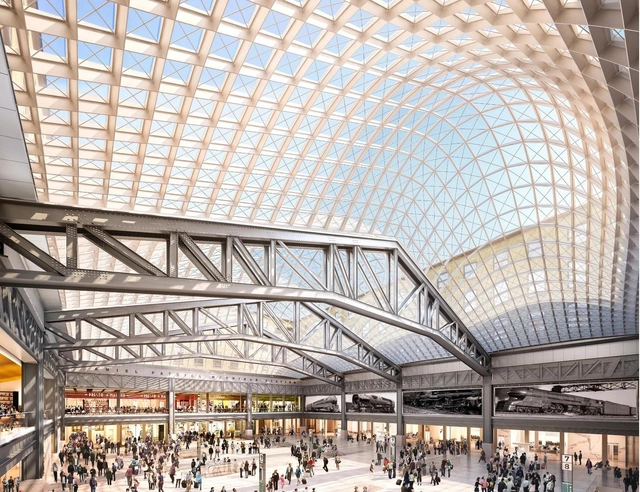
Located within the existing James A. Farley Building (across from the existing Penn Station entrance), the new 255,000-square-foot Train Hall will serve as a new concourse for Amtrak and Long Island Railroad passengers, while an additional 700,000-square-feet will be dedicated to commercial, retail and dining spaces.

Construction Begins on Penn Station's Moynihan Train Hall Transformation - Image 1 of 4Construction Begins on Penn Station's Moynihan Train Hall Transformation - Image 2 of 4Construction Begins on Penn Station's Moynihan Train Hall Transformation - Image 3 of 4Construction Begins on Penn Station's Moynihan Train Hall Transformation - Image 4 of 4Construction Begins on Penn Station's Moynihan Train Hall Transformation - More Images+ 6

New Renderings of Penn Station's $1.6 Billion Renovation Released as Project Gets Greenlight

New York City’s fast-tracked Penn Station transformation project is moving forward, as Governor Andrew Cuomo has announced the closing of the $1.6 billion deal to redevelop a large section of the James A. Farley Post Office into the new “Moynihan Train Hall.”

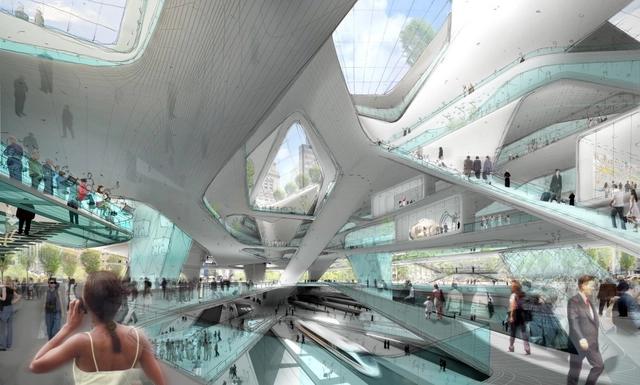
The project will consist of a new 255,000-square-foot terminal for the Long Island Railroad and Amtrak, increasing Penn Station’s total concourse floor space by more than 50 percent, while an additional 700,000 square feet will be developed for commercial, retail and dining spaces to create a new mixed-use civic space for West Manhattan.

New Renderings of Penn Station's $1.6 Billion Renovation Released as Project Gets Greenlight - Image 1 of 4New Renderings of Penn Station's $1.6 Billion Renovation Released as Project Gets Greenlight - Image 2 of 4New Renderings of Penn Station's $1.6 Billion Renovation Released as Project Gets Greenlight - Image 3 of 4New Renderings of Penn Station's $1.6 Billion Renovation Released as Project Gets Greenlight - Image 4 of 4New Renderings of Penn Station's $1.6 Billion Renovation Released as Project Gets Greenlight - More Images+ 12

Construction Begins on the Vast Platform for New York's Hudson Yards

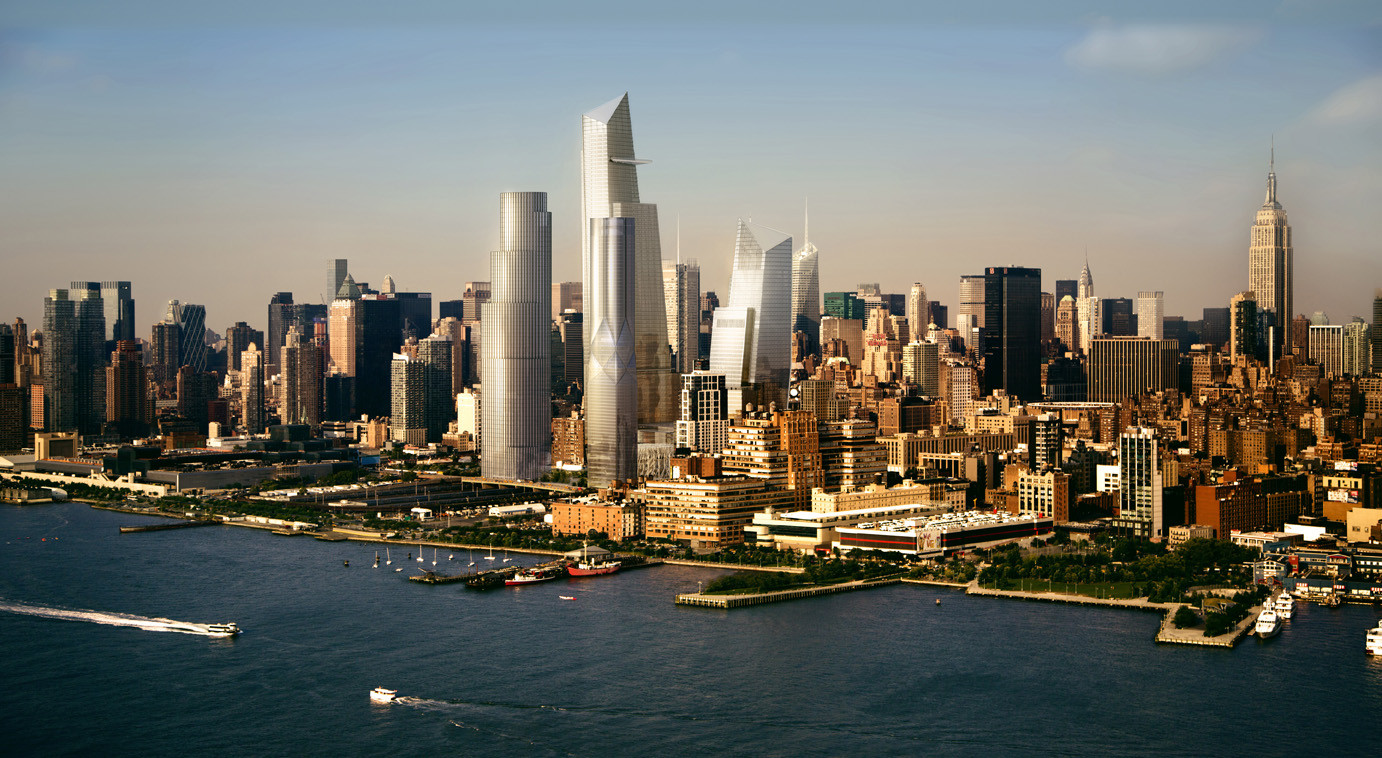
The construction of Hudson Yards, the biggest private real estate development in the history of the United States and currently the largest development in New York City since the Rockefeller Center, is gaining momentum. The vast infrastructural project in the heart of the city is set to enclose an active rail yard with an expansive platform, paving the way for 28 acres (and 17 million square feet) of commercial and residential space. Housing over 100 commercial units, 5000 residences, 14 acres of open public space, an enormous school and luxury hotel all on top of a working train depot, the project will directly connect to a new subway station and meet with the High Line.

Construction Begins on the Vast Platform for New York's Hudson Yards - Commercial ArchitectureConstruction Begins on the Vast Platform for New York's Hudson Yards - Commercial ArchitectureConstruction Begins on the Vast Platform for New York's Hudson Yards - Commercial ArchitectureConstruction Begins on the Vast Platform for New York's Hudson Yards - Commercial ArchitectureConstruction Begins on the Vast Platform for New York's Hudson Yards - More Images+ 5

The Penn Station Proposals: Vanity Projects?

In this article in the New York Observer, Stephen Jacob Smith discusses the future of Penn Station, now that Madison Square Garden's permit has been extended by just 10 years. Smith thinks that the grand redesigns of the station itself are pure vanity - considering the poor organization of the current station and the competing interests of the stakeholders involved - and proposes that there are better improvements to be had in unseen infrastructure improvements rather than show-stopping architecture. Read the full article here.

Madison Square Garden Limited to 10 Year Permit

A landslide vote (47-1) by the New York City Council has limited the permit for Madison Square Garden to just 10 years. The decision comes after the property owner’s - MSG Company - 50 year permit expired earlier this year, sparking a heated debate on whether or not the city should deny the owners request to renew the permit in perpetuity and envision plans for a new Penn Station.

Penn Station, Re-Imagined

This morning, four architectural firms, invited by the Metropolitan Art Society(MAS), displayed how they would transform New York's darkest & dingiest hub - Penn Station - into a space worthy of its site in the heart of the city.

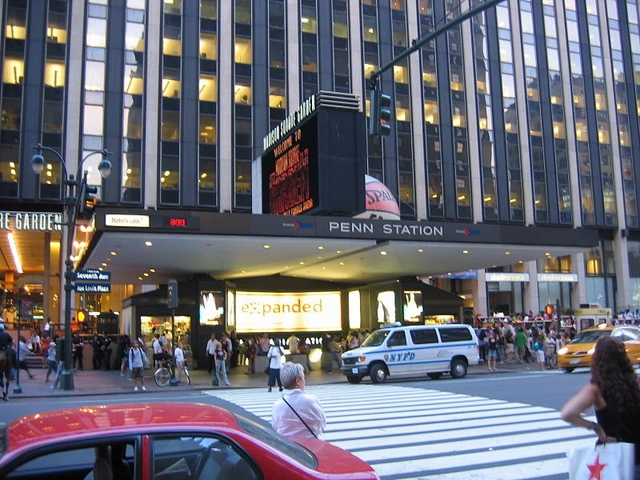
New Yorkers have been up in arms about Penn Station ever since its Beaux-Arts predecessor, designed by McKim, Mead & White, was demolished in 1963. Its replacement is a dark, cramped station that lacks both the operational and security features it needs to sustain the hundreds of thousands of travelers who use it daily. As Michael Kimmelman put it in his inaugural piece as architecture editor for The New York Times: "To pass through Grand Central Terminal, one of New York’s exalted public spaces, is an ennobling experience, a gift. To commute via the bowels of Penn Station, just a few blocks away, is a humiliation."

As we reported last month,Madison Square Garden’s (MSG) 50-year permit expires this year, and it will be either renewed without limit, or extended 10-15 years, by The New York City Council in the coming months. The problem, according to MAS, is that "MSG happens to sit on top of the busiest train station in North America [a.k.a, Penn Station] and constrains its ability to serve over half a million people every day. [...] 2013 presents New York City with a truly unique opportunity and together we need to seize this moment."

And so MAS invited Diller, Sofidio, & Renfro; H3 Hardy Collaboration Architecture; SHoP; Skidmore, Owings, & Merrill, to do just that. See their visions, after the break...

Four Architects Enlisted to Reimagine Penn Station

In an effort to “unlock people’s imaginations” about Penn Station and Madison Square Garden, the Municipal Art Society (MAS) of New York has challenged Santiago Calatrava, Diller Scofidio + Renfro, SHoP Architects and SOM to propose four new visions that exemplify the potential of the highly disregarded area.

The challenge comes amidst a heated debate on whether or not the city should restrict Madison Square’s recently expired special permit to 10 years, rather than in perpetuity as the arena’s owners - the Dolan family - has requested. This would allow time for the city to “get it right” and come up with a viable solution for the arena and station that would not only “improve the safety and quality of life for millions of people but also benefit the economy”. Think Kings Cross in London. With a thoughtful mix of public and private investments, the crime-ridden transfor station was transformed into a thriving cultural destination.

More after the break...