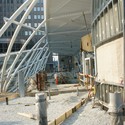
Courtesy of Kengo Kuma & Associates and Field Operations
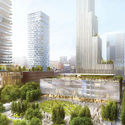
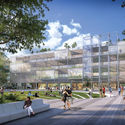
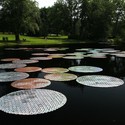
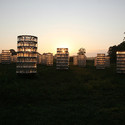
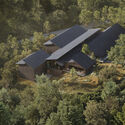
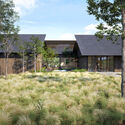
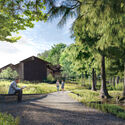
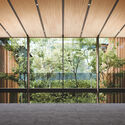
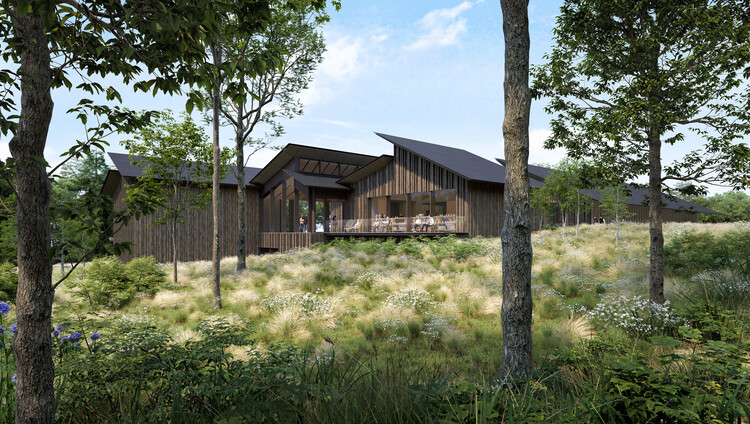
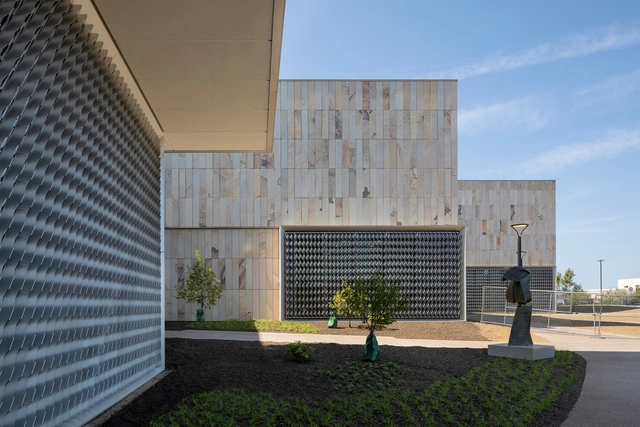
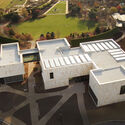
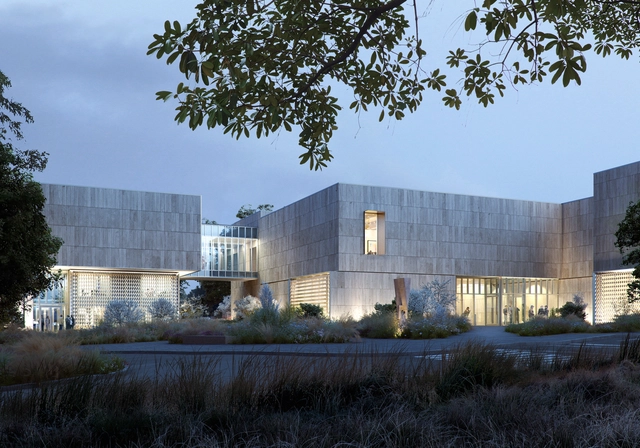
The Brandywine Conservancy & Museum of Art, located near Philadelphia, is dedicated to promoting the natural and cultural connections between the region's landscape, historic sites, and artists. The Conservancy protects land and waterways throughout the Brandywine Valley and other priority conservation areas, while the Museum houses a collection of American art, with particular strengths in landscape and still life painting, portraiture, and illustration. On May 6, 2026, the institution announced a project to transform its 15-acre campus, including the renovation of the historic museum building, a new museum building by Kengo Kuma & Associates, and conservation and landscape interventions by Field Operations that will create a publicly accessible 325-acre reserve with ten miles of trails.
Videos
Second Prize Winner: Branch. Image Courtesy of Buildner
Buildner has announced the results of the Howard Waterfall Retreat architecture competition, an international design challenge developed in close collaboration with the Howard Family Trust. The competition invited architects and designers to propose a multi-generational family retreat set within a privately owned, forested landscape in Northwestern Pennsylvania, centered on the dramatic presence of Howard Falls and the surrounding gorge.
Rather than prescribing a singular architectural solution, the brief emphasized a careful dialogue between architecture and nature. Participants were asked to consider how a retreat could balance shared and private living, respond to steep topography and water systems, and integrate sustainably within a sensitive ecological setting. The project also called for an interpretation of family legacy, encouraging designers to acknowledge the history of the site and the original summer cottage while imagining a retreat capable of evolving across generations.
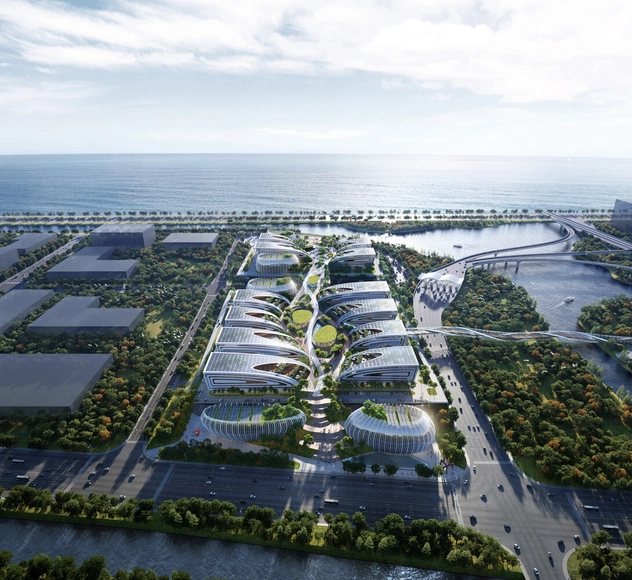
Infrastructure has long defined the backbone of cities by linking people, landscapes, and economies through systems that often go unnoticed until they fail. Today, as global challenges demand more adaptive and human-centered responses, architects are rethinking what infrastructure can be: not just a framework for movement and utility, but a catalyst for ecological restoration, cultural continuity, and civic imagination. The following unbuilt projects, submitted by the ArchDaily community, explore this expanded role of infrastructure, where airports, bridges, industrial parks, and pedestrian networks become architectural expressions of connection and care.
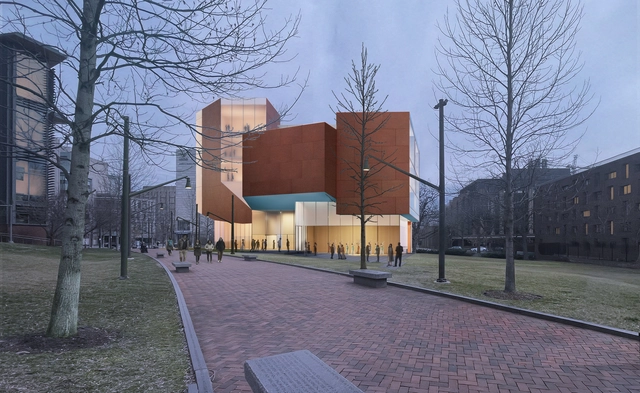
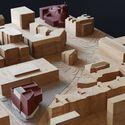
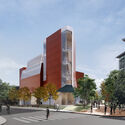
The University of Pennsylvania has unveiled Steven Holl Architects’ design for its new Student Performing Arts Center. The 37,300-square-foot building is set to offer dedicated and flexible spaces for over 70 student performing arts groups on campus, including dance, theater arts, a cappella groups, and musical ensembles. The proposal was informed by a study completed in 2019 by Penn’s University Life, which concluded that additional performance and rehearsal space was needed to meet current and future demand. The project is set to begin construction in 2024, with anticipated occupancy starting in winter 2027.
The construction of the new building of Palmer Museum has begun. Located at Penn State, USA, and scheduled to open in the spring of 2024, the new 6600 square meters complex will expand nearly double the space of the current gallery to host the growing collection of more than 10,000 pieces. The design features a series of pavilions, educational areas, and courtyards to boost accessibility to the art collections for students, staff, and the public. The construction aligns with the 50th anniversary of the museum along with a multitude of events, including the exhibition of Allied Works' pieces of the design process for the new Palmer Museum.
The Pennsylvania chapter of the American Institute of Architects has announced the recipients of the 2020 Architectural Excellence Awards. The November broadcast debuted honors in five programs including the Design Awards, inaugural Committee on the Environment (COTE) Awards, Special Awards, and Student Awards. More than 80 awards and recognitions were presented to firms and individuals across Pennsylvania for excellence in design, contributions to the profession of architecture, and commitment to the quality of the built environment.
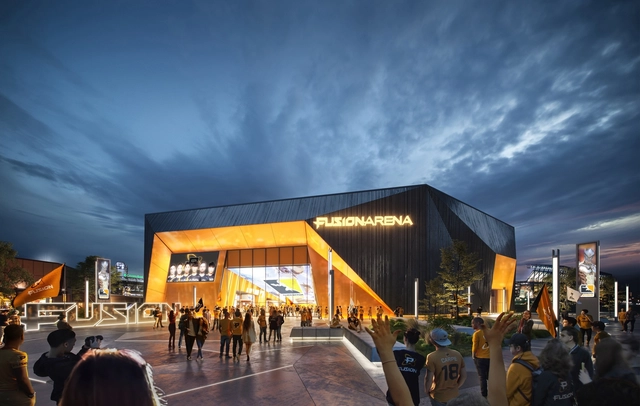
Architecture practice Populous has announced plans for a $50 million esports and entertainment venue in Philadelphia, Pennsylvania. Dubbed Fusion Arena, the project will be the home of the Philadelphia Fusion esports franchise as the largest esports venue in the western hemisphere. Seating up to 3,500 guests, the project will host a variety of live entertainment programming and events. The arena was made to be the first of its kind for next-generation consumers.
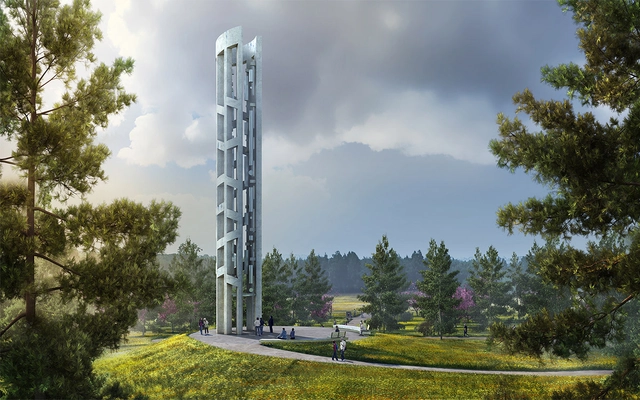
Sixteen years after the tragic events of 9/11, the final major element of the Flight 93 National Memorial has been revealed.
Located in rural in Shanksville, Pennsylvania, the memorial commemorates the 40 passengers who sacrificed their own lives to wrest control away from the hijackers of United Flight 93, preventing the plane from hitting its intended target of the United States Capitol Building.
In 2009, Paul Murdoch Architects, in collaboration with Nelson Byrd Woltz Landscape Architects and Arup Engineering, was selected to design the national memorial at the crash site. Employing a reverent masterplan that traced the airplane’s final movements, the architects designed a series of reflective elements as a solemn reminder of the day’s events. All of these elements have since been completed, with the exception of the plan’s most sensory landmark, the 93-foot-tall “Tower of Voices.”
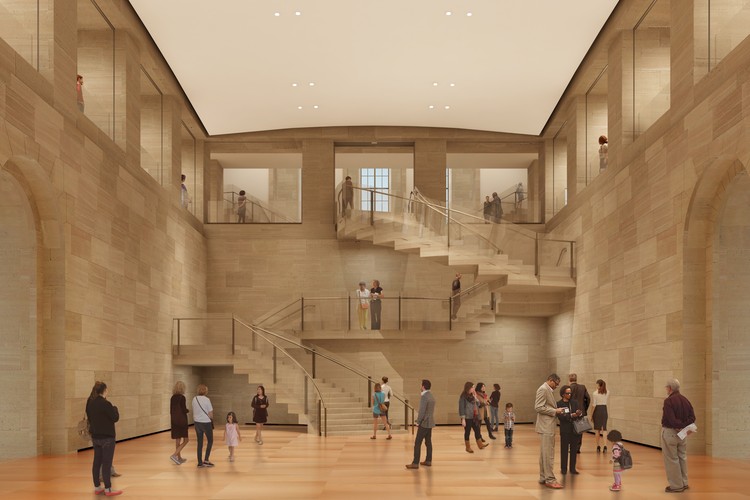
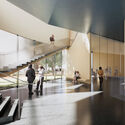
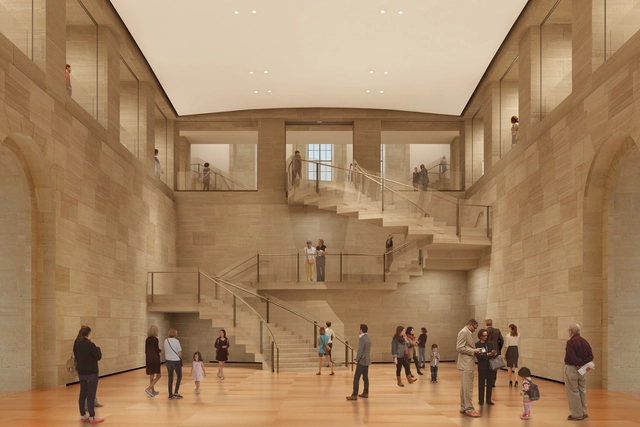
AFTER: The Forum, looking west and up to Lenfest Hall. The Forum extends from Level A to Level C and will be one of the most highly trafficked and recognizable areas created during the Core Project. This stunning space will serve as a venue for performances and events, as well as a welcoming spot for visitors to socialize or orient themselves. Architectural rendering by Gehry Partners, LLP and KX-L. Photo courtesy Philadelphia Museum of Art.
The Philadelphia Museum of Art has broken ground on the Core Project, a $196 million transformation of its main building led by Frank Gehry. In total, the renovation will add a total of 90,000 square feet to the museum, including 67,000 square feet of new public space, 11,500 square feet of gallery space for the museum’s American Art collection, and another 11,500 square feet of contemporary art display space.
As suggested by its name, The Core Project will focus on the heart of the museum; the main circulation of the building will be completely reorganized and museum infrastructure will receive much-needed upgrades, improving access to the community and enhancing the visitor experience.
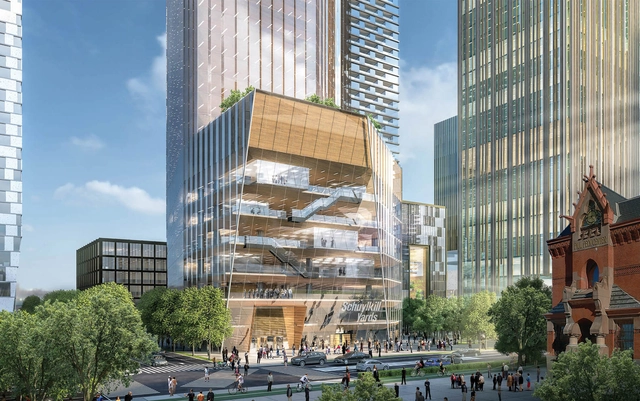
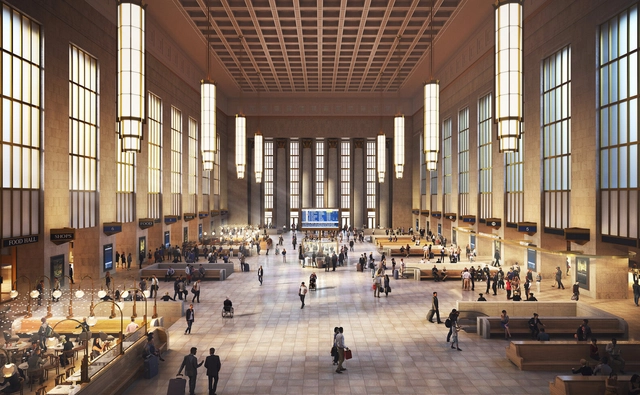
New renderings and information have been revealed for SHoP and West 8’s Schuylkill Yards masterplan envisioned for University City in Philadelphia. Announced last March, the project comprises 14 new buildings on a 14-acre site off the Schuylkill River and around 30th Street Station, the country’s third busiest Amtrak station.
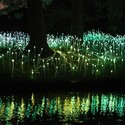
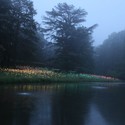
Visitors poured into Longwood Gardens this past Saturday to see 23-acres of breathtaking ‘Light: Installations’ by artist Bruce Munro. Although Munro describes the installations as simply “sketchbook jottings realized”, this “large-scale one-man-show” is anything but a simple feat. Eight large outdoor installations, two installations within the 4-acre Grand Conservatory and a collection of illuminated sculptures in the Music Room are keeping visitors mesmerized for hours.
Munro’s ‘Light: Installations’ are being shown for the first time outside of the UK. They will remain open until September 29th this year. Continue reading for more images and information.
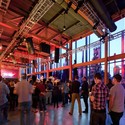
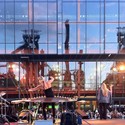
The American Institute of Architects Pennsylvania Chapter has awarded a Silver Medal, the institute’s highest honor, to Spillman Farmer Architects for their highly successful ArtsQuest Center at SteelStacks. Located on the landmark Bethlehem Steel site in eastern Pennsylvania, the dynamic performing arts, media and cultural center has served as an anchor for the revitalization effort in the City of Bethlehem that is transforming the once-abandoned historic industrial core into a dynamic, sustainable and livable mixed-use community. The 200-foot industrial ruins towering above the ArtsQuest Center is part of the country’s largest privately-owned brownfield.
AIA jurors praised the project saying, “The design captures the energy and utilitarian beauty that the best of the industrial revolution once offered. At the same time it demonstrates the power that a truly successful marriage of architecture and program can exert in bringing new purpose and hope to the most abandoned parts of our community.”
Continue reading after the break for more information and images.
Just last month, University of Pennsylvania’s School of Design announced their lecture series for Spring 2012. All lectures are held at 6PM in Meyerson Hall and free and open to the public unless otherwise noted with continuing education credits available. The series began on January 17th and concludes on April 28th. More information on the upcoming events after the break.
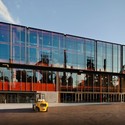
Spillman Farmer Architects’ proposal for the Dickinson College Kline Sports Facility takes advantage of the existing features, while striving to introduce more transparency and connectivity as well as making the building’s sustainability evident. The new three-level addition transforms the Kline Center into a dynamic campus gateway, a marquee building with bold daytime and nighttime presence. The addition is placed along the eastern side of the existing building, reaching east to Cherry Street and south to High Street and integrated with the existing topography. More images and architects’ description after the break.
Architect: EDGE Studio, Pfaffmann & Associates Location: Pittsburgh, PennsylvaniaEDGE Studio Design Team: Gary Carlough AIA, Jonathan Golli, Matt Fineout AIA, Stephen Mrdjenovich Pfaffmann & Associates Design Team: Rob Pfaffmann AIA, Carl Bergamini RA, Erik Hokanson Completion Date: 2011 Photography: Carl Bergamini, Pfaffmann & Associates
The last chance to see the Barnes Foundation’s artwork in its original setting has passed. It is now being prepared for the move to its new home in downtown Philadelphia. Architects Tod Williams and Billie Tsien designed the new building for the Barnes Foundation with respect for its strong history and as a reflective addition of the foundation’s mission. The building is scheduled for completion in late 2011. More after the break.













.jpg?1490895765 "BEFORE: The Van Pelt Auditorium, shown here in 2016, is being demolished to create the Forum. The auditorium was not part of the original design for the building, which opened in 1928; it was added in 1959. Photograph by Elizabeth Leitzell. Photo courtesy Philadelphia Museum of Art.")
.jpg?1490895731 "BEFORE: The Van Pelt Auditorium, shown here in 2016, is being demolished to create the Forum. The auditorium was not part of the original design for the building, which opened in 1928; it was added in 1959. Photograph by Elizabeth Leitzell. Photo courtesy Philadelphia Museum of Art.")