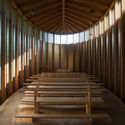
Waterway bathroom concept by Haihua Zhang and the bathroom collection AXOR Archivio by Barber Osgerby. Image Courtesy of AXOR
Water has always occupied a unique position in architecture: elemental yet elusive, functional yet symbolic. It is both a material and a medium that shapes cities, structures rituals, and influences how space is perceived. Across cultures, water is understood not only as a source of life but as a carrier of meaning, associated with purification, renewal, and continuity. Its presence in the built environment often extends beyond utility, becoming a device through which architecture engages the senses and constructs atmosphere.
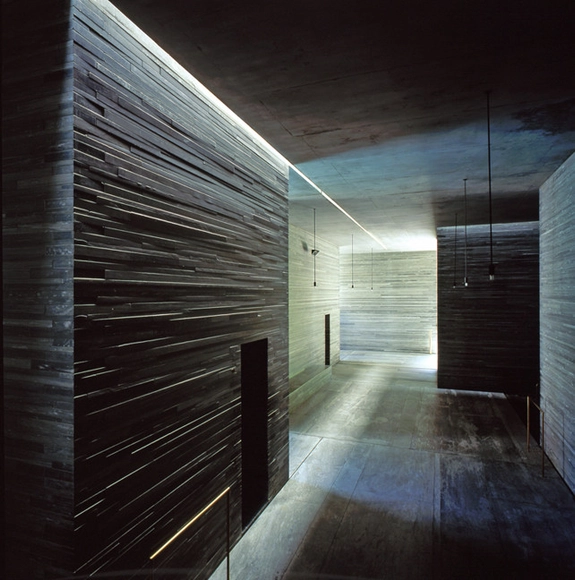
Architecture begins as an encounter with gravity. It is the ancient act of placing weight upon the earth, of persuading matter to stand, hold, and shelter. Within this fundamental condition of heaviness, however, lies a quieter possibility: density itself can generate a sense of lightness—a perceptual condition in which the body, fully convinced of matter's weight, begins to experience space as suspension.
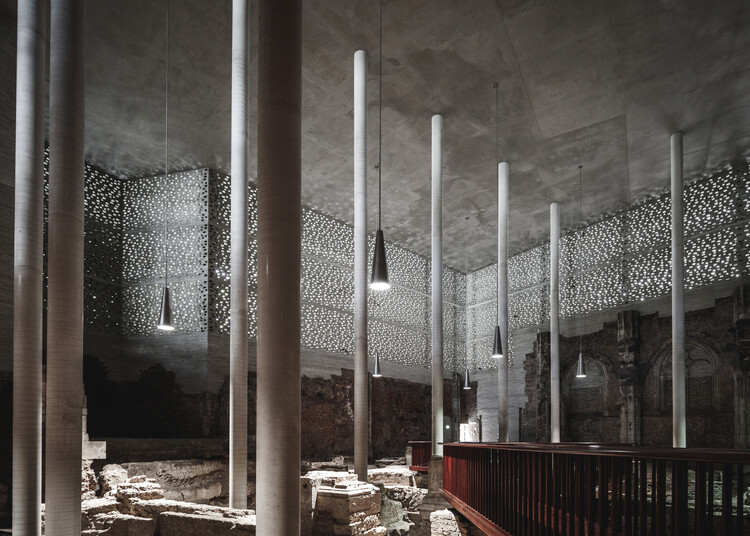
Much of contemporary architecture has pursued lightness through reduction: thinner structures, smoother surfaces, increasingly seamless transitions between interior and exterior. Here, lightness is equated with disappearance, as if gravity could be overcome by withdrawing material presence. Yet there exists another register in which lightness is not the result of absence, but of intensification. It emerges when material presence becomes so precise, so fully asserted, that it begins to alter perception itself—when mass remains heavy, but no longer behaves as simply inert.
Courtesy of Tom Welsh for The Pritzker Architecture Prize
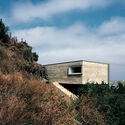
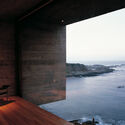
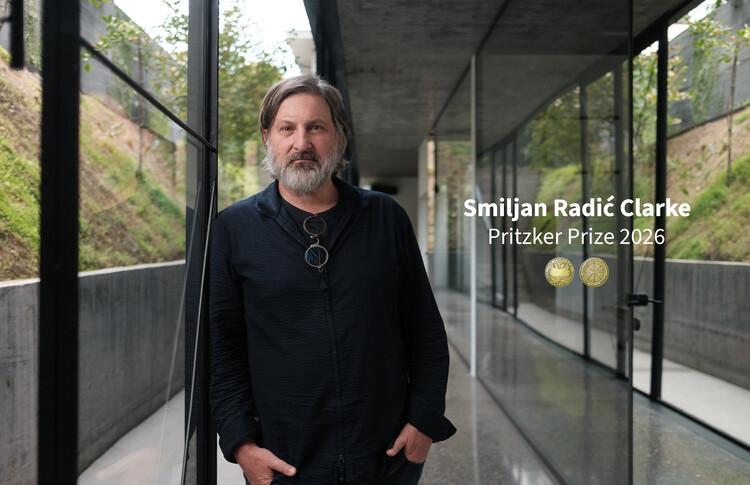
Chilean architect Smiljan Radić Clarke has been announced as the laureate of the 2026 Pritzker Architecture Prize, regarded as one of the highest honors in the field of architecture. The award recognizes Radić for a body of work that explores architecture through material experimentation, spatial perception, and a careful engagement with landscape and context. Born in Santiago, Chile, where he continues to live and work, Radić leads the practice Smiljan Radić Clarke, established in 1995. As the second Chilean to receive the prize, after Alejandro Aravena in 2016, he joins a distinguished list of previous laureates, including Liu Jiakun in 2025, Riken Yamamoto in 2024, David Chipperfield in 2023, and Diébédo Francis Kéré in 2022.
Radić's architecture operates within a territory where the phenomenological experience of space precedes explanation. His buildings often appear quiet, elemental, and resistant to easy verbal interpretation, encouraging visitors to experience them through movement, atmosphere, and perception rather than through formal expression.
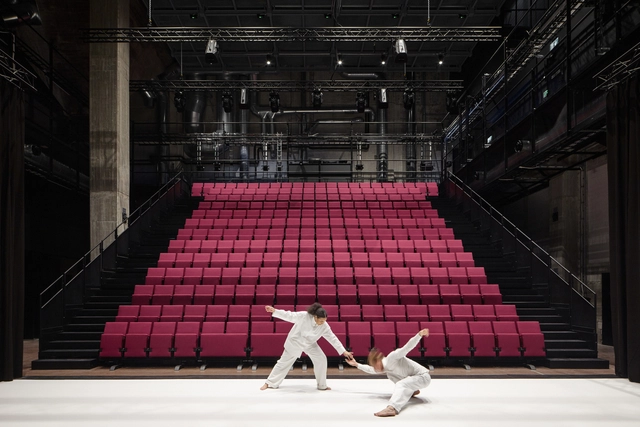
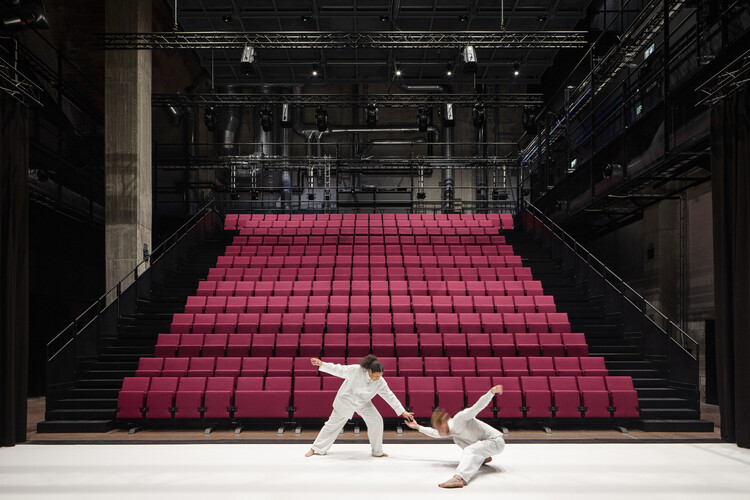
"Dance, dance… otherwise we are lost." This oft-cited phrase by Pina Bausch encapsulates not only the urgency of movement, but its capacity to reveal space itself. In her choreographies, space is never a neutral backdrop, it becomes a partner, an obstacle, a memory. Floors tilt, chairs accumulate, walls oppress or liberate. These are architectural conditions, staged and contested through the body. What Bausch exposes — and what architecture often forgets — is that space is not simply built, it is performed. Her work invites architects to think not only in terms of materials and forms, but of gestures, relations, and rhythms. It suggests that architecture, like dance, is ultimately about how we inhabit, structure, and emotionally charge the spaces we move through.
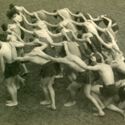
Historically, architecture and dance have operated in parallel, shaping human experience through the body's orientation in space and time. From the choreographed rituals of classical temples to the axial logics of Baroque palaces, built space has always implied movement. The Bauhaus took this further, as Oskar Schlemmer's Triadic Ballet visualized space as a geometric extension of the body. This was not scenery, but spatial thinking made kinetic. In the 20th century, choreographers like William Forsythe and Anne Teresa De Keersmaeker integrated architectural constraints into their scores, while architects such as Steven Holl, Diller Scofidio + Renfro, and Toyo Ito designed buildings that unfold as spatial sequences, inviting movement, drift, and delay.
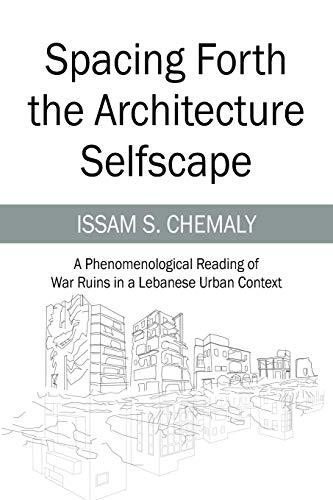
Book Review by Gioia C. Sawaya; Chemaly’s book offers a different attempt to reading war ruins in a Lebanese urban context. It suggests another perception of an architectural space, with the need for a built environment that encourages empathy with the user. He defines this space as a verb (an affording action) rather than a noun. The introduction of the book helps to locate the author’s main aim and frame his discourse.
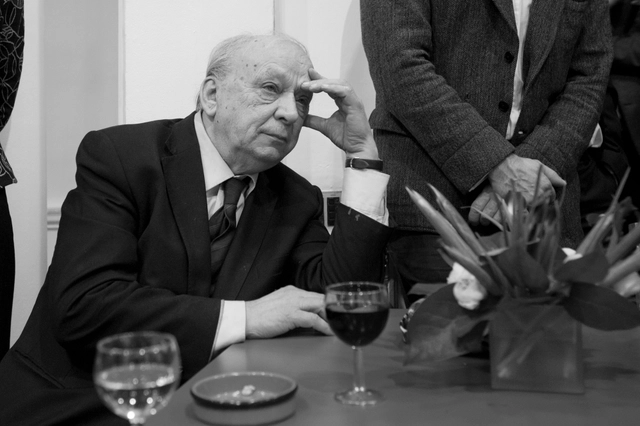
Few people in the architectural world have done more than Juhani Pallasmaa to make the complex ideas of phenomenology accessible to the uninitiated; his book "The Eyes of the Skin," for example, is recommended reading for students in countries the world over. In this interview, originally published in the October issue of Indian Architect & Builder which featured the theme of "the power of the hand," Pallasmaa talks about his similar approaches to designing and writing, and the early childhood experiences that led him to become a phenomenologist.
Indian Architect & Builder: Your practice is widely multidisciplinary; can you tell us a little about your academic journey towards the establishment of your practice?
Juhani Pallasmaa: In my country, Finland, it has been customary for students of architecture to work in architecture offices during their studies, usually from the second year onwards. I entered the Helsinki University of Technology (currently the Aalto University) in the fall of 1957. A year later, I was fortunate enough to be invited to work at the Museum of Finnish Architecture, established a year earlier, as an exhibition assistant. The Museum eventually became my real university, and also gave me the opportunity to travel the world designing exhibitions of Finnish architecture in thirty cities around the world.
Architecture professor and photographer Henry Plummer has heightened the transformative power of daylight with his cameras and published several remarkable books about light and architecture. His deep interest in light, and his lyrical writing perspective, were formed through his contact with the designer and art theorist György Kepes while studying at MIT. Within his numerous photo journeys Plummer has documented the various facets of daylight in Japan and the Nordic Countries, and of masters like Le Corbusier and Louis Kahn. As a Professor Emeritus of Architecture at the University of Illinois at Urbana-Champaign Plummer also still has ambitious plans for future book projects. In the second part of this interview, Plummer reveals how changing technologies have affected his photography, and discusses his thoughts on phenomenology and developing a poetic language of light.
If you missed it, you can read part one of this interview here.
Architecture professor and photographer Henry Plummer has heightened the transformative power of daylight with his cameras and published several remarkable books about light and architecture. His deep interest in light, and his lyrical writing perspective, were formed through his contact with the designer and art theorist György Kepes while studying at MIT. Within his numerous photo journeys Plummer has documented the various facets of daylight in Japan and the Nordic Countries, and of masters like Le Corbusier and Louis Kahn. As a Professor Emeritus of Architecture at the University of Illinois at Urbana-Champaign Plummer also still has ambitious plans for future book projects. In the first part of this interview, Plummer shares a variety of insights about understanding light and approaching buildings for photography.
Vesely was born in Prague in 1934, five years before the Nazi occupation of Czechoslovakia. Following World War II, he studied engineering, architecture, art history and philosophy in Prague, Munich, Paris and Heidelberg. He was awarded his doctorate from Charles University (Prague) having been taught and supervised by Josef Havlicek, Karel Honzik, and Jaroslav Fragner. Although later he would be tutored by James Stirling, it was the philosopher of phenomenology Jan Patočka who, in his own words, “contributed more than anyone else to [his] overall intellectual orientation and to the articulation of some of the critical topics” explored in his seminal book, Architecture in the Age of Divided Representation, published in 2004.