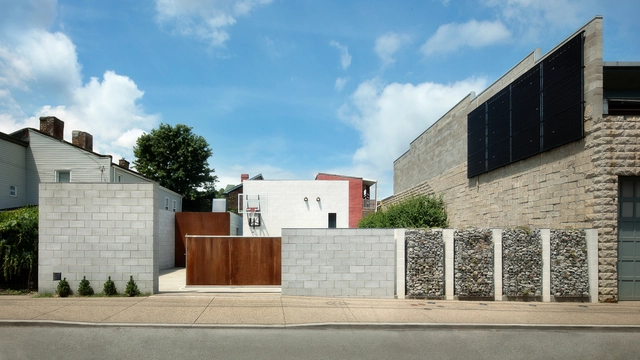
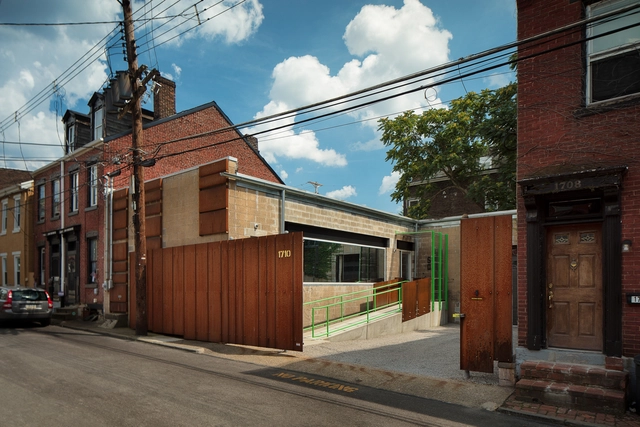
For a long time, the construction industry has followed a linear process - extract raw materials, build structures, demolish them, and then dispose of the garbage in landfills. This approach has serious negative effects on the environment and society and is inherently unsustainable. Reconsidering traditional methods and workflows requires support from all stakeholders and a sense of urgency proclaimed by authorities. In the United States, city organizations have begun to implement new policies to keep construction waste out of landfills and support circular practices. Several cities like Seattle and Pittsburgh, have started implementing deconstruction ordinances that require older buildings to be carefully deconstructed rather than demolished. How might their key provisions influence circular practices in the country?
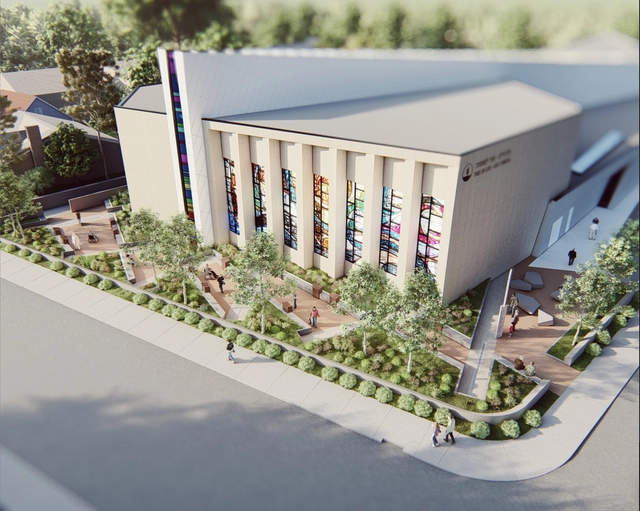
Studio Libeskind, working in close partnership with the Memorialization Working Group, has unveiled the preliminary design for the memorial for the 11 killed on 27 October 2018 at the Tree of Life Synagogue in Pittsburgh, United States. The design was developed in a process led by the victims’ families, communal leaders, and concretional representatives. The building’s official groundbreaking is expected in 2024.
Courtesy of ZGF Architects, Wexford Science & Technology
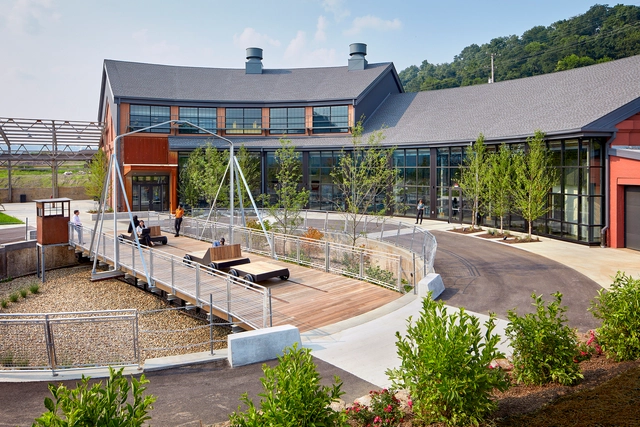
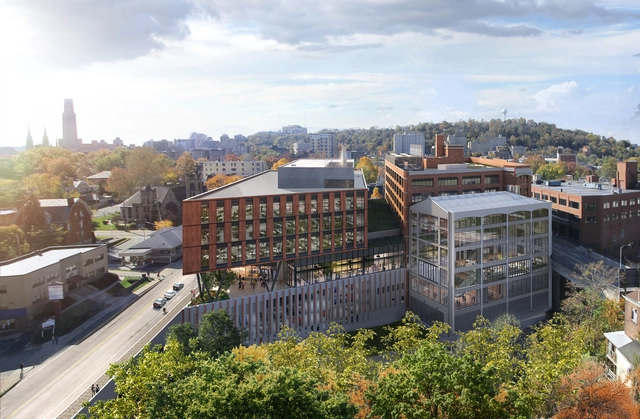
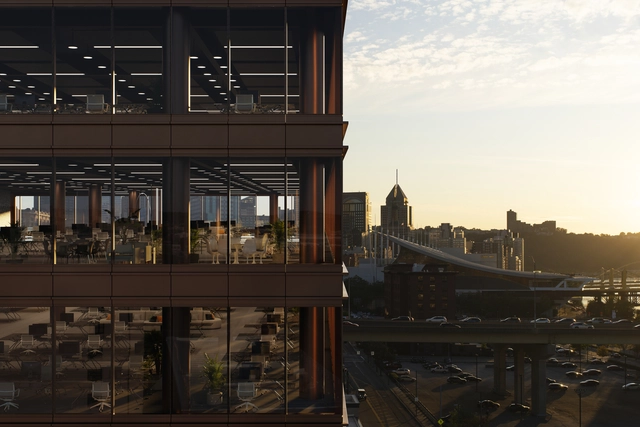
ZGF Architects, Wexford Science & Technology, and The University of Pittsburgh have revealed new details of the Ford Motor Assembly Plant adaptive reuse in Pittsburgh. Called The Assembly, the project aspires to become a hub of university research, entrepreneurial activity, and innovation programming. The six-story crane shed was used to hoist parts unloaded from the Pennsylvania Railroad tracks for assembly.
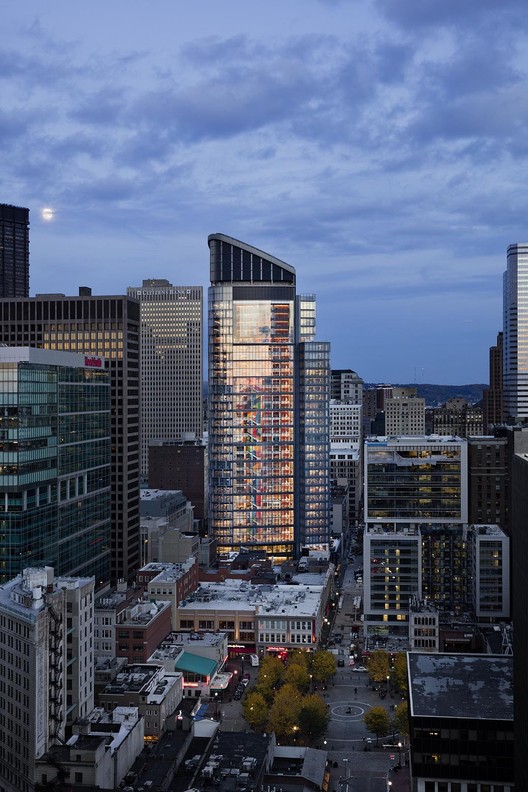
JMC Holdings unveiled images of a 21-story office building in Pittsburgh’s 1501 Penn Ave. Designed by Brandon Haw Architecture, an international architecture studio based in New York, in collaboration with the AM/Woolly Group, the new commercial structure is LEED-certified.
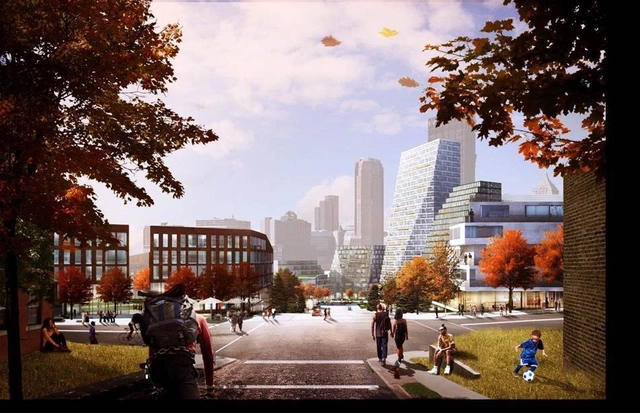
BIG, West 8 and Atelier Ten have revealed their masterplan design for Pittsburgh's Lower Hill district, just outside the city's downtown region. Located on the former site of Pittsburgh's Civic Arena, which was demolished in 2012 and has since left a significant hole in the city's fabric, the design will bring 1,200 residences and over 1 million square feet of retail space to the area, while reconnecting the wider Hill District with the downtown core by reinstating the city's road grid, overlaid with a series of pedestrian footpaths, public plazas and green spaces.
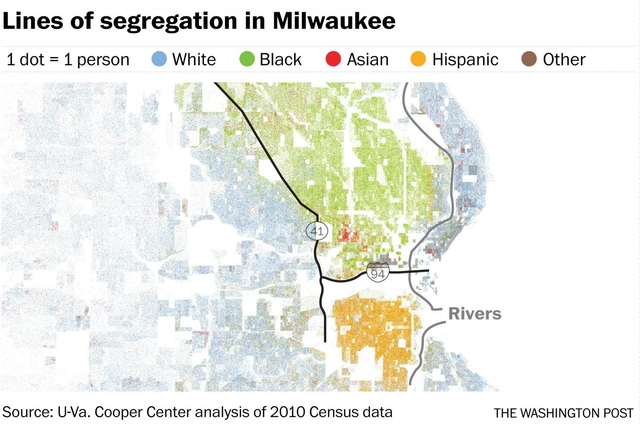
The Washington Post has published a piece looking at how infrastructure acts as a form of segregation in cities in the US. Using racial dot maps from the University of Virginia’s Weldon Cooper Center for Public Service, they show how highways, railroads, historically uncrossable avenues, and similar urban design decisions have a huge impact on the physical isolation of different races. These types of infrastructure were also found to reinforce boundaries set by natural patterns of topography and bodies of water. Cities found to have clear infrastructural segregation include Pittsburgh, Hartford, Detroit, Washington, D.C., and Milwaukee. Read the full article, here.