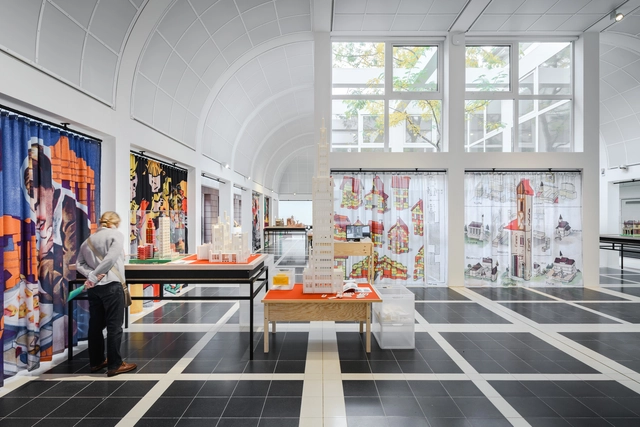
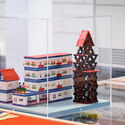
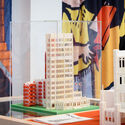
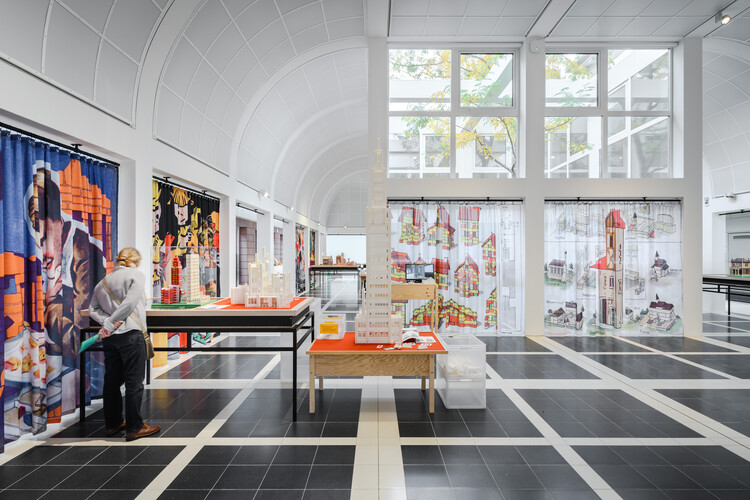
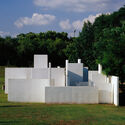
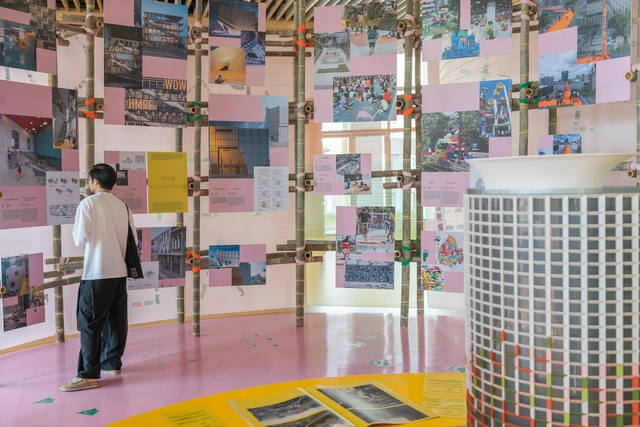
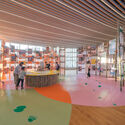
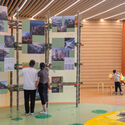
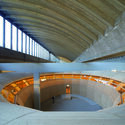
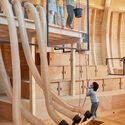
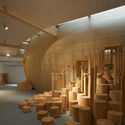
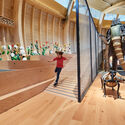
The Deutsches Architekturmuseum (DAM) in Frankfurt, Germany, has opened a new interactive exhibition, on view from October 25, 2025, to February 8, 2026, presenting 100 years of architectural construction kits. Developed in collaboration with graphic designer Claus Krieger, Professors Andreas Kretzer and Philipp Reinfeld from the Stuttgart University of Applied Sciences (HFT), their students, and the wider DAM team, the exhibition brings together around 80 construction kits produced between 1890 and 1990. Many of these systems have been recreated at an enlarged scale so visitors can test their assemblies at eight central play stations. Additional digital features include VR model worlds programmed by HFT students. Dozens of completed models illustrate the range of architectural ideas represented across the kits, and the full collection is documented in an accompanying catalogue. The exhibition is accompanied by a public competition titled How Small Can Architecture Be?, which invites participants to submit miniature architectural models for display.
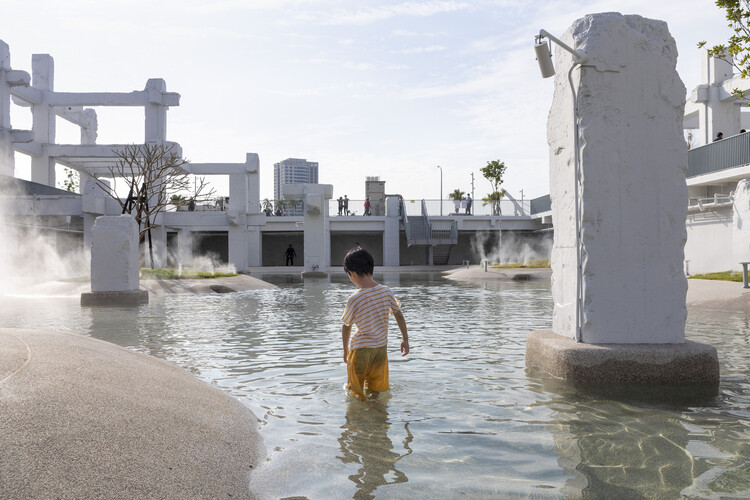
How do nature and landscape dialogue within spaces designed for children? How are architecture and urban design capable of shaping natural atmospheres that integrate practices of play, participation, and exploration? From participatory projects that involve children in the design process to built environments that incorporate furniture adapted to their needs, the conception of spaces for childhood entails the creation of places for encounter, learning, and coexistence. At times, these spaces are able to strengthen the relationships between interiors and exteriors, connecting their users with nature and the surrounding environment. Depending on their cultures, customs, and histories of attachment to place, several contemporary projects deploy tools and strategies that integrate architecture, nature, and pedagogy to form broad experiences of learning, play, and discovery.
Play extends beyond its recreational dimension, unfolding as a social act that encourages children to learn, interact, be creative, and engage with their spatial context. As Johan Huizinga notes in Homo Ludens, it is a fundamental element of culture, where kids form bonds and explore ways of coexisting. When the architecture of play spaces excludes certain bodies or modes of participation, the collective experience becomes fragmented and loses part of its meaning. Designing with inclusion in mind, therefore, means recognizing that the actual value of play lies in its potential to be shared by everyone.
https://www.archdaily.com/1033205/inclusive-playgrounds-every-body-can-play-through-architectureEnrique Tovar
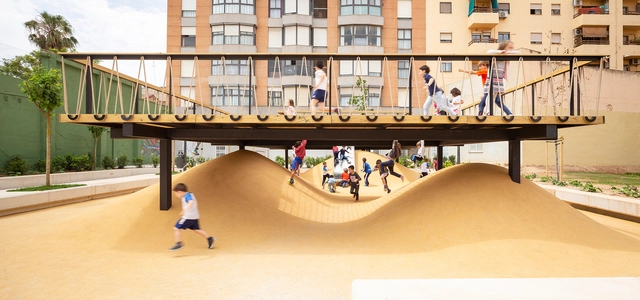
When we think about cities and urban life, we often focus on infrastructure, culture, commerce, nightlife, and density. In metropolises where there seems to be an endless array of activities—especially for adults—play rarely enters the conversation. Yet, the act of playing should be considered a vital part of urban life. Play directly influences how we shape our future cities—starting with how children engage with their environments. The experience of play, and more specifically, the design and presence of playgrounds, leaves lasting impressions on how young people grow up in cities. These spaces form a child's first, physical connection to the urban landscape. In this way, play deserves far more attention in conversations around urban wellness, livability, and the design of public space.
Coffee culture continues to thrive in the contemporary world, with a noticeable shift from the dominance of chains & franchise stores to a growing market for prosumer coffee. As more and more coffee consumers become prosumers, individuals who both produce and consume, they are turning coffee-making into a hobby, even a ritual, and are expecting coffee shops to keep up. Consumers are becoming more knowledgeable, paying close attention to the source and type of beans, brewing methods, and equipment. They also appreciate the design of coffee machinery, not just for its functionality but for its aesthetics, efficiency, and space management. This surge in interest, especially in Asia, has led to changes in coffee shops' operations. Many individual coffee shops, responding to the rise in consumer spending power and interests, are motivated to focus on creating unique, immersive experiences for an ever-growing marketable audience.
“ReviveR,” a new exhibition by MVRDV opened at the Shenzhen Women & Children’s Centre, focused on the different narratives surrounding its hosting building, from the role of play and social interaction, to the importance of fun environments for people of all ages, along with the need to reduce carbon emissions by applying principles of circularity. The exhibition is on display in the building’s 5th-floor auditorium from December 6, 2023, until February 28, 2024.
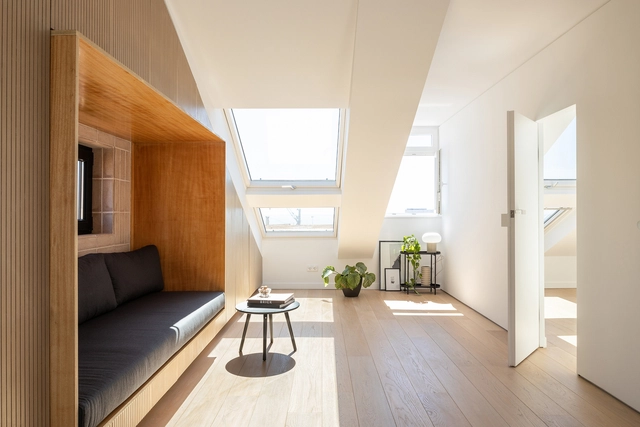
By converting the unused areas hidden in the roofspace, homeowners are able to add extra bedrooms, games rooms, or simply give themselves easier-to-access storage space, without having to move house or apply for planning approval. And with more of our lives now occurring under our own roofs, the additional space provided by an attic conversion is more popular than ever.
Without the ability to alter the roof’s pitch, however, the low-height areas of an attic room often remain unusable, and the resulting usable space is restricted by how low its functions can go. By positioning low-height features and activities in these nooks and crannies, attic rooms can make the best of the space they’re given.
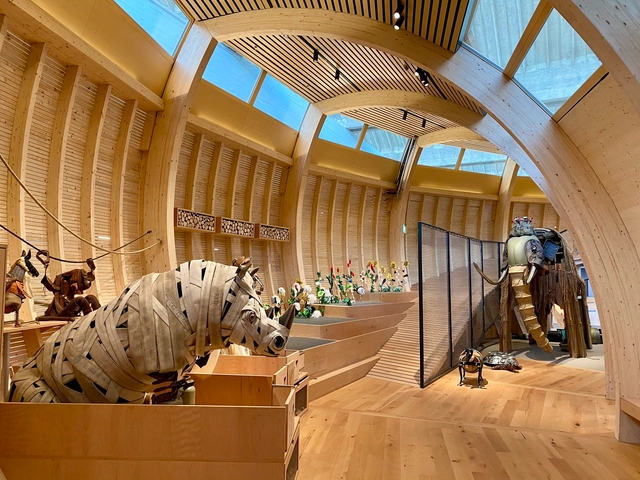
Completed in 2020, amidst the pandemic, ANOHA- The Children’s World designed by Olson Kundig for the Jewish Museum in Berlin is finally opening its doors to the young public. The design reinterprets the myth of Noah’s Ark and furthers the concept and ideas of a similar installation at Skirball Cultural Center in Los Angeles, created by the firm then named Olson Sundberg Kundig Allen. More than a museum experience, the project is a space for community building, a place for imagination and play that enacts a universal story, creating an inclusive environment for children and families of all cultures and backgrounds.
Play is an essential part of all our lives, whether child or adult. Be it playing sports, a board game or simply sharing jokes with friends, play is just as important to adults as building a den or playing dress-up is to a child.
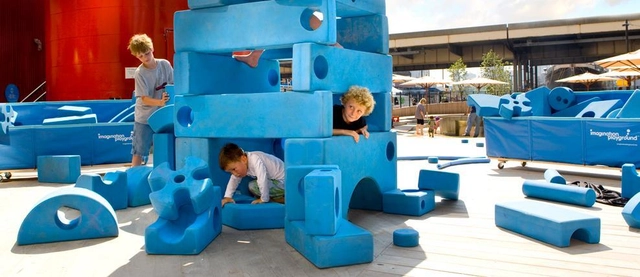
Image: Imagination Playground, New York, the Rockwell Group. Photo credit: Chris Amaral.
Kick start your playful summer with a panel discussion about the impact of design on childhood development! Inspired by BSA Space’s new exhibition, Extraordinary Playscapes, an array of unique panelists will consider ways to prevent barriers of play in urban areas. The conversation will delve into how play is related to design, psychology, parenting, architecture, and development while highlighting the role of designers in a more playful future. After the talk, participants will enjoy light refreshments and exclusive access to the exhibition.
This workshop invites both children and parents to participate in building unique playscapes with natural materials on The Greenway. Led by local artist and craftsman, Mitch Ryerson, each session will focus on the importance of nature play, group building, teamwork, imagination, and learning to build with new materials. This event is part of a series of family and children’s workshops hosted by Design Museum Boston and the BSA Foundation, focusing on design and play throughout the summer.
To celebrate the upcoming Extraordinary Playscapes exhibition in June, BSA Space is teaming up with co-curator Design Museum Boston for an event exploring how to make the urban environment more accessible to play. As part of the ongoing series Design Museum Mornings, this session will feature Maggie Cooper, City Initiatives manager at KaBOOM!, a nonprofit focused on bringing balanced and active play into the daily lives of all children. Join Cooper for a candid conversation as she shares how to bring communities together through initiatives like group playground builds and playability walks, especially for children growing up in poverty. Free breakfast and coffee will be provided, along with juices from sponsor Purity Organic.
Irish Architecture Foundation in collaboration with The Matheson Foundation and Dublin City Council are launching a competition to design a play and skate park for ‘The Lawns’ in Le Fanu Park, Dublin 10. The competition is now open. The 'Play Park: Ballyfermot' project is a unique opportunity for an innovative inter-disciplinary design collective, with a passion for working in community contexts to develop a world class play and skate space for young people in Dublin.
Toshiko Horiuchi MacAdam is known for her massive, colorful architectural sculptures/playgrounds. The most famous example of her work is the expansive net-structure inside the "Woods of Net" Pavilion at the Hakone Open Air Museum in Japan - which Horiuchi MacAdam knitted, entirely by hand, over the span of a year.
We took a moment to speak with Ms. Horiuchi MacAdam about the Pavilion and her other works, how they bridge the worlds of art and architecture, and how they irresistibly invite the world to play. You can read our interview, and see more images of her fascinating work, after the break...