Wood, one of the oldest building materials, has been continuously reinvented throughout history. As contemporary architecture becomes more and more concerned with sustainability and environmental responsibility, the popularity of the material has also increased. As trees absorb carbon dioxide during their growth, their wood stores that carbon, keeping it out of the atmosphere. The materials derived from wood are thus associated with less greenhouse gas emissions on the condition of trees being harvested from sustainably managed forests. But in order to capture the full potential of this material, a plethora of techniques and modifications have evolved with the purpose of adapting and customizing wood's characteristics to the demands of modern design and construction. From thermal modification to engineered wood or versatile particle boards, these methods not only enhance wood's suitability for the rigors of contemporary architecture but also expand the usability of this sustainable material to an unprecedented scale.
When designing a space—whether at the scale of interiors, architecture, or infrastructure—materiality is a central concern. Beyond aesthetics, materials determine how a project functions, ages, and endures. Some architects—such as Wang Shu and Kengo Kuma—have built their practices on a deep sensitivity to the potential and limits of materials. But even in the most pragmatic sense, the question arises: What lasts? What doesn't? And how do materials change over time? Naturally, materials shape atmosphere and appearance—qualities that often matter most to clients. Yet increasingly, the discourse around materiality has shifted from structural substance to surface treatment. When did we start focusing more on "decorating" our spaces by layering one material over another, rather than relying on the inherent beauty and performance of the building fabric itself?
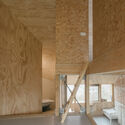
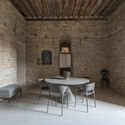
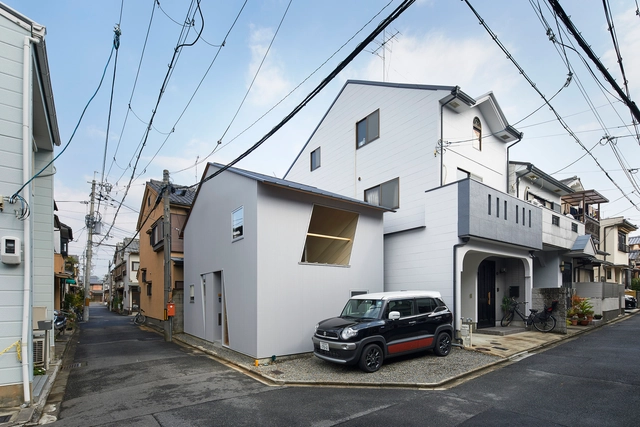
The Farmhouse / Studio Precht. Image Courtesy of Precht
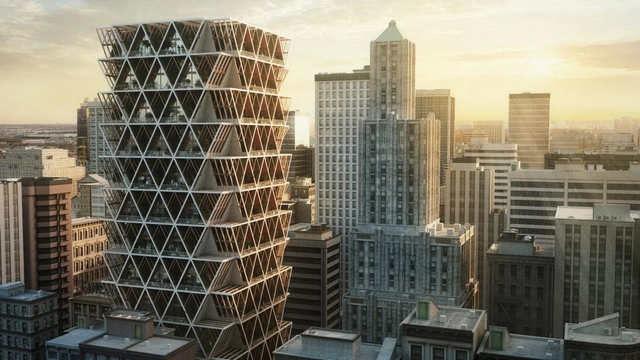
Wood, an age-old building material, has left its mark on the history of architecture. Structures like townhouses and ancient cathedrals have seen usage and innovation with wood as a primary material. As technology evolves and urban landscapes grow skyward, wood has emerged as a strong contender to steel and concrete in the area of skyscraper design. Recent advances in engineering, materials science, and construction techniques have welcomed a new era of experimentation, enabling the construction of timber skyscrapers across the world. Timber skyscrapers signify a departure from traditional construction methods, seamlessly blending aesthetics, functionality, and ecological consciousness. Wood as a material, with its inherent strength and impressive fire resistance, presents hope to an industry in pursuit of a more sustainable future.
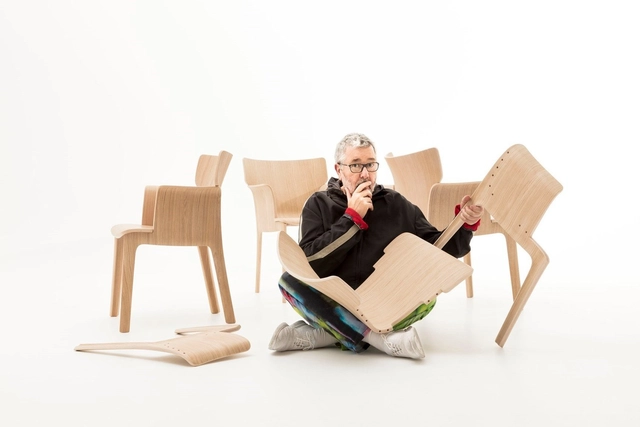
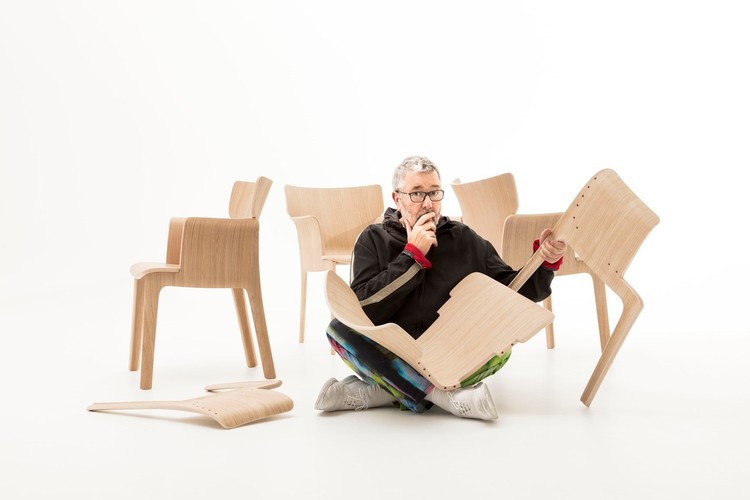
Believing that a creator has a duty towards society, Philippe Starck, is a multifaceted designer whose projects span across many disciplines. From architecture and interiors to industrial and furniture design, Starck’s portfolio is always, as he puts it, “focused on the essential”, and “must improve the lives of as many people as possible”. Author of Alessi’s famous lemon squeezer, he is known for pushing the boundary of design in everyday objects.
With 10,000 creations, completed or yet to come, Philippe Starck is a pioneer in “making things in the way of ecology”. In fact, ArchDaily had the chance to meet the designer at the 2021 Salone del Mobile, to discuss his design approach and visions as well as hislatest plywood creation for Andreu World.
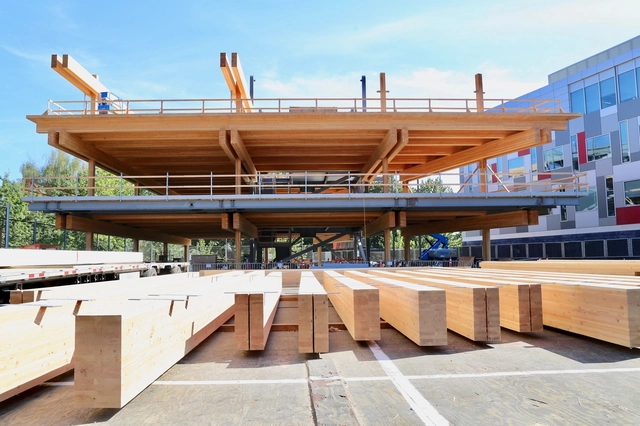
Adidas North American Headquarters Expansion in Portland, OR. South Building under construction showing the timber and steel system. Image Courtesy of LEVER Architecture
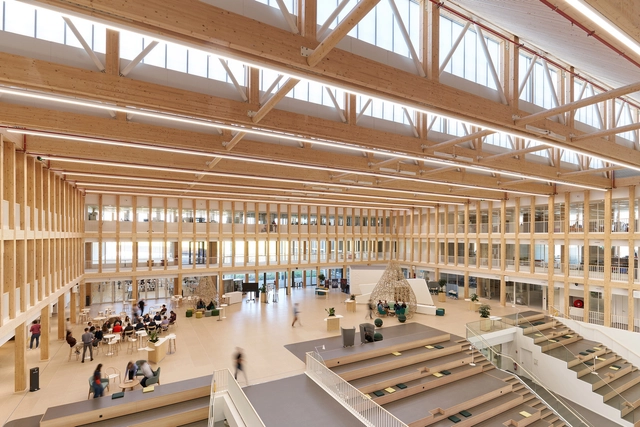
The family of products that encompass mass timber –including Cross-Laminated Timber (CLT), Glue-Laminated Timber (Glulam), and Mass Plywood– is increasingly becoming a viable construction alternative for the AEC industry. Timber has been a structural material for thousands of years, but these engineered wood products have broadened the field of options and provided a solid basis for architectural designers to work with, expanding upon their range of materials and finishes.
Sold in standard 4 foot wide sheets since 1928, plywood has been a staple of conventional construction for nearly a century. Dimensionally strong, easily cut, lightweight and capable of creating an effective barrier, plywood and other engineered panels like OSB, particle board, and MDF is ubiquitous, particularly for their use as sheathing material in balloon and timber frame construction systems. Boats, airplanes and even automobile frames have historically been built out of plywood, predating (or replacing) steel, aluminum, and fiberglass. As a simple material capable of being manipulated and shaped in a wide variety of ways, sheet ply was also favored in furniture and architectural designs by modernists including Charles and Ray Eames, Eero Saarinen, Alvar Aalto, and Marcel Breuer.
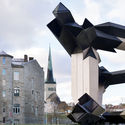
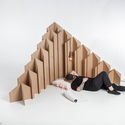
"Exoskeleton" is a pavilion that shows how Computer Aided Manufacturing can create rapid prototypes. This manufacturing process allows for real-scale construction and experimentation with limited resources.
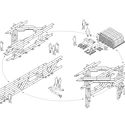
In this project, a system of modules, designed with different dimensions, is put together with simple joints without nails or screws. This allows for different surfaces to be formed and for the pieces to be rotated and assembled at various angles and heights.
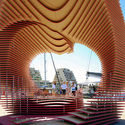
Out of 200 applicants, London-based Gilles Retsin Architecture won the Tallinn Architecture Biennale 2017 competition with their temporary outdoor installation. Participants were challenged to use the fabrication abilities of Estonianwoodenhouse manufacturers in a new and creative way. Jury member Martin Tamke said the Retsin proposal is, “characterized by outstanding aesthetic and intellectually challenging, as it questions current beliefs and trends in architecture."
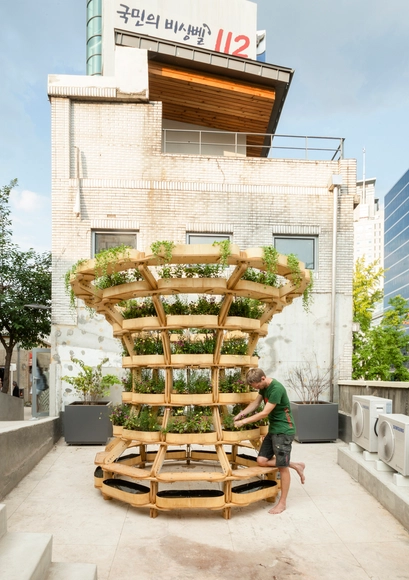
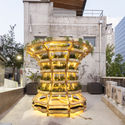
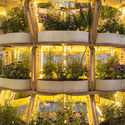
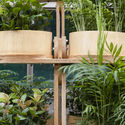
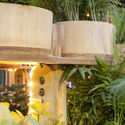
As a response to the fast-paced city life, GrowMore is an urban gardening modular design with endless configurations to suit even the most unexpected of spaces. Designed by Sine Lindholm and Mads-Ulrik Husum, the modular building kit provides an opportunity for social interaction and locally grown vegetation, reminding people to pause and connect with nature.
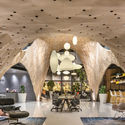
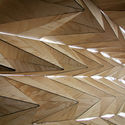
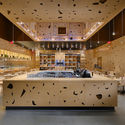
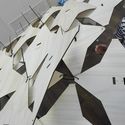
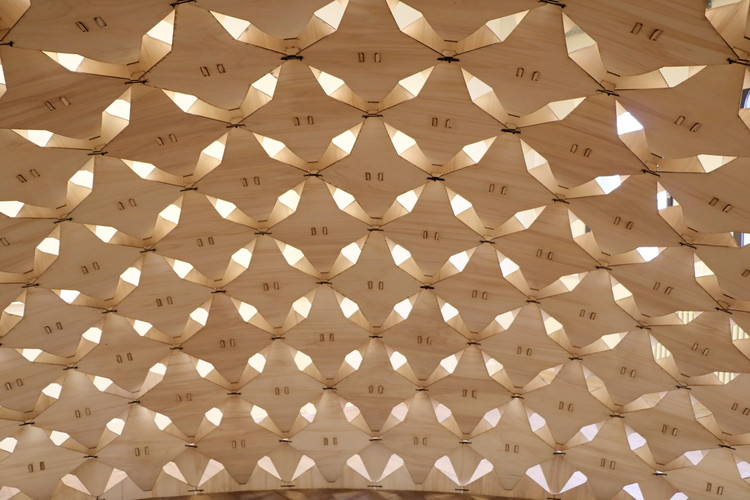
Furniture and design retailer XTRA's new flagship store in Singapore's Marina Square includes a Herman Miller "Shop-in-Shop" that draws inspiration from the furniture it showcases. Encircling the space is a 20-meter arched structure that, from a distance, gives the appearance of tufted fabric pulled taught over a frame. But in fact, this structure is built from a plywood "skin" that designer Pan Yicheng of PRODUCE Workshop has dubbed "fabricwood."
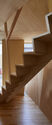
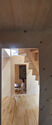
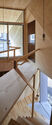
In this video, Ben Uyeda of HomeMade Modern demonstrates how to build a sleek, contemporary spiral staircase using just a standard schedule steel post, plywood and a CNC router (along with a healthy amount of wood and construction glue). To build the staircase, Uyeda uses the CNC to cut out 12 shapes of incremental size from a plywood sheet, which he then stacks and fits around the post to secure into place.
HomeMade Modern has also made the CAD files available for free, so handy woodworking types can attempt the construction themselves.
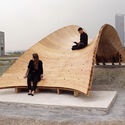
Pro-Form Architects has created Rolled Table, an information booth made of flexible plywood that challenges the standard form of a table. Created for the Water and Land Niigata Art Festival, which has been held every three years since 2009, Rolled Table displays guide books and pamphlets better than an average table due to its distinct curvature and lighting system.
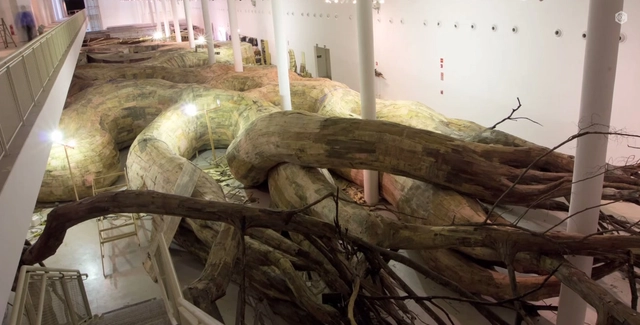
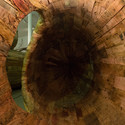
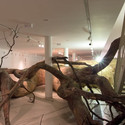
Given a cavernous gallery space at the Museu de Arte Contemporânea da Universidade in São Paulo, artist Henrique Oliveira has created Transarquitetônica, a breathtaking installation from plywood, which fills the room with twisted tree roots large enough for gallery visitors to walk inside.
Read on after the break for more images of the installation, including photos of its construction
Have you ever wanted to create delicate, complex shapes from plywood, but can't because it's too stiff and unforgiving? Well all that might soon change, thanks to Milan-based design studio MammaFotogramma. They have created a type of flexible, 'Woodskin' triangular tiles of russian plywood.
A team of graduate students recently created a temporary installation on the Kent State University, Kent campus in Ohio. The project grew out of an internal challenge in the matR design competition. Designed by graduate students Brian Thoma, Carl, Veith, Victoria, Capranica, Matt Veith, and Griffin Morris, the tunnel-like structure called “The Passage” was a study to support the conceptualization and actualization of innovative and experimental material research. The students created the initial form in Rhinoceros with a couple Grasshopper definitions as a waffle structure of 26 vertical ribs and 24 horizontal struts. More images and information after the break.
Imagine taking your Google Sketchup creation for a house and having it milled out and assembled all within 24 hours. WikiHouse, an Open Community project that puts you in the driver’s seat of design and construction has recently unleashed the opportunity for anyone to realize their own vision of architecture.












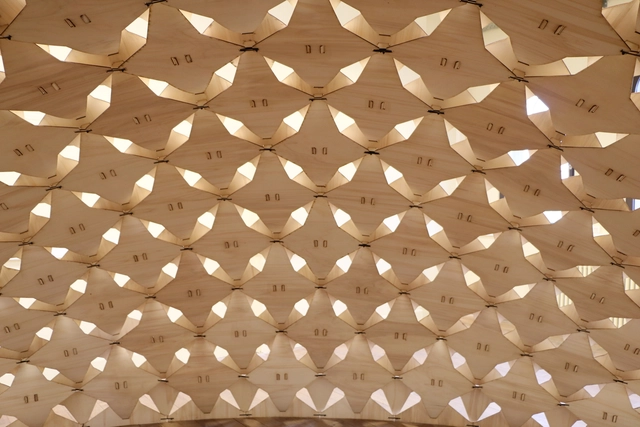
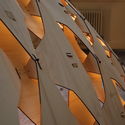
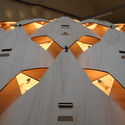
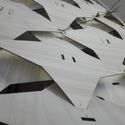






.jpg?1486048343 "Prototype of the Fabricwood system. Image Courtesy of PRODUCE Workshop")
.jpg?1486048351 "Courtesy of PRODUCE Workshop")

.jpg?1444011708&format=webp&width=640&height=580)

.jpg?1401996770 "Courtesy of MAC USP via www.mac.usp.br")