1. ArchDaily
  2. Raumlabor

Raumlabor: The Latest Architecture and News

Concéntrico Festival 2026 Unveils 24 Urban Installations Across Logroño, Spain

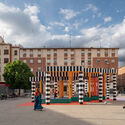
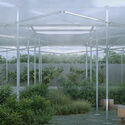
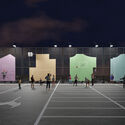
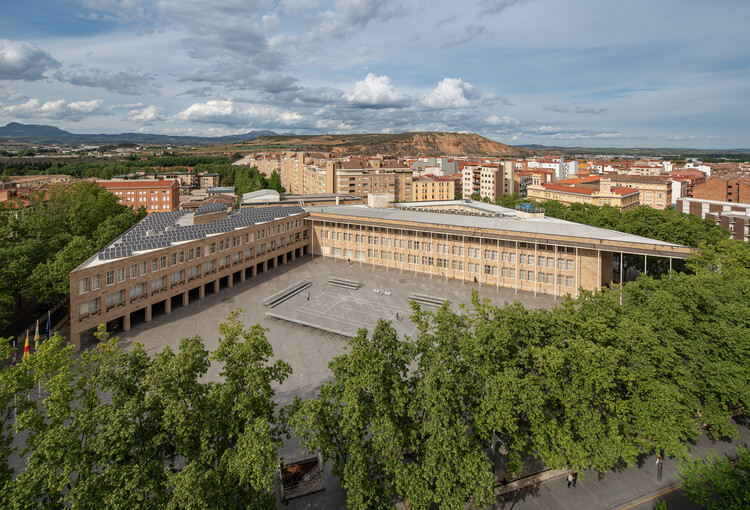
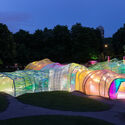
Concéntrico Festival 2026 will take place in Logroño, Spain, from June 18 to 23, transforming the city into a large-scale laboratory for architecture, design, and urban experimentation. Over six days, more than twenty interventions will be distributed across squares, vacant plots, streets, bridges, and emblematic spaces throughout the city, bringing together leading studios, researchers, and creators from the international scene, including Chilean architect Smiljan Radić, the raumlabor collective, Matilde Cassani, AAU Anastas, and Sahra Hersi, among others. This edition introduces a shift towards more collective, festive, and performative practices in public space, with a strong emphasis on sonic experiences and projects linked to accessibility, inclusion, and urban transformation. The programme is structured around three thematic axes: Identity and Fiction, Urban Ecologies, and Ephemeral Agents, ranging from architectures that understand public space as ritual or celebration to experimental approaches exploring materials, sound, and processes of reuse.
Concéntrico Festival 2026 Unveils 24 Urban Installations Across Logroño, Spain - Image 1 of 4Concéntrico Festival 2026 Unveils 24 Urban Installations Across Logroño, Spain - Image 2 of 4Concéntrico Festival 2026 Unveils 24 Urban Installations Across Logroño, Spain - Image 3 of 4Concéntrico Festival 2026 Unveils 24 Urban Installations Across Logroño, Spain - Image 4 of 4Concéntrico Festival 2026 Unveils 24 Urban Installations Across Logroño, Spain - More Images+ 36

Off the Mainland: Floating Architecture Projects Redefining the Built Environment

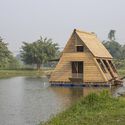
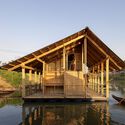
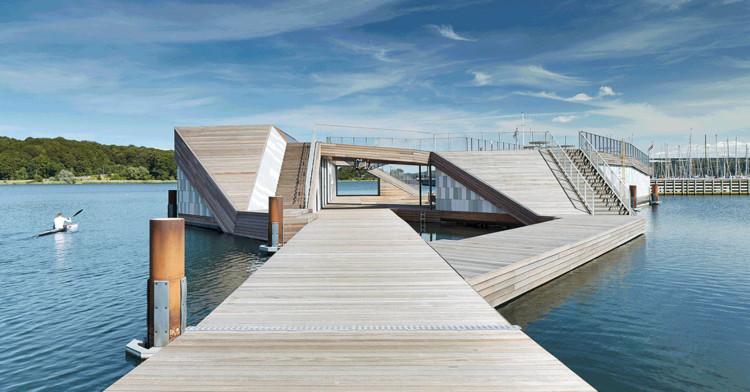
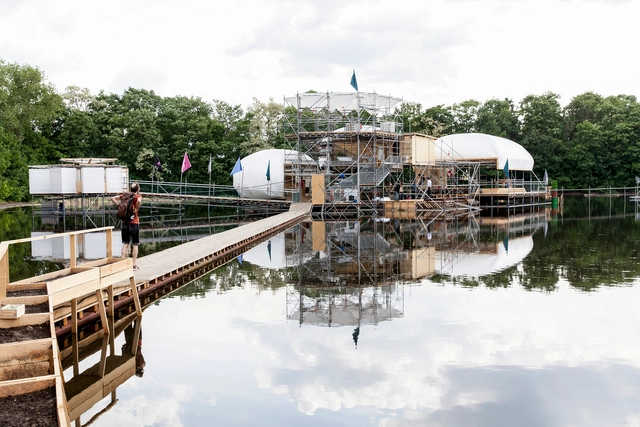
Building above water means doing away with a part of construction that is quite literally the basis of most of our built environment: the foundation. In a world dominated by water, currents, and shifting levels are variables that simply cannot be ignored, which is why the most emblematic feature these projects share is their adaptability.

Instead of robust, deep bases – such as piles or caissons – designed to anchor architecture into the earth, floating structures frequently employ solutions like concrete pontoons or plastic drums to prevent the building from sinking. These are typically paired with anchoring systems to "fix" the structures, even if only temporarily, to a specific location.

Off the Mainland: Floating Architecture Projects Redefining the Built Environment  - Image 1 of 4Off the Mainland: Floating Architecture Projects Redefining the Built Environment  - Image 2 of 4Off the Mainland: Floating Architecture Projects Redefining the Built Environment  - Image 3 of 4Off the Mainland: Floating Architecture Projects Redefining the Built Environment  - Image 4 of 4Off the Mainland: Floating Architecture Projects Redefining the Built Environment  - More Images+ 23

Concéntrico 2026 Features Smiljan Radić Installation and 26 Urban Interventions in Logroño, Spain

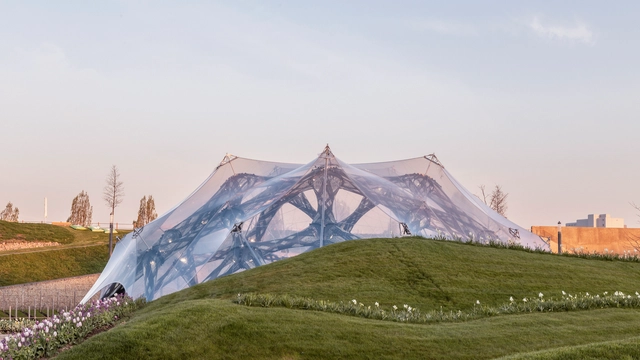
Concéntrico, the Spanish laboratory for urban innovation exploring new ways of inhabiting public space through temporary urban installations, presented the program for its upcoming edition on March 17th, along with its main lines of work for the 2025–2026 season. The festival invites architects, designers, artists, and researchers from different geographies to propose interventions that activate squares, streets, riverbanks, and vacant spaces in the city. This year's edition includes the participation of Smiljan Radić, the recently awarded Pritzker Architecture Prize laureate, who will develop a light, foldable, and temporary structure built from industrial plastic fabrics following the concept of a "poor circus." Another 26 teams, including three practices selected through the festival's international open calls, will intervene in Logroño's public space from June 18 to 23, 2026, with projects ranging from climate-responsive structures to ephemeral public space activations.

Concéntrico 2026 Features Smiljan Radić Installation and 26 Urban Interventions in Logroño, Spain - Image 1 of 4Concéntrico 2026 Features Smiljan Radić Installation and 26 Urban Interventions in Logroño, Spain - Image 2 of 4Concéntrico 2026 Features Smiljan Radić Installation and 26 Urban Interventions in Logroño, Spain - Image 3 of 4Concéntrico 2026 Features Smiljan Radić Installation and 26 Urban Interventions in Logroño, Spain - Image 4 of 4Concéntrico 2026 Features Smiljan Radić Installation and 26 Urban Interventions in Logroño, Spain - More Images+ 3

Understanding Soft Architecture: The Shift from Monument to Moment

In recent years, architecture has increasingly embraced adaptability, flexibility, and responsiveness as core design principles. This evolution reflects a shift from traditional notions of static, permanent structures to dynamic environments that can adjust to changing needs and conditions. Central to this transformation is the concept of "soft architecture", which leverages pliable materials and innovative systems to create spaces that are functional, sustainable, and user-centric. Soft architecture takes shape through membranes that breathe, façades that move, structures that inflate or fold, and surfaces that bend rather than break. It involves designing for transformation — not only in how a building performs environmentally, but also in how it can accommodate shifting functions, user interactions, or temporary occupations. This approach to building challenges traditional notions of durability and control, proposing instead a more responsive and open-ended architecture. It reflects a growing awareness that buildings, like the societies they serve, must be able to evolve.

Understanding Soft Architecture: The Shift from Monument to Moment - Image 1 of 4Understanding Soft Architecture: The Shift from Monument to Moment - Image 2 of 4Understanding Soft Architecture: The Shift from Monument to Moment - Image 3 of 4Understanding Soft Architecture: The Shift from Monument to Moment - Image 4 of 4Understanding Soft Architecture: The Shift from Monument to Moment - More Images+ 53

How Berlin's Floating University Charts the Course for Future Architectural Education

This article was originally published on Metropolis Magazine as "How a DIY Floating Universiity in Berlin Could Be An Unorthodox Prototype for Design Education."

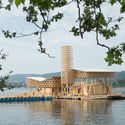
On the north side of Tempelhofer Feld, an airport-turned-park in southern Berlin, lays a large ditch. Surrounded by lots and bungalows and noticeable only to those in the know, this 19th century basin holds rainwater drained from the airport’s defunct runways before it is fed into Berlin’s canal network.

How Berlin's Floating University Charts the Course for Future Architectural Education - Image 1 of 4How Berlin's Floating University Charts the Course for Future Architectural Education - Image 2 of 4How Berlin's Floating University Charts the Course for Future Architectural Education - Image 3 of 4How Berlin's Floating University Charts the Course for Future Architectural Education - Image 4 of 4How Berlin's Floating University Charts the Course for Future Architectural Education - More Images+ 11

Spacebuster in New York

Subscriber Access | 
Spacebuster in New York - Image 4 of 4

Storefront for Art and Architecture, in collaboration with Goethe Institute New York, present Spacebuster, a project by Raumlabor. Spacebuster is a mobile inflatable structure that serves as an entirely portable, expandable pavilion. A new iteration of a past Raumlabor project, the Küchenmonument (presented in Europe in 2006-8), Storefront will bring Spacebuster to the US for the first time this April, when it will travel throughout New York for 10 consecutive evenings hosting various community events.

The pavilion is comprised of an inflatable bubble-like dome that emerges from its self-contained compressor housing. The dome expands and organically adjusts to its surroundings, be it in a field, a wooded park, or below a highway overpass. The material is a sturdy, specially-designed translucent plastic, allowing the varying events taking place inside of the shelter – dance parties, lecture series, or dinner buffets – to be entirely visible from the outside and likewise the exterior environments become the events’ backdrops.

Each of these ten evenings will be organized in conjunction with a community group, nonprofit organization, university, or arts organization. Events will include artist talks, film screenings, communal dinners and many other events. For full information on the lineup of events please visit the official site.

More images after the break.