1. ArchDaily
  2. Resilient by Design

Resilient by Design: The Latest Architecture and News

Inside Homes that Last: Rethinking Residential Design for Climate Resilience

 | Sponsored Content

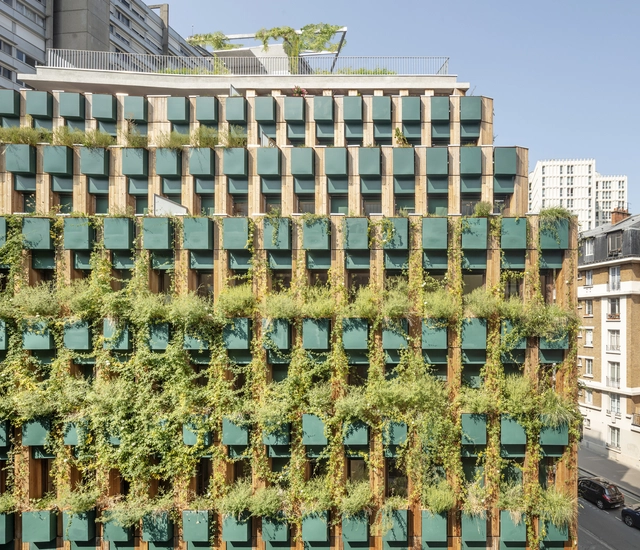
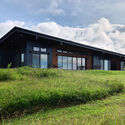
What makes a home resilient? Extreme weather events are becoming increasingly frequent around the world. From power outages, hurricanes, and earthquakes to wildfires, floods, and droughts, the world is experiencing a process of transformation and adaptation that requires collaboration among diverse disciplines. The role of architecture in the built environment reflects an opportunity to rethink how homes perform under changing environmental conditions—not only by anticipating the unexpected. Designing for resilience means thinking holistically, considering material choices, energy systems, landscaping, and construction details that anticipate disruption and help homes recover quickly. It involves creating architecture that evolves with the environment, is worth preserving, and endures for years and generations.

Inside Homes that Last: Rethinking Residential Design for Climate Resilience - 1 的图像 4Inside Homes that Last: Rethinking Residential Design for Climate Resilience - 2 的图像 4Inside Homes that Last: Rethinking Residential Design for Climate Resilience - 3 的图像 4Inside Homes that Last: Rethinking Residential Design for Climate Resilience - 4 的图像 4Inside Homes that Last: Rethinking Residential Design for Climate Resilience - More Images+ 4

Plastic That Is Not a Plastic: Redefining Circularity in Open-Plan Design

 | In Collaboration

When walking into a large living space, a hotel lobby, or an open-plan workplace, the first thing that can be noticed is not what divides the space, but what holds it together. There are rarely clear boundaries, no obvious rooms, no strict partitions, yet the space still feels organized. Some areas invite a pause; others dictate movement; others foster community. The transitions are subtle, but legible.

At the same time, these interiors are expected to do more. They must accommodate constant change, withstand intensive use, and respond to environmental pressures by reducing waste, extending lifespans, and avoiding frequent replacement. The question is not only how a space looks, but how it performs over time. What is actually doing the heavy lifting?

World Architecture Day 2025: How We Design for Strength in an Age of Crisis

Today, on the first Monday of October, we celebrate World Architecture Day. This year, the International Union of Architects (UIA) has set the theme "Design for Strength," a powerful call to action that resonates deeply with the UN's focus on urban crisis response. In a world facing unprecedented environmental and social disruptions, this theme challenges us to move beyond temporary fixes. It asks: How can our buildings and cities not only withstand shocks but also foster equity, continuity, and resilience?

While the concept of strength in architecture can easily evoke images of reinforced concrete and steel, a more profound interpretation is emerging, one that defines strength not as mere rigidity, but as a holistic capacity to endure and adapt. This includes many facets, from ecological resilience and stewardship to long-lasting concepts of social resilience or the long-lasting conservation of existing urban structures, all contributing to a built environment more able to respond to the multitude of crises faced by cities worldwide.

World Architecture Day 2025: How We Design for Strength in an Age of Crisis - Image 1 of 4World Architecture Day 2025: How We Design for Strength in an Age of Crisis - Image 2 of 4World Architecture Day 2025: How We Design for Strength in an Age of Crisis - Image 3 of 4World Architecture Day 2025: How We Design for Strength in an Age of Crisis - Image 4 of 4World Architecture Day 2025: How We Design for Strength in an Age of Crisis - More Images+ 20

What is Over-Providing? A Strategy for Resilient Architecture

Subscriber Access | 

Over-providing traditionally implies offering more than is necessary, often carrying a negative connotation due to the potential for excess and waste. However, could there be scenarios within the built environment where over-providing proves advantageous? The question critically examines how overprovisioning might enhance a building's flexibility and adaptability to diverse and evolving conditions.

The underlying assumption of accurately providing what is needed for a building is that stakeholders—including owners, architects, and designers—can accurately predict and cater to a structure's current and future needs. This assumption, however, is challenging to realize, as societal, economic, and cultural shifts frequently occur in unpredictable ways. In this context, over-providing emerges as a counterintuitive yet potentially beneficial strategy. As buildings and structures inevitably transform, those designed with inherent adaptability reduce the need for costly renovations or complete rebuilds.

What is Over-Providing?  A Strategy for Resilient Architecture - Image 1 of 4What is Over-Providing?  A Strategy for Resilient Architecture - Image 2 of 4What is Over-Providing?  A Strategy for Resilient Architecture - Image 3 of 4What is Over-Providing?  A Strategy for Resilient Architecture - Image 4 of 4What is Over-Providing?  A Strategy for Resilient Architecture - More Images+ 7

Architecture Inspired by Permaculture: How to Integrate Its Design Principles Across Diverse Contexts

The concept of permaculture refers to a design system capable of creating sustainable human environments based on an ethic and a series of ecological, environmental, and resilience design principles. In contact with plants, animals, buildings, and infrastructures such as water, energy, and/or communications, permaculture analyzes the possible relationships between these elements based on their position in the landscape. Its 12 design principles can be applied in multiple architecture projects of varying scales and programs, contributing, for example, to the dissemination of new ways to reduce energy consumption in homes, save water through rainwater harvesting or the recycling of greywater for sanitary systems, gardens, and more, and participate in food production, among other matters.

Yasmeen Lari Sets Out to Build One Million Flood-Resistant Homes in Pakistan by 2024

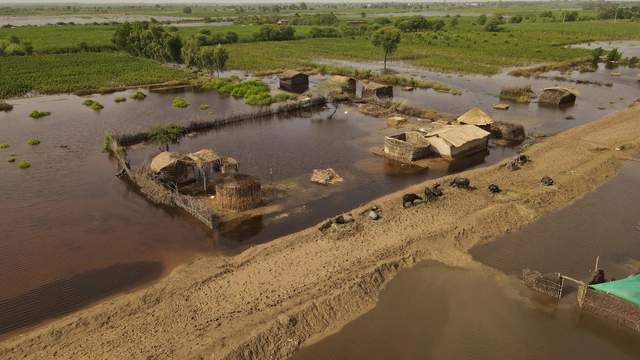
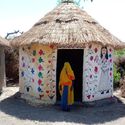
Following the extreme floods that affected Pakistan in 2022, architect Yasmeen Lari the Heritage Foundation of Pakistan pledged to help build one million resilient houses in the country. In 2022, 33 million people have been displaced, and an estimated 500,000 houses have been destroyed or severely damaged. In September 2022, Lari’s NGO launched a target program to start rebuilding and to help communities protect themselves against future disasters. The program is built on Lari’s expertise in working with the communities and employing vernacular and local building materials to achieve resilient and sustainable structures. According to the Heritage Foundation of Pakistan, one-third of the goal has already been reached.

Yasmeen Lari Sets Out to Build One Million Flood-Resistant Homes in Pakistan by 2024 - Image 1 of 4Yasmeen Lari Sets Out to Build One Million Flood-Resistant Homes in Pakistan by 2024 - Image 2 of 4Yasmeen Lari Sets Out to Build One Million Flood-Resistant Homes in Pakistan by 2024 - Image 3 of 4Yasmeen Lari Sets Out to Build One Million Flood-Resistant Homes in Pakistan by 2024 - Image 4 of 4Yasmeen Lari Sets Out to Build One Million Flood-Resistant Homes in Pakistan by 2024 - More Images+ 16

New Orleans’ Equity-Driven Reforestation Plan

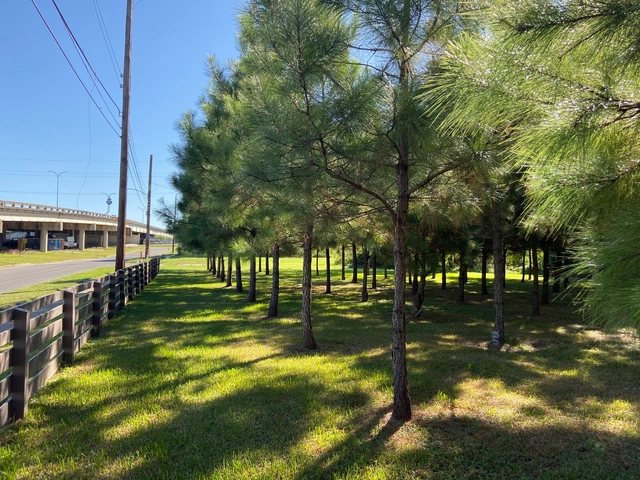
New Orleans experiences the worst urban heat island effect in the country, with temperatures nearly 9 F° higher than nearby natural areas. The city also lost more than 200,000 trees from Hurricane Katrina, dropping its overall tree canopy to just 18.5 percent.

The non-profit organization Sustaining Our Urban Landscape (SOUL) partnered with landscape architects at Spackman Mossop Michaels (SMM) to create a highly accessible, equity-focused reforestation plan for the city that provides a roadmap for achieving a tree canopy of 24 percent by 2040. But more importantly, the plan also seeks to equalize the canopy, so at least 10 percent of all 72 neighborhoods are covered in trees. Currently, more than half of neighborhoods are under the 10 percent goal.

New Orleans’ Equity-Driven Reforestation Plan - Image 1 of 4New Orleans’ Equity-Driven Reforestation Plan - Image 2 of 4New Orleans’ Equity-Driven Reforestation Plan - Image 3 of 4New Orleans’ Equity-Driven Reforestation Plan - Image 4 of 4New Orleans’ Equity-Driven Reforestation Plan - More Images+ 3

Final Winning Design Concepts Released for Resilience by Design's Bay Area Challenge

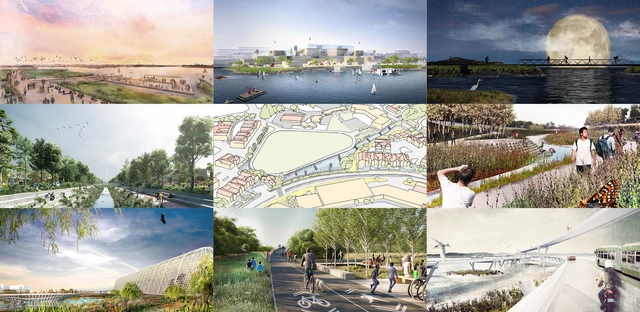
One year after the launch of Resilient by Design's Bay Area Challenge, led by TLS Landscape has presented the final nine design concepts. The Bay Area Challenge launched with a call to action to "bring together local residents, community organizations, public officials and local, national, and international experts to develop innovative solutions that will strengthen our region's resilience to sea level rise, severe storms, flooding, and earthquakes." The idea formulated as a “blueprint for resilience” that can be replicated and utilized locally and globally. Other urban challenges will also be addressed, including housing, transport, health and economic disparity as a means of not just protecting the current regions, but strengthening them.

The elite, collaborative teams include world-renowned designers like BIG, Mithun and HASSELL+.

Read on for more about each of the final design concepts.

Final Winning Design Concepts Released for Resilience by Design's Bay Area Challenge - Image 1 of 4Final Winning Design Concepts Released for Resilience by Design's Bay Area Challenge - Image 2 of 4Final Winning Design Concepts Released for Resilience by Design's Bay Area Challenge - Image 3 of 4Final Winning Design Concepts Released for Resilience by Design's Bay Area Challenge - Image 4 of 4Final Winning Design Concepts Released for Resilience by Design's Bay Area Challenge - More Images+ 41

HASSELL + MVRDV's Proposal to Improve the Bay Area's Resilience in the Event of a Disaster

Following recent natural disasters including the Northern California wildfires, the HASSELL + team have been inspired to reimagine the San Francisco Bay Area as a vibrant community hub, equipped to provide temporary facilities in an emergency. As part of the competition Resilient by Design, the ten teams were asked to provide solutions for the waterfront through site-specific conceptual design and collaborative research projects.

HASSELL + MVRDV's Proposal to Improve the Bay Area's Resilience in the Event of a Disaster - ParkHASSELL + MVRDV's Proposal to Improve the Bay Area's Resilience in the Event of a Disaster - ParkHASSELL + MVRDV's Proposal to Improve the Bay Area's Resilience in the Event of a Disaster - ParkHASSELL + MVRDV's Proposal to Improve the Bay Area's Resilience in the Event of a Disaster - ParkHASSELL + MVRDV's Proposal to Improve the Bay Area's Resilience in the Event of a Disaster - More Images+ 8

Resilient by Design Announces Ten Winners Set to Re-Imagine The Bay Area

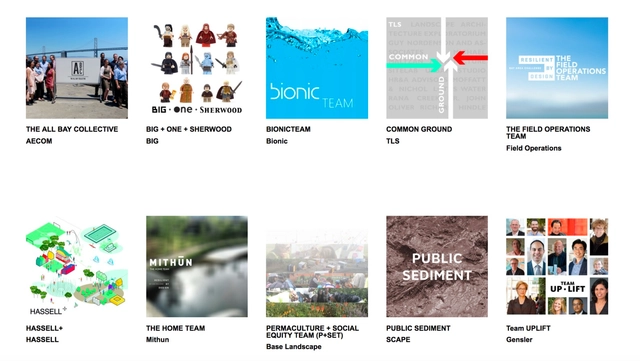
From a pool of over fifty submissions, Resilient by Design have chosen ten winning teams to collaborate with engineers, climate change experts, designers, architects and community members to imagine a better future for The Bay Area in the face of potentially devastating climate change. The winning teams AECOM, BIG, Bionic, TLS, Field Operations, HASSELL, Mithun, Base Landscape, SCAPE and Gensler will spend the next year on a combination of collaborative research projects and site-specific conceptual design solutions.

Resilient by Design Announces Ten Winners Set to Re-Imagine The Bay Area - Image 1 of 4Resilient by Design Announces Ten Winners Set to Re-Imagine The Bay Area - Image 2 of 4Resilient by Design Announces Ten Winners Set to Re-Imagine The Bay Area - Image 3 of 4Resilient by Design Announces Ten Winners Set to Re-Imagine The Bay Area - Image 4 of 4Resilient by Design Announces Ten Winners Set to Re-Imagine The Bay Area - More Images+ 2