1. ArchDaily
  2. Reuse

Reuse: The Latest Architecture and News

Arquivo: Deconstruction and Material Reuse for a Circular Architecture

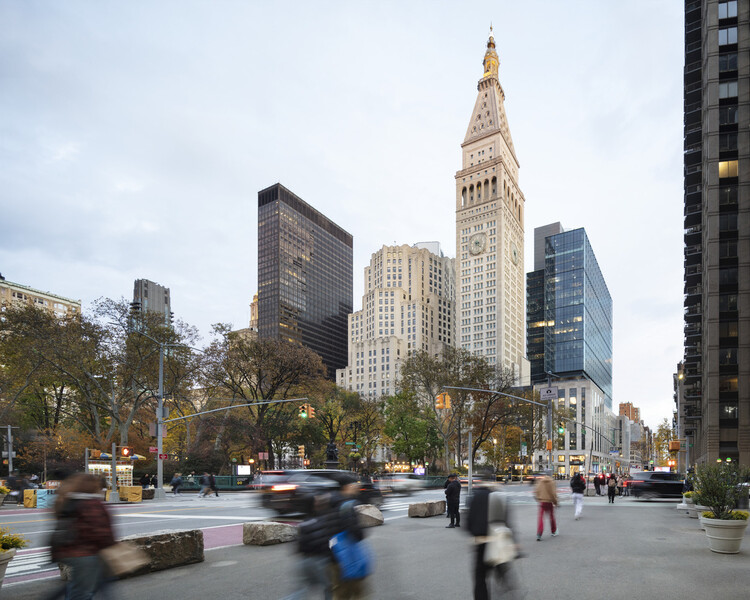
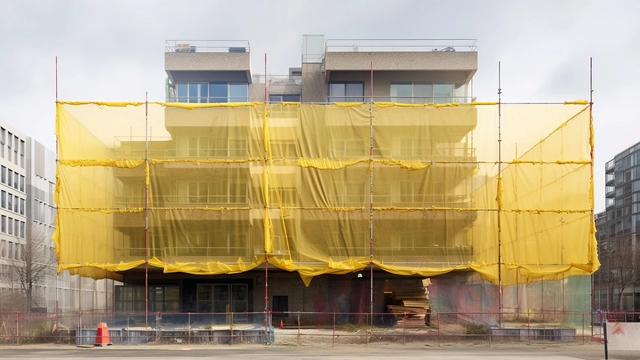
The construction industry today faces an unavoidable paradox: the urgent need for sustainable solutions for the future of cities collides with the exhaustion of the term "sustainability" itself, often reduced to a hollow commercial label. In this scenario, Arquivo – one of the winners of ArchDaily's 2025 Next Practices Award – emerges as a facilitator and mediator between different stakeholders in the construction field through disassembly – or rather, de-construction – and the reuse of building elements. Etymologically, if "construction" derives from the Latin construere (to heap up, assemble), the prefix "de-" imposes a conceptual inversion: it is not about destroying, but about disassembling with intelligence to understand the logic of the parts.

While conventional demolition practices generate a vast volume of waste and energy consumption, Arquivo proposes reuse as a viable alternative for the circular economy. The company operates in the gap between disposal and new construction, guided by a clear premise: "Reuse is only fully realized when the material gains a new life."

Arquivo: Deconstruction and Material Reuse for a Circular Architecture - Image 1 of 4Arquivo: Deconstruction and Material Reuse for a Circular Architecture - Image 2 of 4Arquivo: Deconstruction and Material Reuse for a Circular Architecture - Image 3 of 4Arquivo: Deconstruction and Material Reuse for a Circular Architecture - Image 4 of 4Arquivo: Deconstruction and Material Reuse for a Circular Architecture - More Images+ 10

Barbara Buser Recognized With the 2026 Jane Drew Prize for Her Work In Circular Construction

The AJ and The Architectural Review have named architect Barbara Buser as the winner of the 2026 Jane Drew Prize. The prize, named after English modernist architect and urban designer Jane Drew, is part of the W Awards and the W Programme, which recognise women's contributions to the architectural profession. Swiss-based architect Barbara Buser is known as an innovator in the field of recycling and reuse, and as an expert in circular construction, recognised for pioneering repurposing practices in Switzerland. The award, therefore, recognises not only her contribution to architecture itself, but above all her efforts to reduce the industry's environmental impact through socialisation initiatives. The recognition follows Anne Lacaton's award in 2025, as well as other prominent figures in the field, such as Kazuyo Sejima in 2023, Farshid Moussavi in 2022, and Yasmeen Lari in 2020.

Call for entries: Transformation of the current Odense University Hospital (OUH)

We are pleased to invite you to take part in an international open ideas competition that marks the beginning of one of Denmark’s largest urban transformation projects: the redevelopment of the former Odense University Hospital (OUH) into a vibrant, urban area in the heart of Odense.

Dispatched: Architecture of the American Post Office and the Privatization of Civic Space

Post offices stand among the most enduring monuments of civic life in the United States. Across towns and city centers, they carry the shifting architectural ambitions of the nineteenth and twentieth centuries, from Greek Revival formality to Beaux-Arts monumentality and Art Deco ornament. Architects and federal planners would give these buildings a clear public role and a powerful physical presence. Stone façades, monumental halls, and crafted interiors projected stability, trust, and permanence. The post office placed the federal government directly into the everyday landscape of American life.

Dispatched: Architecture of the American Post Office and the Privatization of Civic Space - Image 4 of 4Dispatched: Architecture of the American Post Office and the Privatization of Civic Space - Image 6 of 4Dispatched: Architecture of the American Post Office and the Privatization of Civic Space - Image 7 of 4Dispatched: Architecture of the American Post Office and the Privatization of Civic Space - Featured ImageDispatched: Architecture of the American Post Office and the Privatization of Civic Space - More Images+ 10

The Afterlife of Expo Osaka’s Grand Ring: How the Timber Structure Is Being Reused Across Japan

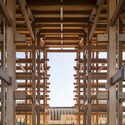
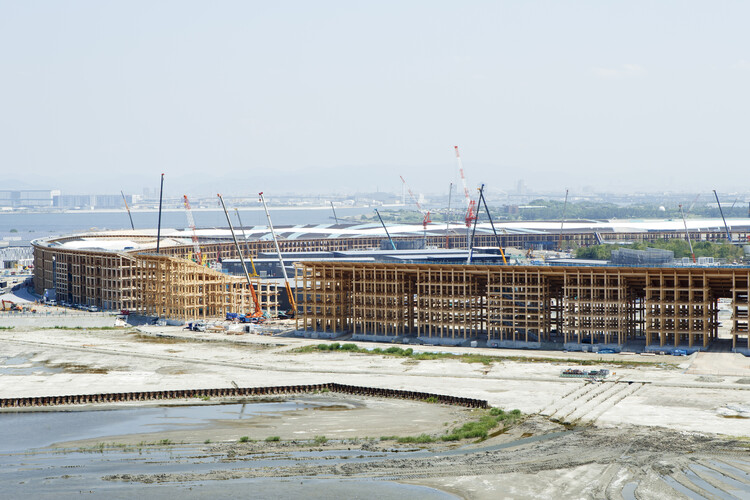
Exhibitions can be an opportunity to extend architectural discourse beyond professional circles, opening conversations with broader publics and serving as an interface between architecture and society. Within this concept, major international events such as the Osaka International Expo 2025 and the Venice Architecture Biennale have adopted the idea of the circular economy as one of their organizational objectives. The idea of circularity in events can be reflected in, for example, their energy consumption, the impact of the displacement they generate, their waste, or the useful life of their infrastructure. The site destined for the last World Expo, held in Osaka from 13 April to 13 October 2025, was surrounded by a massive timber structure designed by Sou Fujimoto Architects, one of the world's largest wooden constructions. The Japan Association for the 2025 World Exposition committed to reusing building materials "as much as possible," with concrete plans for their reuse to be finalized by March. In the meantime, some relocation alternatives are already emerging for the pieces of the World Expo structure.

The Afterlife of Expo Osaka’s Grand Ring: How the Timber Structure Is Being Reused Across Japan - Image 1 of 4The Afterlife of Expo Osaka’s Grand Ring: How the Timber Structure Is Being Reused Across Japan - Featured ImageThe Afterlife of Expo Osaka’s Grand Ring: How the Timber Structure Is Being Reused Across Japan - Image 2 of 4The Afterlife of Expo Osaka’s Grand Ring: How the Timber Structure Is Being Reused Across Japan - Image 4 of 4The Afterlife of Expo Osaka’s Grand Ring: How the Timber Structure Is Being Reused Across Japan - More Images+ 4

Seven Finalists Announced for the 2026 EU Mies Awards for Contemporary European Architecture

The European Commission and the Fundació Mies van der Rohe have announced the seven finalist projects for the 2026 European Union Prize for Contemporary Architecture - Mies van der Rohe Awards, supported by the European Union's Creative Europe programme. The selection follows the announcement of 410 nominated works in November and a shortlist of 40 projects revealed in early January. Of the seven finalists, five have been selected in the Architecture category and two in the Emerging category. According to the jury chaired by Smiljan Radić, the finalist projects are exemplary contributions to the future of European architecture, demonstrating how the discipline can respond simultaneously to specific local conditions and broader social, cultural, and environmental challenges. The selected works range from interventions in former industrial sites, small villages, and peripheral urban areas to carefully calibrated projects within larger cities. Across these varied contexts, the projects show how architecture can transform overlooked or ordinary settings into inclusive, high-quality spaces for living, learning, and social exchange.

Seven Finalists Announced for the 2026 EU Mies Awards for Contemporary European Architecture - Image 1 of 4Seven Finalists Announced for the 2026 EU Mies Awards for Contemporary European Architecture - Image 2 of 4Seven Finalists Announced for the 2026 EU Mies Awards for Contemporary European Architecture - Image 3 of 4Seven Finalists Announced for the 2026 EU Mies Awards for Contemporary European Architecture - Image 4 of 4Seven Finalists Announced for the 2026 EU Mies Awards for Contemporary European Architecture - More Images+ 113

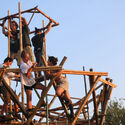
Winter Stations 2026: Crest

Crest is a student-led, design-build installation produced by F_RMlab at the University of Waterloo School of Architecture for Winter Stations 2026, an international competition transforming Toronto’s lifeguard stations into immersive works of public art. This year’s theme, Mirage, invited participants to address the “boundary of what is seen and what is real in the age of AI”, exploring art as a medium that disengages from the digital world by immersing audiences in shared, tactile experiences.

Timber Tectonics: 10 Projects Rethinking Wood Construction in Contemporary China

Subscriber Access | 

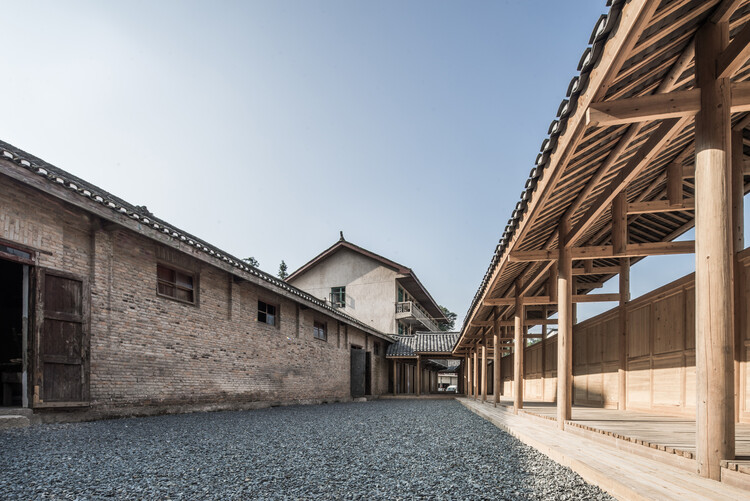
In much of China, concrete remains the dominant construction material. Despite growing concerns over its environmental impact, concrete continues to align with the priorities of many developers and clients—it is fast, cost-effective, and highly durable. As a result, most building types in China still rely heavily on concrete. This reliance is further reinforced by China's position as the world's largest producer of Portland cement. A deeply entrenched supply chain, rooted in raw material manufacturing and economic infrastructure, ensures that concrete remains the default choice in the construction industry.

Yet historically, Chinese architecture was built upon a rich tradition of timber construction. The Forbidden City is a prime example: not only is it emblematic of China's architectural heritage, but it also remains one of the largest and best-preserved collections of ancient wooden structures in the world. This legacy prompts an important question: does timber construction have a meaningful future in China's contemporary building industry?

Timber Tectonics: 10 Projects Rethinking Wood Construction in Contemporary China - Image 1 of 4Timber Tectonics: 10 Projects Rethinking Wood Construction in Contemporary China - Image 2 of 4Timber Tectonics: 10 Projects Rethinking Wood Construction in Contemporary China - Image 3 of 4Timber Tectonics: 10 Projects Rethinking Wood Construction in Contemporary China - Image 4 of 4Timber Tectonics: 10 Projects Rethinking Wood Construction in Contemporary China - More Images+ 42

New Life for Old Spaces: Buildner Announces Results of Its First Annual Re-Form Competition

 | Sponsored Content

Buildner has announced the results of its Re-Form: New Life for Old Spaces, an international ideas competition examining the adaptive reuse of small-scale existing buildings. The competition invited architects and designers to propose transformations of used, abandoned, or overlooked structures with an approximate footprint of 250 square meters, located anywhere in the world. With no fixed site or program, participants were encouraged to explore alternatives to demolition and new construction through reuse strategies grounded in contemporary social and environmental concerns.

As an open-format competition, Re-Form foregrounded sustainability, feasibility, and community impact over formal or typological constraints. Submissions ranged from precise urban insertions to more speculative rural interventions, reflecting a broad range of approaches to working with existing fabric. Many projects focused on how limited, often marginal spaces could be reactivated to support new forms of collective use while responding to material, climatic, and ecological conditions.

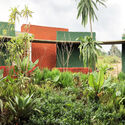
From Legal Constraint to Local Craft: Four Adaptive Projects by messina | rivas in Cunha

The municipality of Cunha, located in the state of São Paulo, Brazil, is a region known for its inland landscape, hilly terrain, and, especially, a major production of nationally renowned ceramics. It is within this context that the office messina | rivas has been working since 2017, with a set of projects located on a farm. Their work, which integrates design and construction in an indissociable manner, results in interventions that reveal a sensitive approach to pre-existing conditions and their surrounding environment.

The relationship between the office, led by architects Francisco Rivas and Rodrigo Messina, and the site began with a small renovation of a guest house for hosting friends. The project resulted in the transformation of two existing bedrooms into suites and the creation of an external kitchen. Since then, growing demands and the need to adapt existing buildings have driven the design of other projects distributed across the same site.

From Legal Constraint to Local Craft: Four Adaptive Projects by messina | rivas in Cunha - Image 1 of 4From Legal Constraint to Local Craft: Four Adaptive Projects by messina | rivas in Cunha - Image 2 of 4From Legal Constraint to Local Craft: Four Adaptive Projects by messina | rivas in Cunha - Image 3 of 4From Legal Constraint to Local Craft: Four Adaptive Projects by messina | rivas in Cunha - Image 4 of 4From Legal Constraint to Local Craft: Four Adaptive Projects by messina | rivas in Cunha - More Images+ 9

Design Ethos of Subtraction and Addition: 10 Adaptive Reuse Projects for Commercial and Social Spaces in Asia

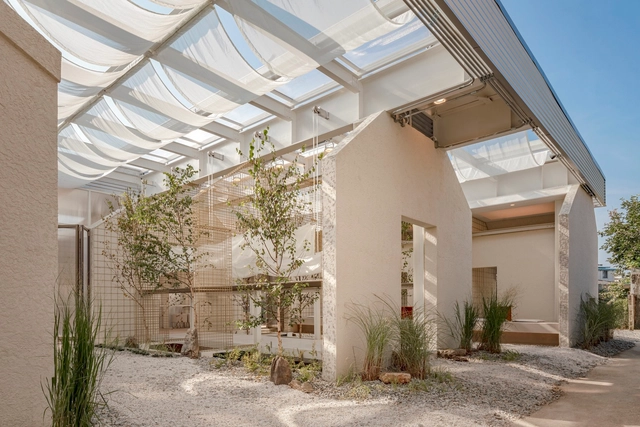
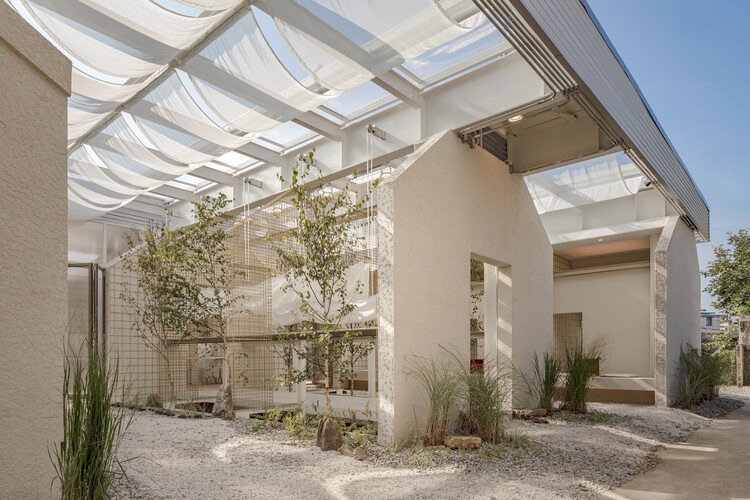
While adaptive reuse has been increasingly acknowledged as a vital architectural strategy worldwide, its discourse and implementation in Asia are still expanding—driven by growing ecological awareness and a shifting understanding of architectural knowledge. Rather than accelerating a developmentalist model centered on demolition and new construction, architects today are confronted with a different approach to the built environment: treating the existing structure as a resource—an archive of materials, spatial organizations, and informal histories.

Adaptive reuse is often associated with the preservation of historic buildings and culturally significant heritage. Yet the vast field of seemingly 'less-valued' structures—abandoned houses, standard yet old dwellings, non-conforming office buildings, and overlooked urban voids—has become ground for experimentation. These sites challenge architects and designers to reconsider prevailing standards of efficiency and market-driven development, and to imagine spatial and ecological practices that avoid the continual loss of embodied material and cultural knowledge inherent in constant rebuilding.

Design Ethos of Subtraction and Addition: 10 Adaptive Reuse Projects for Commercial and Social Spaces in Asia - SustainabilityDesign Ethos of Subtraction and Addition: 10 Adaptive Reuse Projects for Commercial and Social Spaces in Asia - SustainabilityDesign Ethos of Subtraction and Addition: 10 Adaptive Reuse Projects for Commercial and Social Spaces in Asia - SustainabilityDesign Ethos of Subtraction and Addition: 10 Adaptive Reuse Projects for Commercial and Social Spaces in Asia - SustainabilityDesign Ethos of Subtraction and Addition: 10 Adaptive Reuse Projects for Commercial and Social Spaces in Asia - More Images+ 29

How Can Transport Infrastructures Take On a New Lease of Life?

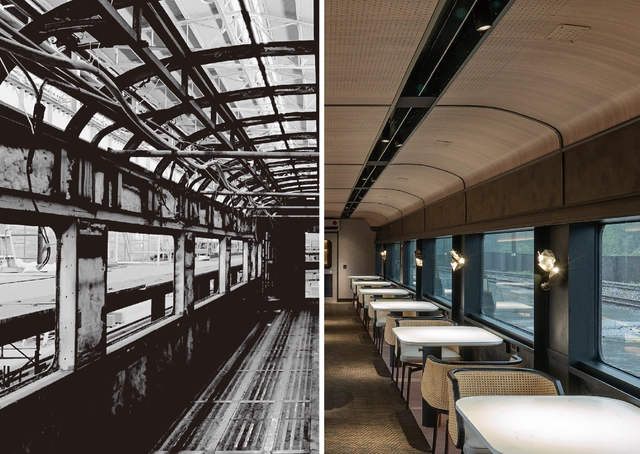
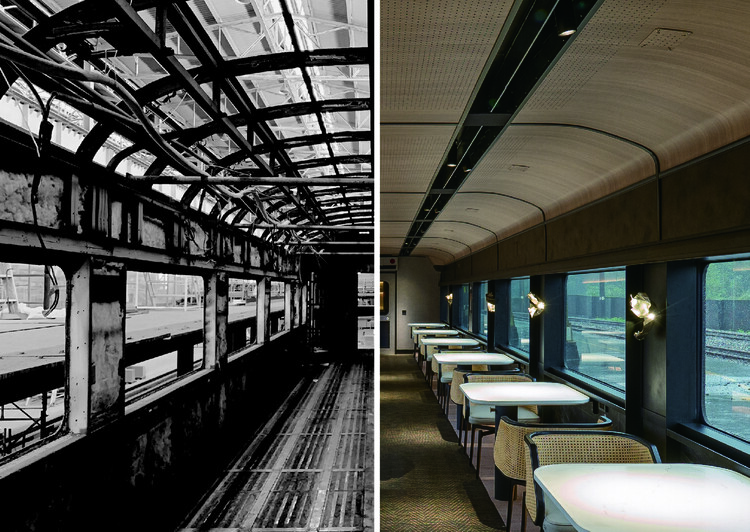
Faced with the combined forces of population growth, economic prosperity, and urban expansion, cities are witnessing a significant rise in the movement of people and goods—mirroring the evolution of diverse mobility systems within urban environments. As technologies advance and modes of transport evolve, the adaptive reuse of train carriages, airplane cabins, and other service infrastructures reveals opportunities to explore their creative potential. Materials, technologies, and design tools converge around a shared goal: refurbishing and repurposing disused structures to give them new life.

How Can Transport Infrastructures Take On a New Lease of Life? - Image 1 of 4How Can Transport Infrastructures Take On a New Lease of Life? - Image 2 of 4How Can Transport Infrastructures Take On a New Lease of Life? - Image 3 of 4How Can Transport Infrastructures Take On a New Lease of Life? - Image 4 of 4How Can Transport Infrastructures Take On a New Lease of Life? - More Images+ 12

Building Less: ArchDaily’s November Editorial Focus

As the late urban planner Jaime Lerner once argued, the future of architecture lies not in building new cities but in updating those that already exist. In a world where resources are finite and urban space is increasingly saturated, his statement feels more urgent than ever. It calls for architects to look inward, to rethink what truly needs to be built, and to recognize the creative potential of what is already there. Within the constraints of existing structures lies an opportunity to design differently: to repair, adapt, and reuse. Or, as French poet Louis Aragon would have it, to reinvent the past to see the beauty of the future.

This month, ArchDaily explores Building Less: Rethink, Reuse, Renovate, Repurpose, a theme that examines the growing shift in architecture toward working with what already exists. As urban spaces grow denser and land becomes scarce, architects are rethinking the impulse to build anew. Instead, they are extending the life of existing structures, embracing retrofit and adaptive reuse as strategies for sustainability and creativity. The question guiding this exploration is simple, yet urgent: How can architecture redefine urban futures by building less?

Building Less: ArchDaily’s November Editorial Focus - Image 1 of 4Building Less: ArchDaily’s November Editorial Focus - Image 2 of 4Building Less: ArchDaily’s November Editorial Focus - Image 3 of 4Building Less: ArchDaily’s November Editorial Focus - Image 4 of 4Building Less: ArchDaily’s November Editorial Focus - More Images+ 4

The Chilean Architecture Biennial Revives a Church Ruin as a Temporary Pavilion

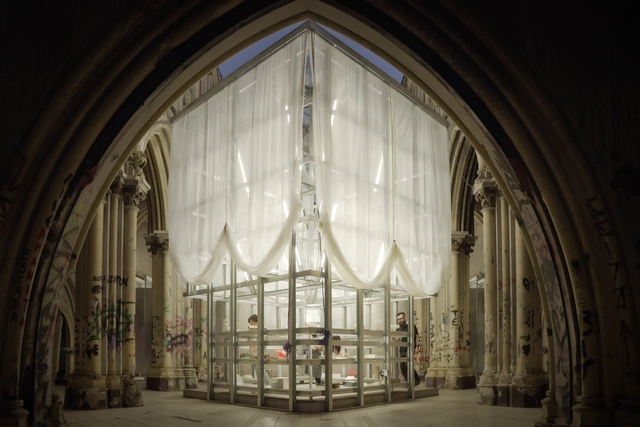
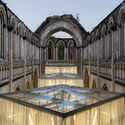
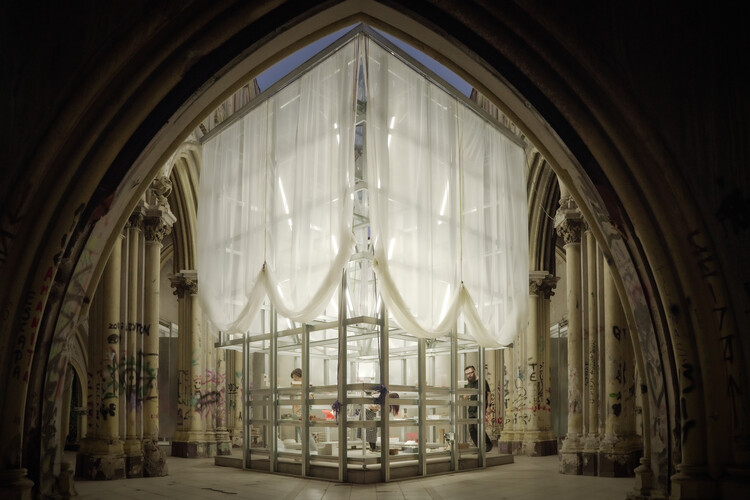
Between September 25 and October 5, 2025, the XXIII Chilean Architecture and Urbanism Biennial took place in Santiago. Under the title "DOUBLE EXPOSURE: (re)program · (re)adapt · (re)construct," the event was organized around the idea of "understanding architecture not as the production of the new, but as the ability to reactivate what already exists." Based on this premise, the curatorial team, composed of Ángela Carvajal and Sebastián López (Anagramma Arquitectes) together with Óscar Aceves, conceived a circuit of eight venues located in downtown Santiago. Their goal was to revive and reclaim urban spaces through a series of free public activities that drew around 70,000 visitors. Among the reactivated sites, the ruins of the San Francisco de Borja Church stood out. Burned during the social outburst of October 2019, the site hosted a temporary pavilion that served as a venue for talks, readings, art installations, discussions, and community events.

The Chilean Architecture Biennial Revives a Church Ruin as a Temporary Pavilion - Image 1 of 4The Chilean Architecture Biennial Revives a Church Ruin as a Temporary Pavilion - Image 2 of 4The Chilean Architecture Biennial Revives a Church Ruin as a Temporary Pavilion - Image 3 of 4The Chilean Architecture Biennial Revives a Church Ruin as a Temporary Pavilion - Image 4 of 4The Chilean Architecture Biennial Revives a Church Ruin as a Temporary Pavilion - More Images+ 17

World Architecture Day 2025: How We Design for Strength in an Age of Crisis

Today, on the first Monday of October, we celebrate World Architecture Day. This year, the International Union of Architects (UIA) has set the theme "Design for Strength," a powerful call to action that resonates deeply with the UN's focus on urban crisis response. In a world facing unprecedented environmental and social disruptions, this theme challenges us to move beyond temporary fixes. It asks: How can our buildings and cities not only withstand shocks but also foster equity, continuity, and resilience?
While the concept of strength in architecture can easily evoke images of reinforced concrete and steel, a more profound interpretation is emerging, one that defines strength not as mere rigidity, but as a holistic capacity to endure and adapt. This includes many facets, from ecological resilience and stewardship to long-lasting concepts of social resilience or the long-lasting conservation of existing urban structures, all contributing to a built environment more able to respond to the multitude of crises faced by cities worldwide.

World Architecture Day 2025: How We Design for Strength in an Age of Crisis - Image 1 of 4World Architecture Day 2025: How We Design for Strength in an Age of Crisis - Image 2 of 4World Architecture Day 2025: How We Design for Strength in an Age of Crisis - Image 3 of 4World Architecture Day 2025: How We Design for Strength in an Age of Crisis - Image 4 of 4World Architecture Day 2025: How We Design for Strength in an Age of Crisis - More Images+ 20

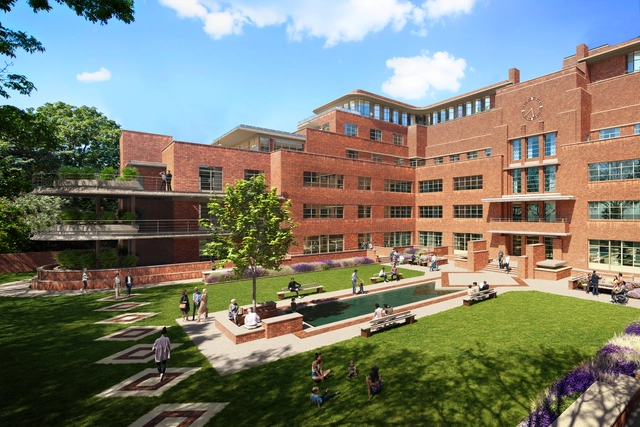
SPPARC Studio Unveils Design for Residential Conversion of Former Ravenscourt Park Hospital in London

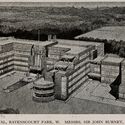
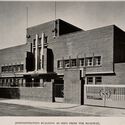
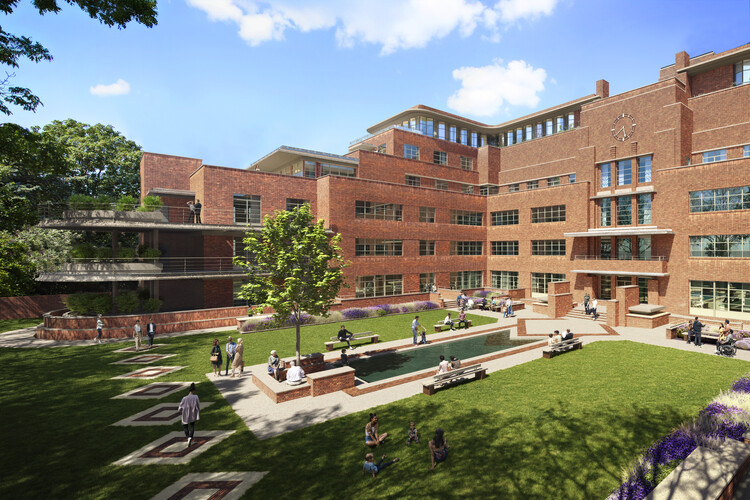
SPPARC architecture and design studio has revealed plans to renovate the former Ravenscourt Park Hospital in Hammersmith, London, which has stood vacant for two decades. The building, originally named the Royal Masonic Hospital and designed by Thomas S. Tait, is regarded as one of the first major modern buildings in the UK and was Europe's largest independent acute hospital when it was opened by King George V in 1933. Built to provide low-cost treatment for Freemasons and their families, the 260-bed facility operated until 1994, reopened as an NHS hospital in 2002, and was permanently closed in 2004. According to the recent announcement, the Grade II listed landmark, currently on Historic England's Heritage at Risk register, is intended to be repurposed as 140 new homes, a 65-bed care home, and spaces available for public hire.

SPPARC Studio Unveils Design for Residential Conversion of Former Ravenscourt Park Hospital in London - Image 1 of 4SPPARC Studio Unveils Design for Residential Conversion of Former Ravenscourt Park Hospital in London - Image 2 of 4SPPARC Studio Unveils Design for Residential Conversion of Former Ravenscourt Park Hospital in London - Image 3 of 4SPPARC Studio Unveils Design for Residential Conversion of Former Ravenscourt Park Hospital in London - Image 4 of 4SPPARC Studio Unveils Design for Residential Conversion of Former Ravenscourt Park Hospital in London - More Images+ 2

The European Citizens’ Initiative HouseEurope! Receives the 2025 OBEL Award

HouseEurope!, a registered non-profit organization focused on promoting the social and ecological transformation of Europe's built environment, has received the 2025 OBEL Award. Presented annually by the Henrik Frode Obel Foundation, the award recognizes architectural contributions with the potential to drive meaningful change. Aligned with this year's theme, "Ready Made," the OBEL Award Jury selected HouseEurope! for its efforts in raising awareness and fostering public engagement around the need for a shift in construction and housing practices across Europe.

The European Citizens’ Initiative HouseEurope! Receives the 2025 OBEL Award - Image 1 of 4The European Citizens’ Initiative HouseEurope! Receives the 2025 OBEL Award - Image 2 of 4The European Citizens’ Initiative HouseEurope! Receives the 2025 OBEL Award - Image 3 of 4The European Citizens’ Initiative HouseEurope! Receives the 2025 OBEL Award - Image 4 of 4The European Citizens’ Initiative HouseEurope! Receives the 2025 OBEL Award - More Images+ 4

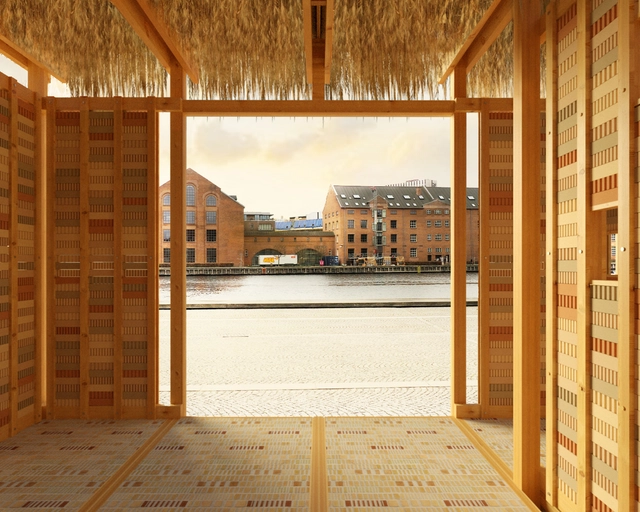
Copenhagen Architecture Biennial 2025 Reveals 'Slow Pavilion' Designs Built from Reused Materials

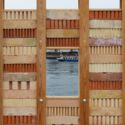
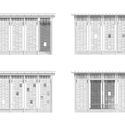
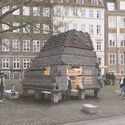
The first edition of the Copenhagen Architecture Biennial will take place from 18 September to 19 October 2025. Organized by CAFx (Copenhagen Architecture Forum), the event marks a transition from the previous annual Copenhagen Architecture Festival to a more expansive platform for architectural exploration. The theme of the inaugural edition, "Slow Down," invites participants to reflect on how the rapid pace of modern life affects the built environment. According to the organizers, this thematic shift encourages the envisioning of spaces that promote sustainability, longevity, and mindful engagement with our surroundings. In line with this vision, the organization launched an open call earlier this year for pavilion proposals that embody principles of circular design while serving as hubs for public programming during the event. Two winning proposals, modular structures by Slaatto Morsbøl and Tom Svilans x THISS Studio, were selected, each offering an approach to architectural deceleration.

Copenhagen Architecture Biennial 2025 Reveals 'Slow Pavilion' Designs Built from Reused Materials - Image 1 of 4Copenhagen Architecture Biennial 2025 Reveals 'Slow Pavilion' Designs Built from Reused Materials - Image 2 of 4Copenhagen Architecture Biennial 2025 Reveals 'Slow Pavilion' Designs Built from Reused Materials - Image 3 of 4Copenhagen Architecture Biennial 2025 Reveals 'Slow Pavilion' Designs Built from Reused Materials - Image 4 of 4Copenhagen Architecture Biennial 2025 Reveals 'Slow Pavilion' Designs Built from Reused Materials - More Images+ 5