1. ArchDaily
  2. science

science: The Latest Architecture and News

Lisbon Architecture Triennale 2025 Examines the Technosphere and Human Impact on Earth

Subscriber Access | 

Thirty trillion tons. This is the estimated mass of all human-made matter on Earth, and the starting point for the 7th edition of the Lisbon Architecture Triennale. Curated by Ann-Sofi Rönnskog and John Palmesino, founders of Territorial Agency, the event asks a deceptively simple question: How heavy is a city? To answer it requires more than data. It demands a shift in perception: from the scale of the city to the planetary technosphere.

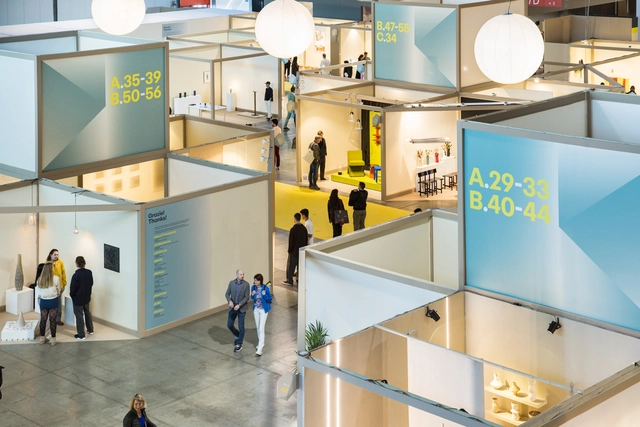
The technosphere, a term borrowed from Earth sciences, defines the vast system of infrastructures, technologies, and materials that sustain human life while reshaping the planet. Cities, in this view, are not only territories but dense nodes within this planetary metabolism. From October to December 2025, Lisbon becomes a lens to examine that magnitude, hosting three main exhibitions (Fluxes, Spectres, Lighter), a book of essays, a talks program, and more than twenty independent projects across the city.

Lisbon Architecture Triennale 2025 Examines the Technosphere and Human Impact on Earth - Image 1 of 4Lisbon Architecture Triennale 2025 Examines the Technosphere and Human Impact on Earth - Image 2 of 4Lisbon Architecture Triennale 2025 Examines the Technosphere and Human Impact on Earth - Image 3 of 4Lisbon Architecture Triennale 2025 Examines the Technosphere and Human Impact on Earth - Image 4 of 4Lisbon Architecture Triennale 2025 Examines the Technosphere and Human Impact on Earth - More Images+ 8

The Architect as a Scientist: New Materials Emerging Between Science and Design

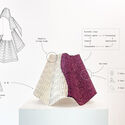
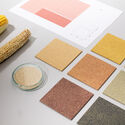
What is architecture? For some, its traditional role is to bring together imagination, technical knowledge, and problem-solving, allowing architects to design and construct while balancing ideas with the means to realize them. From the stone and wood of early buildings to the steel and concrete of the 20th century, each era demanded not only an understanding of form but also of the properties and potential of the materials in use. This grasp of materials has always been a core part of the creative process, though its scope was limited by the know-how and technologies available.

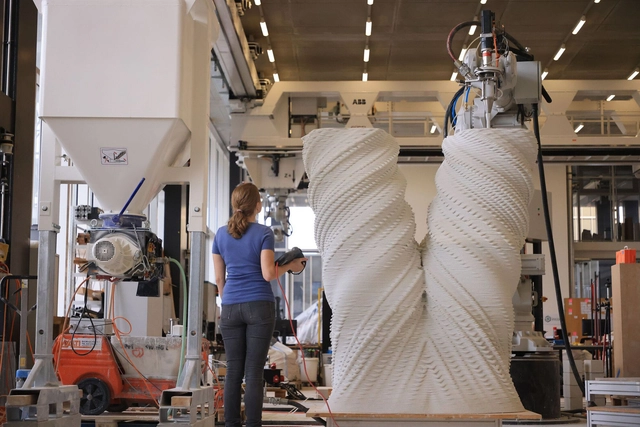
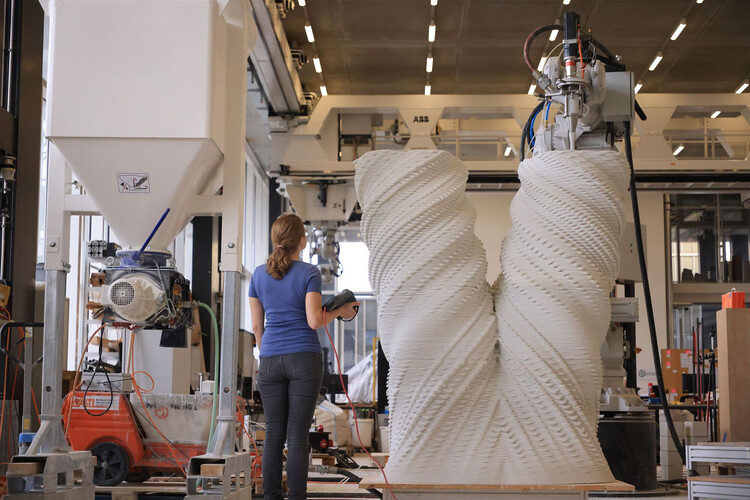
Over time, that balance has begun to shift. Architects have moved from merely using materials to actively designing them, applying scientific principles and experimenting with biological, chemical, and computational processes. This evolution has expanded the possibilities of architecture, intersecting nature, technology, and art, while pushing the role of the architect into a more experimental, science-driven dimension, where the manipulation and creation of materials becomes central to the creative act rather than merely a means to achieve forms or structures.

The Architect as a Scientist: New Materials Emerging Between Science and Design - Image 1 of 4The Architect as a Scientist: New Materials Emerging Between Science and Design - Image 2 of 4The Architect as a Scientist: New Materials Emerging Between Science and Design - Image 3 of 4The Architect as a Scientist: New Materials Emerging Between Science and Design - Image 4 of 4The Architect as a Scientist: New Materials Emerging Between Science and Design - More Images+ 11

The Science of Design: How Neuroscience can Help Architects Shape the Built Environment

In recent years, the integration of neuroscience and architecture has revolutionized our understanding of how built environments influence human well-being, behavior, and cognition. This interdisciplinary field, known as neuroarchitecture, explores the connections between spatial design, brain function, and psychology, offering insights into creating environments that promote health, creativity, and emotional resilience.

The Science of Design: How Neuroscience can Help Architects Shape the Built Environment  - Image 1 of 4The Science of Design: How Neuroscience can Help Architects Shape the Built Environment  - Image 2 of 4The Science of Design: How Neuroscience can Help Architects Shape the Built Environment  - Image 3 of 4The Science of Design: How Neuroscience can Help Architects Shape the Built Environment  - Image 4 of 4The Science of Design: How Neuroscience can Help Architects Shape the Built Environment  - More Images+ 9

Carlo Ratti Associati's Proposed Milan Science Campus Features Robotically-Assembled Brick Facades

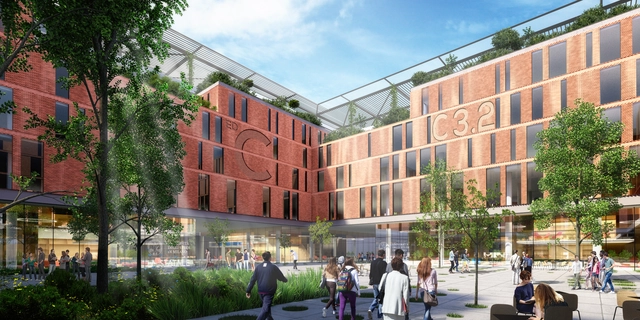
Carlo Ratti Associati has released details of their schematic design for the University of Milan’s new science campus, featuring robotically-assembled brick facades, porous communal areas, and natural oases. Working in collaboration with Australian real estate group Lendlease, the “Science for Citizens” proposal will sit within a new Milan Innovation District, located on the site of Milan’s 2015 World Expo.

Located within this new district, and home to over 18,000 students and 2,000 researchers, the “Science for Citizens” proposal seeks to “put forward a vision for an open campus that becomes a testing ground for innovative education while fostering exchanges between the university and the surrounding innovation neighborhood.”

Donghua Chen & Partners Release Details of "Science Island Loop" Proposal in Lithuania

Donghua Chen & Partners released details of their proposal for the Lithuanian National Science and Innovation Center, an initiative known colloquially as “Science Island.” The competition saw entries from 144 teams, making it the largest design contest ever held in Lithuania. Donghua Chen & Partners were one of three finalists for the competition, with the entry by SMAR Architecture Studio ultimately chosen for realization.

The Donghua Chen & Partners proposal named the “Science Loop” sees a series of systems, including social, skyline, circulation, devolution, and recycling loops, organized as an integrated network.

Donghua Chen & Partners Release Details of "Science Island Loop" Proposal in Lithuania - Image 1 of 4Donghua Chen & Partners Release Details of "Science Island Loop" Proposal in Lithuania - Image 2 of 4Donghua Chen & Partners Release Details of "Science Island Loop" Proposal in Lithuania - Image 3 of 4Donghua Chen & Partners Release Details of "Science Island Loop" Proposal in Lithuania - Image 4 of 4Donghua Chen & Partners Release Details of Science Island Loop Proposal in Lithuania - More Images+ 17

Bernard Tschumi Team Wins Competition for University Research Complex in Paris

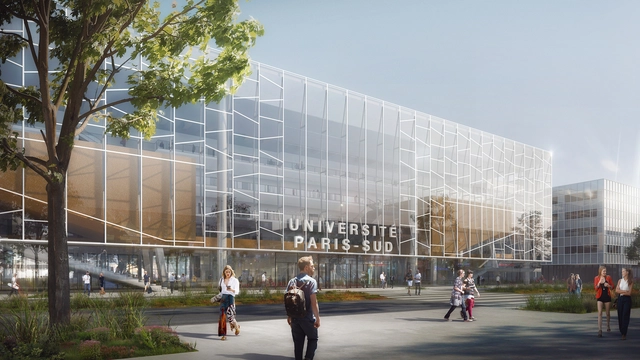
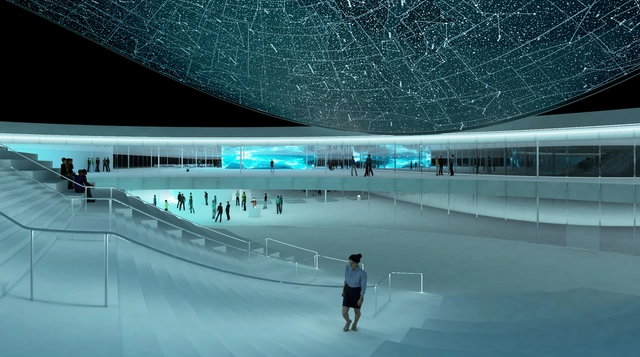
Bernard Tschumi Architects has been awarded one of the largest university commissions in France, with the design and build of a €283 million ($350 million) state-of-the-art educations and research center at the Université Paris-Sud in Saclay, just south of the French capital. The “METRO Center” will form part of the biology, pharmacy and chemistry wing of the university, comprising six buildings connected by flying bridges, featuring teaching facilities, research labs, offices, restaurants, and logistics areas.

Having won a competition against teams containing Herzog & De Meuron and MVRDV, Bernard Tschumi will work in collaboration with Bouygues Construction, Groupe-6 and Baumschlager Eberle Architekten for the scheme’s realization and operation.

Bernard Tschumi Team Wins Competition for University Research Complex in Paris - Image 1 of 4Bernard Tschumi Team Wins Competition for University Research Complex in Paris - Image 2 of 4Bernard Tschumi Team Wins Competition for University Research Complex in Paris - Image 3 of 4Bernard Tschumi Team Wins Competition for University Research Complex in Paris - Image 4 of 4Bernard Tschumi Team Wins Competition for University Research Complex in Paris - More Images+ 4

SMAR Architecture Studio Selected as Winners of Science Island Design Competition

Kaunas City Municipality has announced SMAR Architecture Studio as the winners of the Science Island International Design Contest for Lithuania's new National Science and Innovation Center. SMAR's design was the highest ranked of three winners in the Design Contest, which was the most popular in Lithuania's history attracting 144 teams from 44 countries.

Florence Experiment To Show How Watching Movies Impacts Plant Growth

Florence Experiment To Show How Watching Movies Impacts Plant Growth - Image 5 of 4
Courtesy of Michele Giuseppe Onali

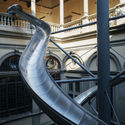
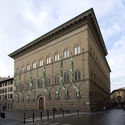
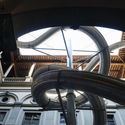
Throughout the spring and summer of 2018, the Palazzo Strozzi in Florence, Italy will host a new site-specific project seeking to further our understanding of ecology, and the relationship between humans and the natural world. “The Florence Experiment” will connect internal and external spaces of the famed Renaissance palace through two separate experiences: an intertwined set of 65-foot-high (20-meter-high) slides, and a “live analysis” of the impact of human emotion on plant growth.

The Florence Experiment has been devised by German artist Carsten Höller and plant neurobiologist Stefano Mancuso, with the vision of turning the Palazzo Strozzi’s façade and courtyard into engaging areas of scientific and artistic experiment. Inspired by the Renaissance alliance between art and science, the project aims to create a new awareness of the way we see, understand, and interact with plant life.

Florence Experiment To Show How Watching Movies Impacts Plant Growth - Image 1 of 4Florence Experiment To Show How Watching Movies Impacts Plant Growth - Image 2 of 4Florence Experiment To Show How Watching Movies Impacts Plant Growth - Image 3 of 4Florence Experiment To Show How Watching Movies Impacts Plant Growth - Image 4 of 4Florence Experiment To Show How Watching Movies Impacts Plant Growth - More Images+ 3

ARCHITECT's 12th Annual R+D Awards

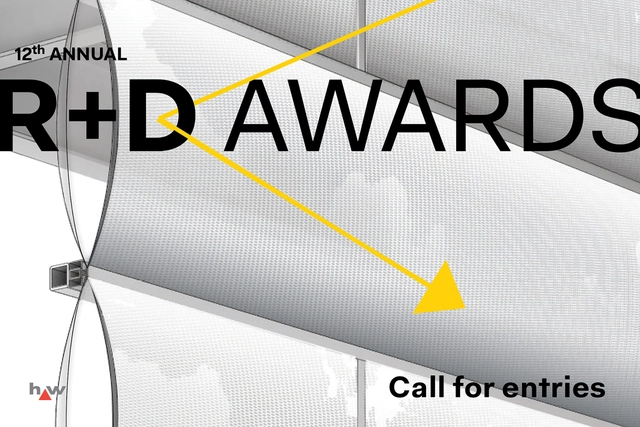
ARCHITECT magazine is now accepting entries for its 12th Annual R+D Awards! We would be grateful if you could share the competition details below with your network. The winners will published in ARCHITECT’s July 2018 issue and on our website. As with previous years, full-time students and faculty are eligible for a reduced registration fee!

The Experience of Architectural Space: A Design Experiment

What is architectural space? How is it perceived and experienced by the user? What reactions does it produce within the human mind and body? The Experience of Architectural Space is a interactive design experiment conducted by students of Hunter College. The experiment takes place within Natasha Johns-Messenger's interactive installation within El Museo de Los Sures, ThreeFold, curated by Melissa Bianca Amore.

Laboratory Design: It's Time for a Breakthrough

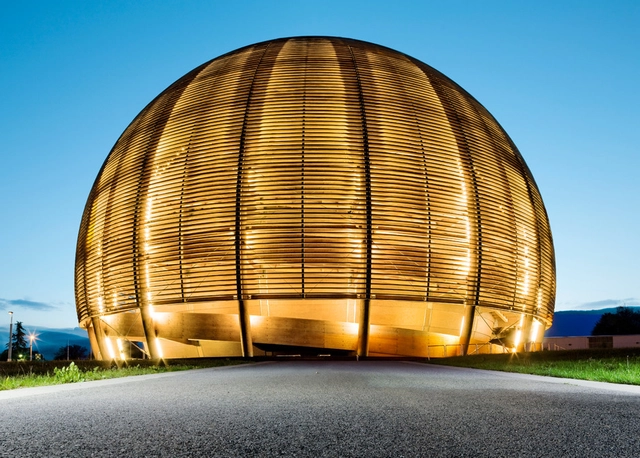
As science continues to propel forward, it seems that the architecture to support scientists and their advancements is falling behind. The problem of laboratory design was recently brought up in an article by The Financial Times' Edwin Heathcote, who cited labs around the world, from Mendelsohn's Einstein Tower to Cern's giant timber globe, as great examples of an architecture of collaboration and experimentation. If some of our greatest discoveries today are often happening in mundane environments, what would happen if the architecture of labs and offices began to support and inspire innovation? Read the full story here.

From STEM To STEAM: The Value of Art

In a recent article for the Seattle Daily Journal of Commerce, Barney Mansavage champions the idea of transforming STEM into STEAM (Science, Technology, ART, and Mathematics). He argues that overlapping science and art helps launch cross-disciplinary conversations and relationships, and in turn, promote experimentation; he thus suggests that educational spaces be designed to bring these fields together. Check out the article here, and more about the TED talk that inspired it, here.

Designers Don't Get Science (And That's A Dangerous Thing)

Subscriber Access | 

This article, by Michael Mehaffy and Nikos Salingaros, originally appeared in Metropolis Mag as "Science for Designers: The Meaning of Complexity."

Today’s designers seem to love using new ideas coming from science. They embrace them as analogies, metaphors, and in a few cases, tools to generate startling new designs. (Computer algorithms and spline shapes are a good recent example of the latter.) But metaphors about the complexity of the city and its adaptive structures are not the same thing as the actual complexity of the city. The trouble is, this confusion can produce disastrous results. It can even contribute to the slow collapse of an entire civilization. We might think that the difference between metaphor and reality is so obvious that it’s hardly worth mentioning. And yet, such confusion pervades the design world today, and spreads from there into the general culture. It plays a key role in the delusional expectation that metaphors will create reality.
Psychiatrists speak of this as an actual disorder known as “magical thinking”: if our symbols are good enough, then reality will follow. In the hands of designers, this is very dangerous stuff. 

More after the break...