1. ArchDaily
  2. Sports Architecture

Sports Architecture: The Latest Architecture and News

'BS25' Silos - Diving and Indoor Skydiving Center Proposal / Moko Architects

The proposal by Moko Architects for the Diving and Indoor Skydiving Center restores a part of a house factory in Żerań which operated in the past,. They turn a building in a non-developed area with abandoned halls and warehouses into a recreation center open all year round in the old silos where bulk cement used to be stored in the past. The existing facility is a perfect base for this investment and will be the only place in Poland where people wishing to learn the skills of diving will have the opportunity to safely train at the depth of 25m under control. More images and architects' description after the break.

Musholm Bay Holiday Resort Winning Proposal / AART Architects

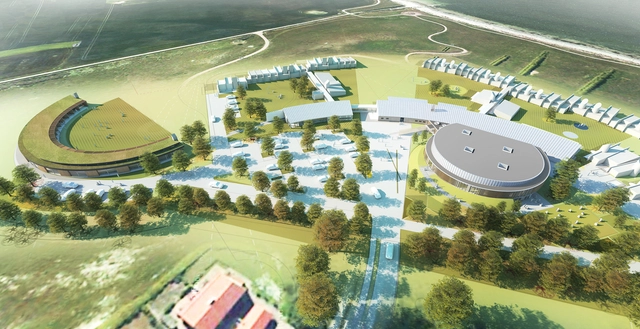
AART Architects, in collaboration with URBANlab, Bexcom and Keinicke & Overgaard Architects, have won the competition for the expansion of Musholm Bay Holiday Resort. Located at the beautiful Danish coastline, the resort is acknowledged as the world’s most innovative holiday resort for people with disabilities. The expansion of resort is divided into two sections in the form of a multi-purpose sports hall and a number of new holiday flats. More images and architects' description after the break.

Territoria / Cazú Zegers

Territoria / Cazú Zegers - Gymnasium, Facade, Door, Handrail
© Carlos Eguiguren
Las Condes, Chile
  • Architects: Cazú Zegers
  • Area Area of this architecture project Area:  1825
  • Year Completion year of this architecture project Year:  2009
  • Manufacturers Brands with products used in this architecture project
    Manufacturers:  Cbb ReadyMix
  • Professionals: Pitágora S.A.

Territoria / Cazú Zegers - Gymnasium, Bedroom, Lighting, TableTerritoria / Cazú Zegers - Gymnasium, Facade, Door, ColumnTerritoria / Cazú Zegers - Gymnasium, Door, ChairTerritoria / Cazú Zegers - GymnasiumTerritoria / Cazú Zegers - More Images+ 43

Another Round of Human Rights Violations for the Sake of the Olympic Games: Sochi 2014

Subscriber Access | 

Imminent domain has a new justification and it's called the Olympic Games. Once again, the anticipation of the Olympics brings to light the slew of human rights violations that are permitted by countries as they prepare to host the games. So what is the real cost of hosting the Olympic Games? We posed this question on ArchDaily last year in regards to Rio de Janeiro's pick for hosting the 2014 World Cup and 2016 Olympic Summer Games. http://www.archdaily.com/214726/rio-de-janeiros-favelas-the-cost-of-the-2016-olympic-games/ And here we are again, looking at the controversies that surround building the site of the 2014 Winter Olympics in Sochi, Russia which has been preparing for the games for six years now since it won its bid in 2007. If Brazil's practices with the favelas struck a nerve with human rights groups, Sochi's is sure to spark more controversy. Every time the International Olympic Committee sits down to choose the next host city, cities all over the world jump at the opportunity to impress, hoping that they will be chosen for the global celebration of human feats and accomplishments. As spectators, we are assured that cities can only benefit from being chosen to host the events. They bring tourism, new architectural projects, and global recognition. They encourage city infrastructure to develop and upgrade. They inspire measures that clean up a city, make it "presentable"; and eventually they raise the standard of living for residents. However, they also have the capacity to infringe on the rights and dignity of the very people whose land is being leased to this global event. The massive buildings that host the events have to be built somewhere, and often they are built in the disadvantaged neighborhoods that haven't the political leverage to fight against imminent domain. We've seen this happen in different versions to varying degrees, and we're seeing it now in Sochi as neighborhoods are destroyed, homes are razed, and life becomes unbearable for those still living among the construction and pollution with no means to relocate. The global community looks on in horror as reports like Anna Nemtsova's for ForeignPolicy.com (http://www.foreignpolicy.com/articles/2013/04/11/russia_s_olympic_city) reveal the treatment of citizens to make room for the infrastructure that supports the Olympics. Nemtsova gives some insight into the status of these projects and their affects on communities: The rising concrete wall (set to be 12 feet high upon completion) is about to cut off Acacia Street's view of the mountains -- and, indeed, of the rest of the world. During rainstorms, bulldozers push mud into residential courtyards, where the dirty water floods residents' basements, destroying floors and furniture. Mold is creeping up the walls in homes, filling the air with a rotten-garbage smell. Last month, Sochi City Hall filed a lawsuit against Acacia Street inhabitants who haven't been willing to demolish their own outhouses, kitchens, and water pumps that happen to be in the way of the construction of a new federal highway. But what happens here is not just a human rights issue that leaves people disenfranchised. This otherwise idyllic get-away city has been transformed by the massive construction undertaking and in some cases has become an ecological disaster as well. Greenpeace an World Wildlife Fund have both expressed concern over the construction that is poisoning the lakes which are a crucial ecological site for migrating birds. And community protest and activism in regards to their own condition has gone unregistered by President Putin, according to Nemtsova. The Atlantic (http://www.theatlantic.com/infocus/2012/12/sochi-2014-an-olympic-preview/100422/) posted some progress photos from the construction late last year. These images are bittersweet. On the one hand they show growth, construction, progress and the majesty and grandiosity that we associate with this celebration. On the other hand, we see photos of demolished, scattered rubble, and construction sites where there once were neighborhoods. It's sad to think that this global celebration has so many casualties. Is this something that was always the case, the unmentionable part of the Olympic Games? Or has it become more acceptable to bulldoze neighborhoods for the sake of the games and declare imminent domain without regard for the people or the place? And what can we do differently next time? While the global community watches and comments, it largely turns a blind eye to these developments, permitting them to perpetuate year after year.


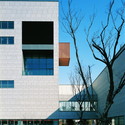
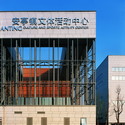
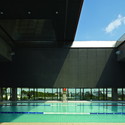
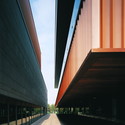
Anting Culture and Sports Activity Centre / Atelier Z+

Anting Culture and Sports Activity Centre  / Atelier Z+ - Sports Architecture, FacadeAnting Culture and Sports Activity Centre  / Atelier Z+ - Sports Architecture, FacadeAnting Culture and Sports Activity Centre  / Atelier Z+ - Sports Architecture, Facade, ChairAnting Culture and Sports Activity Centre  / Atelier Z+ - Sports Architecture, FacadeAnting Culture and Sports Activity Centre  / Atelier Z+ - More Images+ 11

Beijiao Sports Center / Decode Urbanism Office

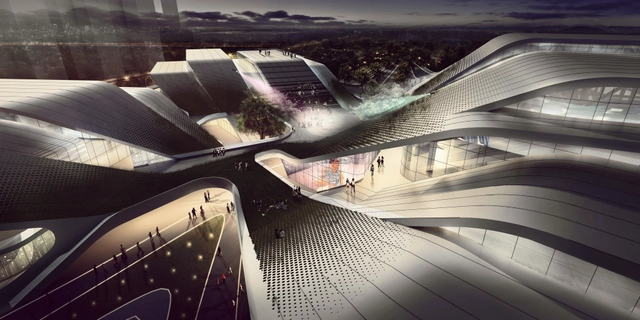
The main purpose of Beijiao Sports Center is to serve the surrounding neighbourhoods, thus it was extremely important to design it as a multi-functional and friendly place. The typical image of traditional sports architecture is abandoned, in place for an activity space full of energy during or after sports events, both day and night. The intent of the architecture is to create a community space for activity, one that enlivens its immediate vicinities. 

Queen Elizabeth Outdoor Pool / Group2

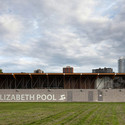
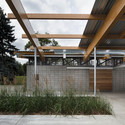
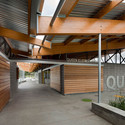
Queen Elizabeth Outdoor Pool / Group2  - Swimming Pool, FacadeQueen Elizabeth Outdoor Pool / Group2  - Swimming Pool, Garden, Beam, FacadeQueen Elizabeth Outdoor Pool / Group2  - Swimming Pool, Facade, BeamQueen Elizabeth Outdoor Pool / Group2  - Swimming Pool, FacadeQueen Elizabeth Outdoor Pool / Group2  - More Images+ 4

The Lushi Hill Club / Atelier Fronti

The Lushi Hill Club / Atelier Fronti - Recreation & TrainingThe Lushi Hill Club / Atelier Fronti - Recreation & TrainingThe Lushi Hill Club / Atelier Fronti - Recreation & Training, FacadeThe Lushi Hill Club / Atelier Fronti - Recreation & Training, FacadeThe Lushi Hill Club / Atelier Fronti - More Images+ 20

  • Architects: Atelier Fronti
  • Area Area of this architecture project Area:  1600
  • Year Completion year of this architecture project Year:  2003

Collider Activity Center Competition Entry / Radionica Arhitekture

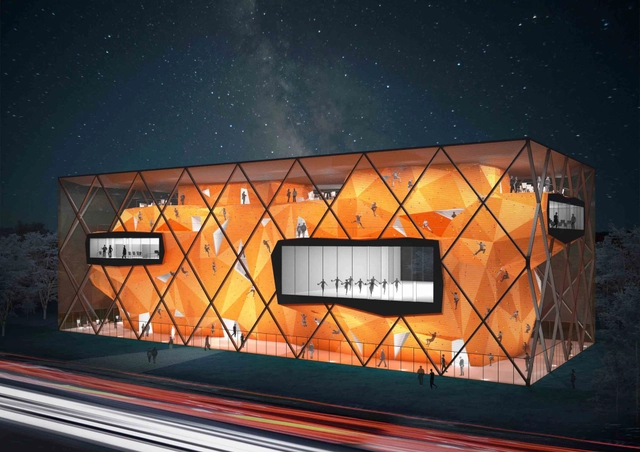
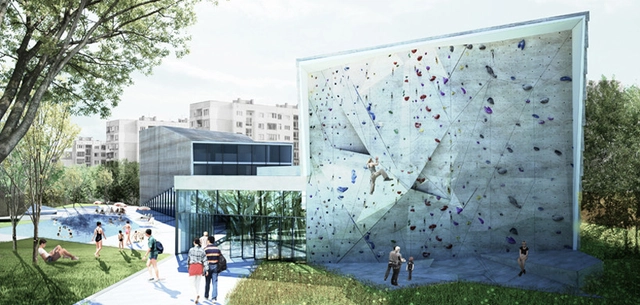
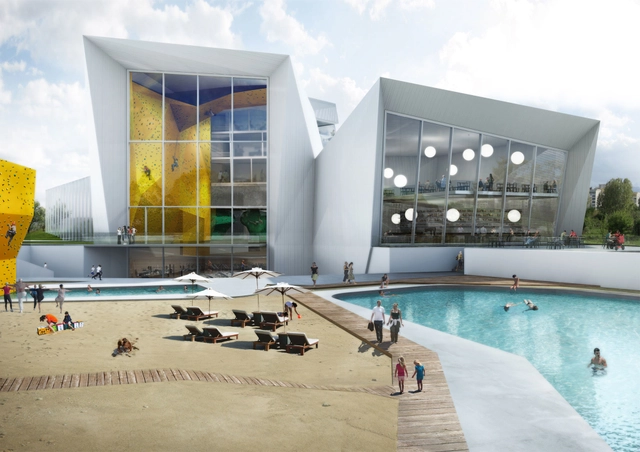
Situated in the large fun park in the suburbs of Sofia, Radionica Arhitekture's proposal for the Collider Activity Center, which won one of five first prizes, is a small artificial 'mountain'. When external conditions are favorable, the facade opens and the internal atmosphere becomes external. The second layer is the hall, a kind of a "cytoplasm". The space between the façade and the climbing surface.This is the place of entrance, where the building and the park mix, the site of overlapping where all paths intersect. More images and architects' description after the break.

Herzog & de Meuron Breaks Ground on ‘Grand Stade de Bordeaux’

Nearly two years after unveiling the design to the public, Herzog & de Meuron broke ground this morning on the new ‘Grand Stade de Bordeaux’ in France. Surrounded by lush vegetation typically found in this green belt district, the stepped concourse transitions visitors through a forest of slender white columns to the stadium’s bowl, whose form ensures maximum flexibility and optimal visibility for all 43,000 spectators.

Completion is set for 2015, just in time to host the Euro 2016 football championship.

The architect’s description after the break...

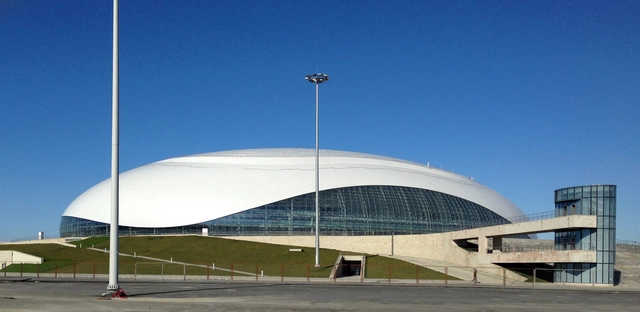
Ice Dome Bolshoy / SIC Mostovik

Ice Dome Bolshoy / SIC Mostovik - StadiumsIce Dome Bolshoy / SIC Mostovik - StadiumsIce Dome Bolshoy / SIC Mostovik - StadiumsIce Dome Bolshoy / SIC Mostovik - StadiumsIce Dome Bolshoy / SIC Mostovik - More Images+ 26

Sochi, Russia

Collider Activity Center Competition Entry / INDEX

Located in the rapidly urbanizing Mladost area on the edge of central Sofia, the new Collider Activity Center, designed by INDEX, draws on the process of the tectonic movement and operations of geological forms as an organizational system to create architecture. The center will be one of the first new buildings to occupy the quasi Greenfield site and the broader urban structure plan for the area will eventually play host to a variety of new facilities, capitalizing on the latent potential of Bulgaria as an emerging economy. More images and architects' description after the break.

Fletiomare Utrecht Swimming Pool / Slangen+Koenis Architects

Fletiomare Utrecht Swimming Pool / Slangen+Koenis Architects - Swimming Pool, Garden, Facade
© Mark Prins

Fletiomare Utrecht Swimming Pool / Slangen+Koenis Architects - Swimming Pool, FacadeFletiomare Utrecht Swimming Pool / Slangen+Koenis Architects - Swimming PoolFletiomare Utrecht Swimming Pool / Slangen+Koenis Architects - Swimming Pool, Stairs, LightingFletiomare Utrecht Swimming Pool / Slangen+Koenis Architects - Swimming Pool, Facade, Door, ChairFletiomare Utrecht Swimming Pool / Slangen+Koenis Architects - More Images+ 11

Collider Activity Center Competition Entry / Ignacio Gias, Jesús Lorenzo Garvín, Ana Vida

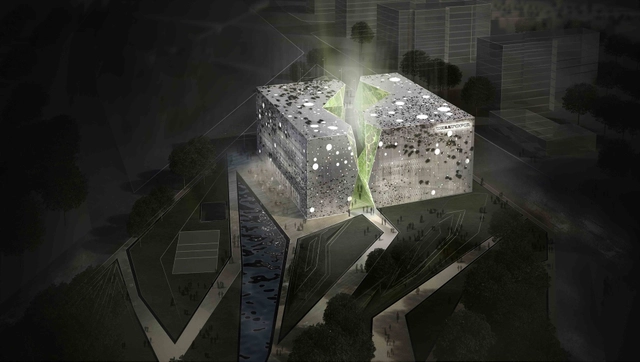
Located between two very different poles that have a great tension between them, architects Ignacio Gias, Jesús Lorenzo Garvín, and Ana Vida (Fissure Team), designed the building of the Collider Activity Center to appear as a flow connector in the territory. In doing so, they create a transition from the urban to nature, from the stability to the unpredictable, from colonized to wild territories. It is broken by an organic geometry, by the adventure, by the representation of the natural world, that cuts the building and makes the users 'break it, break it through, to the other side' as a door to adventure. More images and architects’ description after the break.

Hangar Artistic Creation Centre / Yaiza Terré + Arantxa Manrique

Hangar Artistic Creation Centre / Yaiza Terré + Arantxa Manrique - Recreation & Training, Facade
© Adrià Goula

Hangar Artistic Creation Centre / Yaiza Terré + Arantxa Manrique - Recreation & Training, Door, Facade, Arch, ArcadeHangar Artistic Creation Centre / Yaiza Terré + Arantxa Manrique - Recreation & Training, Beam, DoorHangar Artistic Creation Centre / Yaiza Terré + Arantxa Manrique - Recreation & Training, HandrailHangar Artistic Creation Centre / Yaiza Terré + Arantxa Manrique - Recreation & Training, DoorHangar Artistic Creation Centre / Yaiza Terré + Arantxa Manrique - More Images+ 22

Collider Activity Center Competition Entry / SO-AP Architects

By creating a space which is open onto the city and welcoming for visitors, the proposal for the Collider Activity Center by SO-AP Architects intends to be a place of importance in the city of Sofia. The objective is to propose a building designed to meet the expectations of a wide audience motivated by the challenge and keen on using a place offering multiple combinations of sports and rest, while being able to enjoy views on the city and its surroundings. More images and architects' description after the break.

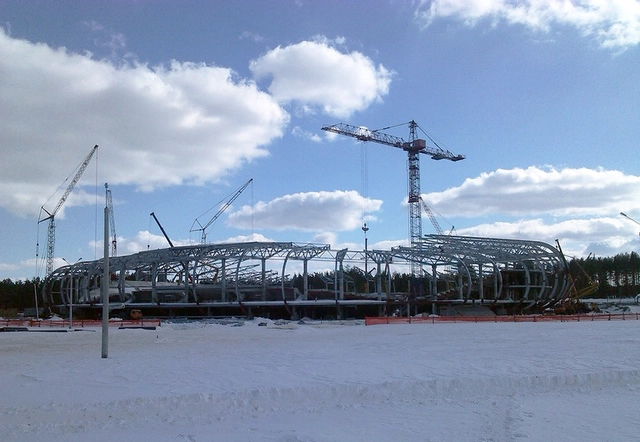
In Progress: FC Bate Borisov Football Stadium / OFIS

In Progress: FC Bate Borisov Football Stadium / OFIS - Football StadiumIn Progress: FC Bate Borisov Football Stadium / OFIS - Football StadiumIn Progress: FC Bate Borisov Football Stadium / OFIS - Football StadiumIn Progress: FC Bate Borisov Football Stadium / OFIS - Football StadiumIn Progress: FC Bate Borisov Football Stadium / OFIS - More Images+ 33

  • Architects: OFIS Architects
  • Area Area of this architecture project Area:  3628
  • Year Completion year of this architecture project Year:  2013

Collider Activity Center Competition Entry / STRATO

Designed by STRATO, the project proposal for the Collider Activity Center has two primary objectives: visual identity and vitality. Conceived as a sort of natural formation, the entire building is emphasized by the folding panels of the walls, the placement of the volumes and the power that this arrangement represents. Since it is placed in a context of ongoing evolution, their version of the activity center aims to be the driving force of the transformation of the whole district of Sofia, Bulgaria by becoming a symbol for the entire city. More images and architects’ description after the break.