
-
Architects: Cannon Design
- Year: 2010
-
Manufacturers: StructureCraft



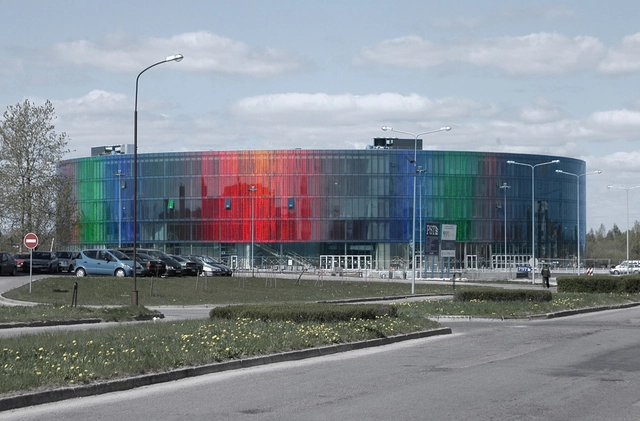
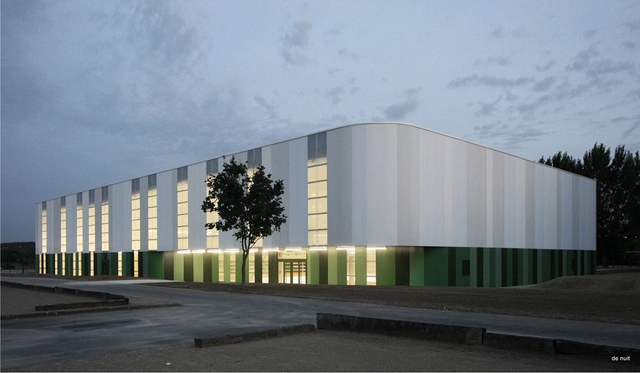
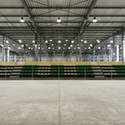
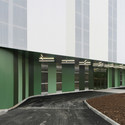
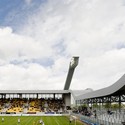
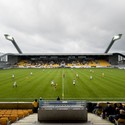
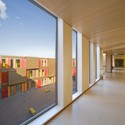
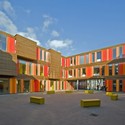
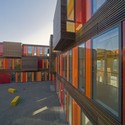
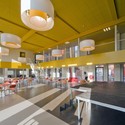
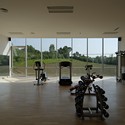
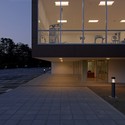
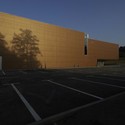
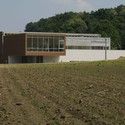
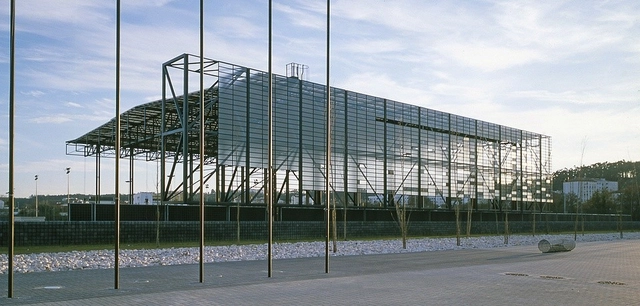
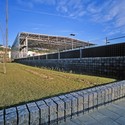
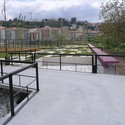
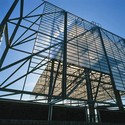
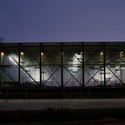
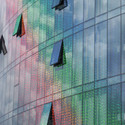
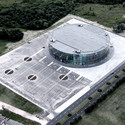
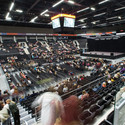
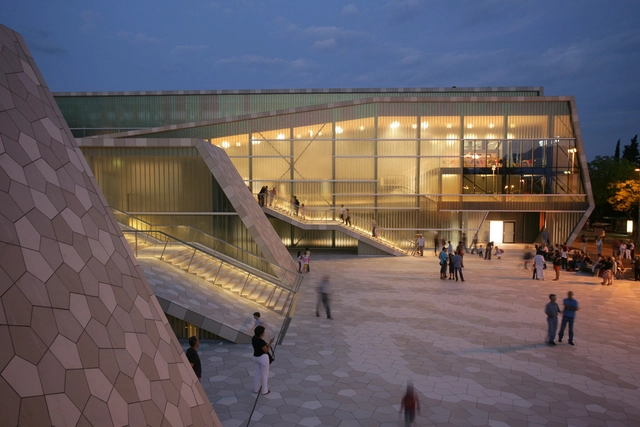
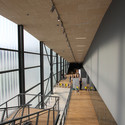
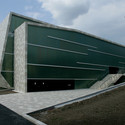
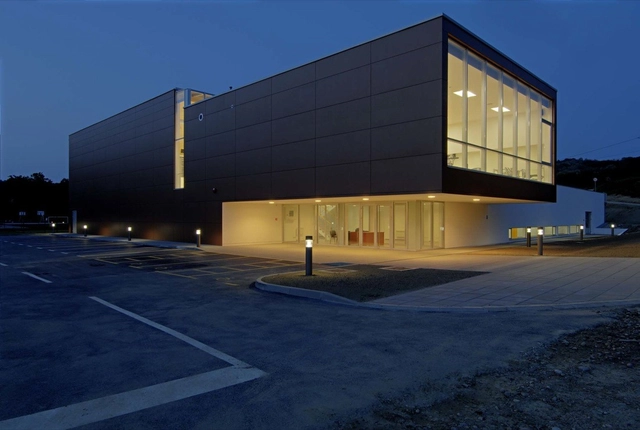
UR Architects were awarded first prize for their design of a sports center in Antwerp. The center, which is intended for non-competition sports, is aligned with the existing sports hall along the main street of the new master plan development. The building attempts “to communicate” on all sides as the sports hall, dance hall and rental depot are positioned on the edge, interconnected by a T-shaped service area. This extroverted model opens the building to the community and the architecture reflects the modernism of the surrounding buildings. The roof is designed as a fifth facade to relate to the nearby housing blocks of Renaat Braem while the facades of the halls are made of multi-layered polycarbonate. Partly translucent, partly transparent, this material combines the dynamic spectacle of changing light and shade, with diffuse daylight admission and a high insulation value, resulting in a low energy building.
More images of the sports center after the break.

Almost six months till the 2010 South Africa World Cup kicks off. A while ago, we told you we’ll be featuring the stadiums that will host this huge competition. We started with Soccer City Stadium, designed by Boogertman Urban Edge and Partners in partnership with Populous. This week, we’ll be featuring three stadiums designed by gmp architekten. We’ll start with the Moses Mabhida Stadium, in the city of Durban. The stadium was also designed by Theunissen Jankowitz Durban, Ambro-Afrique Consultants, Osmond Lange Architects & Planners, NSM Designs, and Mthulisi Msimang.
More images and architect’s description after the break.

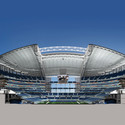
Designed by Aedas Sport, the innovative 75,000-seat stadium will be the first LEED-certified building in the NFL and will capture the luxury and drama of the world’s entertainment capital. The project anticipates completion for the 2013 season. Both the NFL and the client, Majestic Realty, are committed to making a progressive statement with this building and are exploring a number of initiatives that will make this the most environmentally progressive stadium in the U.S. Aedas Sport has employed the unique topography of the site to build the stadium into a hillside, reducing the steel structure by 40% and allowing at least two-thirds of the seating bowl to be built on grade.
More images and full architect’s description after the break.

Designing a place for 50,000 people to enjoy a sports event may be quite a difficult task. In this second part of stadiums (check the first one here), we include a Winter Olympic Games, Asian Games and the biggest and most spectacular stadium ever built for an NFL team. Enjoy!

With the Homeless World Cup arriving in Rio de Janiero, Brazil in fall 2010, Architecture for Humanity, Homeless World Cup, and Nike are teaming up with local partners Organização Civil de Ação Social (OCAS), and Bola Pra Frente (BPF) to establish multiple Legacy Centers to implement the Homeless World Cup influence beyond the week-long Tournament and Leadership Conference.

Today, the draw for South Africa’s World Cup 2010 took place. So for today’s special Round Up we’ll show you our selection of previously featured stadiums, including Soccer City Stadium, where the final game in South Africa will be played.

BIG, in collaboration with AKT, Tyréns and Transsolar, just won the competition for the World Village of Women Sports in Malmo, Sweden, a 100.000sqm complex for research, education and training of women’s sports.
Rather than a program organized around a sports arena disconnected from the city, the project becomes a town inside a town, offering rich public spaces as you can see on the renderings.

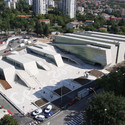
The central space of the village offers a large area for public gathering, which can host professional football matches, concerts, conferences, exhibitions and flea markets. Around this space we find a series of sloped buildings, which reduce the visual impact of the complex to the adjacent neighborhood.
Between these buildings we find a pedestrian network around the main sports hall which plugs into the surrounding street networks as well as the interior galleries of Kronprinsen, turning it into a complete ecosystem of urban life.
More images and drawings after the break.