Sports Architecture: The Latest Architecture and News
Armann Sports Club / PK Arkitektar
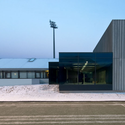
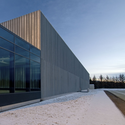
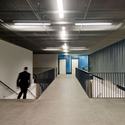
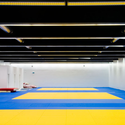

https://www.archdaily.com/37533/armann-sports-club-pk-arkitektarNico Saieh
2014 Incheon Asian Games Main Stadium / Populous

The competition-winning design of the main stadium for the 17th Asian games in Incheon, in South Korea, illustrates a new level of sustainable design in stadia in Asia. The stadium will hold 70,000 people for the main event in 2014 and will reduce down to a single sided grandstand for 30,000 afterward as a People’s Park for the city of Incheon. The global architecture firm, Populous, formerly HOK Sport Venue Event, is designing Incheon stadium with local firm Heerim Architects and Planners.
More information at Bustler. More images after the break.
https://www.archdaily.com/37460/2014-incheon-asian-games-main-stadium-populousSebastian Jordana
2014 Winter Olympic Games Stadium / Populous

The global design practice Populous announced this week that they have been selected by the State Corporation ‘Olympstroy’ to design the main stadium for the 2014 Winter Olympic and Paralympic Games in Sochi, Russia.
https://www.archdaily.com/36888/2014-winter-olympic-games-stadium-populousSebastian Jordana
Sports and Leisure Center in Saint-Cloud / KOZ Architectes

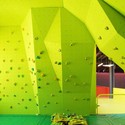
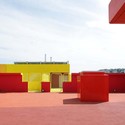
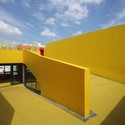
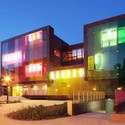

https://www.archdaily.com/36552/sports-and-leisure-center-in-saint-cloud-koz-architectesNico Saieh
World's Most Expensive Stadiums

Design, innovation and capacity are just some of the key elements when building a stadium. We have been featuring some great stadiums in ArchDaily like Herzog & de Meuron’s Bird’s Nest, for the Beijing Olympics.
However, as impressive as it may be, the Bird’s Nest cost was ‘just’ 500 millions dollars, a lot less than the ones who made Forbes top 10 list of most expensive stadiums.
Check the complete list, after the break.
https://www.archdaily.com/35274/worlds-most-expensive-stadiumsSebastian Jordana
Dalian Shide stadium / NBBJ

NBBJ‘s proposed design for the new Dalian Shide football stadium in China represents a new direction in sports architecture by moving away from the creation of a building based on pure form. The organic architecture of the building challenges the typical stadium typology to become more than an impressive skin wrapped around an ordinary seating bowl.
More images and full architect’s description after the break.
https://www.archdaily.com/35207/dalian-shide-stadium-nbbjSebastian Jordana
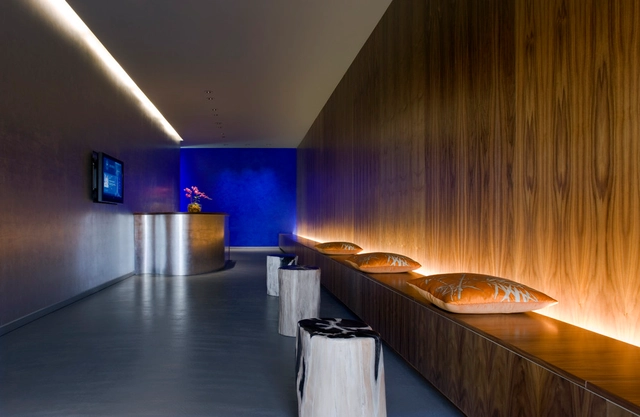

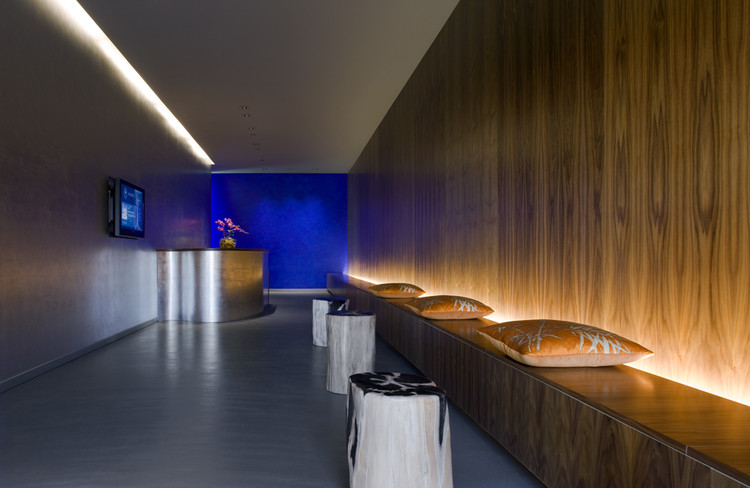
The Michael Hill Clubhouse / Patterson Associates




https://www.archdaily.com/33288/the-michael-hill-clubhouse-patterson-associatesDavid Basulto
Sports Hall / Substance

When the Jurmala City Council asked Substance to build a sports venue for the popular Latvian sea resort, the firm designed a structure that could be open all year long in any weather. Inspired by the amber – crystallised resin of pine typically washed up on the Baltic coast, the venue’s form incorporates translucent polycarbonate cladding inside a structural framework to accentuate the building’s varying height.
More about the sports venue after the break.
https://www.archdaily.com/33123/sports-hall-substanceKaren Cilento
South Africa World Cup 2010: Soccer City Stadium

The 2010 World Cup to be held in South Africa is less than one year away. Being perhaps the most important international competition in sports in the world, we would like to start featuring some of the stadiums that will host this magnificient competition.
Soccer City Stadium is located in Johannesburg and it was originally built in 1987. Among other important events, it hosted the first massive speech from Nelson Mandela after his liberation in 1990. However, it was completely renewed for the upcoming World Cup, becoming the stadium where the starting and the final game will be played.
Designed by Boogertman Urban Edge and Partners in partnership with Populous, it will allow for 94,000 spectators to enjoy the best soccer in the world. The design of the stadium was selected from a series of concept designs ranging from acknowledgement of Johannesburg’s disappearing mine dumps; the kgotla (defined by the tree) of the African city state; the African map as a horizontal representation, which included the roof as a desert plane supported on tropical trees set within the mineral wealth of Southern Africa; to a representation of the protea, South Africa’s national flower.
The calabash, or African pot, was selected as being the most recognizable object to represent what would automatically be associated with the African continent and not any other. The calabash, or ‘melting pot of African cultures’, sits on a raised podium, on top of which is located a ‘pit of fire’. Thus the pot sits in a depression, which is the ‘pit of fire’, as if it were being naturally fired.
More images after the break.
https://www.archdaily.com/32004/south-africa-world-cup-2010-soccer-city-stadiumSebastian Jordana
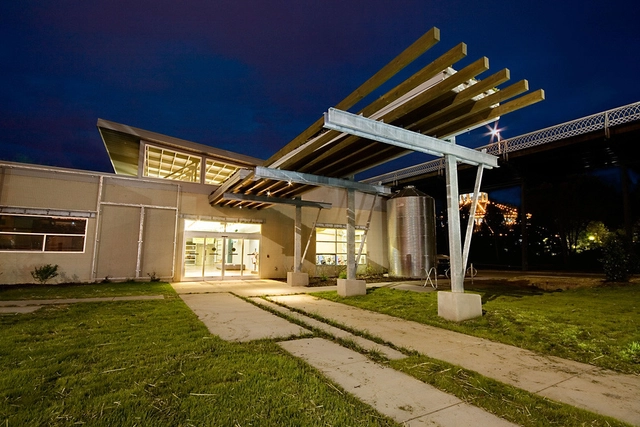
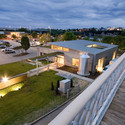
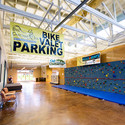
Outdoor Chattanooga Center / Artech


https://www.archdaily.com/31200/outdoor-chattanooga-center-artechNico Saieh
Stadiums for the 2014 World Cup in Brazil

Although the 2010 World Cup in South Africa is a little bit less than a year away, in Brazil they already started to prepare for the 2014 World Cup. Brazil has won more World Cups than any other country in the world, so they want to make sure their stadiums are as spectacular as their soccer team.
The 12 cities that will host the World Cup are Rio de Janeiro, São Paulo, Belo Horizonte, Porto Alegre, Curitiba, Brasília, Cuiabá, Manaus, Fortaleza, Salvador, Recife and Natal. You can see 6 great stadiums after the break.
Thanks to our reader Luis for sending us this info!
https://www.archdaily.com/25419/stadiums-for-the-2014-world-cup-in-brazilSebastian Jordana
AD Round Up: Sports Architecture Part II
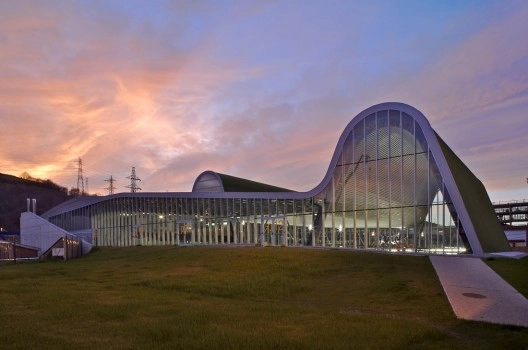
An impressive stadium may be well known around the world. The latest example is the Bird’s Nest in Beijing. So to finish this week’s Round Up, we bring you our second part of previously featured Sports Architecture.
https://www.archdaily.com/24129/ad-round-up-sports-architecture-part-iiSebastian Jordana
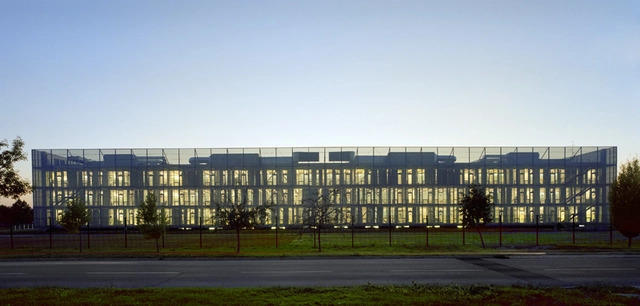
Gymnasium 46º09'N-16º50E / STUDIO UP
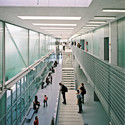


https://www.archdaily.com/23378/gymnasium-46%25c2%25ba09n-16%25c2%25ba50e-studio-upEthel Baraona Pohl
NBBJ presents design for UCLA's Pauley Pavilion

NBBJ just revealed their latest design for UCLA’s Pauley Pavilion, slated to begin February 2010 and be completed just in time for the 2012-2013 basketball season. Upon UCLA’s decision to renovate the existing Pavilion due to its strong sentimental value, NBBJ’s design includes new lobby and concourse space, as well as new facilities for the athletes and additional seating for fans.
Project description and more images after the break.
https://www.archdaily.com/22908/nbbj-presents-design-for-uclas-pauley-pavilionKaren Cilento
Sports Park Stozice / SADAR + VUGA, with KSS + MYSI + OFIS

Architects: Sadar Vuga Arhitekti (lead architect); KSS, London (consultant in sports architecture); MYSI, Tel Aviv (shopping centre concept); OFIS arhitekti, Ljubljana (architect shopping centre) Location: Ljubljana, Slovenia Landscape Architects: AKKA, Ljubljana Construction Engineering: Gradis; Atelier One, London Mechanical Engineering: Lenassi; Jelen & Zaveršnik Electrical Engineering: Elprojekt; UTRIS Fire Engineering: EKOsystem Client: Ljubljana City Municipality, Grep Project year: 2007 Site Area: 182,000 sqm Constructed Area: 460,720 sqm Photographs: Sadar Vuga
https://www.archdaily.com/22268/sports-park-stozice-sadar-vuga-kss-mysi-ofisAmber P
School Gym 704 / H Arquitectes
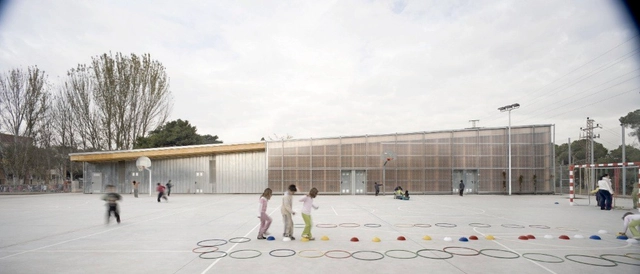
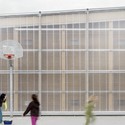
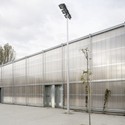
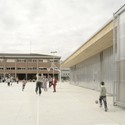

https://www.archdaily.com/22269/school-gym-704-h-arquitectesDavid Basulto