

-
Architects: Stefano Boeri Architetti China
- Area: 4062 m²
- Year: 2017


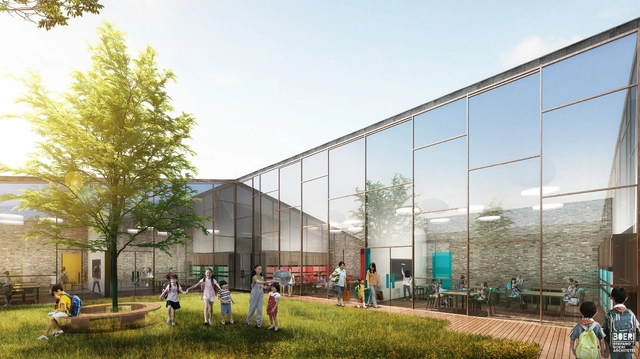
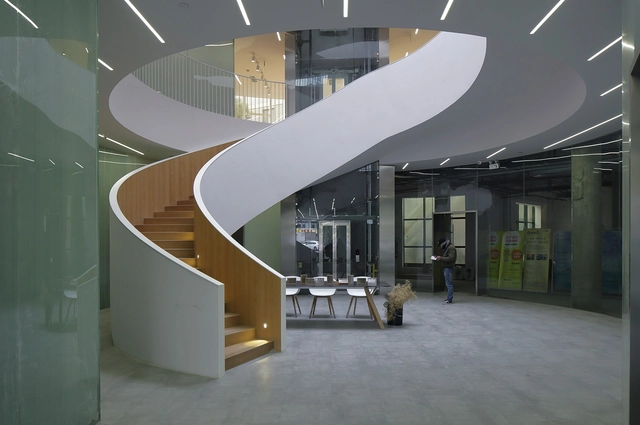
For the 2018 Venice Biennale, Stefano Boeri Architetti presents Slow Food Freespace, the first Slow Village to be constructed in Sichuan, China. Made in collaboration with Slow Food Movement, speakers Stefano Boeri and Carlo Petrini discussed the project at the event “Across Chinese Cities - The Community.”
For the Slow Food China project, Stefano Boeri Architetti has designed a school, a library and a small museum for the villages involved, free of charge. The program attempts to encourage millions of Chinese farmers to stay in their rural districts, combatting the unprecedented emigration to cities which has grown in the last few years. By offering educational facilities and cultural landmarks to these rural communities, it inspires the preservation of local culture and acknowledges the importance of the agricultural economy.
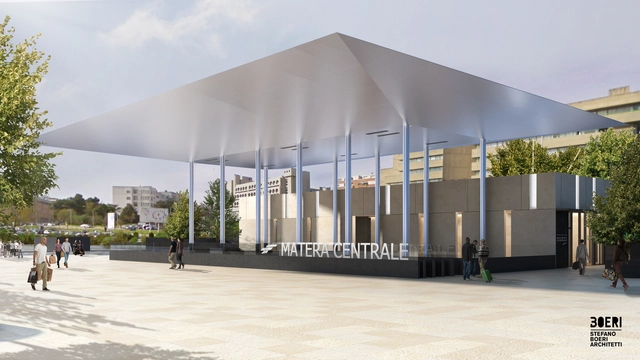
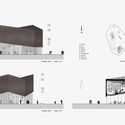
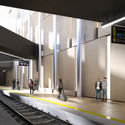
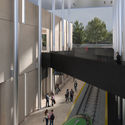
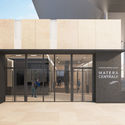
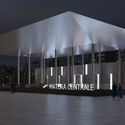
Stefano Boeri Architetti has released images of their proposed renovation of Matera Central Station in Southern Italy. Matera Central FAL railway station will be structurally altered through an “aesthetic and functional redevelopment together with technological upgrading of the railway itself.”
The proposal seeks to alter the existing hierarchy of space in the city by making the transport hub a genuine and significant urban landmark, rather than simply an infrastructural node. The scheme is therefore designed to incorporate a recognizable, pedestrianized public square, forming connections with the nearby historic city center.

In preparation for the first World Forum on Urban Forests promoted by FAO (Food and Agriculture Organization), which will be held from November 28 to December 1, 2018 in Mantova, Italy, Stefano Boeri Architetti has launched a global call for action regarding projects, strategies and ideas in relation to urban forestry.
We, designers of the first Vertical Forest in Milan, invite architects, urban planners, botanists, agronomists, forestry corps, tree growers, geographers, ethologists, landscape scientists, technicians, researchers and experts in green care and urban forestry, real estate developers, administrators and representatives of local institutions and civil society, members and representatives of international organizations, funding agencies, universities and research institutes, and NGOs,
In this short film, part of a four-part video series co-produced by Curbed and The Verge, the Bosco Verticale—the towering residential forest in the dense urban environment of Milan—is examined for its architectural prowess, as well as its botanical aptitude. In the film, architect Stefano Boeri and expert arborists explain what makes the skyscraper so unique, as well as it's very real potential effect on air pollution in the city.
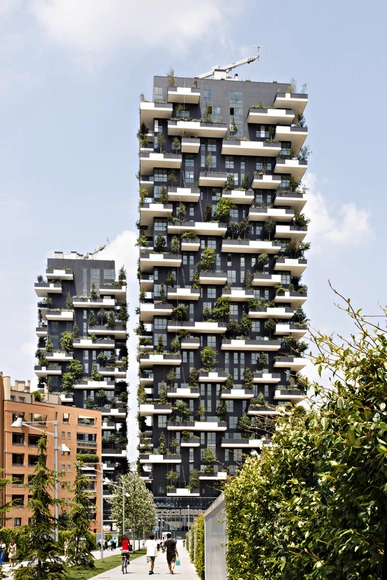
The Council on Tall Buildings and Urban Habitat (CTBUH) has selected Stefano Boeri’s Bosco Verticale as the Best Tall Building Worldwide 2015 for “its extraordinary implementation of vegetation at such scale and height," according to a press release. The tower was selected from a shortlist of four buildings, which included SOM’s One World Trade Center, Toyo Ito and RSP Architects’ CapitaGreen and Foster + Partners’ Burj Mohammed Bin Rashid Tower.
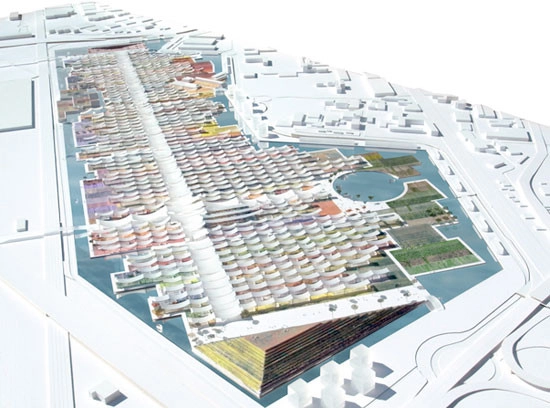
It seems Jacques Herzog is not particularly excited about the opening of the 2015 Expo in Milan later this year. In an interview with uncube magazine Herzog - one half of Herzog & de Meuron, the Expo's masterplanners - explains why they left the project in 2011, along with collaborators Stefano Boeri, William McDonough and Ricky Burdett. In their absence, he says, the Expo will now feature their plan "only as an urbanistic and formal pattern, not as an intellectual concept," and their plan to transform the event into "a radically new vision for a world exhibition" has been twisted so that the Expo "will be the same kind of vanity fair that we’ve seen in the past." Read the full interview here.
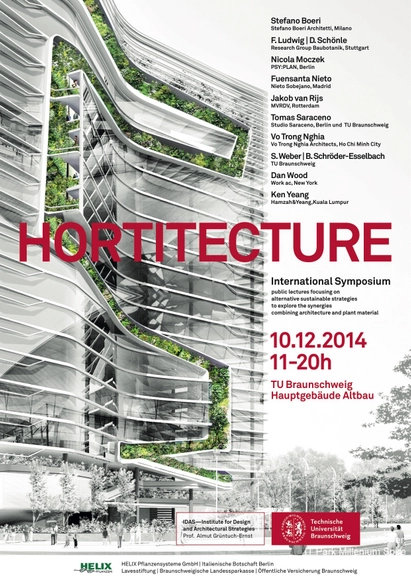
Starting December 10, the Hortitecture 01 Symposium will kickstart a (free) public lecture series in Braunschweig, Germany, centered around brainstorming synergistic strategies for integrating architecture and vegetal matter. Stefano Boeri, MVRDV and WORKac are among a list of interdisciplinary experts that will join together to offer discussions focused around the exploration of vernacular wisdom and contemporary architectural solutions to sustainable building problems.
.jpg?1527163240 "Masterplan. Image Courtesy of Stefano Boeri Architetti")