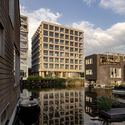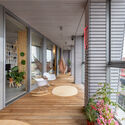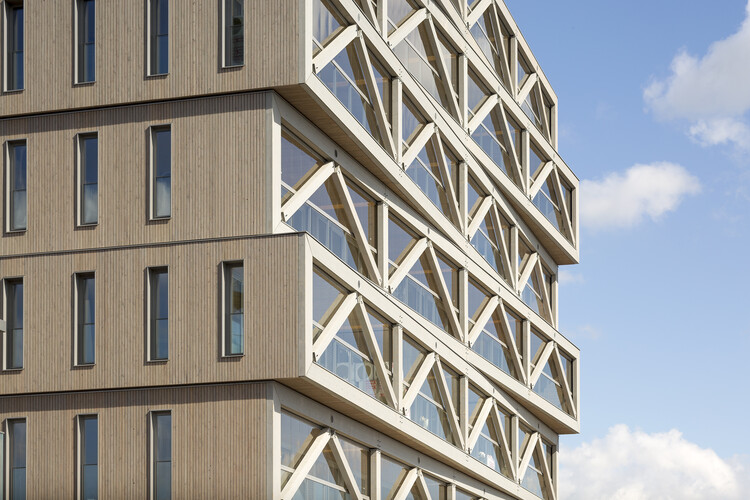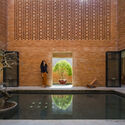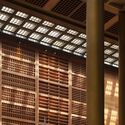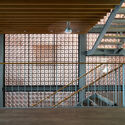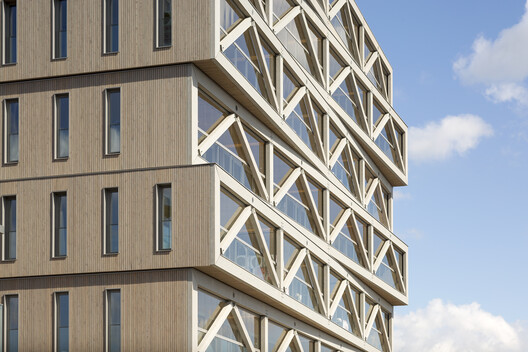
With forty-eight psychogeriatric beds and sixty-eight wheelchair-accessible apartments, accommodation for informal caregivers, and space for bedside care, the De Keyzer building opened in Amsterdam in 2011. Its program had been conceived entirely for elderly people requiring assistance, but shortly after completion, the building was sold to an investment fund, and the apartments began to be rented to young families with children.
For the project's architects, Tom Frantzen and Karel van Eijken, the episode could have been interpreted as a failure of prediction. Instead, it became a confirmation. "It showed, very clearly, that buildings can end up being used in completely different ways than originally intended," Frantzen recalls. The transformation was only possible because the apartments were generous and because the structure allowed for uses more diverse than those anticipated in the original program. Had the building been designed solely for its initial function, the change of use would likely have required a destructive renovation or, in the extreme, demolition.