1. ArchDaily
  2. Sustainable Architecture

Sustainable Architecture: The Latest Architecture and News

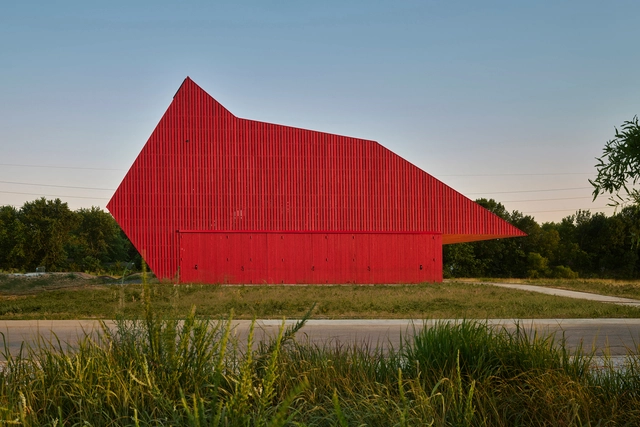
MCHAP Announces Thaden School by EskewDumezRipple, Marlon Blackwell Architects, and Andropogon Associates as Its Fifth Americas Prize Award Winners

The Mies Crown Hall Americas Prize (MCHAP) has just announced the winners of the fifth MCHAP Americas Prize award: Thaden School, designed by EskewDumezRipple, Marlon Blackwell Architects, and Andropogon Associates. Located in Bentonville, Arkansas, on a 30-acre site, the campus explores the relationship between architecture, landscape, and community within the educational context. The announcement was made after a daylong celebration at S.R. Crown Hall on the Illinois Institute of Technology (IIT) campus. The event featured Masterclass presentations by students from IIT and regional universities, along with a roundtable discussion with the finalists and jury during the MCHAP Symposium.

MCHAP Announces Thaden School by EskewDumezRipple, Marlon Blackwell Architects, and Andropogon Associates as Its Fifth Americas Prize Award Winners - Image 1 of 4MCHAP Announces Thaden School by EskewDumezRipple, Marlon Blackwell Architects, and Andropogon Associates as Its Fifth Americas Prize Award Winners - Image 2 of 4MCHAP Announces Thaden School by EskewDumezRipple, Marlon Blackwell Architects, and Andropogon Associates as Its Fifth Americas Prize Award Winners - Image 3 of 4MCHAP Announces Thaden School by EskewDumezRipple, Marlon Blackwell Architects, and Andropogon Associates as Its Fifth Americas Prize Award Winners - Image 4 of 4MCHAP Announces Thaden School by EskewDumezRipple, Marlon Blackwell Architects, and Andropogon Associates as Its Fifth Americas Prize Award Winners - More Images+ 7

Designing for the Performing Arts: Architecture as a Stage for Experience

Subscriber Access | 

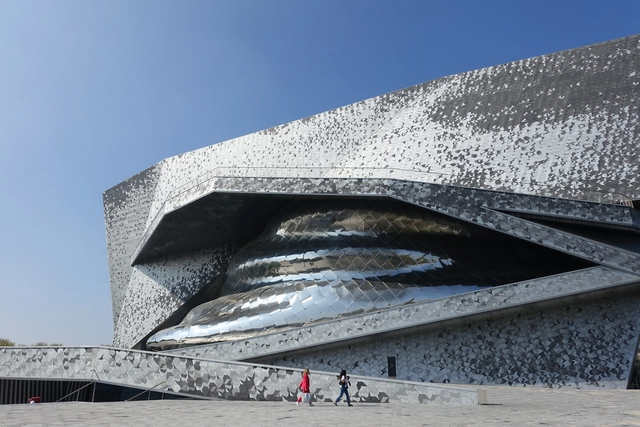
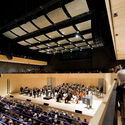
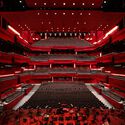
Theaters, concert halls, and opera houses are more than just venues — they are meticulously orchestrated environments where architecture, technology, and human emotion converge. Unlike conventional buildings, these spaces must accommodate a dynamic interplay between acoustics, sightlines, stage mechanics, and audience engagement, all while maintaining an architectural identity that resonates with performers and spectators alike. Whether it is the immersive embrace of a vineyard-style concert hall or the grandeur of a proscenium theater, every design decision shapes how performances are experienced and remembered.

The recently published SET PIECES: Architecture for the Performing Arts in Fifteen Fragments by Diamond Schmitt Architects explores these complexities through case studies and reflections. Inspired by its insights, this article examines essential design considerations for performance spaces, from acoustic engineering to the evolving role of theaters in urban life.

Designing for the Performing Arts: Architecture as a Stage for Experience - Image 1 of 4Designing for the Performing Arts: Architecture as a Stage for Experience - Image 2 of 4Designing for the Performing Arts: Architecture as a Stage for Experience - Image 3 of 4Designing for the Performing Arts: Architecture as a Stage for Experience - Image 4 of 4Designing for the Performing Arts: Architecture as a Stage for Experience - More Images+ 60

The Promise of Accessibility: Can Modular Systems Contribute to Democratizing the Design Process?

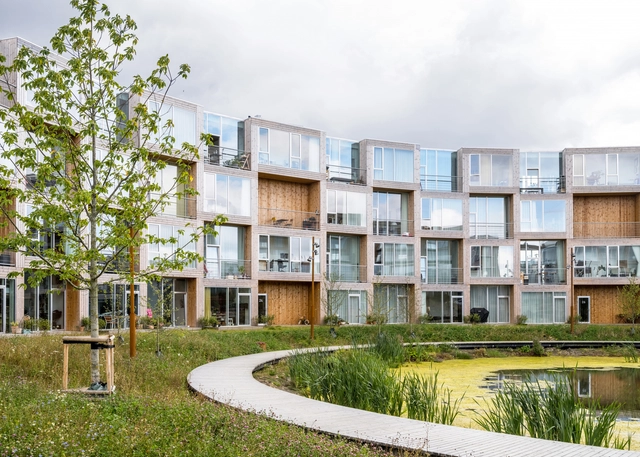
At the dawn of Modernism, in the fervent search for innovative, efficient, and cost-effective building systems, the idea of modular construction offered the promise of exactly that: an industrialized system comprised of ready-to-assemble elements, easily configured, cost-effective, and quality-controlled. While the idea did not gain as much traction as was initially expected, it has remained an attractive premise for architects and designers. Now, new developments in the field have led to a renewed interest in the matter, as modular housing emerges as an effective measure in various fields, from affordable housing to emergency shelters, or even as platforms for interdisciplinary collaboration, participation, and co-design. The following article explores this promise of accessibility, creativity, and affordability that has become an integral part of the debate around modular architecture.

The Promise of Accessibility: Can Modular Systems Contribute to Democratizing the Design Process? - Image 1 of 4The Promise of Accessibility: Can Modular Systems Contribute to Democratizing the Design Process? - Image 2 of 4The Promise of Accessibility: Can Modular Systems Contribute to Democratizing the Design Process? - Image 3 of 4The Promise of Accessibility: Can Modular Systems Contribute to Democratizing the Design Process? - Image 4 of 4The Promise of Accessibility: Can Modular Systems Contribute to Democratizing the Design Process? - More Images+ 3

ECC Announces the 2025 Time Space Existence Exhibition in Venice as a Call to Repair, Regenerate, and Reuse

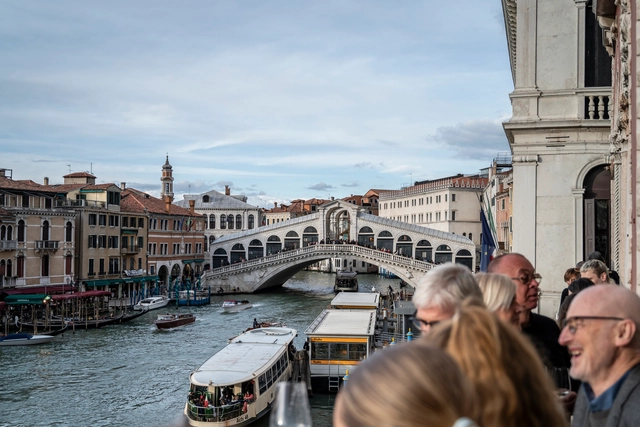
The 2025 iteration of the Time Space Existence exhibition is set to attract audiences from May 10 to November 23. Organized by the European Cultural Centre (ECC) in Venice's renowned venues—Palazzo Bembo, Palazzo Mora, and Marinaressa Gardens—this seventh edition brings together a diverse cohort of 207 architects, designers, artists, and researchers from over 52 countries. All contributions are curated under the theme of "Repair, Regenerate, and Reuse" as an exploration of architecture's capacity to engage with critical environmental, social, and cultural challenges. Highlights of the Special Projects section include ArchDaily's inaugural exhibition, presenting six architecture offices previously recognized as Best New Practices as emerging voices in the field of architectural innovations.

ECC Announces the 2025 Time Space Existence Exhibition in Venice as a Call to Repair, Regenerate, and Reuse - Image 1 of 4ECC Announces the 2025 Time Space Existence Exhibition in Venice as a Call to Repair, Regenerate, and Reuse - Image 2 of 4ECC Announces the 2025 Time Space Existence Exhibition in Venice as a Call to Repair, Regenerate, and Reuse - Image 3 of 4ECC Announces the 2025 Time Space Existence Exhibition in Venice as a Call to Repair, Regenerate, and Reuse - Image 4 of 4ECC Announces the 2025 Time Space Existence Exhibition in Venice as a Call to Repair, Regenerate, and Reuse - More Images+ 3

To Live Well in High-Density Cities: Connections of Urban Density and Public Health

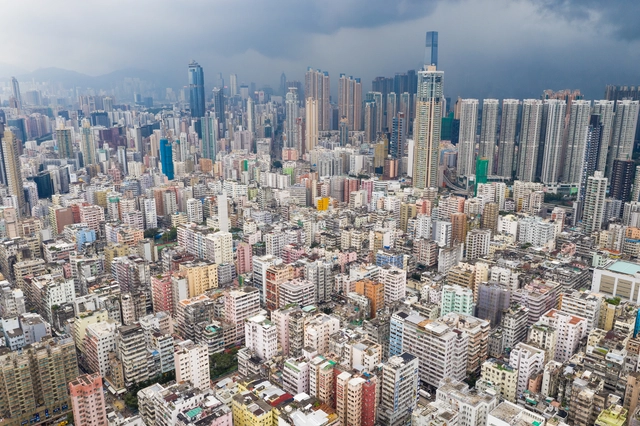
As the global population continues to surge, cities become increasingly complex ecosystems, dense and bustling environments home to millions of people. Today, more than half of the world's population lives in cities, which is expected to grow dramatically in the coming decades. This rapid urbanization presents a complex set of challenges for the architects and planners tasked with creating spaces that can accommodate urban residents' lives.

To Live Well in High-Density Cities: Connections of Urban Density and Public Health - Image 1 of 4To Live Well in High-Density Cities: Connections of Urban Density and Public Health - Image 2 of 4To Live Well in High-Density Cities: Connections of Urban Density and Public Health - Image 3 of 4To Live Well in High-Density Cities: Connections of Urban Density and Public Health - Image 4 of 4To Live Well in High-Density Cities: Connections of Urban Density and Public Health - More Images+ 10

Earth Day 2025: Our Agency in Rethinking Sustainability Across Cities, Scales, and Sectors

Subscriber Access | 

On Earth Day 2025, observed annually on April 22, we are once again reminded of the urgent environmental and sustainability challenges that face our planet—challenges that continue to evolve alongside global economic, political, and cultural shifts. The building and construction industry remains one of the most critical sectors in the effort to manage and reduce global carbon emissions. This year, these issues are being addressed through increasingly diverse lenses, calling for more holistic and integrated approaches. It's vital that we view sustainability not as a one-size-fits-all solution, but as a multi-scalar effort—one that spans from large-scale urban development and strategic planning, to the advancement of sustainable materials, and even to temporary, thought-provoking interventions like exhibitions and installations. In doing so, we reaffirm our commitment to reducing our collective carbon footprint, while shaping a built environment that promotes human well-being and planetary health.

Earth Day 2025: Our Agency in Rethinking Sustainability Across Cities, Scales, and Sectors - Image 1 of 4Earth Day 2025: Our Agency in Rethinking Sustainability Across Cities, Scales, and Sectors - Image 2 of 4Earth Day 2025: Our Agency in Rethinking Sustainability Across Cities, Scales, and Sectors - Image 3 of 4Earth Day 2025: Our Agency in Rethinking Sustainability Across Cities, Scales, and Sectors - Image 4 of 4Earth Day 2025: Our Agency in Rethinking Sustainability Across Cities, Scales, and Sectors - More Images+ 23

Biophilic Architecture without Plants: Invisible Design for Wellbeing

The term "biophilia" understandably conjures images of buildings engulfed by vegetation and integrated into natural landscapes. In modern architectural discourse, the concept has come to be associated with the incorporation of greenery into built environments, yet such applications represent only a sliver of biophilic design's true scope. Inarguably, nature plays a central role in biophilic design. However, its influence stretches to often-overlooked strategies that involve spatial configuration and environmental patterning. "Invisible" biophilia frequently leads to positive health outcomes for occupants, working impactfully beneath the surface.

Biophilic Architecture without Plants: Invisible Design for Wellbeing - Image 1 of 4Biophilic Architecture without Plants: Invisible Design for Wellbeing - Image 2 of 4Biophilic Architecture without Plants: Invisible Design for Wellbeing - Image 3 of 4Biophilic Architecture without Plants: Invisible Design for Wellbeing - Image 4 of 4Biophilic Architecture without Plants: Invisible Design for Wellbeing - More Images+ 4

The Economics of Vertical Growth in India: Addressing Urban Density and Sprawl

Subscriber Access | 

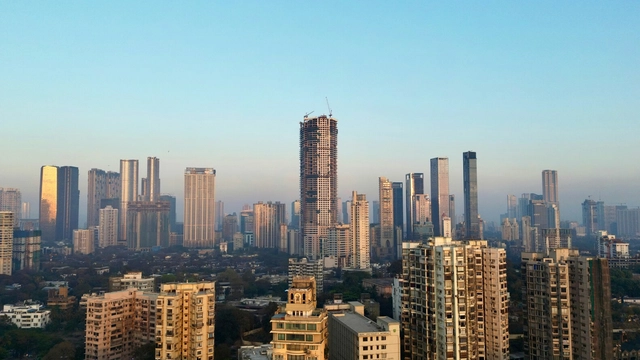
India finds itself a watershed moment with its urban evolution. With the United Nations projecting urbanization to reach 68% by 2050, the country's metropolitan regions needs to adapt to increasing populations while maintaining equity and quality of life. India's urban population is expected to exceed 600 million by 2030, drawing attention to both urban density and sprawl. As an emerging player in the domain of high-rise development, India is restructuring how it engages with urban growth by shifting from horizontal sprawl to vertical expansion.

The Economics of Vertical Growth in India: Addressing Urban Density and Sprawl - Image 1 of 4The Economics of Vertical Growth in India: Addressing Urban Density and Sprawl - Image 2 of 4The Economics of Vertical Growth in India: Addressing Urban Density and Sprawl - Image 3 of 4The Economics of Vertical Growth in India: Addressing Urban Density and Sprawl - Image 4 of 4The Economics of Vertical Growth in India: Addressing Urban Density and Sprawl - More Images+ 1

Rising Above: Environmental Conditions for Elevating Architectural Foundations

Subscriber Access | 

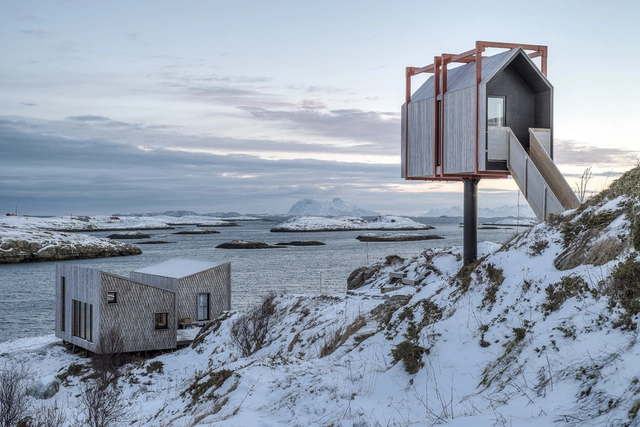
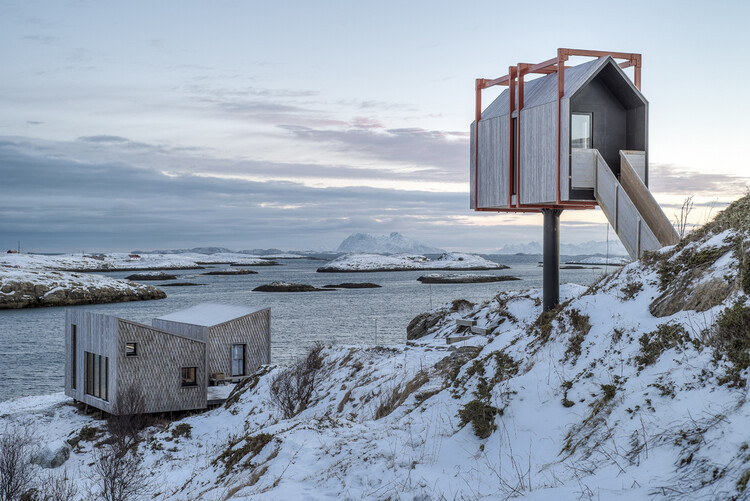
The decision to lift a building off the ground is a technical maneuver that requires substantial planning, expertise, and careful consideration. It is a deliberate architectural response to the site's forces and fragilities. Floodplains, wetlands, and thawing tundra share a common thread: Architects reconcile risk and vulnerability through elevated structures. In this sense, it is a spatial response and a structural necessity.

Rising Above: Environmental Conditions for Elevating Architectural Foundations - Image 1 of 4Rising Above: Environmental Conditions for Elevating Architectural Foundations - Image 2 of 4Rising Above: Environmental Conditions for Elevating Architectural Foundations - Featured ImageRising Above: Environmental Conditions for Elevating Architectural Foundations - Image 3 of 4Rising Above: Environmental Conditions for Elevating Architectural Foundations - More Images+ 11

Garcés de Seta Bonet and Marvel Architects Win Competition to Transform Three Chimneys Into Catalunya Media City

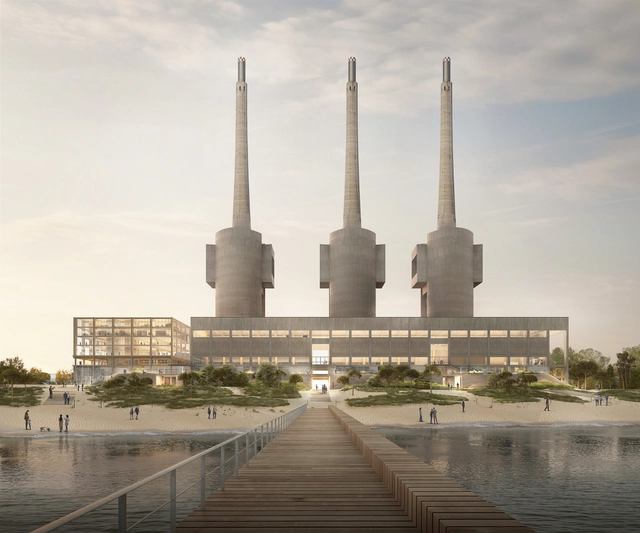
Garcés de Seta Bonet and MARVEL Architects' proposal won the competition to adapt and expand the Tres Xemeneies/Three Chimneys, a former power plant set to become the Catalunya Media City hub in Barcelona, Spain. With their winning design, the two studios sought to preserve the site's historical legacy while creating a space that can evolve and shape future possibilities. Scheduled to begin in the summer of 2025 and expected to be completed by 2027/2028, the project is planning to offer a range of features and services designed to foster innovation, creativity, technology, training, and digital culture exhibitions.

Garcés de Seta Bonet and Marvel Architects Win Competition to Transform Three Chimneys Into Catalunya Media City - Image 1 of 4Garcés de Seta Bonet and Marvel Architects Win Competition to Transform Three Chimneys Into Catalunya Media City - Image 2 of 4Garcés de Seta Bonet and Marvel Architects Win Competition to Transform Three Chimneys Into Catalunya Media City - Image 3 of 4Garcés de Seta Bonet and Marvel Architects Win Competition to Transform Three Chimneys Into Catalunya Media City - Image 4 of 4Garcés de Seta Bonet and Marvel Architects Win Competition to Transform Three Chimneys Into Catalunya Media City - More Images+ 3

Forest Futures: Rethinking Architecture of Forest Ecosystems and Ecological Balance

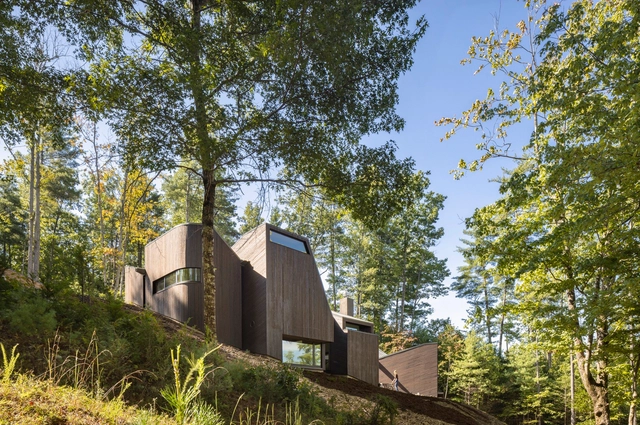
Forests are among the most complex yet vital ecosystems on Earth. They regulate climate, support biodiversity, and sustain human communities. With the growing realities of climate change and environmental degradation, architects, planners, and engineers now face a new imperative: designing within forests in ways that sustain the ecosystems on which they depend.

Forest Futures: Rethinking Architecture of Forest Ecosystems and Ecological Balance - Image 1 of 4Forest Futures: Rethinking Architecture of Forest Ecosystems and Ecological Balance - Image 2 of 4Forest Futures: Rethinking Architecture of Forest Ecosystems and Ecological Balance - Image 3 of 4Forest Futures: Rethinking Architecture of Forest Ecosystems and Ecological Balance - Image 4 of 4Forest Futures: Rethinking Architecture of Forest Ecosystems and Ecological Balance - More Images+ 7

Rethinking Sustainability Through Site-Specific Strategies

Subscriber Access | 

Sustainability in architecture is often framed as a universal challenge, leading to standardized solutions that prioritize efficiency over context. However, architecture is inherently tied to its environment — buildings interact with climate, topography, and cultural history in ways that demand specificity. Instead of relying on standardized sustainability checklists, how can architecture embrace site-specific solutions? This conversation is deeply connected to the concept of Genius Loci, or the spirit of a place, introduced by Christian Norberg-Schulz and embraced by architects advocating for designs that resonate with their surroundings. It suggests that architecture should not be imposed upon a site but rather emerge from it, informed by its materials, climate, and cultural significance. This philosophy challenges the widespread application of generic sustainable technologies, instead proposing that sustainability must be inherently tied to the location in which it operates.

Rethinking Sustainability Through Site-Specific Strategies - Image 1 of 4Rethinking Sustainability Through Site-Specific Strategies - Image 2 of 4Rethinking Sustainability Through Site-Specific Strategies - Image 3 of 4Rethinking Sustainability Through Site-Specific Strategies - Image 4 of 4Rethinking Sustainability Through Site-Specific Strategies - More Images+ 81

Reimagine Hospitality in Venice: Monaco Smart & Sustainable Marina Rendezvous 2025

 | Sponsored Content

For the 5th Anniversary Edition of the "Monaco Smart & Sustainable Marina Rendezvous", M3 Monaco unveils the new theme of its annual international architecture competition. Students, young architects, and professionals are challenged to imagine a new vision or rethink the development of Certosa Island's infrastructure in Venice, creating a unique dialogue that incorporates regenerative tourism, the maritime journey, the UNESCO World Heritage listing, and the context of "La Serenissima."

Comfort and Seclusion: 5 Hotels in the Deserts of Latin America

Subscriber Access | 

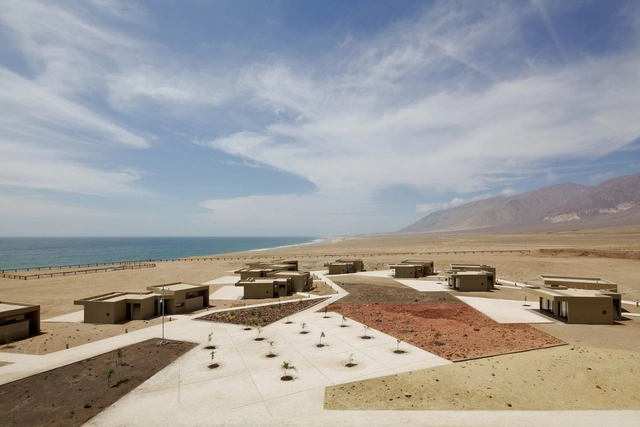
The desert is a landscape in constant transformation. Shaped by the wind, its dunes, ridges, and fissures emerge and fade in an ever-shifting expanse, as if the scenery itself were alive. It is a land of stark contrasts, where the scorching heat of the day gives way to the crisp coolness of the night, revealing nature in its most primal form. In such a dynamic and untamed environment, how can architecture not only integrate but also respect and engage with its surroundings? This is the challenge faced by hotels built within Latin America’s vast desert landscapes.

Comfort and Seclusion: 5 Hotels in the Deserts of Latin America - Image 1 of 4Comfort and Seclusion: 5 Hotels in the Deserts of Latin America - Image 2 of 4Comfort and Seclusion: 5 Hotels in the Deserts of Latin America - Image 3 of 4Comfort and Seclusion: 5 Hotels in the Deserts of Latin America - Image 4 of 4Comfort and Seclusion: 5 Hotels in the Deserts of Latin America - More Images+ 7

Advanced Façades by Trimo: Shaping Architecture for a Net-Zero Future

 | Sponsored Content

As the construction industry intensifies its efforts towards sustainability, architects and developers are actively seeking innovative solutions to reduce the environmental footprint of buildings. Trimo, a global leader in architectural façade and roofing solutions, is at the forefront of this transformation with its NEXT product range—Qbiss One NEXT and Trimoterm NEXT—which are setting new standards in sustainability. Designed to support the global shift to net-zero carbon construction, these products embody cutting-edge technology, lower carbon emissions, and high recyclability, all while delivering superior performance and aesthetics.

Designing with Humidity: How Architecture Adapts to the World’s Dampest Climates

Humid environments present some of the most complex challenges in architectural design. From the tropical monsoon season of Southeast Asia to the equatorial heat of Central Africa, these environments demand solutions that account for intense moisture, high temperatures, and the constant battle against mold, decay, and stagnation. Yet, for centuries, communities in these regions have developed architectural techniques that do not fight against humidity but instead work with it, leveraging local materials, climate-responsive design, and passive cooling techniques to create sustainable and livable spaces. By considering atmosphere as a sensory and climatic phenomenon, architects will craft spaces that are not only evocative but also responsive, adaptive, and sustainable.

Designing with Humidity: How Architecture Adapts to the World’s Dampest Climates - Image 1 of 4Designing with Humidity: How Architecture Adapts to the World’s Dampest Climates - Image 4 of 4Designing with Humidity: How Architecture Adapts to the World’s Dampest Climates - Image 5 of 4Designing with Humidity: How Architecture Adapts to the World’s Dampest Climates - Image 7 of 4Designing with Humidity: How Architecture Adapts to the World’s Dampest Climates - More Images+ 13

Power Play: How Large-Scale Complexes are Leading the Charge with Solar Investments

 | Sponsored Content

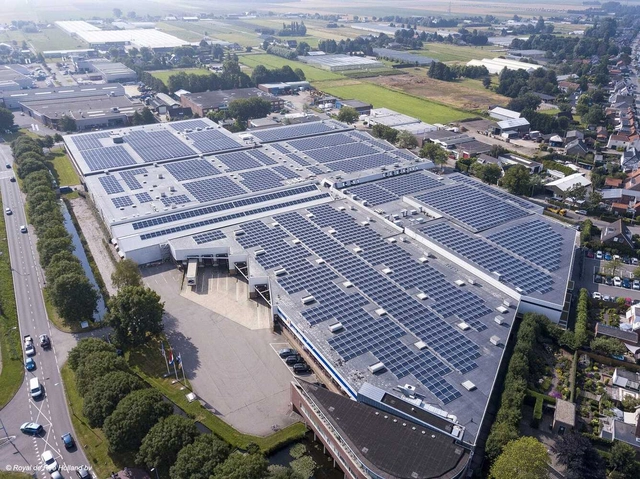
Transforming urban buildings into clean energy plants is a bold and powerful strategy to combat the climate crisis, reduce dependence on centralized grids, and promote more resilient, sustainable cities. Since 2010, cities have been responsible for over 75% of global electricity use, a demand historically met by fossil fuels as urbanization has increased since the Industrial Revolution. By the late 19th century, hydroelectric power began gaining relevance as a renewable alternative. However, with rapid advancements in solar technology, urban buildings now have the unprecedented potential to become self-sufficient power hubs.


Reconsidering Brutalist Renovations: A Transformation of the Boston City Hall for the Public

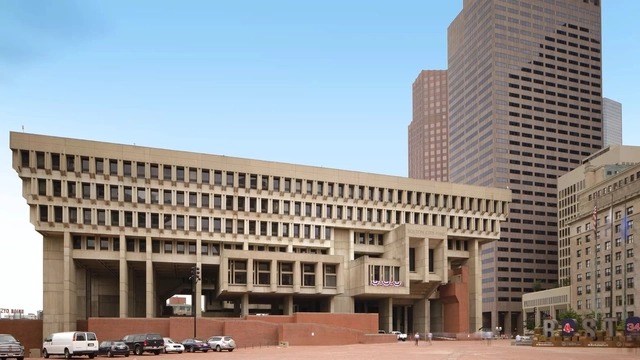
Boston City Hall, one of the most debated examples of Brutalist architecture in the United States, has significantly transformed since its conception. Designed by Kallmann, McKinnell, and Knowles and completed in 1968, the fortress-like concrete exterior and geometric austerity have long divided public opinion. Critics, including a former mayor, called for its demolition for decades arguing that its imposing design was inhospitable, inefficient, and most importantly, not beautiful. However, rather than tearing it down, Boston has chosen to renovate and revitalize the structure, demonstrating that contested Brutalist architectural styles can be adapted for a more sustainable future.
Reconsidering Brutalist Renovations: A Transformation of the Boston City Hall for the Public - Image 1 of 4Reconsidering Brutalist Renovations: A Transformation of the Boston City Hall for the Public - Image 2 of 4Reconsidering Brutalist Renovations: A Transformation of the Boston City Hall for the Public - Image 3 of 4Reconsidering Brutalist Renovations: A Transformation of the Boston City Hall for the Public - Image 5 of 4Reconsidering Brutalist Renovations: A Transformation of the Boston City Hall for the Public - More Images+ 4