1. ArchDaily
  2. Technology

Technology: The Latest Architecture and News

10 Most Read Articles about Materials and New Construction Technologies of 2019

Being up to date with new technologies, understanding the best solutions for each project, and knowing the products present in the market and those that will be used in the future. We have observed that these themes arouse great interest in the architects, students, and architecture lovers who visit our site every day. In 2019, ArchDaily began to focus more on materials, covering products, construction techniques, and raw materials in general. The year is coming to an end, so we have compiled the most viewed articles on these topics, trying to understand what they imply for the present and where they will take us in the coming years.


10 Most Read Articles about Materials and New Construction Technologies of 2019 - Image 1 of 410 Most Read Articles about Materials and New Construction Technologies of 2019 - Image 2 of 410 Most Read Articles about Materials and New Construction Technologies of 2019 - Image 3 of 410 Most Read Articles about Materials and New Construction Technologies of 2019 - Image 4 of 410 Most Read Articles about Materials and New Construction Technologies of 2019 - More Images+ 9

Can a Machine Perform the Work of an Architect? A Chat with Jesper Wallgren, Founder of Finch 3D

There has been a lot of talk about how automation will affect the way we do architecture, and what our role will be when technologies reach our own desks and work tables. In recent years, while we have seen how robotics and advanced technology are gaining ground in construction and manufacturing, new tools are emerging that promise to automate the design process itself. These would allow us to quickly and easily configure living spaces and their dimensions in the initial stages of a project, using simulations and artificial intelligence.

Will this automation be the future of architectural design? We talked with Jesper Wallgren, architect and founder of Finch 3D, to better understand this tool and its possible scope.

Carlo Ratti and Winy Maas Discuss Facial Recognition and the Shenzhen Biennale

Subscriber Access | 

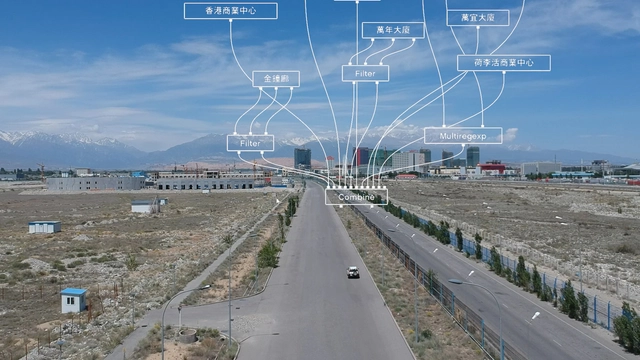
In December 2019, the Chinese city of Shenzhen will host the world’s only Biennale focused exclusively on the topics of urbanism and urbanization. The 2019 Bi-City Biennale of Urbanism\Architecture will explore new phenomena brought about by the digital revolution, and the ability of citizens to become involved in shaping cities. The Biennale curator, Carlo Ratti, exemplifies this intersection between natural and artificial, championing the power of new technologies to transform how we live and design through his work at Carlo Ratti Associati and the MIT Senseable City Lab. In the “Eyes of the City” section of the Biennale, he is joined by MVRDV, and its co-founder Winy Maas, in shaping an experience that invites visitors and observers to question how technologies such as facial recognition can be integrated into urban life.

The Shenzhen & Hong Kong 2019 Bi-City Biennale Reflects on Technology and Urban Life

Opening in December in Shenzhen, China, the Bi-City Biennale of Urbanism and Architecture (UABB), organized by the cities of Shenzhen and Hong Kong, will discuss the theme of “Urban Interactions”. First to use Facial Recognition and Artificial Intelligence, the public exhibition will test new grounds to reflect on the impact of digital technologies on the urban environment.

The Shenzhen & Hong Kong 2019 Bi-City Biennale Reflects on Technology and Urban Life - Image 1 of 4The Shenzhen & Hong Kong 2019 Bi-City Biennale Reflects on Technology and Urban Life - Image 2 of 4The Shenzhen & Hong Kong 2019 Bi-City Biennale Reflects on Technology and Urban Life - Image 3 of 4The Shenzhen & Hong Kong 2019 Bi-City Biennale Reflects on Technology and Urban Life - Image 4 of 4The Shenzhen & Hong Kong 2019 Bi-City Biennale Reflects on Technology and Urban Life - More Images+ 30

The Evolution of Bricklaying Robots: Changing the Rules of Traditional Construction

Automation is rapidly becoming a normalized part of many people’s daily lives and careers, a trend which has by no means evaded the construction industry. While this increasingly pervasive technology is often considered a symptom of the contemporary 21st century, however, one automated construction technology may have a history stretching as far back as the 1960s. This technology, the bricklaying robot, has transformed dramatically since its limited realization over 50 years ago, splintering into newer, more technologically advanced variations today.

“We’re Building New Ways of Working”: Morphosis Explores XR and the Future of Design Technologies

Shifts in technology reflect how designers are creating experiences of architecture and cities. New advances engender novel ways of working, and in turn, shape our design process. As a practice defined by pushing boundaries, experimenting with workflows, and embracing new design technologies, Morphosis has a forty-year history of enthusiastically wondering at the future.

“We’re Building New Ways of Working”: Morphosis Explores XR and the Future of Design Technologies - Image 1 of 4“We’re Building New Ways of Working”: Morphosis Explores XR and the Future of Design Technologies - Image 2 of 4“We’re Building New Ways of Working”: Morphosis Explores XR and the Future of Design Technologies - Image 3 of 4“We’re Building New Ways of Working”: Morphosis Explores XR and the Future of Design Technologies - Image 4 of 4“We’re Building New Ways of Working”: Morphosis Explores XR and the Future of Design Technologies - More Images+ 7

7 Architectural Considerations that are Shaping Future Cities

7 Architectural Considerations that are Shaping Future Cities - Featured Image
Hong Kong . Image Courtesy of Soledad Sambiasi

By 2050, the world’s population is expected to have exceeded 10 billion people, making overcrowded cities one of the most pressing issues of the present. Data analysis, machine learning, transportation developments, and the rapid development of new social technologies are increasingly changing the needs of people and communities, which will have a direct impact on the issue of overcrowding and on our built environment more largely.

Architectural Softwares: Tips on How to Choose and Discover the Right Programs

Architectural Softwares: Tips on How to Choose and Discover the Right Programs  - Image 1 of 4
Courtesy of The Midnight Charette

The Midnight Charette is an explicit podcast about design, architecture, and the everyday. Hosted by architectural designers David Lee and Marina Bourderonnet, it features a variety of creative professionals in unscripted conversations that allow for thoughtful takes and personal discussions. A wide array of subjects are covered with honesty and humor: some episodes provide useful tips for designers, while others are project reviews, interviews, or explorations of everyday life and design. The Midnight Charette is also available on iTunes, Spotify, and YouTube.

Architectural Softwares: Tips on How to Choose and Discover the Right Programs  - Image 2 of 4

This week David and Marina discuss software in design and architecture. It's not as boring as it sounds! The two cover the more pragmatic and specific issues and the more conceptual ones: everything from what programs you need to know to design and to get hired different offices; how to learn programs; balancing technical skillsets with conceptual thinking; why working in the computer is both advantageous and dangerous; 2D drafting versus 3D modeling; things to consider when choosing a software; the failures of successes of BIM programs for employers and employees; key issues to consider before transitioning to BIM; what BIM programs are best (Revit or ArchiCAD) for small and large offices and which project types (the more office-focused and BIM-focused conversation starts at 37:30) and workflows between different programs. If you have any questions or advice about portfolios or any other design-related topics, leave a voicemail at The Midnight Charette hotline: 213-222-6950.

Layered Architecture: What is Additive Manufacturing?

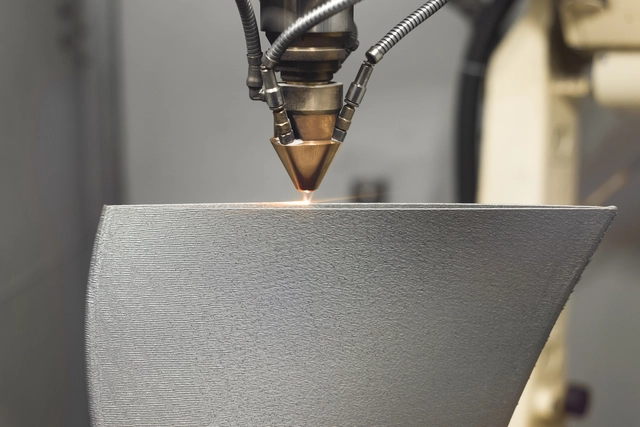
Additive Manufacturing (AM) is a term used to identify the manufacturing processes performed by 3D printing through layer-by-layer construction. In addition to avoiding the generation of waste through the use of precise geometries and exact quantities of material, these controlled processes can be much faster than traditional ones, since they don't require tools or other instruments.

Additive Manufacturing is done based on a digital model. The process begins with a CAD design or three-dimensional scan and then translates that shape into an object divided into sections, allowing it to be printed. Its use has extended from industrial design to the replica of archaeological objects to the manufacture of artificial human organs and tissues, among many others.
Will Technology Replace Architects? Artist Sebastian Errazuriz Explains Why "Architects Will Need To Find New Jobs"

Will Technology Replace Architects? Artist Sebastian Errazuriz Explains Why "Architects Will Need To Find New Jobs" - Featured Image
Joris Laarman for MX3d

Will architects be one of the professionals who will be replaced by AI in the near future? New York-based artist Sebastián Errázuriz recently opened the debate in one of his latest Instagram videos.
Errázuriz, also known for his critique/proposal of the reconstruction of the Notre-Dame church, says that it is very likely that the future of the profession as we know it might disappear. Thanks to technological advancements, only a small elite of architects who maintain architecture as an artistic practice might be the ones who will continue to practice the discipline as we know it.

BuildTech Trends: Movements Shaping Architecture and Construction

As construction evolves, new advancements are shaping how we design. These movements are the product of shared ideas and the convergence of building technologies that open up new possibilities for architecture. From the atomic scale of materials to preassembled homes and faraway planets, the changes in BuildTech are felt across industries. As a result, disciplines are learning from one another to reimagine how we build.

BuildTech Trends: Movements Shaping Architecture and Construction - Image 1 of 4BuildTech Trends: Movements Shaping Architecture and Construction - Image 2 of 4BuildTech Trends: Movements Shaping Architecture and Construction - Image 3 of 4BuildTech Trends: Movements Shaping Architecture and Construction - Image 4 of 4BuildTech Trends: Movements Shaping Architecture and Construction - More Images+ 5

Human-Free Construction: How BuildTech’s Evolution Impacts Design

The construction industry has evolved throughout time, but always by way of builders. What happens when people are no longer part of building and construction? This is the question asked by British multinational infrastructure company Balfour Beatty, and they’ve published their answer in the 2050 Innovation Paper. The industry report has become a reference point to those looking at the evolution of buildings and design.

Human-Free Construction: How BuildTech’s Evolution Impacts Design - Image 1 of 4Human-Free Construction: How BuildTech’s Evolution Impacts Design - Image 2 of 4Human-Free Construction: How BuildTech’s Evolution Impacts Design - Image 3 of 4Human-Free Construction: How BuildTech’s Evolution Impacts Design - Image 4 of 4Human-Free Construction: How BuildTech’s Evolution Impacts Design - More Images+ 4

How Will Home Automation Affect our Future?

Once restricted to luxury or super-tech buildings, home automation is proving to be an increasingly fundamental and affordable addition to architectural projects, whether to new buildings or renovations. While understanding how they operate can be extremely complex, the primary purpose of technology is to make life simpler, safer, and easier. By definition, home automation seeks to be globally intelligent, functioning as a system that facilitates processes without unnecessarily complicating the user's life. The idea is to connect devices, which in turn connect and talk through a centralized control unit, accessible by computers, tablets, and mobile phones. These include lights, appliances, electrical outlets, and heating and cooling systems, but also alarms, doors, windows, smoke detectors, surveillance cameras, and many other sensors and devices.

10 Technologies for Accessible, Affordable Cities

Major cities are facing major crises. The United Nations estimates that by 2050, almost one billion people with disabilities will live in cities, representing 15% of total city dwellers. With urban landscapes awash with inaccessible subways, shops, and bathrooms, the UN has declared that poor accessibility represents a major challenge for cities. At the same time, most cities around the world are struggling to provide safe, respectable, affordable housing for their citizens, with rent accounting for more than 50% of some incomes. The World Economic Forum recently warned that “a world in which only a few can afford housing is not sustainable.”

How Fiber-Reinforced Concrete Can Make for More Resistant and Lighter Architecture

Subscriber Access | 

The history of concrete dates back to ancient Rome, approximately 2,000 years ago. The so-called “Roman Concrete” is composed of limestone, volcanic ash, and seawater and it permitted the construction of aqueducts, highways, and temples; many of them still stand to this day. Some time ago, this original mix was discovered to form a mineral called aluminum tobermorite, which gets stronger as time goes by.

How Fiber-Reinforced Concrete Can Make for More Resistant and Lighter Architecture - Image 1 of 4How Fiber-Reinforced Concrete Can Make for More Resistant and Lighter Architecture - Image 2 of 4How Fiber-Reinforced Concrete Can Make for More Resistant and Lighter Architecture - Image 3 of 4How Fiber-Reinforced Concrete Can Make for More Resistant and Lighter Architecture - Image 4 of 4How Fiber-Reinforced Concrete Can Make for More Resistant and Lighter Architecture - More Images+ 5

SURGE Combines High Aesthetics with Environmentally Oriented Technology

Subscriber Access | 

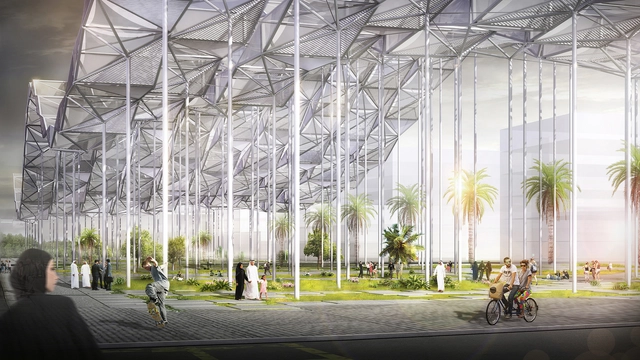
Chinese architect Mingfei Sun has designed an environmentally oriented urban hub for Masdar City, Abu Dhabi. Titled SURGE, its natural aesthetics and technological forwardness are intended to communicate a J.M.W. Turner-esque awe for the power of nature, making it an oasis of high aesthetic and ecological value.

10 Solutions for Adaptive Walls for More Resilient Architecture

The term "resilience" has been employed in a wide range of subjects. The scientific definition is the ability of a substance or object to recover its form after suffering some trauma. In other words, it is quite different from resistance, as it concerns the capability of adapting and recovering. In ecology, resilience is about the ability of an ecosystem to respond to a perturbation or disturbance, resisting damage and recovering quickly. In architecture, however, designing something while having resilience in mind can lead to a variety of approaches. Resilient designs are always site-specific. Predicting the potential scenarios for typical building use, and even any disasters that could challenge the integrity of the project and its occupants is an important starting point. Furthermore, it is possible to address adaptive structures and materials that can ''learn'' from their environment and continuously reinvent themselves. Since there are software and robots with algorithms that learn from their contexts, why can't we use the same approach in construction?

We have selected 10 adaptive materials and solutions that work under the concept of Resilience in Architecture and Construction. We are left wondering whether these solutions will someday become mainstream or merely occasional innovations.

10 Solutions for Adaptive Walls for More Resilient Architecture  - Image 1 of 410 Solutions for Adaptive Walls for More Resilient Architecture  - Image 2 of 410 Solutions for Adaptive Walls for More Resilient Architecture  - Image 3 of 410 Solutions for Adaptive Walls for More Resilient Architecture  - Image 4 of 410 Solutions for Adaptive Walls for More Resilient Architecture  - More Images+ 19

London Launches Open Source App for Homebuilding

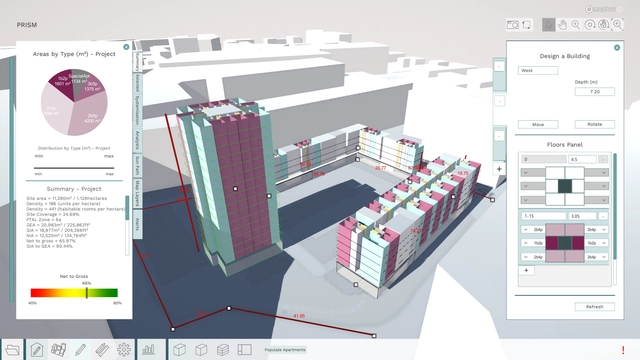
Bryden Wood, Cast, and the Mayor of London have launched a new app to speed up the capital’s home building. The freely-available app, titled PRISM, is aimed at the design and construction of high-quality, factory-built homes to address the current demand of 50,000+ houses per year.