1. ArchDaily
  2. Resilience

Resilience: The Latest Architecture and News

Redesigning the Road to Net Zero: How CO Adaptive Architecture is Breaking New Ground

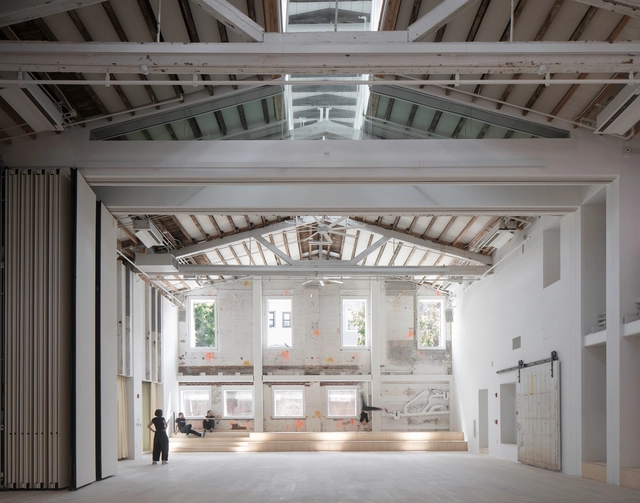
The climate crisis has reshaped contemporary architecture. Sustainability has become a central guiding force in design, and in turn, architects are rethinking how to build today. For CO Adaptive Architecture, addressing the climate crisis begins with a process oriented practice. Together, Ruth Mandl and Bobby Johnston have created a firm that embodies how a values-based approach can tackle the most pressing issues of our time. The result is elegant and impactful architecture brought to life with poise and finesse.

Redesigning the Road to Net Zero: How CO Adaptive Architecture is Breaking New Ground - Arch Daily InterviewsRedesigning the Road to Net Zero: How CO Adaptive Architecture is Breaking New Ground - Arch Daily InterviewsRedesigning the Road to Net Zero: How CO Adaptive Architecture is Breaking New Ground - Arch Daily InterviewsRedesigning the Road to Net Zero: How CO Adaptive Architecture is Breaking New Ground - Arch Daily InterviewsRedesigning the Road to Net Zero: How CO Adaptive Architecture is Breaking New Ground - More Images+ 4

World’s Cities Day 2021: Resilience, Climate Crisis and Sustainable Urbanization

Subscriber Access | 

As cities grow in scale, dimensions, and amplitude, taking in 60% of the world population, the United Nations has designated the 31st of October as “World Cities Day”, an opportunity to talk furthermore about global urbanization, addressing challenges, encouraging opportunities across borders and highlighting responses. Focusing this edition on the theme of “Adapting Cities for Climate Resilience”, this day, part of Urban October, seeks to raise awareness about the climate crisis and its repercussions on the built environment.

Cities, at the center of the global challenges, are hubs for institutions, society, economy, commerce, and transportation. Understanding the importance of “Thinking the City”, we have compiled in this roundup, articles published by ArchDaily’s editors that offer planning tools and guidelines, tackle the different components of the urban realm and highlight worldwide as well as contextual questions and responses.

How to Achieve a Resilient City? First, Let it Shape Itself

Resilience seems to be the topic of much discussion within circles of urbanism today. Though, there is a slight problem. We can’t quite agree on what the term means.

Two definitions seem to be floating about. The first rooted in material science. The second, in ecology. 
KAAN Architecten Seeks to Transform Amsterdam into a Resilient City with a Series of Architectural Projects

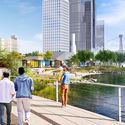
KAAN Architecten has been investigating methods to ensure that cities continue to flourish. Working closely and experimenting primarily with the city of Amsterdam, the firm’s projects have been focusing on developing a healthy design and finding alternative possibilities to high-density architecture.

KAAN Architecten Seeks to Transform Amsterdam into a Resilient City with a Series of Architectural Projects - Image 1 of 4KAAN Architecten Seeks to Transform Amsterdam into a Resilient City with a Series of Architectural Projects - Image 2 of 4KAAN Architecten Seeks to Transform Amsterdam into a Resilient City with a Series of Architectural Projects - Image 3 of 4KAAN Architecten Seeks to Transform Amsterdam into a Resilient City with a Series of Architectural Projects - Image 4 of 4KAAN Architecten Seeks to Transform Amsterdam into a Resilient City with a Series of Architectural Projects - More Images+ 16

Call for Submissions // Disc*2020 Is Going Remote!

Disc*2020 (Design & Innovation for Sustainable Cities) is a five week summer program for currently enrolled college students that explores an interdisciplinary and multi-scalar approach to design and analysis in the urban environment.

White Arkitekter + ReGen Villages Create First Circular, Self-Sufficient Communities for Sweden

White Arkitekter, in collaboration with Silicon Valley-based ReGen Villages, have joined forces to create fully circular, self-sufficient and resilient communities in Sweden. Inspired by computer games, the project puts in place organic food production, locally produced and stored energy, comprehensive recycling, and climate positive buildings.

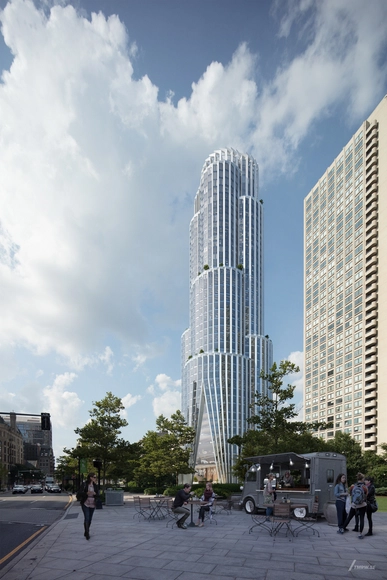
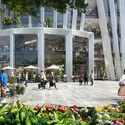
KPF Unveils High Performance and Resilient Tower in Boston

KPF and the Chiofaro Company have released images of their latest project The Pinnacle at Central Wharf, a high performance and resilient mixed-use development on the Boston Harbor waterfront. Aiming to reconnect Downtown Boston to the waterfront, the project also puts in place a new public space.

KPF Unveils High Performance and Resilient Tower in Boston  - Image 1 of 4KPF Unveils High Performance and Resilient Tower in Boston  - Image 2 of 4KPF Unveils High Performance and Resilient Tower in Boston  - Image 3 of 4KPF Unveils High Performance and Resilient Tower in Boston  - Image 4 of 4KPF Unveils High Performance and Resilient Tower in Boston  - More Images+ 5

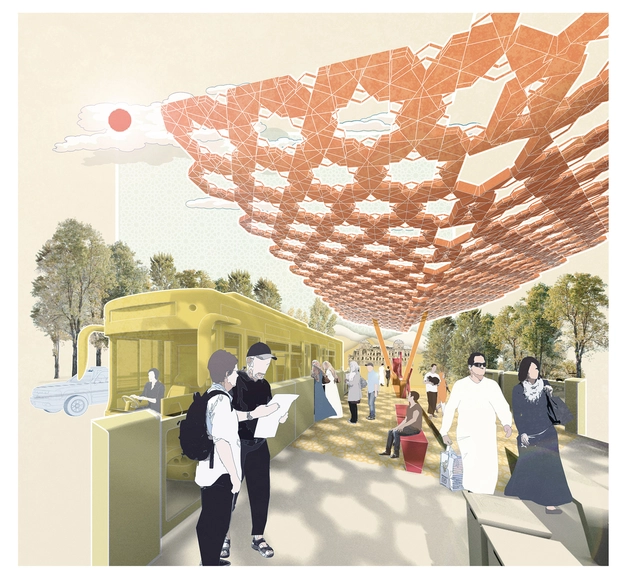
Sasaki Envisions a Sustainable, Equitable, and Resilient Kabul City

Imagined by Sasaki, the Kabul Urban Design Framework creates a vision of what the city can become. The project generates a set of guidelines that can transform the Afghan capital into a model of sustainable, equitable, and resilient development.

Sasaki Envisions a Sustainable, Equitable, and Resilient Kabul City - Image 1 of 4Sasaki Envisions a Sustainable, Equitable, and Resilient Kabul City - Image 2 of 4Sasaki Envisions a Sustainable, Equitable, and Resilient Kabul City - Image 3 of 4Sasaki Envisions a Sustainable, Equitable, and Resilient Kabul City - Image 4 of 4Sasaki Envisions a Sustainable, Equitable, and Resilient Kabul City - More Images+ 24

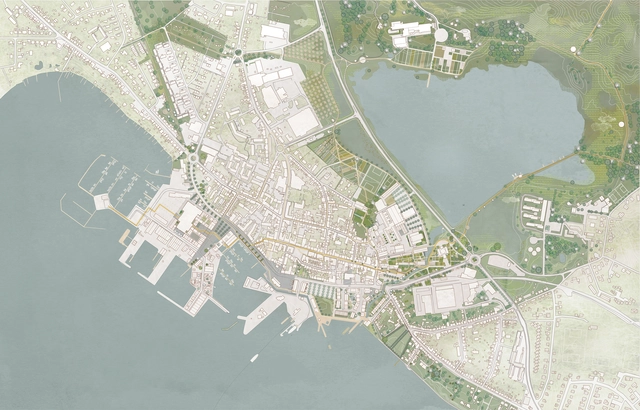
Kjellander Sjöberg Wins Competition to Climate Proof the Coastal Town of Faaborg in Denmark

Kjellander Sjöberg, one of the leading architectural practices in Scandinavia, in collaboration with GHB Landskabsarkitekter, Mogens A. Morgen, Realise and Tyréns, was selected to design a strategic development plan for Faaborg. The coastal town in southern Denmark is facing many challenges like a high risk of flooding and an important decrease in its population.

Kjellander Sjöberg Wins Competition to Climate Proof the Coastal Town of Faaborg in Denmark - Image 1 of 4Kjellander Sjöberg Wins Competition to Climate Proof the Coastal Town of Faaborg in Denmark - Image 2 of 4Kjellander Sjöberg Wins Competition to Climate Proof the Coastal Town of Faaborg in Denmark - Image 3 of 4Kjellander Sjöberg Wins Competition to Climate Proof the Coastal Town of Faaborg in Denmark - Image 4 of 4Kjellander Sjöberg Wins Competition to Climate Proof the Coastal Town of Faaborg in Denmark - More Images+ 11

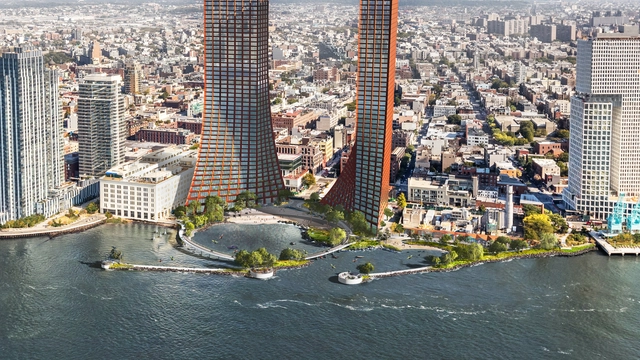
BIG + Field Operations Design Master Plan for River Street Waterfront

Two Trees Management Company, a New York-based real estate development firm, has presented a master plan for the Northern Brooklyn waterfront, a new approach to urban resiliency. Designed by BIG and Field Operations, the project puts in place a mixed-use development and a resilient park.

BIG + Field Operations Design Master Plan for River Street Waterfront - Image 1 of 4BIG + Field Operations Design Master Plan for River Street Waterfront - Image 2 of 4BIG + Field Operations Design Master Plan for River Street Waterfront - Image 3 of 4BIG + Field Operations Design Master Plan for River Street Waterfront - Image 4 of 4BIG + Field Operations Design Master Plan for River Street Waterfront - More Images+ 7

Are Architects and Developers Finally Addressing the Same Global Concerns?

Subscriber Access | 

Architects and developers have always been on opposite ends of the construction world. While the first wanted to create dreamy spaces, the latter just wanted to cater to the basic needs. In these past few years, the world has witnessed significant changes, with the aggravation of climate-related issues, the evolution of technological solutions, and the newly acquired awareness and growth of the population.

While everything is transforming, building trends also evolved, mainly due to an alteration in people’s perceptions and priorities. However, one question remains unanswered: Could all these changes mean that the never-ending conflict between architects and developers reached some sort of common grounds? And could they finally be seeking one same goal, of a sustainable, resilient and inclusive future?

Are Architects and Developers Finally Addressing the Same Global Concerns? - Image 1 of 4Are Architects and Developers Finally Addressing the Same Global Concerns? - Image 2 of 4Are Architects and Developers Finally Addressing the Same Global Concerns? - Image 3 of 4Are Architects and Developers Finally Addressing the Same Global Concerns? - Image 4 of 4Are Architects and Developers Finally Addressing the Same Global Concerns? - More Images+ 19

Sasaki to Design Ho Chi Minh City Innovation District in Vietnam

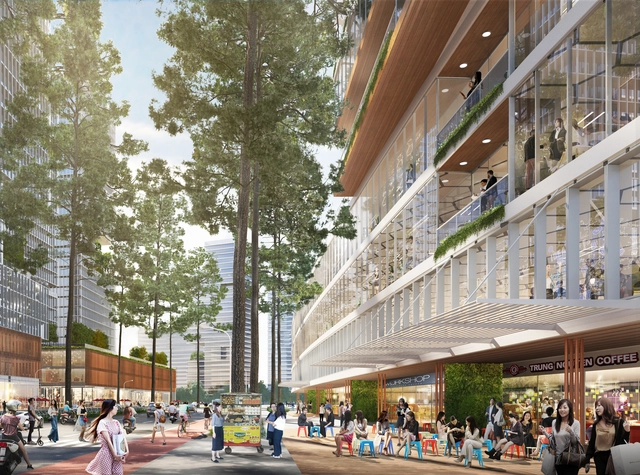
Sasaki has been selected by the government of Ho Chi Minh City to conceive the innovation district in the eastern part of the city, in collaboration with enCity, an international planning practice based in Singapore and Vietnam.

Sasaki to Design Ho Chi Minh City Innovation District in Vietnam - Image 1 of 4Sasaki to Design Ho Chi Minh City Innovation District in Vietnam - Image 2 of 4Sasaki to Design Ho Chi Minh City Innovation District in Vietnam - Image 3 of 4Sasaki to Design Ho Chi Minh City Innovation District in Vietnam - Image 4 of 4Sasaki to Design Ho Chi Minh City Innovation District in Vietnam - More Images+ 26

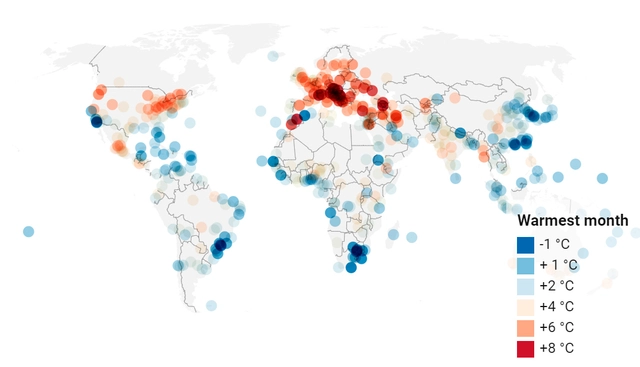
The Temperature Rise of 520 Cities by 2050 (is Grim)

The climate in Madrid in 2050 will look more like the climate in Marrakesh, Morocco today. Stockholm will feel more like Budapest, London like Barcelona, Moscow like Sofia, Seattle like San Francisco, and Tokyo like Changsa in China. 

The research "Understanding Climate Change Starting with an Analysis of Similar Cities" published in the scientific magazine PLOS ONE by The Crowther Lab of ETH Zurich, paints a grim picture of the future for the world's urban centers.

The Great Umayyad Mosque of Aleppo: from Historic Islamic Monument to War Battlefield

The Great Umayyad Mosque of Aleppo: from Historic Islamic Monument to War Battlefield - Image 5 of 4
via AFP / Getty Images

Islam, other than describing a religious belief, is a word that identifies a unique type of architecture that dates back thousands of years. It has been formed by a civilization that transformed the qualities of this belief into visible and tangible material, building structures with a striking focus on details and experiences within enclosed spaces. 

Islamic architecture is an architecture that does not change its form easily. In fact, its principles have been more or less the same since thousands of years ago, with minor changes based on functional adaptations. To this day, hundreds of buildings still stand as a representation of the history of Islamic architecture and are still used just as they have been in the past.

War, however, has no religion or cultural nostalgia, and even the holiest, most historically-significant sites are threatened with complete destruction. The Great Umayyad Mosque in Aleppo, originally built by the first imperial Islamic dynasty and currently situated within a UNESCO World Heritage Site, stood yet again as a battlefield during the recent Syrian War, but this time, lost its most significant and resilient element, an 11th-century Seljuk Minaret.

The Great Umayyad Mosque of Aleppo: from Historic Islamic Monument to War Battlefield - Image 1 of 4The Great Umayyad Mosque of Aleppo: from Historic Islamic Monument to War Battlefield - Image 2 of 4The Great Umayyad Mosque of Aleppo: from Historic Islamic Monument to War Battlefield - Image 3 of 4The Great Umayyad Mosque of Aleppo: from Historic Islamic Monument to War Battlefield - Featured ImageThe Great Umayyad Mosque of Aleppo: from Historic Islamic Monument to War Battlefield - More Images+ 29

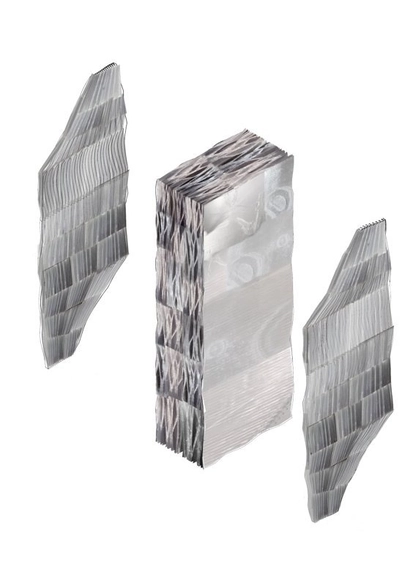
10 Solutions for Adaptive Walls for More Resilient Architecture

The term "resilience" has been employed in a wide range of subjects. The scientific definition is the ability of a substance or object to recover its form after suffering some trauma. In other words, it is quite different from resistance, as it concerns the capability of adapting and recovering. In ecology, resilience is about the ability of an ecosystem to respond to a perturbation or disturbance, resisting damage and recovering quickly. In architecture, however, designing something while having resilience in mind can lead to a variety of approaches. Resilient designs are always site-specific. Predicting the potential scenarios for typical building use, and even any disasters that could challenge the integrity of the project and its occupants is an important starting point. Furthermore, it is possible to address adaptive structures and materials that can ''learn'' from their environment and continuously reinvent themselves. Since there are software and robots with algorithms that learn from their contexts, why can't we use the same approach in construction?

We have selected 10 adaptive materials and solutions that work under the concept of Resilience in Architecture and Construction. We are left wondering whether these solutions will someday become mainstream or merely occasional innovations.

10 Solutions for Adaptive Walls for More Resilient Architecture  - Image 1 of 410 Solutions for Adaptive Walls for More Resilient Architecture  - Image 2 of 410 Solutions for Adaptive Walls for More Resilient Architecture  - Image 3 of 410 Solutions for Adaptive Walls for More Resilient Architecture  - Image 4 of 410 Solutions for Adaptive Walls for More Resilient Architecture  - More Images+ 19

What Can Nature Teach Architects about Resilience

In order to further explore how we think about the future of cities, ArchDaily's topic of the month for July is resilience. To prepare for disasters or disruptions in the system, we spoke with biologist Alessandra Araújo, founder of bio-inspirations and professor of Biomimicry at the Architectural Association Amazon Visiting School and the Master Ecological Design Thinking at Schumacher College, who discussed her thoughts on resilience in the field of architecture and urbanism through a different point of view: nature.

GVL Gossamer Merge Resilience and Urbanism in Xi'an, China

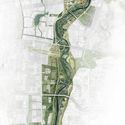
GVL Gossamer has released images of their design for a 19 kilometer stretch of waterfront along the Jing River in Xi’an, China. The proposal, a finalist in an international design competition, celebrates the site’s history at the origin of the Silk Road through strategies that tap into ancient and enduring histories of traditional architecture, merchant trade, and agricultural innovation. These enduring histories are woven with contemporary influences such as responses to major climatic and environmental challenges.

GVL Gossamer Merge Resilience and Urbanism in Xi'an, China - Image 1 of 4GVL Gossamer Merge Resilience and Urbanism in Xi'an, China - Image 2 of 4GVL Gossamer Merge Resilience and Urbanism in Xi'an, China - Image 3 of 4GVL Gossamer Merge Resilience and Urbanism in Xi'an, China - Image 4 of 4GVL Gossamer Merge Resilience and Urbanism in Xi'an, China - More Images+ 9

ArchDaily Topics - July: Resilience in Architecture

Resilience has become increasingly common in our vocabulary when we talk about people, buildings, cities or even whole societies overcoming all kind of problems. In fact, Google searches related to resilience have continued to grow since 2004 in English, Spanish, and Portuguese.